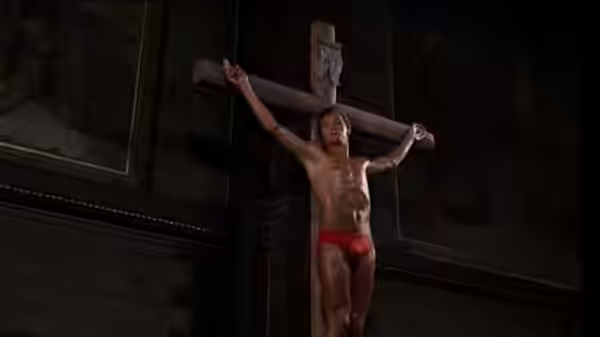
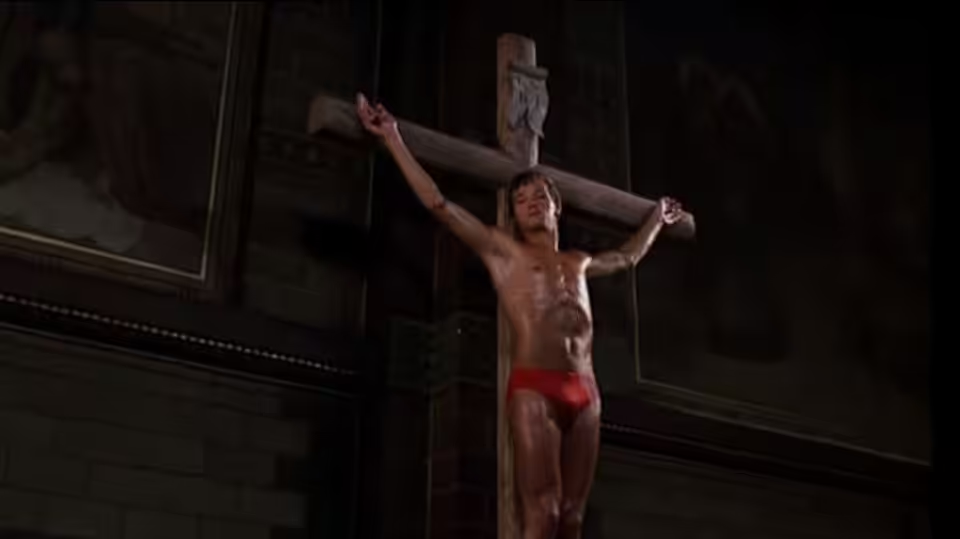
A nearly naked man in red briefs hangs from a cross inside a dark church
Film review

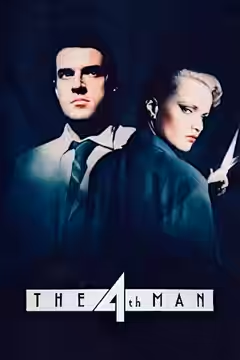
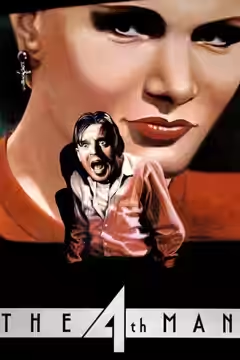
The 4th Man

1983 · Directed by Paul Verhoeven · 1h 38m

In a sentenceA whodunnit in which the sleuth is drunk, Catholic and hallucinating, and possibly nothing was done at all

Gerard Reve (Jeroen Krabbé) is a Dutch novelist who drinks from breakfast, prays to a plaster Virgin Mary when he is frightened and tells strangers he lies for a living. He takes the train to a provincial town to give a talk to a literary society. On the station platform he catches sight of Herman (Thom Hoffman), a young man he cannot stop thinking about. After the talk, Christine Halslag (Renée Soutendijk), who is young, rich and runs a beauty salon, takes Gerard home for the night. When he learns that Herman is her lover he contrives to stay on, and discovers that Christine has already buried three husbands, each of whom died badly.

Fi1m review

Paul Verhoeven’s Dutch thriller is lurid, funny and shot through with Catholic dread, with Renée Soutendijk calmly running rings around Jeroen Krabbé’s sweating novelist. It cares more about its imagery than its mystery, and the imagery is worth it.

Gerard Reve, the hero of The 4th Man, shares his name with the author of the novel it is taken from, and he is not a man you would lend money to. He drinks in the morning, he talks to a plaster Virgin, and he introduces himself to an audience of provincial book-lovers by explaining that he lies for a living. Jeroen Krabbé plays him as a sweating, self-pitying, rather funny wreck, and Paul Verhoeven builds around him a thriller in which every object is a portent and every portent may be the drink talking. It is lurid, it is knowing, and it is one of the most enjoyable films Verhoeven has made.

The plot, from Gerard Soeteman’s script, is a widow story. Christine Halslag (Renée Soutendijk) runs a beauty salon, has money, and has been married three times; each husband is dead. Gerard sleeps with her because she is there, and stays because her boyfriend Herman (Thom Hoffman) is the young man he saw on the station platform and cannot get out of his head. He then starts to see things. Verhoeven’s game is to keep us unsure whether Gerard is a drunk imagining a murderess or a prophet being warned, and he keeps it up for 98 minutes without tipping his hand.

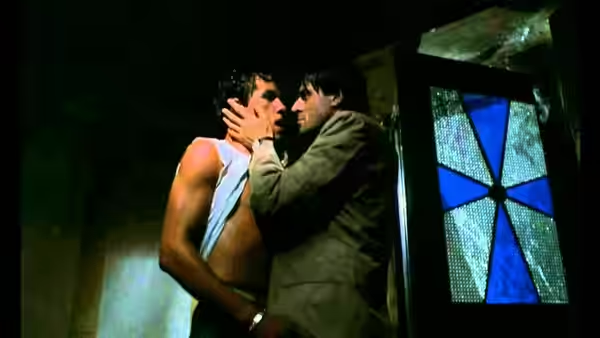
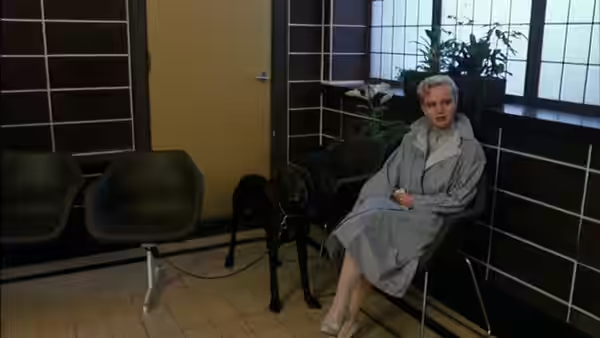
Soutendijk is the film’s still point. She plays Christine without a flicker of menace: pleasant, practical, faintly amused, a woman who films her husbands on holiday and keeps the reels in a cupboard. That is the joke and the threat at once. Krabbé does the opposite, all flop sweat and bad faith, and the pairing works because neither of them is trying to win the scene. Hoffman has less to do; Herman is a body the camera admires, and the script is honest enough to admit that this is exactly how Gerard sees him.

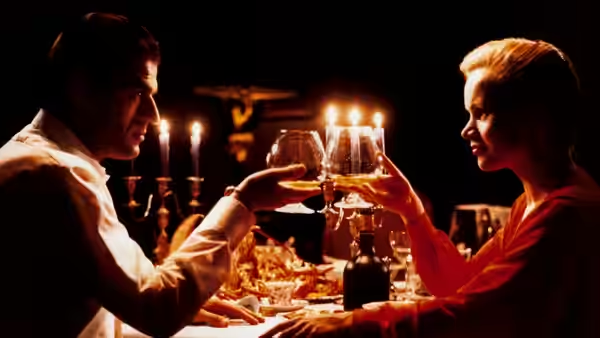
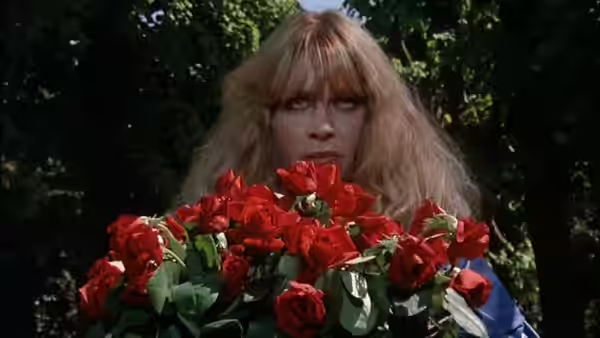
Jan de Bont shoots it in hard reds and cold blues and lets the colours do the warning: the salon sign glows red, the hotel corridor is red, and the church Gerard hides in is lit like a mortuary. The visions come without any change in the image, so a cemetery, a bunch of keys or a woman with scissors arrives with the same flat clarity as a cup of coffee, and Ine Schenkkan cuts back out of them a beat before you expect. Loek Dikker’s score is big, romantic, string-heavy stuff in the old Hollywood manner, and it plays everything straight; the images do the smirking. Elly Claus dresses Christine in whites and pale pinks, the colours of a first communion, and the film means that too.

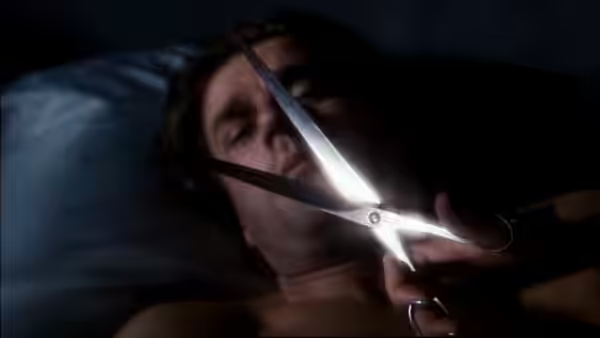
There is a dream, about halfway through, involving Christine, a pair of scissors and Gerard’s lower half, and we will confess it made us cross our legs. A second later it made us laugh, which is the effect Verhoeven is after from the first frame. A scene in a crypt, where Gerard reads three names off three urns, did something colder to us. We had been enjoying the symbols as symbols, and suddenly they had dates on them.

The mystery itself is thin. Once you have grasped that Christine’s husbands die, there is one question left, and Soeteman is not much interested in answering it; the second half is about Gerard’s fear rather than anything Christine does. Some of the symbolism is laid on with a trowel, and the Virgin Mary turns up so often she should have a credit. Verhoeven knows all this, and the knowingness is the point, but there are stretches where the film is winking so hard it cannot see. Most critics have forgiven the excess, and so, mostly, do we.

Against Verhoeven’s own work this is the bridge. The cool blonde who may or may not kill her men comes back, glossier and sillier, in Basic Instinct nine years later, and it is not hard to see why Hollywood called. The 4th Man is the better film, because it lets you laugh, and because its Catholicism is real rather than decorative.

Watch it late, with a drink you can put down when Gerard picks his up. The last twenty minutes take a turn we will not describe, except to say that the film declines to tell you what happened, and that for once we did not mind.

Critical consensus AI synthesised

74
Positive
4
Mixed
1
Negative
0

With only 5 reviews in so far, the lean is warm and fairly consistent: most critics take The 4th Man as a black comedy first and a thriller second, and enjoy it on those terms. The praise clusters around Verhoeven’s imagery, erotic and religious alike, which the reviews call audacious, overripe and provocative in roughly equal measure, and around a screenplay that keeps pace with his excesses. Empire also credits the performances for staying balanced amid the spectacle. Reservations are mild, mostly a nod to those same excesses, and the one cooler notice cannot be read in full.

Empire
1 January 2000 · Kim Newman
80*

Newman regards the film as an unusual, tasty blend of louche fantasy, horror and sly comedy. He singles out its balanced performances and Verhoeven’s audacious erotic and religious imagery.

Read the full review →
The AV Club
19 April 2002 · Nathan Rabin
80*

Rabin regards the film as a wickedly funny, effective black comedy. He singles out its screenplay for doing justice to Verhoeven’s warped vision.

Read the full review →
Slant Magazine
16 June 2009 · Robert C. Cumbow
75*

The critic considers the film a provocative, visually rich work that has retained his esteem, while acknowledging its excesses and limitations. He especially praises the striking imagery and the way the film translates the novel’s hallucinatory prose into cinema.

Read the full review →
Time Out
· TCh
70*

The review presents the film as a deliciously overripe, tongue-in-cheek melodrama. It singles out Verhoeven’s ostentatious symbolism as a defining pleasure.

Read the full review →
The New York Times
27 June 1984 · Janet Maslin
64*

The page is inaccessible, so the critic’s verdict cannot be verified. Its specific praise or complaint is also unavailable.

Read the full review →

Straight answers AI written, from our review

Is The 4th Man worth watching?
The 4th Man is worth watching for anyone who likes a thriller that cares more about its imagery than its mystery, and we scored it 76. Paul Verhoeven keeps you unsure whether Jeroen Krabbé's drunk, Catholic novelist is imagining a murderess or being warned of one. The plot is thin, but Renée Soutendijk's calm widow and Jan de Bont's reds and blues carry it.
How long is The 4th Man, and what is it rated?
The 4th Man runs 1h 38m. It is a thriller and mystery film.
Where can I watch The 4th Man in Italy?
The 4th Man is streaming on Amazon Prime Video in Italy, and it is also available to rent from Amazon Prime Video from €0.99. Availability is checked daily; the links above go straight to each service.
How violent or frightening is The 4th Man, and is it suitable for children?
The 4th Man has no UK certificate and is unrated in the US, and it is not for children. It contains sex, nudity, blood and a dream involving scissors that made us cross our legs before it made us laugh. The horror is mostly hallucinated and knowingly lurid rather than sustained, so adults who can take a wink with their dread will manage.
How does The 4th Man compare to Basic Instinct?
The 4th Man is the better film, and Basic Instinct is the louder one. Verhoeven took the same cool blonde who may or may not kill her men to Hollywood nine years later and made her glossier and sillier. The Dutch film lets you laugh and means its Catholicism; the American one has more suspense and cruder sexual politics.
Is The 4th Man based on a true story or a book?
The 4th Man is based on a novel by Gerard Reve, and it is not a true story. The hero shares the author's name, which is part of the joke, since he announces to a room of book-lovers that he lies for a living. You do not need to know the book; the film works as Verhoeven's own game of portents and drink.
What should I watch after The 4th Man?
After The 4th Man, try Basic Instinct (1992, Fi1m 72): Verhoeven remakes his own widow in Hollywood money; louder, sillier, still fun. Then Don't Look Now (1973, Fi1m 90): Another man drowning in omens he cannot read, in a wetter city.

Cast

Awards

International Submission to the Academy Awards, 1984

Nominated
International Submission to the Academy Awards

If you liked this, try…

  1. Basic Instinct (1992, Fi1m 72)Verhoeven remakes his own widow in Hollywood money; louder, sillier, still fun.

  2. Don't Look Now (1973, Fi1m 90)Another man drowning in omens he cannot read, in a wetter city.

  3. Les Diaboliques (1955) · not on Fi1m yetClouzot’s murder plot with a bathtub; the template for every cool schemer since.

  4. Deep Red (1975) · not on Fi1m yetArgento’s red-soaked mystery, where the clue was in the first reel all along.

  5. The Housemaid (1960) · not on Fi1m yetKorean domestic thriller in which a household turns on a single locked door.

The 4th Man (1983) review: lurid, funny and knowingly overripe (Italy) | Fi1m