Film review

The Alamo

1960 · Directed by John Wayne · 3h 22m · MPA NR

In a sentenceThree hours of men explaining why they are about to die, then twenty minutes of them doing it

WarAdventureHistoryWestern

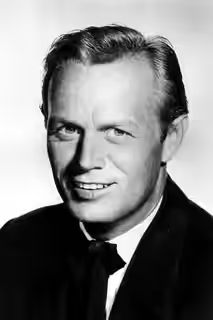
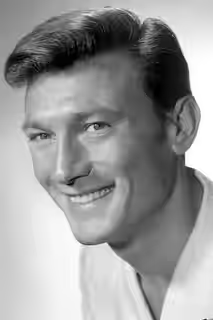
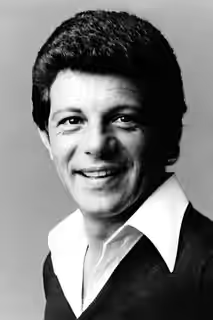
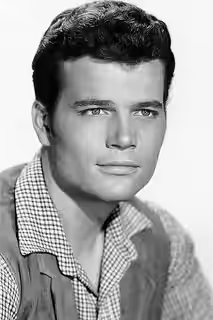
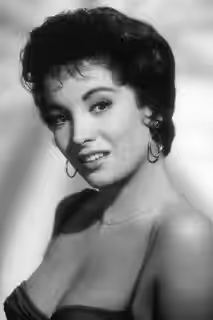
San Antonio, Texas, early 1836. Colonel William Travis (Laurence Harvey), a formal, buttoned-up officer, commands the small garrison holding a ruined mission called the Alamo, with orders to keep it while Sam Houston raises an army elsewhere. Jim Bowie (Richard Widmark) arrives with his own volunteers and dislikes Travis on sight. Then Colonel Davy Crockett (John Wayne) rides in with a party of Tennesseans who think they have come to hunt and drink, and Crockett must decide whether to tell them why they are really here. Santa Anna’s army is days away and several thousand strong. Meanwhile Crockett courts Flaca (Linda Cristal), Travis and Bowie argue over command, and young Smitty (Frankie Avalon) wants to be treated as a soldier.

Plays from YouTube when you press play; nothing loads from them until then.

Fi1m review

John Wayne’s siege is handsome, sincere and 202 minutes long, and a good third of that is speeches. William H. Clothier’s wide frame and the final assault earn their keep; the rest is an expensive way of hearing what Crockett thinks about liberty.

John Wayne produces, directs and plays Davy Crockett, and The Alamo is his 202-minute case for why a few hundred men should stay inside a mission they know they cannot hold. James Edward Grant’s screenplay treats the siege as a debate: about Texas, about liberty, about what a man owes the people who follow him. It is entirely sincere. It is also, for long stretches, a film in which people stand in a courtyard and tell each other what they believe, and the belief is always the same.

The verdict, plainly: the last forty minutes are worth seeing and the two and a half hours before them are a test. Most critics failed it in 1960 for the talk and the flag-waving, and they were not wrong about either. We are a little kinder, because when Wayne finally stops his cast speaking and starts them moving he shows he had an eye for size.

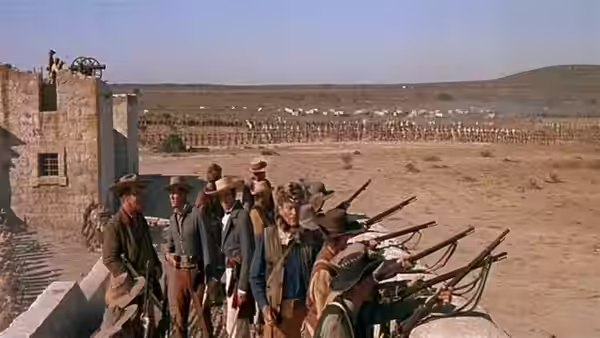
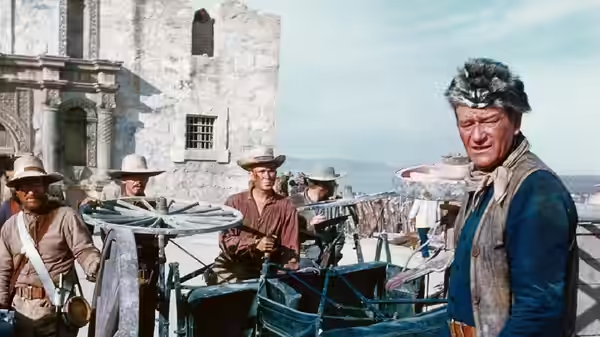
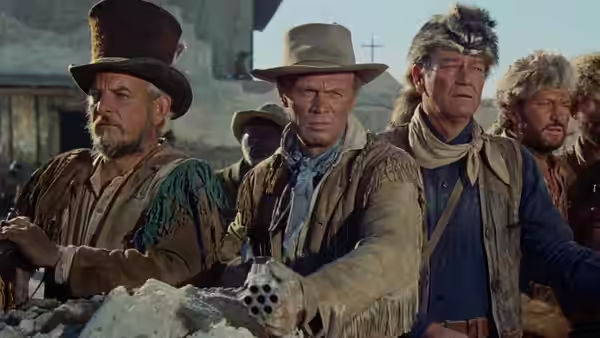
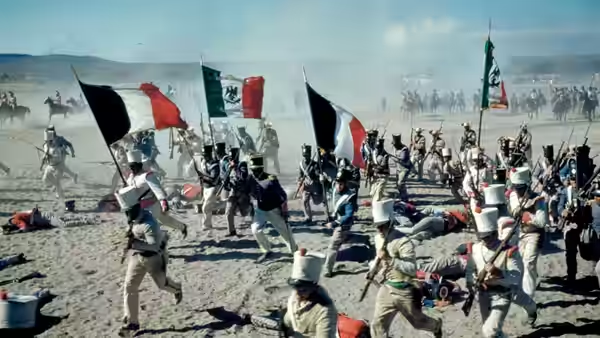
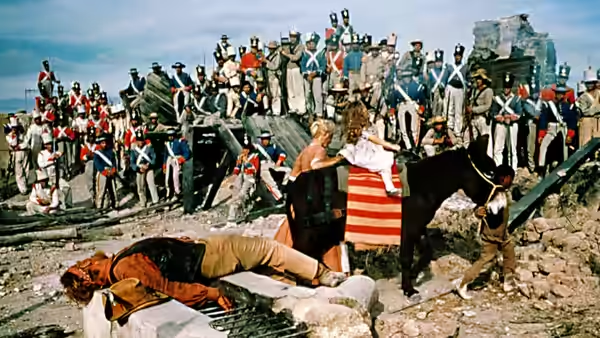
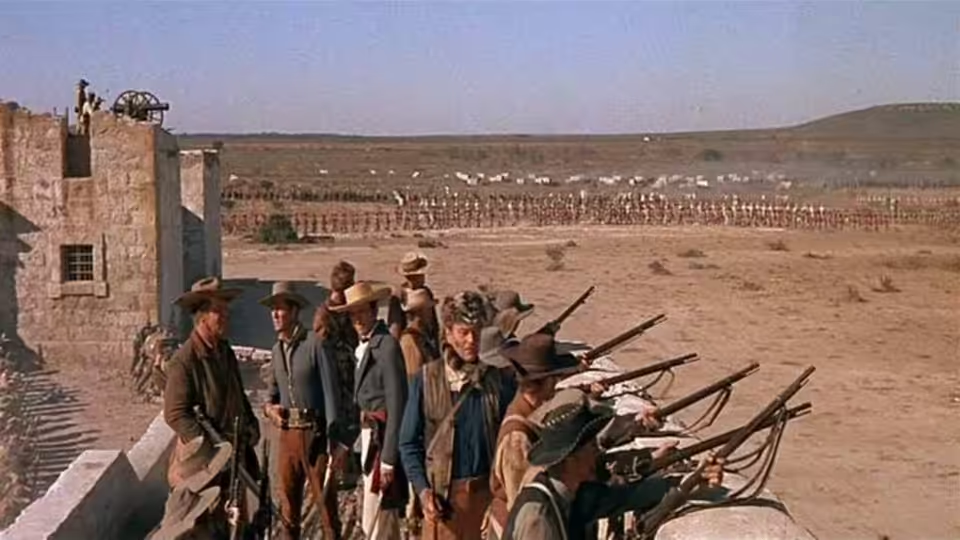
That eye belongs partly to William H. Clothier. He shoots the plaza wide and low, so that the mission’s broken walls sit against the sky like a row of teeth, and he holds the frame long enough for a rider to cross it at full gallop. When Santa Anna’s army arrives, columns in white and blue filing over the ridge and into the town while the garrison watches from the wall, we sat forward and stopped noticing the runtime. It is one wide shot after another, no cutting to faces, and it makes the odds visible in a way no speech manages. Ann Peck and Frank Beetson Jr. dress the two sides so you can read them at a distance: buckskin and homespun on the parapet, pressed uniforms below.

Dimitri Tiomkin’s score does most of the film’s feeling for it. The ballad the men sing on the night before the assault, “The Green Leaves of Summer”, is the one place the sentiment arrives quietly, and it moved us more than any of Crockett’s monologues. The rest of the time Tiomkin is asked to bring the brass in under a speech, and he obliges.

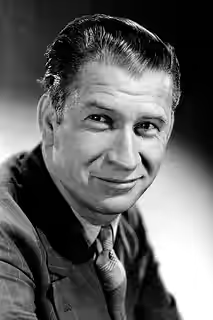
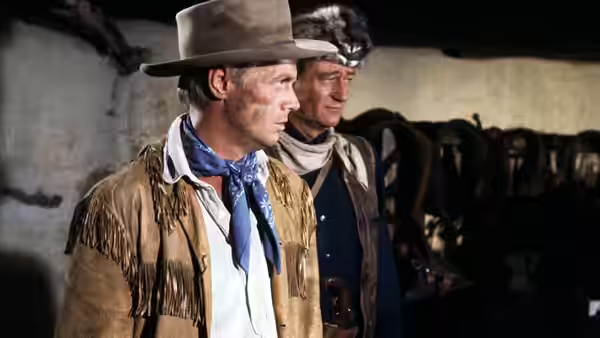
The cast is uneven in a revealing way. Laurence Harvey plays Travis as a stiff, vain, correct man who is right about nearly everything and unbearable about all of it, and he is the best thing in the film. Richard Widmark gives Bowie a drinker’s temper and is left with little to do once the arguing stops. Wayne plays Crockett as Wayne, large and easy and amused, which is pleasant for an hour. Then Grant hands him a speech about the word “republic” and how he likes the sound of it, then another, and we began to feel lectured by a man who had also hired the hall. Linda Cristal’s Flaca exists so that Crockett has someone to explain his principles to. Joseph Calleia’s Juan Seguin and Carlos Arruza’s Lieutenant Reyes are the few Mexican characters given any dignity, and they get a scene or two each.

Stuart Gilmore’s editing is where the trouble lives. Scenes do not end when their point is made; they end when the last man has finished talking. A cantina brawl, a courtship, a row about command, each runs a beat or three too long, and across 202 minutes those beats add up to about an hour we did not need. We were bored, honestly bored, through the middle stretch, and then irritated at being bored by a story we knew would end in the most dramatic way possible.

Wayne had spent two decades being directed by John Ford and you can see what he took: the wide horizon, the men in the doorway, the song by the fire. What he did not take was Ford’s impatience with his own sentiment. Ford would have cut Crockett off mid-sentence. Wayne lets him finish.

See it for the arrival of the army and for the assault, which Wayne stages with hundreds of extras and no cheating, and which we will not describe; every ticket-buyer in 1960 knew how it went anyway. Give the last hour your full attention and let the first two wash past with a cup of tea. That is not quite a recommendation. It is what we would do.
Critical consensus AI synthesised

38
Positive
2
Mixed
0
Negative
4
Radio Times
★★★★ · Andrew Collins
80

The critic calls it a powerful old-school epic made with passion by an obsessed John Wayne, despite sketchy facts. It oozes poignancy and high drama with humour, thanks to a strong cast.

Read the full review →
The New York Times
27 October 1960 · Bosley Crowther
30*

The film has vivid action scenes and visually overwhelming passages but burdens the viewer with excessive dialogue and dull talk scenes. Wayne's performance as Crockett feels more like a recreation of himself than a historical figure.

Read the full review →
Variety
31 December 1959 · ** · Variety Staff
30*

The picture has a good measure of mass appeal but loads the tale with happy homilies and patriotic platitudes that smack of theatricalism rather than realism. There is an absence of emotional feeling despite attempts to explore the characters, though the climactic battle sequence commands attention.

Read the full review →
Empire
1 January 2000 · Ian Nathan
20*

The critic calls the film a vanity project and expensive misfire, criticizing Wayne's direction as not natural and the film as flabby, dawdling and one-dimensional with a right-wing agenda. They note some visual splendour in the arrival of Santa Anna’s forces but conclude most will want to forget it.

Read the full review →
The New Yorker
29 October 1960 · Brendan Gill
10*

The version of the Alamo story is showy and false from start to finish, turning a splendid chapter of the past into sentimental and preposterous flapdoodle with a script full of distortion and vulgarization. Nothing in it is serious or true except the bare facts.

Read the full review →
Collider
20 September 2023 · Liam Gaughan
70*

The critic views the 1960 film as a successful blockbuster epic that turns a minor historical event into a rousing story of liberty and heroism, crediting Wayne's star power and direction. It singles out the film's entertainment value for praise while complaining about its historical inaccuracies and dated, problematic depictions of Mexican characters.

Read the full review →

Cast

Awards

Academy Awards, 1961

Nominated
Best Cinematography, Color
Nominated
Best Film Editing
Nominated
Best Original Dramatic or Comedy Score
Nominated
Best Picture
Nominated
Best Supporting Actor
Won
Best Sound

If you liked this, try…

Rio Bravo poster

Rio Bravo

1959 · Wayne holding a smaller fort for Howard Hawks, with the talk kept short and funny

Zulu poster

Zulu

1964 · A British last stand that lets the arriving army do the talking

Seven Samurai poster95

Seven Samurai

1954 · Kurosawa’s village defence, where every speech earns its place before the rain comes

The Alamo poster50

The Alamo

2004 · The same thirteen days told with more history and less Wayne; instructive to compare

The Charge of the Light Brigade poster

The Charge of the Light Brigade

1968 · Tony Richardson’s sceptical answer to the glorious-doom picture, all vanity and bad orders