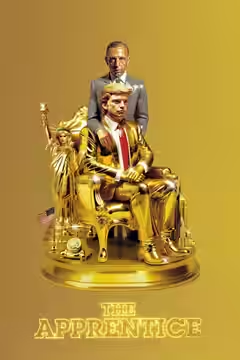
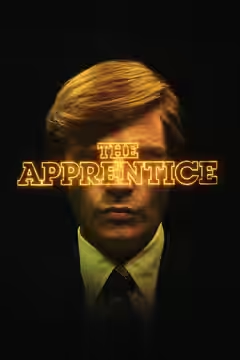
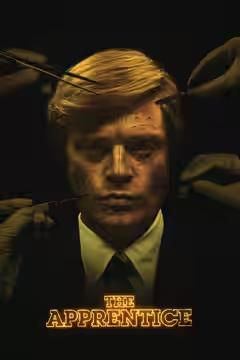
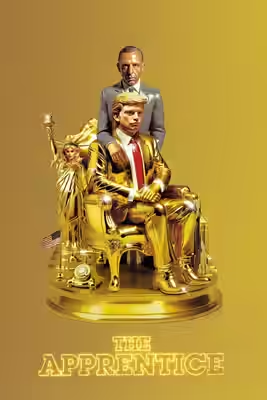
Ali Abbasi’s account of young Donald Trump under the wing of Roy Cohn is well made and, for an hour, properly gripping, with a remarkable Jeremy Strong. Then the lessons are learnt and the film has nowhere to go but the record.
Ali Abbasi, whose Border (2018) and Holy Spider (2022) kept close company with people most films would avoid, has made a film about how Donald Trump was assembled. Gabriel Sherman’s script covers roughly a decade, from a 1970s New York in which a young Donald chases rents on his father’s buildings to the brass and marble of the 1980s. The shape is a seduction. Roy Cohn finds a soft, needy young man and remakes him in his own image, and for as long as that is what the film is about, it is a good film. The tagline calls it an American horror story. For an hour it is closer to a lesson, and the lesson is the best of it.
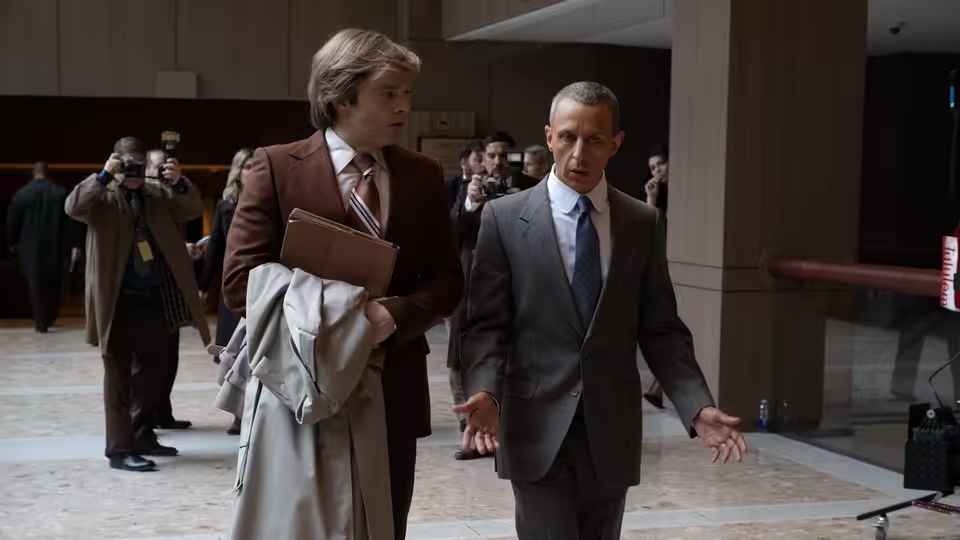
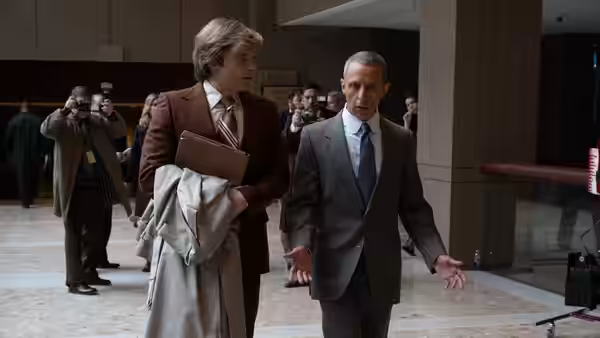
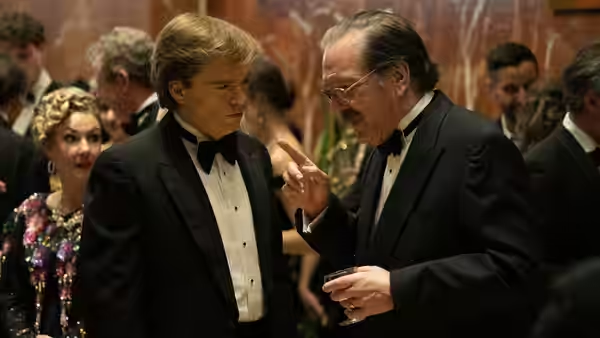
Jeremy Strong plays Cohn with lidded eyes, a flat quiet voice and the stillness of a man who decided long ago never to be seen wanting anything. Across a table at a members’ club he lays down his three rules for winning: attack, attack, attack; admit nothing and deny everything; claim victory and never admit defeat. Strong delivers them like table manners. We laughed at him a good deal and then felt uneasy about it, because the film had put us where Donald sits, enjoying a monster’s company because he is the most interesting person present. Every scene Strong is in has a charge the rest of the film cannot find without him.
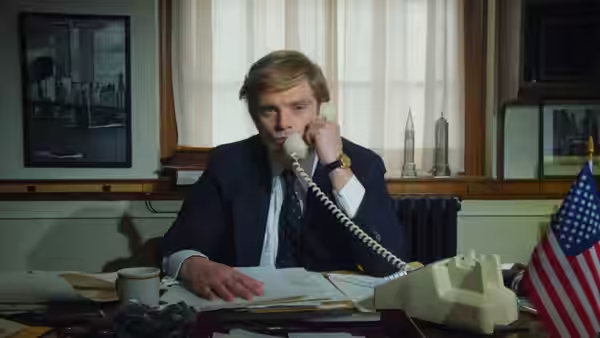
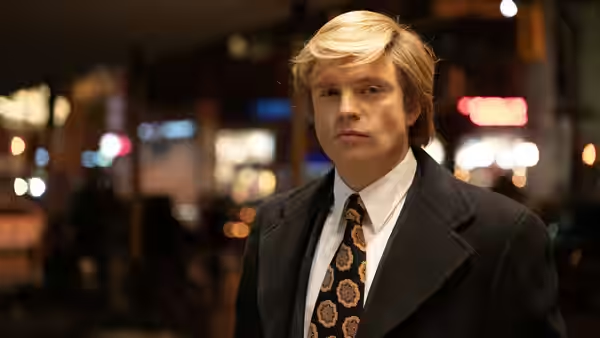
Sebastian Stan resists doing the voice for as long as he can. His early Donald is watchful and a little embarrassed, a boy who wants his father’s approval and knows he will not get it, and Stan plays the wanting rather than the mannerisms. Martin Donovan’s Fred Trump gives him nothing but a hard stare and a lecture, which makes the Cohn scenes feel like a son finding a second father who says yes. Then the pout arrives, and the hands, and by the second half Stan is doing the man from television. He does it well. It is still an impersonation, and once it lands the character stops being someone we are finding out about.
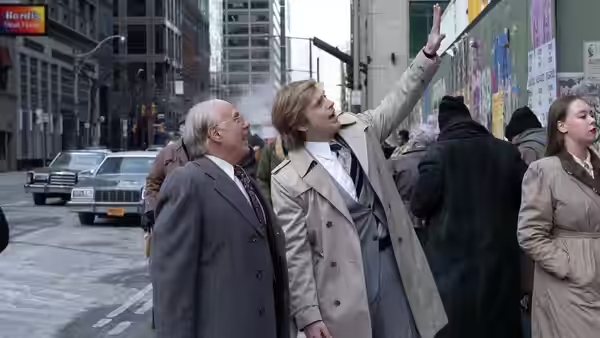
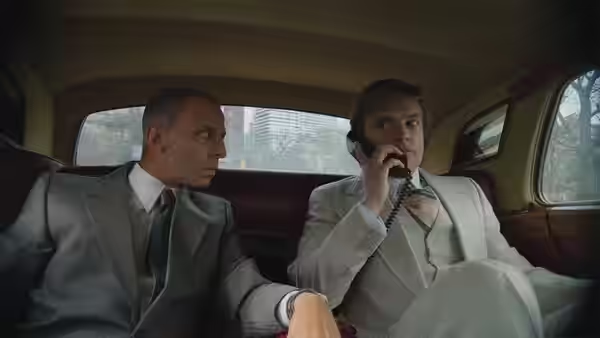
Kasper Tuxen shoots the 1970s in coarse grain and dirty yellow light, a city of steam and litter. When the decade turns he switches to the smeared, over-bright look of period videotape, colours bleeding at the edges and the frame jittering as if the tape were worn. It is the film’s clearest idea, that the man becomes a television picture. Aleksandra Marinkovich takes the rooms from Fred’s brown offices to mirrored lifts and gold fittings. The score, credited to Martin Dirkov, David Holmes and Brian Irvine, sits low and menacing under the first half and then largely gives way to the records of the period. The editors Olivia Neergaard-Holm and Olivier Bugge Coutté cut the early scenes with patience and the later ones as a sequence of stops.
That is the trouble. Once Donald has learnt his rules, Sherman’s script runs through the record, the tower and the marriage and the casinos and Cohn’s own troubles, and each item gets a scene and none gets a development. A film that had been curious about how a person is made becomes a film that knows what he became and is checking how he got there. There is a scene with Ivana in the second half that we will not describe. It is the most serious thing in the film, and it is played so flatly and left behind so fast that we sat through it cold and then were angry at feeling nothing, which we do not think was the intention. Maria Bakalova, in the scenes she is given, makes Ivana the one person who sees Donald clearly and stays anyway, and the film keeps losing sight of her.
Holy Spider was frightening because Abbasi stayed with his killer past the point of comfort and let us watch him be ordinary. Here he cuts away at the moments that count. The question anyone bringing this subject to a screen has to answer is what we will learn that we did not already know, and the honest answer is Roy Cohn. Most of what the film has to say about Donald Trump has been said on the news, and saying it again with better lighting does not make it new.
See it for Strong, and see it at home, where the second half’s shortcuts are easier to forgive and the first half’s pleasures survive intact. It carries a 15 certificate and runs 122 minutes, which is a good hour longer than the lesson takes.