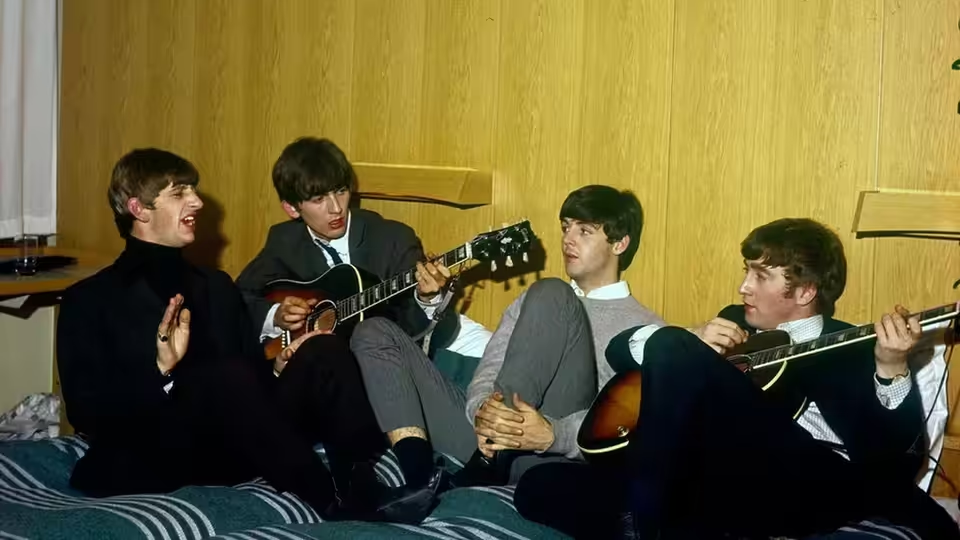
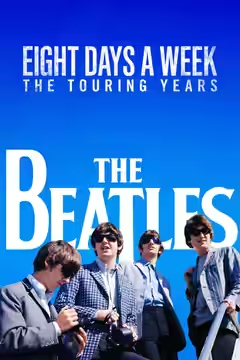
Ron Howard’s account of the Beatles on the road is familiar in shape and tidy in temperament, and none of that matters once the restored concert footage starts. See it for the performances; forgive the celebrities who keep interrupting them.
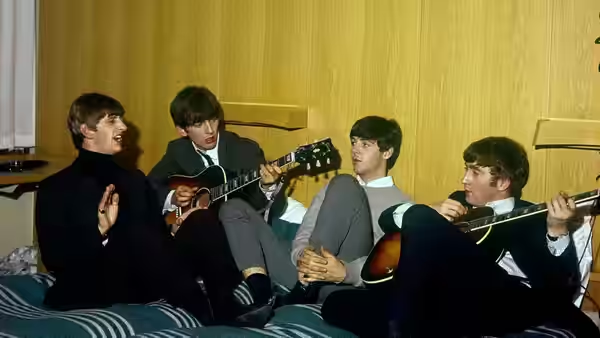
Ron Howard’s film covers four years: from the Cavern Club in Liverpool to the night in August 1966 when the Beatles played Candlestick Park in San Francisco and never toured again. P.G. Morgan and Mark Monroe have written it as a straight chronology, with Paul McCartney and Ringo Starr talking now, John Lennon and George Harrison talking then, and a great deal of concert footage that has been restored so that, for once, you can hear the band under the screaming. The story will be familiar to anyone who owns a Beatles book. The footage is not, and it carries the film.
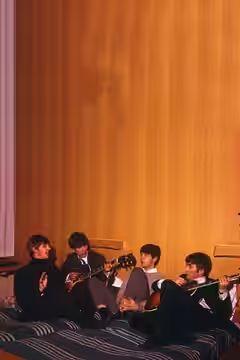
It is the stretches without commentary that work best. Early on there is a 1963 show in a British cinema, the band playing to a hall rather than a stadium and grinning at one another between lines, and we grinned back. We had not expected to. We have heard these songs in supermarkets for forty years, and the sight of four people playing them as if the ink were still wet got past us anyway. The cleaned-up sound is the reason: Starr’s drumming, which was always buried, comes through as the thing holding the whole racket together, and you can hear how tight they were on nights when they could not hear themselves.
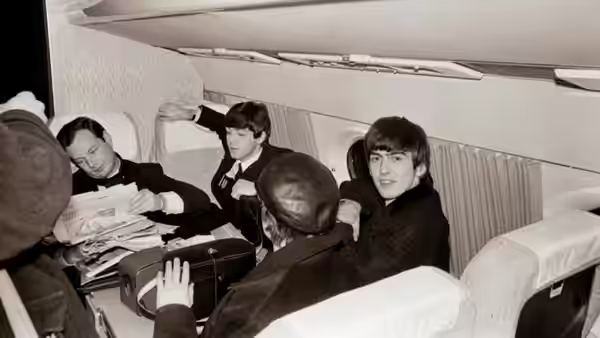
The interviews are a mixed bag, and the mix is predictable. Larry Kane, the American radio reporter who travelled with the band on their 1964 tour, is worth every second he gets, because he was in the plane and the hotel rooms and he describes them like a reporter rather than a fan. Kitty Oliver, who went to see them at the Gator Bowl in Jacksonville in September 1964 after the band refused to play to a segregated crowd, gives the film its one properly serious passage, and Howard is wise enough to let her finish. Howard Goodall sits at a piano and shows what the chords are doing. Those three justify the format.
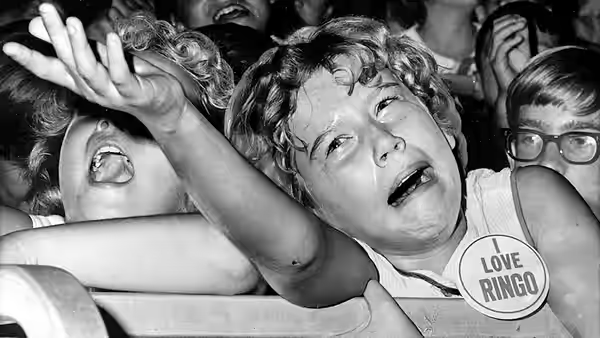
Then there are the famous people. Whoopi Goldberg remembers being taken to Shea Stadium as a girl. Sigourney Weaver is picked out in the crowd at the Hollywood Bowl in 1964, which is a nice trick with the archive. Elvis Costello and Suzy Eddie Izzard say warm and reasonable things about the music and the press conferences. None of them is wrong and none of them is needed, and somewhere past the hour mark we noticed we had started to resent every cut from the stage to a celebrity remembering being young.
Caleb Deschanel, Tim Suhrstedt and Jessica Young shoot the new material plainly: McCartney and Starr in soft light against dark backgrounds, with nothing in the frame to compete with what they are saying. That is the right call. The visual interest is all in the archive, which mixes newsreel, television, press conferences and shaky colour film shot by fans from the stands, and the film moves between them briskly enough that the dullest stretch is never long.
What it will not do is let the band be unhappy for more than a shot. The wives are nowhere. The drugs are a passing joke. The bad year, 1966, with the manhandling at Manila airport and the record burnings in the American South after Lennon’s remark about Jesus, is covered in a few minutes, and the decision to stop touring arrives as a tidy conclusion rather than the exhaustion it plainly was. Harrison’s face in the later footage tells a bleaker story than the narration does. The film sees it and keeps walking.
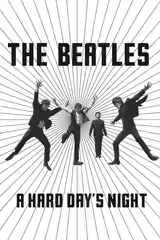
Richard Lester appears here as an interviewee, and his A Hard Day’s Night (1964) remains the better record of what Beatlemania felt like, because it was made inside the thing while it was happening. Howard’s film is the view from fifty years off, affectionate and orderly and reluctant to pry. That is a limitation, and it is also why the 106 minutes go down so easily.
Watch it with someone who thinks the Beatles were a boy band; the Shea Stadium sequence will settle the argument inside two minutes. Watch it loud, which is not advice we often get to give. It carries a 12A, and there is nothing in it a child could not see, which is rather the point.