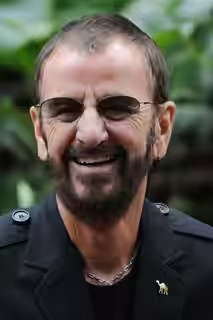
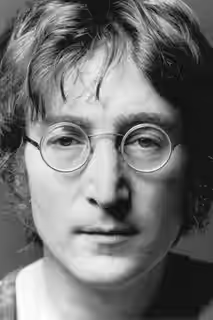
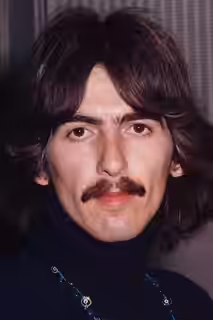
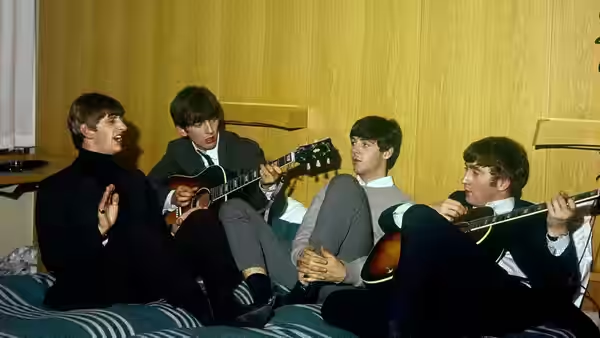
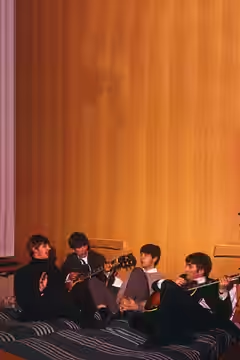
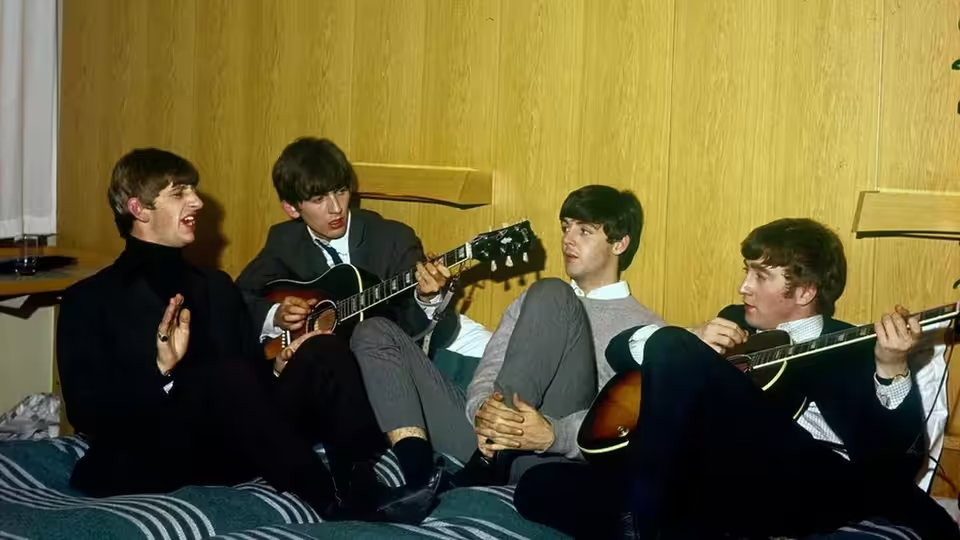
The Beatles sit together in a room, two holding guitars as another gestures
Film review

The Beatles: Eight Days a Week - The Touring Years

2016 · Directed by Ron Howard · 1h 46m

In a sentenceThree years of screaming, four matching suits, and for once you can hear the drums

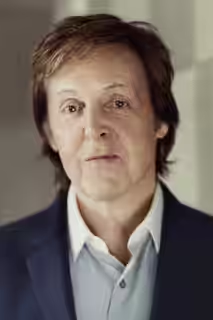
Liverpool, 1963. Four young men from the Cavern Club, Paul McCartney, John Lennon, George Harrison and Ringo Starr, have a run of hit singles and a country screaming at them. Ron Howard’s documentary follows them out of Britain and onto the road: The Ed Sullivan Show in February 1964, the first American tour, the hotel rooms, the press conferences and the nights when nobody on stage can hear a note they are playing. McCartney and Starr talk now; Lennon and Harrison are heard in archive interviews. The journalist Larry Kane, who travelled with the band in 1964, and the fan Kitty Oliver, who saw them in Jacksonville, describe what it was like from the ground. The film runs to August 1966, when the touring stops.

Plays from YouTube when you press play; nothing loads from them until then.

Fi1m review

Ron Howard’s account of the Beatles on the road is familiar in shape and tidy in temperament, and none of that matters once the restored concert footage starts. See it for the performances; forgive the celebrities who keep interrupting them.

Ron Howard’s film covers four years: from the Cavern Club in Liverpool to the night in August 1966 when the Beatles played Candlestick Park in San Francisco and never toured again. P.G. Morgan and Mark Monroe have written it as a straight chronology, with Paul McCartney and Ringo Starr talking now, John Lennon and George Harrison talking then, and a great deal of concert footage that has been restored so that, for once, you can hear the band under the screaming. The story will be familiar to anyone who owns a Beatles book. The footage is not, and it carries the film.

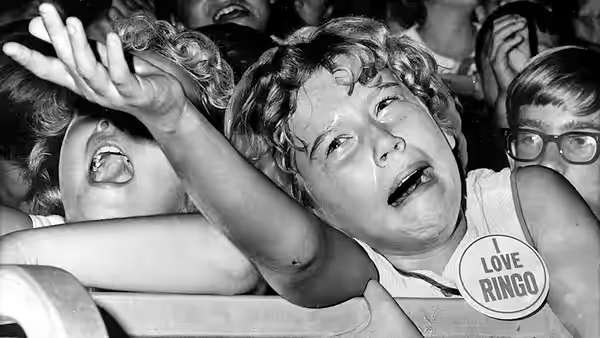
It is the stretches without commentary that work best. Early on there is a 1963 show in a British cinema, the band playing to a hall rather than a stadium and grinning at one another between lines, and we grinned back. We had not expected to. We have heard these songs in supermarkets for forty years, and the sight of four people playing them as if the ink were still wet got past us anyway. The cleaned-up sound is the reason: Starr’s drumming, which was always buried, comes through as the thing holding the whole racket together, and you can hear how tight they were on nights when they could not hear themselves.

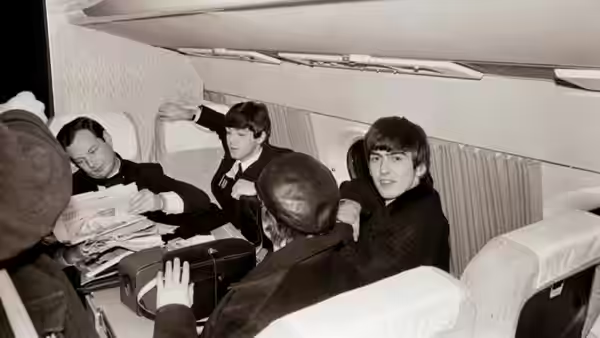
The interviews are a mixed bag, and the mix is predictable. Larry Kane, the American radio reporter who travelled with the band on their 1964 tour, is worth every second he gets, because he was in the plane and the hotel rooms and he describes them like a reporter rather than a fan. Kitty Oliver, who went to see them at the Gator Bowl in Jacksonville in September 1964 after the band refused to play to a segregated crowd, gives the film its one properly serious passage, and Howard is wise enough to let her finish. Howard Goodall sits at a piano and shows what the chords are doing. Those three justify the format.

Then there are the famous people. Whoopi Goldberg remembers being taken to Shea Stadium as a girl. Sigourney Weaver is picked out in the crowd at the Hollywood Bowl in 1964, which is a nice trick with the archive. Elvis Costello and Suzy Eddie Izzard say warm and reasonable things about the music and the press conferences. None of them is wrong and none of them is needed, and somewhere past the hour mark we noticed we had started to resent every cut from the stage to a celebrity remembering being young.

Caleb Deschanel, Tim Suhrstedt and Jessica Young shoot the new material plainly: McCartney and Starr in soft light against dark backgrounds, with nothing in the frame to compete with what they are saying. That is the right call. The visual interest is all in the archive, which mixes newsreel, television, press conferences and shaky colour film shot by fans from the stands, and the film moves between them briskly enough that the dullest stretch is never long.

What it will not do is let the band be unhappy for more than a shot. The wives are nowhere. The drugs are a passing joke. The bad year, 1966, with the manhandling at Manila airport and the record burnings in the American South after Lennon’s remark about Jesus, is covered in a few minutes, and the decision to stop touring arrives as a tidy conclusion rather than the exhaustion it plainly was. Harrison’s face in the later footage tells a bleaker story than the narration does. The film sees it and keeps walking.

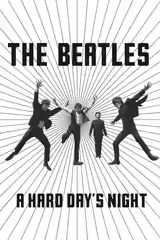
Richard Lester appears here as an interviewee, and his A Hard Day’s Night (1964) remains the better record of what Beatlemania felt like, because it was made inside the thing while it was happening. Howard’s film is the view from fifty years off, affectionate and orderly and reluctant to pry. That is a limitation, and it is also why the 106 minutes go down so easily.

Watch it with someone who thinks the Beatles were a boy band; the Shea Stadium sequence will settle the argument inside two minutes. Watch it loud, which is not advice we often get to give. It carries a 12A, and there is nothing in it a child could not see, which is rather the point.
Critical consensus AI synthesised

72
Positive
11
Mixed
4
Negative
1

Most critics are warmly disposed to Ron Howard’s documentary, and the praise lands on the archive. The restored concert footage is the recurring pleasure, with several reviews also singling out fan-shot film and underused newsreel for freshening a story already well known. Reviewers like the picture of the band as young, irreverent and close, and a few pick out the account of their refusal to play to segregated audiences as the film’s best passage.

The reservations cluster around familiarity. Many say the story is told more fully elsewhere and that longtime fans will find few revelations. The Guardian faults its neglect of the band’s wives and home lives; Variety thinks it steers around conflict and tragedy; Paste finds the ending rushes through pivotal years; the Los Angeles Times is cool on the self-satisfied interviews. The spread is narrow, most reviews sitting in the good-not-great range, with Empire the lone dissenter, calling it a second-tier account without a proper narrative or natural end.

RogerEbert.com
15 September 2016 · ★★★½/4 · Matt Zoller Seitz
88

Seitz gives the documentary a positive assessment, appreciating its lively account of the Beatles’ touring years. He singles out the wealth of archival performance footage as a particular strength.

Read the full review →
Little White Lies
7 September 2016 · 3/4/4 · Ed Gibbs
80

Gibbs finds the film a fresh, thoughtful and emotionally engaging look at the Beatles’ touring years. He praises Howard’s effective use of rare archival footage and candid audio to illuminate the band’s camaraderie and creative speed.

Read the full review →
Radio Times
★★★★ · Jamie Healy
80

Healy finds the documentary suitably entertaining, though its story has been covered more comprehensively elsewhere. He praises unseen fan-shot footage and underused newsreel for bringing freshness to familiar material.

Read the full review →
Time Out
12 September 2016 · ★★★★ · Dave Calhoun
80

The review is positive about Ron Howard’s documentary. It praises how the film captures the Beatles’ youth and irreverence on the road.

Read the full review →
The AV Club
15 September 2016 · B · Alex McLevy
77

McLevy finds the documentary familiar but buoyant, praising its lively, crowd-pleasing portrayal of Beatlemania. He singles out the rare concert footage and its deft interweaving with interviews as a particular pleasure.

Read the full review →
The Guardian
15 September 2016 · B · Peter Bradshaw
77

Bradshaw finds the documentary intensely enjoyable and convincing in its case that there is still something new to say about the Beatles. He praises its archive material and portrayal of the band’s live phenomenon, while faulting its neglect of their wives and domestic lives.

Read the full review →

Straight answers AI written, from our review

Is The Beatles: Eight Days a Week - The Touring Years worth watching?
The Beatles: Eight Days a Week - The Touring Years is worth watching for the restored concert footage, and we scored it 71. The story is familiar and the celebrity interviews are padding, but once the band is on stage and you can hear Starr's drums under the screaming, none of that matters much. Watch it loud.
How long is The Beatles: Eight Days a Week - The Touring Years, and what is it rated?
The Beatles: Eight Days a Week - The Touring Years runs 1h 46m. It is a documentary and music film.
Where can I watch The Beatles: Eight Days a Week - The Touring Years in Malaysia?
The Beatles: Eight Days a Week - The Touring Years is not on any streaming or rental service in Malaysia at the moment. It is available in 25 other countries; change your country at the top of the page to see where. Availability is checked daily.
How violent or frightening is The Beatles: Eight Days a Week - The Touring Years, and is it suitable for children?
The Beatles: Eight Days a Week - The Touring Years contains nothing violent or frightening, and it carries a UK 12A certificate. It is a music documentary built from concert footage, newsreel and interviews, with drugs mentioned only as a passing joke. A child could watch all of it, and one who thinks the Beatles were a boy band probably should.
What should I watch after The Beatles: Eight Days a Week - The Touring Years?
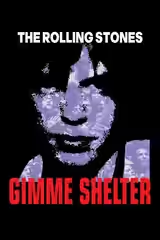
After The Beatles: Eight Days a Week - The Touring Years, try A Hard Day's Night (1964, Fi1m 86): Lester shot the mania from inside while it was happening; this is the primary source. Then Gimme Shelter (1970, Fi1m 78): The Maysles brothers at Altamont; the decade’s good mood ending on camera.

Cast

If you liked this, try…

  1. A Hard Day's Night (1964, Fi1m 86)Lester shot the mania from inside while it was happening; this is the primary source.

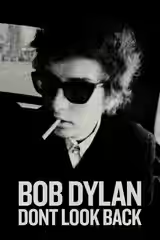
  2. Dont Look Back (1967) · not reviewed yetPennebaker follows Dylan round England in 1965 and nobody is allowed to be charming.

  3. Gimme Shelter (1970, Fi1m 78)The Maysles brothers at Altamont; the decade’s good mood ending on camera.

  4. Amazing Grace (2018) · not reviewed yetAretha Franklin in a Los Angeles church in 1972, with nothing but the singing.

  5. The Beatles: Get Back (2021) · not reviewed yetJackson’s long sit in the studio; the four of them, after the touring stopped.