Howard Hawks’s Western is good, unhurried company, with a romance that gives its dangers weight. Kirk Douglas can seem too urban for the setting, and the leisurely telling needs a firmer cut.
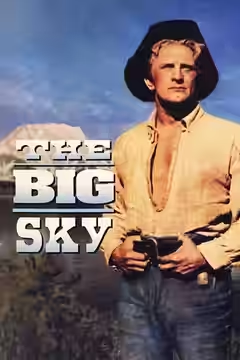
The Big Sky is an enjoyable Western adventure that takes longer than it needs to, with enough feeling for its battered travellers to make the journey worthwhile. Howard Hawks gives conflict and romance room to develop, and the resulting film remains agreeable company through some unnecessarily slow stretches. The attraction is spending time with people whose physical troubles have personal consequences. At 133 minutes, though, it asks us to be more patient than the material always deserves.
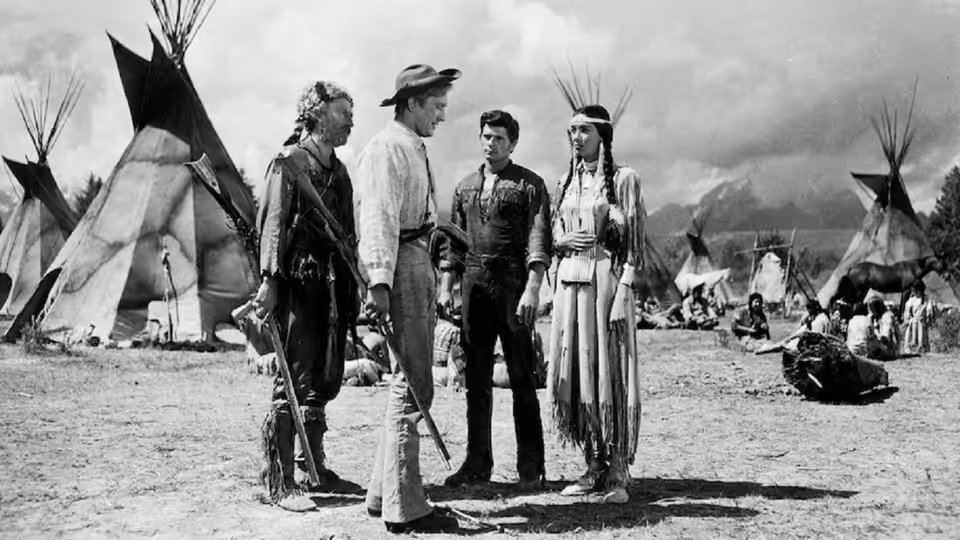
Kirk Douglas, playing Jim Deakins, provides much of the energy and some of the friction. There is an urban sharpness to his presence that can seem at odds with the Western setting, as though he is slightly too conscious of the impression he makes. Yet that intensity gives the physical trouble Jim encounters a useful edge: his confidence offers little protection against getting hurt. We winced at the injuries he collects, because the damage makes the adventure feel costly even with such a forceful leading man.
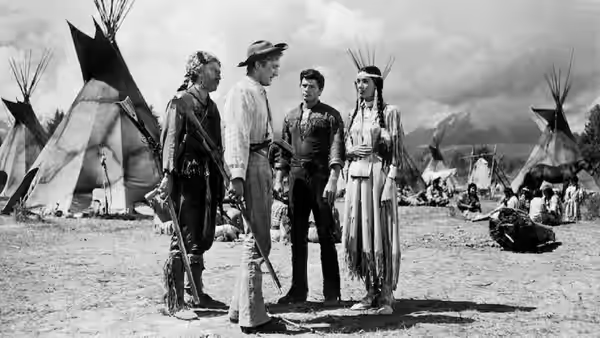
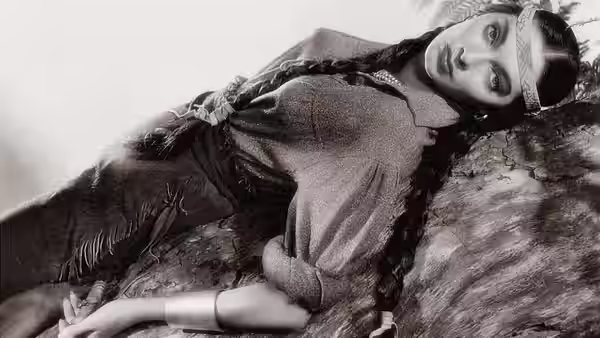
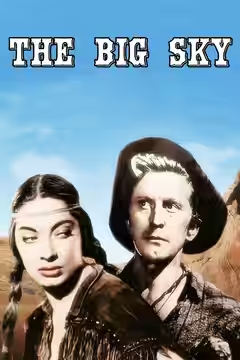
The romance matters because it gives those injuries a consequence beyond the next bout of danger. Dewey Martin’s Boone Caudill and Elizabeth Threatt’s Teal Eye belong to a story whose personal complications can hold our attention without another burst of action. Dudley Nichols’s screenplay, adapted from the novel by A.B. Guthrie Jr., is strongest when the adventurous and romantic strands affect one another. It is less persuasive when the sheer size of the undertaking is expected to keep us interested.
Russell Harlan’s cinematography makes the outdoor scale persuasive. The surroundings deserve the attention they receive, and the images give us a reason to accept the film’s leisurely pace for a while. There is pleasure in a Western that allows time for looking, rather than treating every view as a brief pause before somebody does something urgent. The difficulty comes when the people cease to be as interesting as the country around them, and Hawks does not always move things along quickly enough.
Christian Nyby’s editing is where that indulgence becomes harder to excuse. Some stretches need tightening, because the film has already secured our interest and then spends too long without giving us a fresh reason to sustain it. Dimitri Tiomkin’s music lends the undertaking weight, although that emphasis becomes less helpful when the drama itself needs to advance. The running time would be easier to defend if more of these slower passages strengthened our attachment to the company.
As a Western, this is more interested in romance than its emphasis on physical hardship might suggest, which gives it an appeal beyond the hazards of the journey. Hawks lets a man’s hurt count for something, and that helps keep us involved when the pace slackens. Some supporting performances lack the force needed to justify such an expansive telling, while Douglas’s intensity occasionally seems better suited to a tighter film. Choose it for an evening of unhurried adventure, with some patience reserved for the detours.