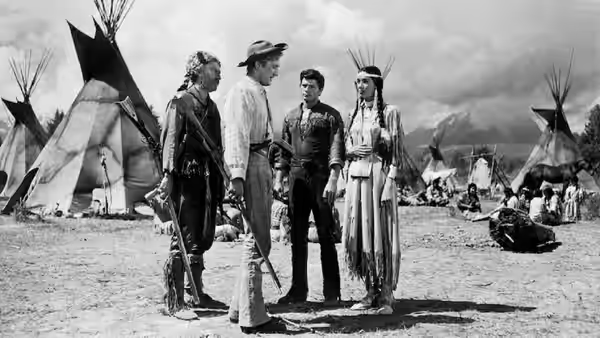
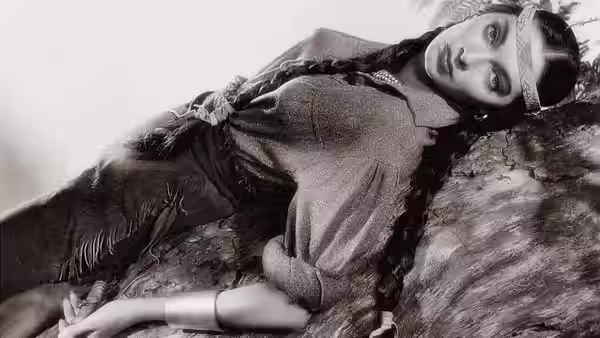
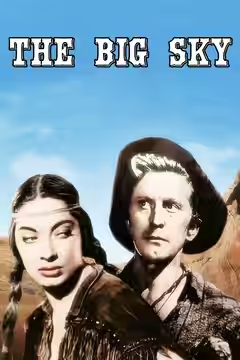
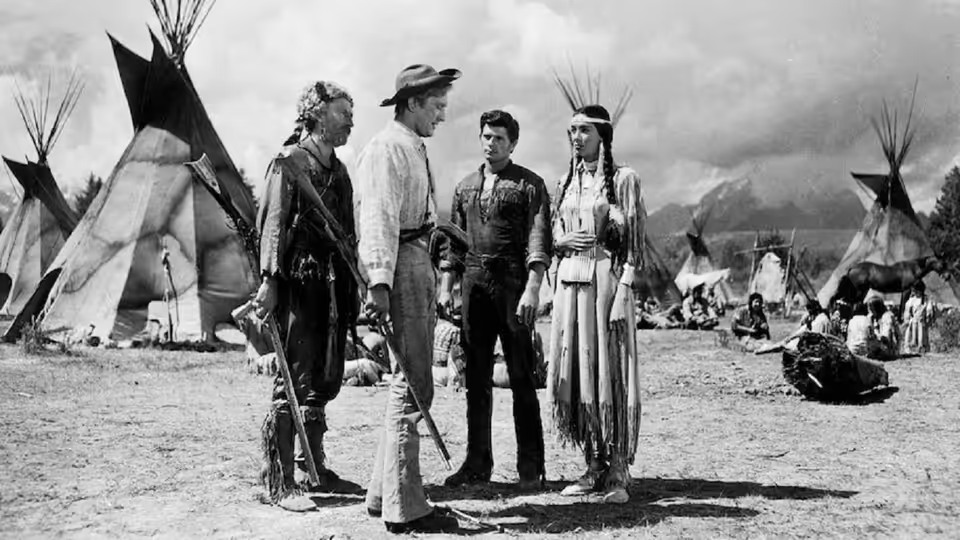
A frontier party stands among tipis at a Native encampment
Film review

The Big Sky

1952 · Directed by Howard Hawks · 2h 13m

In a sentenceKirk Douglas gets knocked about while the scenery is given all the time it needs

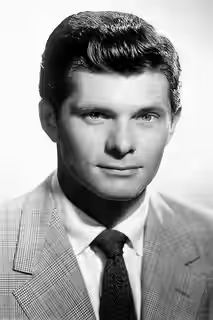
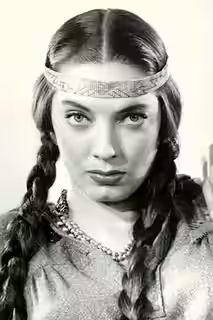
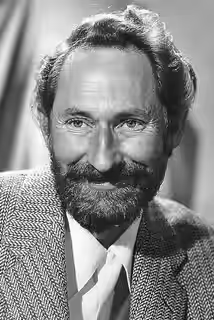
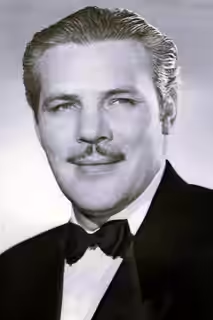
Jim Deakins (Kirk Douglas), Boone Caudill (Dewey Martin) and Teal Eye (Elizabeth Threatt) are at the centre of a Western journey in which adventure and romance become entangled. The company also includes Zeb Calloway (Arthur Hunnicutt), Romaine (Buddy Baer) and “Frenchy” Jourdonnais (Steven Geray). Conflict brings physical danger, while romantic complications give the journey a personal cost. Jim’s injuries make that cost visible. Howard Hawks directs from Dudley Nichols’s screenplay, based on the novel by A.B. Guthrie Jr.

Plays from YouTube when you press play; nothing loads from them until then.

Fi1m review

Howard Hawks’s Western is good, unhurried company, with a romance that gives its dangers weight. Kirk Douglas can seem too urban for the setting, and the leisurely telling needs a firmer cut.

The Big Sky is an enjoyable Western adventure that takes longer than it needs to, with enough feeling for its battered travellers to make the journey worthwhile. Howard Hawks gives conflict and romance room to develop, and the resulting film remains agreeable company through some unnecessarily slow stretches. The attraction is spending time with people whose physical troubles have personal consequences. At 133 minutes, though, it asks us to be more patient than the material always deserves.

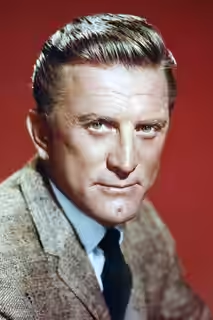
Kirk Douglas, playing Jim Deakins, provides much of the energy and some of the friction. There is an urban sharpness to his presence that can seem at odds with the Western setting, as though he is slightly too conscious of the impression he makes. Yet that intensity gives the physical trouble Jim encounters a useful edge: his confidence offers little protection against getting hurt. We winced at the injuries he collects, because the damage makes the adventure feel costly even with such a forceful leading man.

The romance matters because it gives those injuries a consequence beyond the next bout of danger. Dewey Martin’s Boone Caudill and Elizabeth Threatt’s Teal Eye belong to a story whose personal complications can hold our attention without another burst of action. Dudley Nichols’s screenplay, adapted from the novel by A.B. Guthrie Jr., is strongest when the adventurous and romantic strands affect one another. It is less persuasive when the sheer size of the undertaking is expected to keep us interested.

Russell Harlan’s cinematography makes the outdoor scale persuasive. The surroundings deserve the attention they receive, and the images give us a reason to accept the film’s leisurely pace for a while. There is pleasure in a Western that allows time for looking, rather than treating every view as a brief pause before somebody does something urgent. The difficulty comes when the people cease to be as interesting as the country around them, and Hawks does not always move things along quickly enough.

Christian Nyby’s editing is where that indulgence becomes harder to excuse. Some stretches need tightening, because the film has already secured our interest and then spends too long without giving us a fresh reason to sustain it. Dimitri Tiomkin’s music lends the undertaking weight, although that emphasis becomes less helpful when the drama itself needs to advance. The running time would be easier to defend if more of these slower passages strengthened our attachment to the company.

As a Western, this is more interested in romance than its emphasis on physical hardship might suggest, which gives it an appeal beyond the hazards of the journey. Hawks lets a man’s hurt count for something, and that helps keep us involved when the pace slackens. Some supporting performances lack the force needed to justify such an expansive telling, while Douglas’s intensity occasionally seems better suited to a tighter film. Choose it for an evening of unhurried adventure, with some patience reserved for the detours.
Critical consensus AI synthesised

68
Positive
3
Mixed
1
Negative
0
Radio Times
★★★★ · Tony Sloman
80

Sloman regards the film as an eventful epic western, praising Howard Hawks’s direction. He notes that Kirk Douglas seems too urbane and intense for the role, and that several supporting performances fall short.

Read the full review →
Time Out
· GA
75*

The review calls the film an evergreen delight, while noting it falls short of Hawks’s best Westerns. It praises the film’s enduring appeal, though the available text does not reveal further specifics.

Read the full review →
The New Yorker
70*

The capsule presents the film as a compelling adventure in which conflict and romance intertwine. It singles out Jim’s accumulating injuries as symbols of the journey’s physical and romantic costs.

Read the full review →
Variety
31 December 1951 · Variety Staff
45*

The review sees the film as an ambitious outdoor epic whose impact is weakened by its excessive running time. It praises the scale of Hawks’s filming, while faulting the lack of editing restraint.

Read the full review →

Straight answers AI written, from our review

Is The Big Sky worth watching?
The Big Sky is worth watching for its unhurried Western adventure and consequential romance; we score it 73. The scenery rewards the time spent looking, and Jim’s injuries give the dangers weight, but the slow stretches need tightening and Kirk Douglas sometimes seems too urban for the setting.
How long is The Big Sky, and what is it rated?
The Big Sky runs 2h 13m. It is an adventure and western film.
Where can I watch The Big Sky in Australia?
The Big Sky is available to buy from Amazon Prime Video from A$14.99. Availability is checked daily; the links above go straight to each service.
How does The Big Sky compare to Red River?
The Big Sky is the more leisurely, romance-minded choice beside Red River, which we recommend as the stronger Western for its tense cattle drive and sharper performances. Both make the travellers’ personal troubles matter as much as the journey, but The Big Sky asks for more patience with its scenery and detours.
Is The Big Sky based on a true story or a book?
The Big Sky is adapted from a novel by A.B. Guthrie Jr., with a screenplay by Dudley Nichols. We find the writing strongest where adventure and romance affect one another; our review does not assess fidelity to the book, but the film’s appeal does not depend on knowing it.
What should I watch after The Big Sky?
After The Big Sky, try Red River (1948, Fi1m 88): Another hard journey where the men’s quarrels matter as much as the miles. Then The African Queen (1951, Fi1m 84): For romance that develops through shared discomfort and the effort of travelling together; and Meek's Cutoff (2010, Fi1m 82): A harsher expedition, attentive to exhaustion, uncertainty and the work of keeping going.

Cast

Awards

Academy Awards, 1953

Nominated
Best Cinematography, Black-and-White
Nominated
Best Supporting Actor

If you liked this, try…

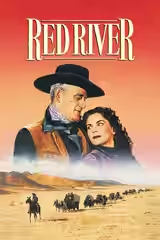
  1. Red River (1948, Fi1m 88)Another hard journey where the men’s quarrels matter as much as the miles.

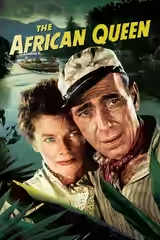
  2. The African Queen (1951, Fi1m 84)For romance that develops through shared discomfort and the effort of travelling together.

  3. Dersu Uzala (1975) · not on Fi1m yetPatient outdoor adventure, with friendship made convincing through the practical business of survival.

  4. Meek's Cutoff (2010, Fi1m 82)A harsher expedition, attentive to exhaustion, uncertainty and the work of keeping going.

  5. Theeb (2014) · not on Fi1m yetA younger traveller faces desert dangers in an adventure with fewer comforts.

The Big Sky (1952) review: good company on a slow journey (Australia) | Fi1m