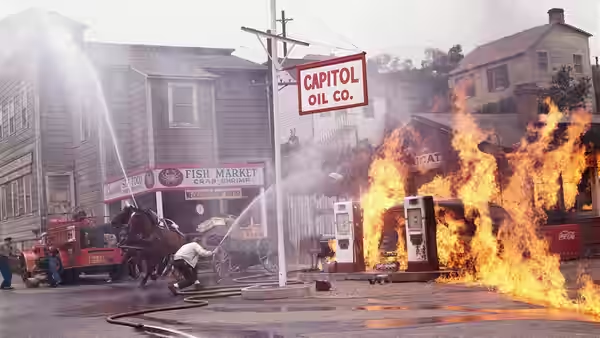
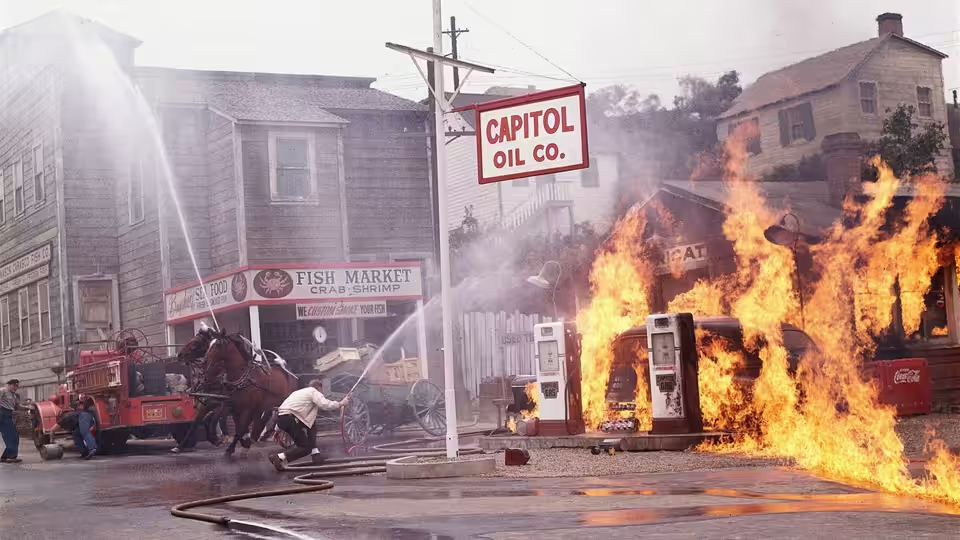
Flames engulf a roadside building beside the Capitol Oil sign and a parked truck
Film review

The Birds

1963 · Directed by Alfred Hitchcock · 1h 59m

In a sentenceTippi Hedren buys two lovebirds and the whole of Bodega Bay holds her personally responsible

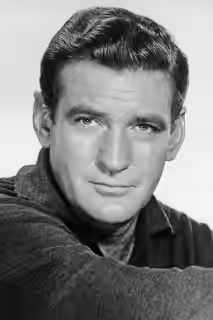
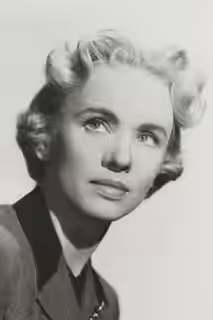
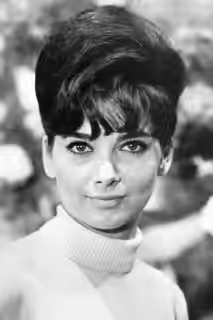
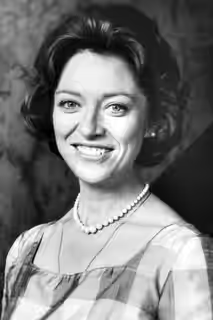
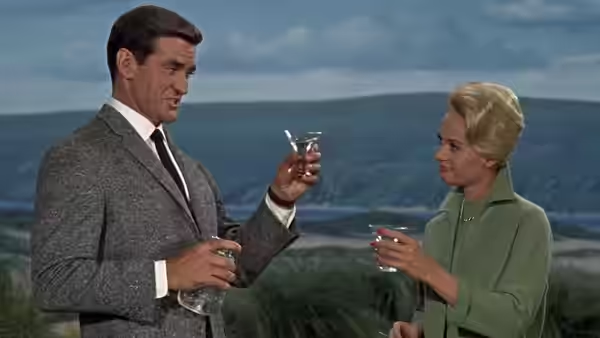
Melanie Daniels (Tippi Hedren), a San Francisco heiress known for practical jokes, is in a pet shop when the lawyer Mitch Brenner (Rod Taylor) walks in, pretends to take her for the assistant and asks for a pair of lovebirds for his sister. Stung, she buys the lovebirds herself, drives up the coast to Bodega Bay, hires a boat and leaves the cage in the Brenner farmhouse as a joke. On the way back a gull strikes her on the head. She takes a room for the night with the schoolteacher Annie Hayworth (Suzanne Pleshette), Mitch’s old flame, and goes to dinner with him, his mother Lydia (Jessica Tandy) and his sister Cathy (Veronica Cartwright). That night a gull flies into Annie’s front door and kills itself.

Plays from YouTube when you press play; nothing loads from them until then.

Fi1m review

Hitchcock’s horror begins as a light comedy about a spoilt heiress and turns, without a word of explanation, into the coldest thing he made. The effects have aged and the romance is thin, and neither matters once the sparrows come down the chimney.

Alfred Hitchcock took The Birds from a Daphne du Maurier short story, kept the birds and the title and little else. Evan Hunter’s screenplay gives us a San Francisco socialite, a lawyer, his mother and his sister, and spends its first three quarters of an hour on a flirtation that could have come from a Doris Day picture. Then the birds begin, and they do not stop, and nobody ever finds out why. Hitchcock has decided not to tell us, and the film is far more frightening for it.

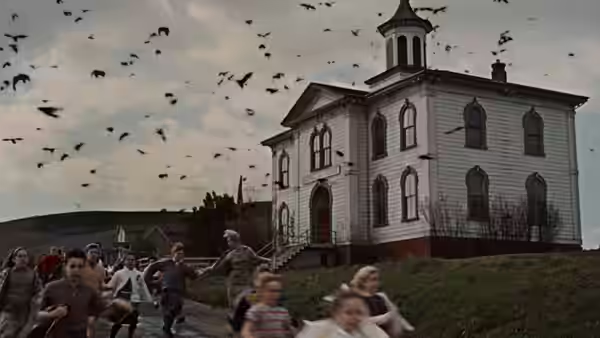
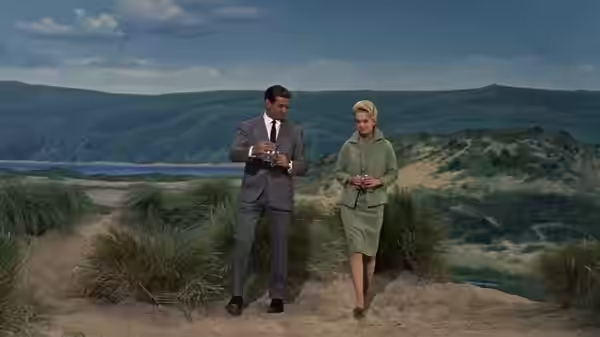
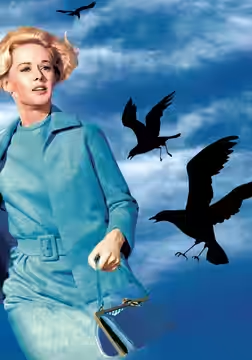
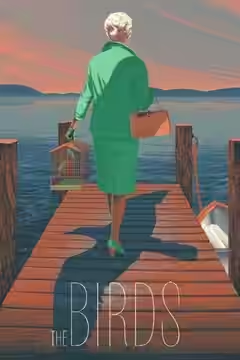
Robert Burks shoots Bodega Bay under a flat, overcast light, so the sky is a pale grey sheet and anything with wings shows on it as a black mark. Robert F. Boyle’s Brenner farmhouse is white clapboard, and the film fills it, a room at a time, with things it was never built to hold. When sparrows pour down the chimney Hitchcock stages it first as a domestic disaster, china going over and Jessica Tandy trying to sweep birds off the carpet, and only then as horror. Edith Head puts Tippi Hedren in one pale green suit for almost the whole film, and the state of the suit tells you how the evening is going.

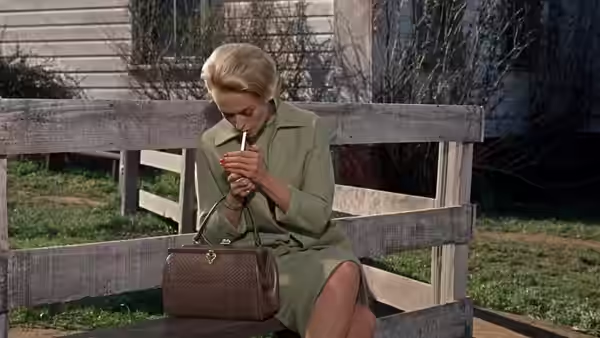
There is no music. Instead the film uses electronically made bird noise, shrieks and wingbeats that sound not quite like anything alive, and long stretches of nothing at all. The silence is the sharpest tool it has. George Tomasini cuts the attacks into short, hard pieces, a wing, a beak, a hand over a face, so we never see one whole bird do one whole thing. The scene outside the schoolhouse is one woman on a bench with a cigarette and a climbing frame behind her; each time the film cuts back to the frame there are more crows on it, and she does not look.

We knew that scene was coming. We have seen the film several times, and our stomach still dropped when Hedren finally turned her head. The other moment that got us is smaller. A frightened mother in the town’s diner tells Melanie she is the cause of all this, and Hedren, composed until now, has no answer, and the camera stays on her while nobody speaks up for her. We found that harder to watch than any beak.

The people are the film’s soft spot. Rod Taylor’s Mitch is solid, slightly wooden and there to be reasonable. Hedren’s Melanie is all poise and no interior in the early scenes, and she gets better as the film takes more from her. Tandy is the best thing in it: a widow so afraid of being left alone that she has started to resent the son she cannot bear to share, played in small adjustments of the mouth. Suzanne Pleshette gives Annie, the schoolteacher who moved to a small town to be near a man who did not want her, a warmth the script hardly asks for. Ethel Griffies has one scene as Mrs. Bundy, the ornithologist who explains that birds do not do this, a small perfect comic turn.

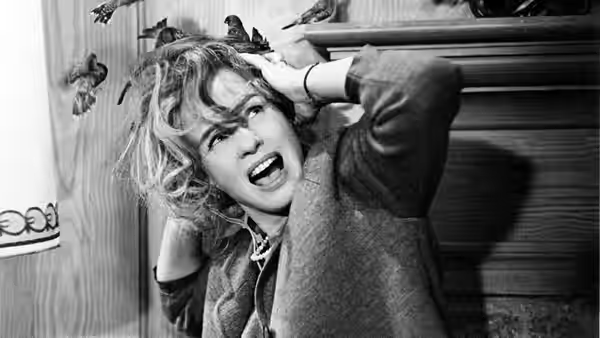
The effects have aged. Several attacks are composites, birds laid optically over a shot of a person, and the joins show: the birds are a little the wrong size, a little the wrong shade, and they cast no shadow. We stopped minding within seconds, because the real birds are handled with a viciousness no trick could match. The consensus score sits well below ours, because two of the reviews we read were written in 1963 and found a shocker with nothing behind it and a romance that goes nowhere. They were right about the romance. They were wrong about the shocker. Most critics since have come round.

Against Hitchcock’s own work it sits beside Psycho (1960), the only other time he went all the way into horror, and it is the colder. See it with the lights off and the sound up, since the silences are the point and a humming fridge will spoil them. Bring someone who has not seen it and say nothing about the schoolhouse. It runs 119 minutes and carries a 15.
Critical consensus AI synthesised

68
Positive
4
Mixed
1
Negative
2

Most critics come away unsettled, and the praise clusters on how Hitchcock stages the attacks. The birds gathering outside the school are picked out more than once as the film’s most frightening passage, and several reviews note how much of the dread comes from the refusal to explain anything. The electronic soundtrack of bird noise, rather than a conventional score, is singled out as part of what makes it so eerie, and the film is described as darkly comic before it turns nasty.

The spread is wide, and the dissent is old. The two reviews written on release are the two negative ones: Variety finds the human drama thin and the romantic subplot left dangling, and The New Yorker goes further, arguing the film never builds suspense and finding the sadism of the attacks repellent. Later critics are markedly warmer, and one review reads more as description than verdict.

Radio Times
★★★★★ · Alan Jones
100

Jones describes the film as a black comedy that becomes genuinely unsettling, and regards it as a Hitchcock classic. He singles out its horrific allegory and enduring place in popular mythology.

Read the full review →
Empire
1 January 2011 · Kim Newman
85*

Newman calls it a genuinely disturbing thriller classic and praises its unsettling, unexplained assault on ordinary characters. He singles out the birds gathering outside the school as a particularly creepy moment.

Read the full review →
Time Out
· TM
65*

The available metadata identifies this as a review but does not reveal the critic’s verdict. Its description points to the film’s menace, but offers no clear evaluative judgment.

Read the full review →
Variety
1 January 1963 · Variety Staff
40*

The review finds the film visually compelling but dramatically weak, calling it a shocker for its own sake. It praises the birds’ bizarre, terrifying attacks while faulting the unresolved romantic subplot and weak human element.

Read the full review →
The New Yorker
29 March 1963 · Brendan Gill
20*

Gill calls the film a sorry failure, arguing that it fails to create suspense. He singles out the exposed sadism of the bird attacks as especially repellant.

Read the full review →
Polygon
30 October 2025 · Oli Welsh
90*

Welsh calls the film a masterpiece of existential horror, finding it both terrifying and profoundly evil. He singles out its eerie electronic bird-noise soundtrack and the forceful staging of its attacks.

Read the full review →

Straight answers AI written, from our review

Is The Birds worth watching?
The Birds is worth watching for anyone who wants to be frightened by a film that never explains itself, and we scored it 86. The first three quarters of an hour are a thin, Doris Day sort of flirtation, and the optical effects have aged; once the sparrows come down the chimney neither matters. Watch it with the sound up, since the silences do most of the work.
How long is The Birds, and what is it rated?
The Birds runs 1h 59m. It is a horror and thriller film.
Where can I watch The Birds in Czechia?
The Birds is available to rent from Apple TV from Kč 59.00. Availability is checked daily; the links above go straight to each service.
How violent or frightening is The Birds, and is it suitable for children?
The Birds carries a UK 15 and is a horror film first, with attacks cut into short, hard pieces of wing, beak and a hand over a face, so we see very little whole. There is no gore to speak of and no music, but the dread is sustained and the electronic bird noise is unpleasant. It is not for young children; nervous teenagers should be warned about the schoolhouse.
How does The Birds compare to Don't Look Now?
The Birds and Don't Look Now both come from Daphne du Maurier stories and both trade in cold dread, but they work differently. Hitchcock's film is the more frightening and the more mechanical, its people kept at a distance and its horror never explained. Roeg's is the more deeply felt, built around a marriage worth caring about, and is the better choice if you want to be moved as well as scared.
What should I watch after The Birds?
After The Birds, try Don't Look Now (1973, Fi1m 90): Roeg takes another du Maurier story and finds the same cold dread in Venice. Then Night of the Living Dead (1968, Fi1m 88): A farmhouse boarded against something nobody understands, made for pennies and still frightening; and Marnie (1964, Fi1m 68): Hitchcock and Hedren again, colder still, with the birds swapped for a husband.

Cast

Awards

Academy Awards, 1964

Nominated
Best Visual Effects

Golden Globes, 1963

Won
New Star of the Year – Actress

If you liked this, try…

  1. Don't Look Now (1973, Fi1m 90)Roeg takes another du Maurier story and finds the same cold dread in Venice.

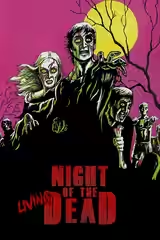
  2. Night of the Living Dead (1968, Fi1m 88)A farmhouse boarded against something nobody understands, made for pennies and still frightening.

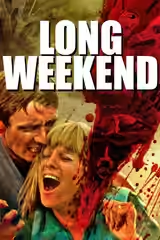
  3. Long Weekend (1978) · not on Fi1m yetAn Australian couple bicker on a beach and nature quietly turns against them.

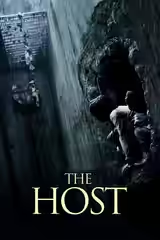
  4. The Host (2006) · not on Fi1m yetBong Joon-ho’s river monster, a family that cannot stop arguing, and officials who explain nothing.

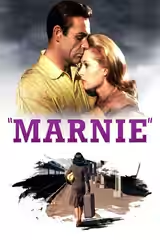
  5. Marnie (1964, Fi1m 68)Hitchcock and Hedren again, colder still, with the birds swapped for a husband.