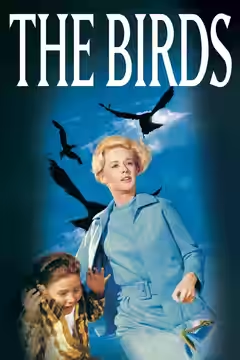
Hitchcock’s horror begins as a light comedy about a spoilt heiress and turns, without a word of explanation, into the coldest thing he made. The effects have aged and the romance is thin, and neither matters once the sparrows come down the chimney.
Alfred Hitchcock took The Birds from a Daphne du Maurier short story, kept the birds and the title and little else. Evan Hunter’s screenplay gives us a San Francisco socialite, a lawyer, his mother and his sister, and spends its first three quarters of an hour on a flirtation that could have come from a Doris Day picture. Then the birds begin, and they do not stop, and nobody ever finds out why. Hitchcock has decided not to tell us, and the film is far more frightening for it.
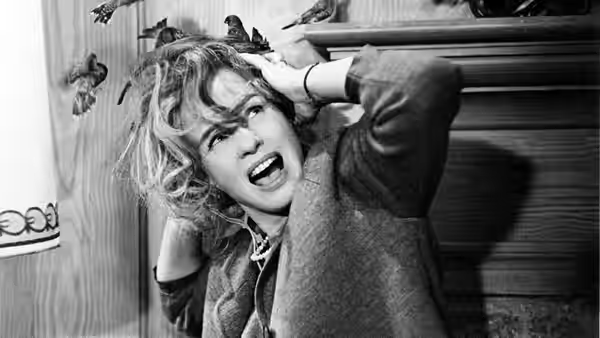
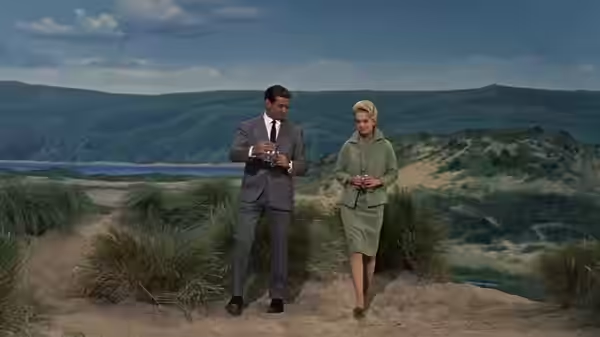
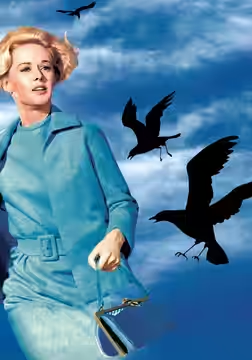
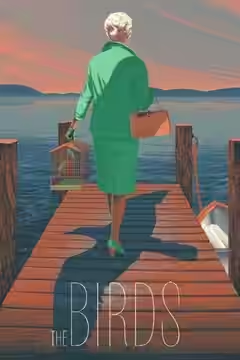
Robert Burks shoots Bodega Bay under a flat, overcast light, so the sky is a pale grey sheet and anything with wings shows on it as a black mark. Robert F. Boyle’s Brenner farmhouse is white clapboard, and the film fills it, a room at a time, with things it was never built to hold. When sparrows pour down the chimney Hitchcock stages it first as a domestic disaster, china going over and Jessica Tandy trying to sweep birds off the carpet, and only then as horror. Edith Head puts Tippi Hedren in one pale green suit for almost the whole film, and the state of the suit tells you how the evening is going.
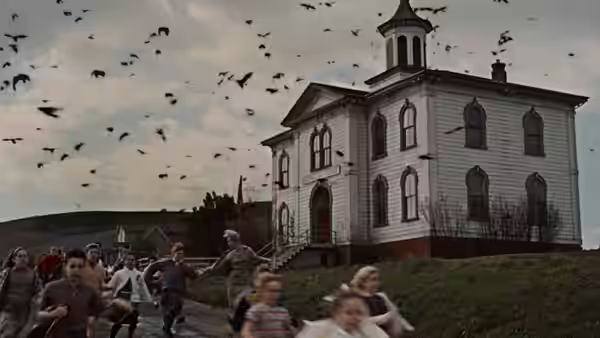
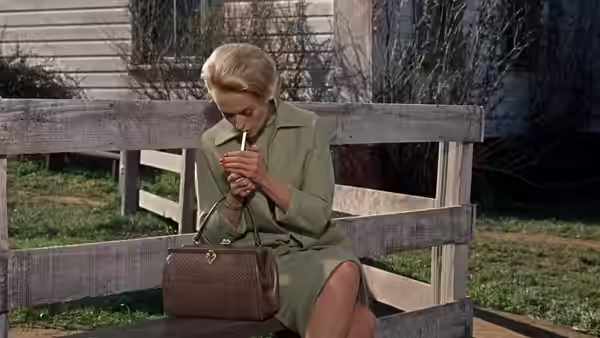
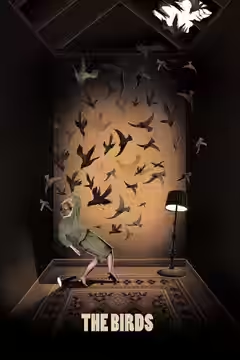
There is no music. Instead the film uses electronically made bird noise, shrieks and wingbeats that sound not quite like anything alive, and long stretches of nothing at all. The silence is the sharpest tool it has. George Tomasini cuts the attacks into short, hard pieces, a wing, a beak, a hand over a face, so we never see one whole bird do one whole thing. The scene outside the schoolhouse is one woman on a bench with a cigarette and a climbing frame behind her; each time the film cuts back to the frame there are more crows on it, and she does not look.
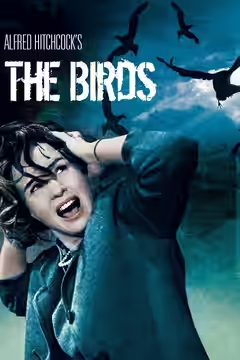
We knew that scene was coming. We have seen the film several times, and our stomach still dropped when Hedren finally turned her head. The other moment that got us is smaller. A frightened mother in the town’s diner tells Melanie she is the cause of all this, and Hedren, composed until now, has no answer, and the camera stays on her while nobody speaks up for her. We found that harder to watch than any beak.
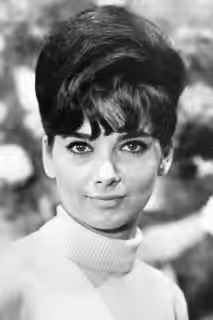
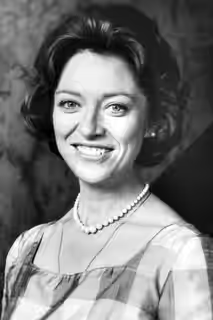
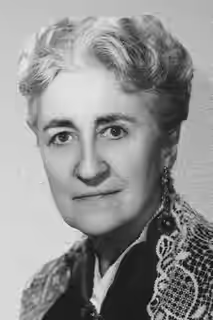
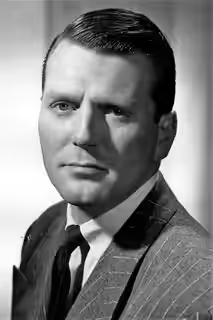
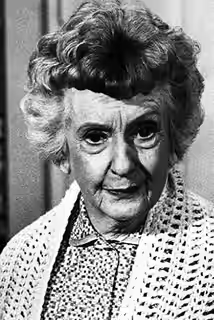
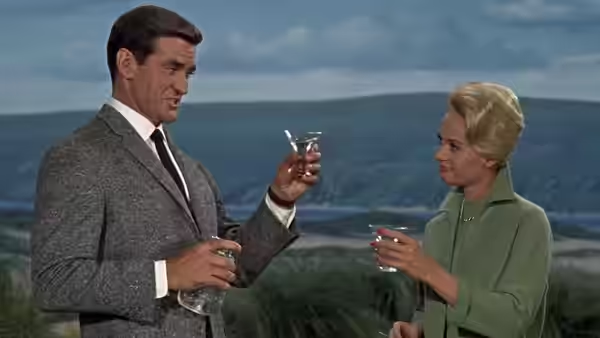
The people are the film’s soft spot. Rod Taylor’s Mitch is solid, slightly wooden and there to be reasonable. Hedren’s Melanie is all poise and no interior in the early scenes, and she gets better as the film takes more from her. Tandy is the best thing in it: a widow so afraid of being left alone that she has started to resent the son she cannot bear to share, played in small adjustments of the mouth. Suzanne Pleshette gives Annie, the schoolteacher who moved to a small town to be near a man who did not want her, a warmth the script hardly asks for. Ethel Griffies has one scene as Mrs. Bundy, the ornithologist who explains that birds do not do this, a small perfect comic turn.
The effects have aged. Several attacks are composites, birds laid optically over a shot of a person, and the joins show: the birds are a little the wrong size, a little the wrong shade, and they cast no shadow. We stopped minding within seconds, because the real birds are handled with a viciousness no trick could match. The consensus score sits well below ours, because two of the reviews we read were written in 1963 and found a shocker with nothing behind it and a romance that goes nowhere. They were right about the romance. They were wrong about the shocker. Most critics since have come round.
Against Hitchcock’s own work it sits beside Psycho (1960), the only other time he went all the way into horror, and it is the colder. See it with the lights off and the sound up, since the silences are the point and a humming fridge will spoil them. Bring someone who has not seen it and say nothing about the schoolhouse. It runs 119 minutes and carries a 15.