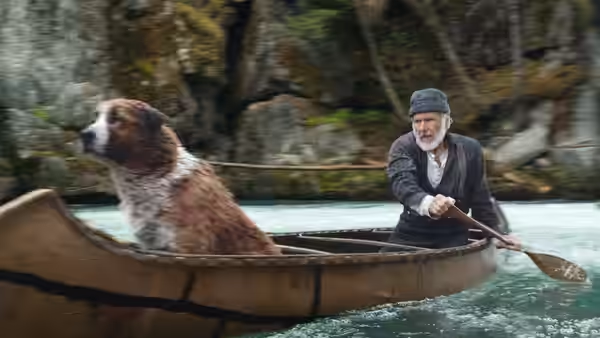
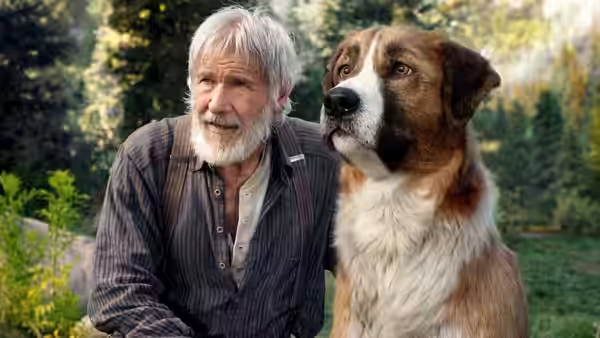
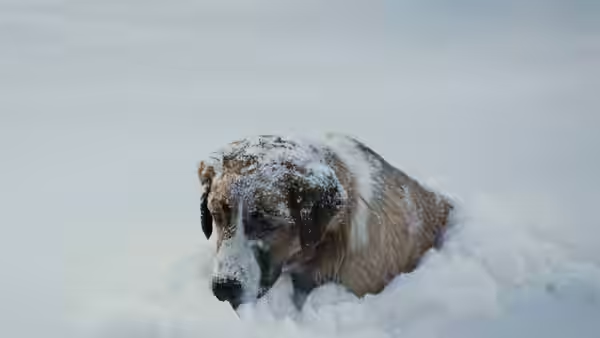
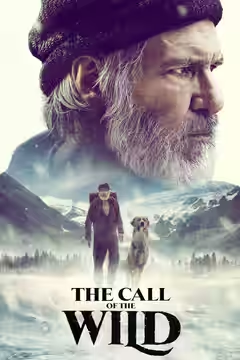
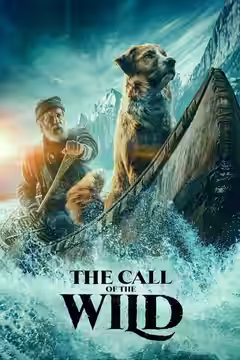
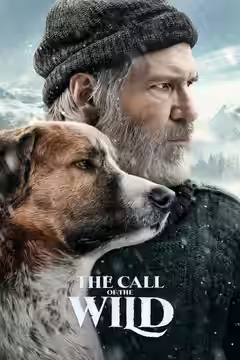
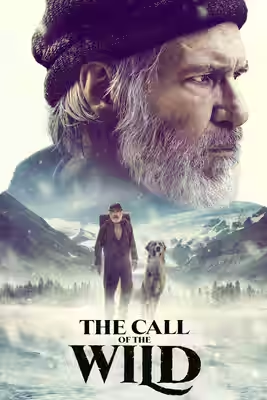
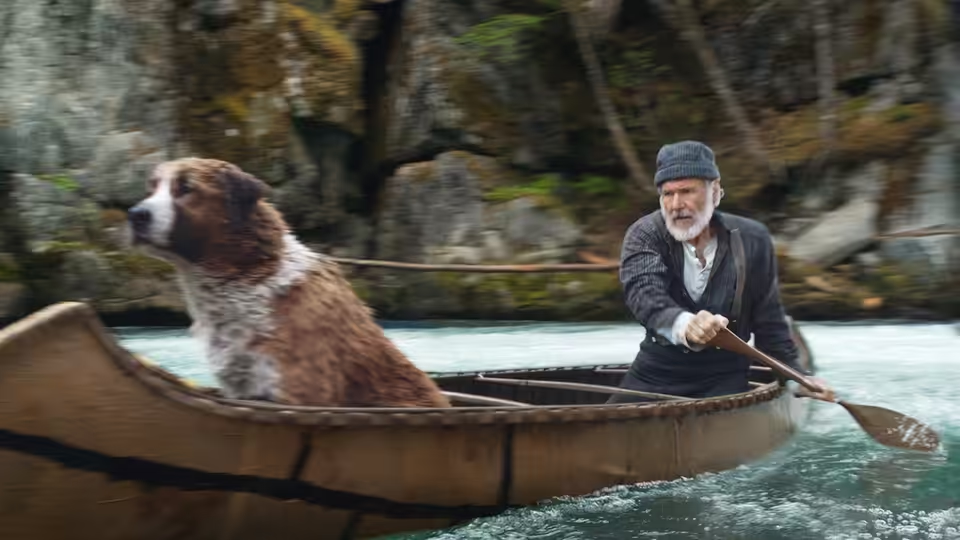
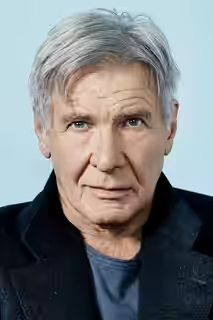
John Thornton (Harrison Ford) paddles a canoe downriver with Buck beside him
Film review

The Call of the Wild

2020 · Directed by Chris Sanders · 1h 40m

In a sentenceHarrison Ford makes friends with a dog who looks as though he has already read the script

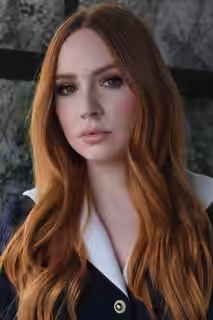
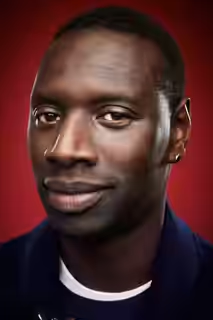
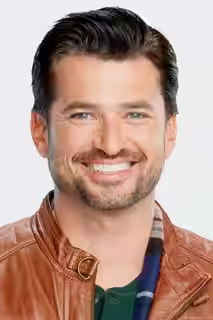
Buck, a dog, travels through snowy country with a sled team, meeting people whose company brings both comfort and danger. John Thornton (Harrison Ford), Perreault (Omar Sy) and Hal (Dan Stevens) are among the humans he encounters. Buck has to find his place among the dogs and cope with the demands of the trail, while learning what to expect from the people around him. Adapted from Jack London’s novel, the story follows Buck’s perspective through sled journeys and the wilderness, with his developing connection to Thornton bringing him closer to human company.

Plays from YouTube when you press play; nothing loads from them until then.

Fi1m review

An uneven family adventure, worth considering for Harrison Ford’s restrained warmth and the lively sled sequences. Buck’s conspicuous animation remains a distraction, while the softened wilderness leaves too little sense of danger.

Chris Sanders makes a decent family adventure from Jack London’s novel, though anyone drawn by the promise of wildness should lower their expectations. The Call of the Wild is interested in Buck’s feelings and his attachment to people, and it makes those feelings easy to read. Michael Green’s screenplay favours reassurance over the harsher possibilities of the material. That is a defensible choice for a PG film, but the snow and fast sleds seldom bring much lasting unease.

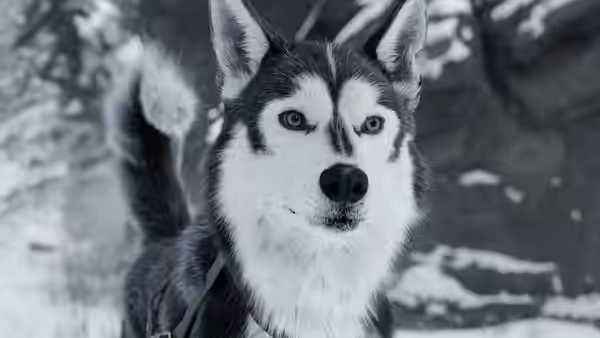
Buck is the difficulty, and he is also where the film occasionally becomes interesting. Terry Notary provides the live-action reference performance, giving the animators a physical basis for a dog whose movements carry whole stretches of the story. In the sled sequences, the speed and freedom of the animation are absorbing enough to make realism seem a fussy demand. Once Buck shares the image with a human being, though, the discrepancy becomes distracting again. His expressions explain so much that there is little pleasure left in watching an animal and wondering what it understands.

Harrison Ford does a good deal to make that problem matter less. His John Thornton has a worn, unforced warmth, and the performance stays restrained even when the film is plainly asking for tenderness. We were moved by the companionship between Thornton and Buck, because Ford gives it his full attention without making a display of his own sensitivity. The quieter wilderness passages benefit from that patience, even when Buck’s expressions keep drawing attention to the effects.

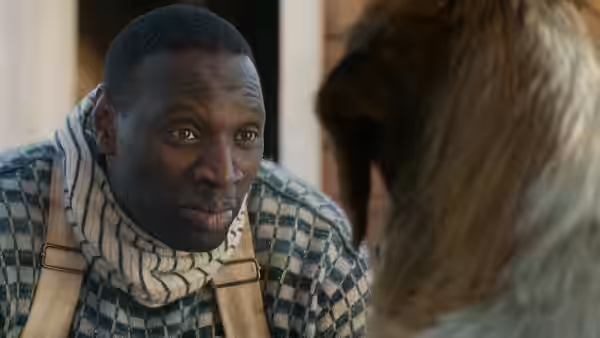
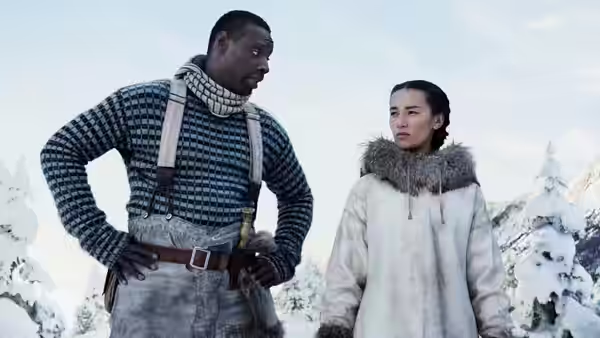
Omar Sy brings an equally useful warmth to Perreault, particularly in a film where the human presence can so easily become secondary to the digital activity. Sanders is right to keep Buck at the centre, but that decision leaves some of the people around him looking thinly drawn. Dan Stevens’s Hal belongs to the broader, more caricatured side of the film. Green’s writing is least persuasive when it simplifies people so that Buck’s response to them needs no thought.

Janusz Kamiński’s cinematography gives the snow and ice a welcome clarity, particularly during the dog-centred action. Stefan Dechant’s production design contributes to a wilderness that feels carefully arranged, even when it is meant to look untamed. The polished surroundings make the animated animal seem less unusual, but they also weaken our sense of physical risk. That matters in an adventure that keeps asking us to care about a dog’s safety.

Editors William Hoy and David Heinz get useful momentum into the sled passages, then have less success sustaining it through the slower second half. At 100 minutes, the film is not long, yet its insistence on being touching begins to feel repetitive. John Powell’s score leans into the film’s sweetness, adding encouragement when the performances have already made the feeling clear. A little less of that encouragement would have helped Ford’s quieter work.

The family animal adventure has room for gentleness, and Sanders is not wrong to make companionship the attraction. What disappoints us is how seldom the wilderness challenges that comfort; we get little sense of its harshness. Anyone who finds Buck immediately endearing will have an easier time with the quieter stretches. Consider it for Ford’s company, if a dog with conspicuous acting habits is not likely to keep catching your eye.
Critical consensus AI synthesised

54
Positive
7
Mixed
8
Negative
8

The reviews are divided, with the consensus settling around a mixed response to this sentimental adventure. Harrison Ford provides the clearest point of agreement: critics across the divide praise his warmth, restraint and vulnerability, often finding his performance affecting even when the digital Buck is not convincing. The sled sequences, snowy scenery and dog-centred action also draw praise, while the more enthusiastic reviews find an entertaining, emotionally engaging retelling beneath the artificial surfaces.

The chief disagreement concerns whether the conspicuous CGI serves the story or makes its central animal too difficult to believe. The Ringer welcomes the artificial landscapes as a thoughtful way to celebrate wilderness without damaging it; The Wrap finds the animals lifeless and the adaptation remote from Jack London’s story. Responses range widely, from warm approval to outright rejection, with reservations also clustering around the softened brutality, broad characterisation and sentimentality.

Little White Lies
17 February 2020 · 2/4/3 · Elena Lazic
80

Lazic finds this a winning adaptation that treats its audience respectfully. She praises the thrilling sled sequences and the film’s direct, dog-centered perspective.

Read the full review →
Slant Magazine
17 February 2020 · ★★★/4 · Michael Joshua Rowin
75

The critic finds the adaptation surprisingly thrilling and emotionally moving despite its softened treatment of the novel’s harsh realities. He praises the spirited CGI-driven movement and Harrison Ford’s vulnerable performance.

Read the full review →
The Guardian
17 February 2020 · Peter Bradshaw
75*

Bradshaw finds the film corny but robustly entertaining, with real storytelling bite. He particularly praises its old-fashioned, analogue-hearted adventure despite its CGI animals.

Read the full review →
Empire
17 February 2020 · Ian Freer
70*

Freer finds it a sentimental, dependable retelling that is entertaining without doing anything radical. He praises the well-mounted set-pieces and Harrison Ford’s grizzled gravitas, while noting that the digital animals can make Buck harder to believe as a real dog.

Read the full review →
Variety
17 February 2020 · Owen Gleiberman
70*

Gleiberman finds the film increasingly affecting despite its overdone, artificial visual style. He praises Harrison Ford’s soulful, restrained performance for bringing Buck and their friendship to life.

Read the full review →
RogerEbert.com
64*

The review’s verdict cannot be verified because the page only shows a browser-check message. No praise or complaint can be identified from the available text.

Read the full review →

Straight answers AI written, from our review

Is The Call of the Wild worth watching?
The Call of the Wild is worth considering for families who prefer gentle animal adventures; we score it 63 out of 100. Harrison Ford’s restrained warmth and the lively sled sequences help, but Buck’s conspicuous animation keeps distracting us, and the wilderness offers little lasting sense of danger.
How long is The Call of the Wild, and what is it rated?
The Call of the Wild runs 1h 40m. It is an adventure and family film.
Where can I watch The Call of the Wild in Mexico?
The Call of the Wild is available to rent from Apple TV from MX$25.00. Availability is checked daily; the links above go straight to each service.
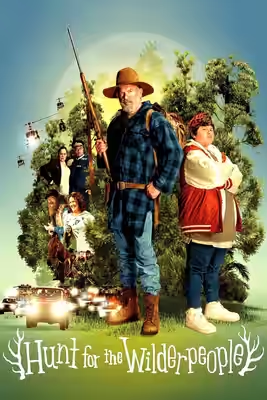
How does The Call of the Wild compare to Hunt for the Wilderpeople?
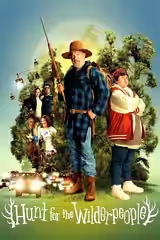
The Call of the Wild is the gentler wilderness adventure, but we recommend Hunt for the Wilderpeople for sharper jokes and more persuasive companionship. Ford brings warmth to Buck’s story, though the animated dog is distracting; Julian Dennison and Sam Neill make their friendship funny and moving, despite some fussing over the quirks.
Is The Call of the Wild based on a true story or a book?
The Call of the Wild is adapted from Jack London’s novel, rather than presented as a true story. We find this version favours reassurance and Buck’s attachment to people over the material’s harsher possibilities, so familiarity with the book is not needed, though anyone expecting a harsh wilderness adventure should lower their expectations.
What should I watch after The Call of the Wild?
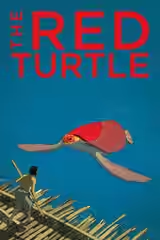
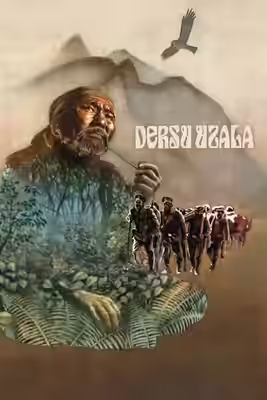
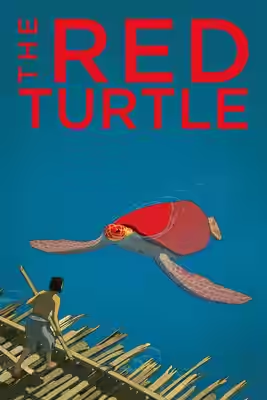
After The Call of the Wild, try Hunt for the Wilderpeople (2016, Fi1m 82): Another gruff companion in the wilderness, with sharper jokes and less reassurance. Then Dersu Uzala (1975, Fi1m 82): For older viewers, a patient wilderness friendship with a stronger sense of hardship; and The Red Turtle (2016, Fi1m 84): A quieter animated encounter with nature, with little comfort offered cheaply.

Cast

If you liked this, try…

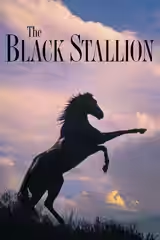
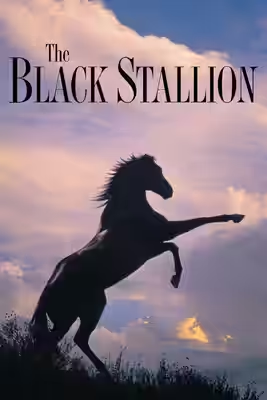
  1. The Black Stallion (1979) · not reviewed yetA boy and a horse make companionship convincing without quite so much signalling.

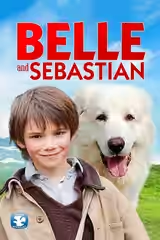
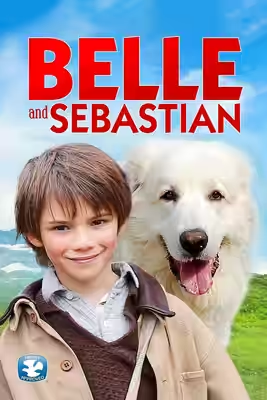
  2. Belle and Sebastian (2013) · not reviewed yetSnow, danger and a dog, with a more tangible sense of companionship.

  3. Hunt for the Wilderpeople (2016, Fi1m 82)Another gruff companion in the wilderness, with sharper jokes and less reassurance.

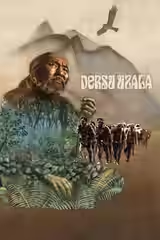
  4. Dersu Uzala (1975, Fi1m 82)For older viewers, a patient wilderness friendship with a stronger sense of hardship.

  5. The Red Turtle (2016, Fi1m 84)A quieter animated encounter with nature, with little comfort offered cheaply.

Free account

Know what to watch tonight

Two lists that know where things are streaming, collections you can share, your own score beside ours, and Discover that remembers what you have seen.

  • Want to see, sorted by what is streaming now
  • Seen, with your score out of ten
  • No adverts, ever