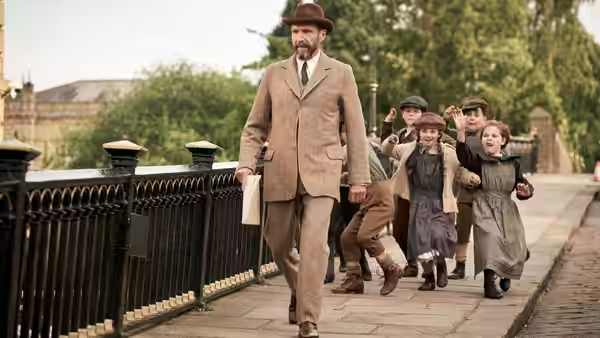
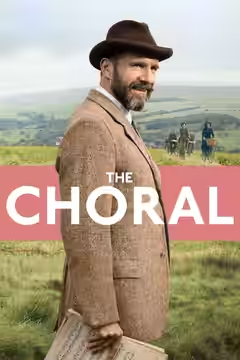
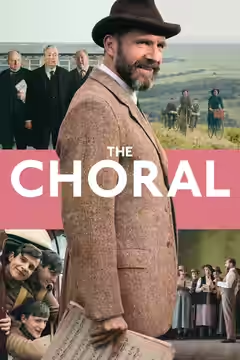
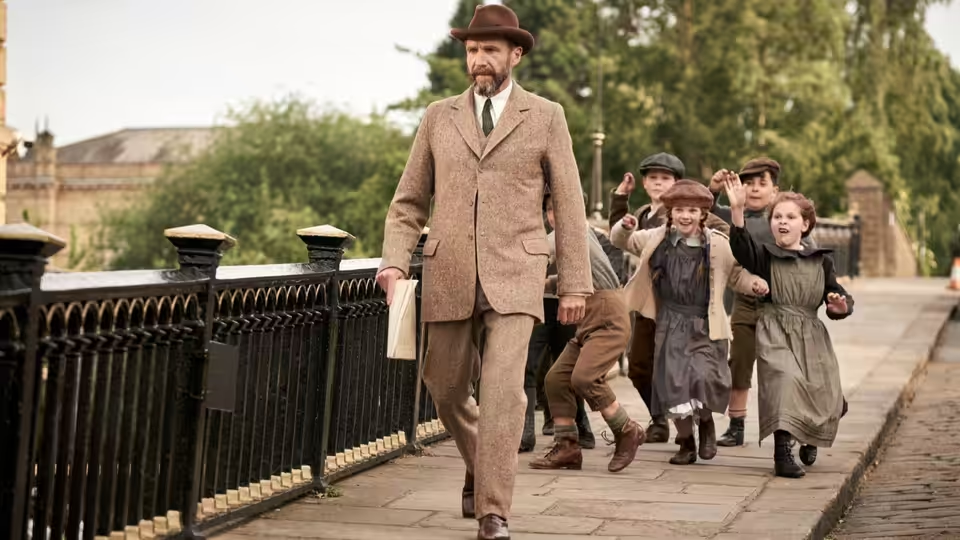
Dr. Henry Guthrie (Ralph Fiennes) walks along a riverside path as children follow behind
Film review

The Choral

2025 · Directed by Nicholas Hytner · 1h 53m

In a sentenceA whole town learns to sing Elgar while the war politely waits outside

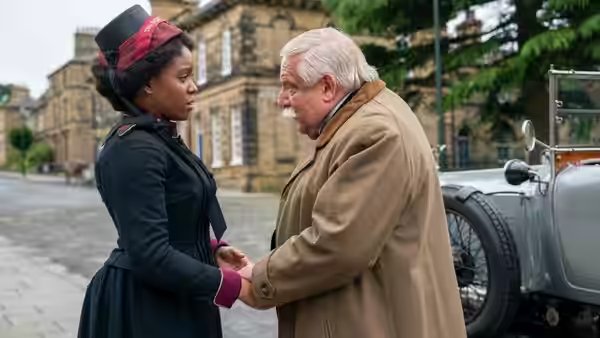
The First World War. The men of a provincial town have gone to the front, and its choral society is short of voices and short of anyone to stand in front of them. Dr. Henry Guthrie (Ralph Fiennes) takes charge of the choir, under the eye of Alderman Bernard Duxbury (Roger Allam), with Joe Fytton (Mark Addy), Herbert Trickett (Alun Armstrong) and the Reverend Woodhead (Ron Cook) among the town’s remaining men. Guthrie holds open auditions and fills the empty rows with the young people left behind: Mary Lockwood (Amara Okereke), Bella Holmes (Emily Fairn), Mitch (Shaun Thomas) and Clyde (Jacob Dudman). He wants them to sing Elgar, and Sir Edward Elgar himself (Simon Russell Beale) is not far away. The town wants something to lift its spirits. Guthrie wants it sung properly.

Plays from YouTube when you press play; nothing loads from them until then.

Fi1m review

Alan Bennett and Nicholas Hytner send a choir master to a town emptied of its young men, and Ralph Fiennes gives him a quiet, exact grief. Around him the film tells too many small stories and finishes almost none of them.

Alan Bennett has written and Nicholas Hytner has directed a film about a provincial choral society in the First World War, and if that sentence makes you feel comfortable you have already understood both its appeal and its problem. The men have gone to the front, the choir has gaps where its voices used to be, and Dr. Henry Guthrie (Ralph Fiennes) takes it in hand. It is gentle, well acted and civilised, and it is too slight to carry the war it keeps reminding us about.

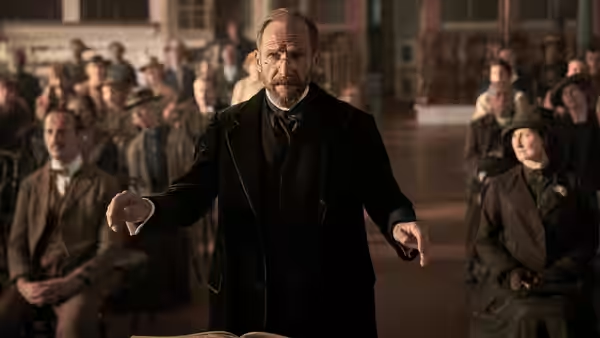
Fiennes is the reason to see it. He plays Guthrie as a man who has decided to be exact about everything because exactness is what he can control: he stands upright, speaks at rehearsal volume, and corrects a vowel as if a life depended on it. The film’s best scene has him with a wounded soldier, and it moved us more than we were prepared for. Fiennes sits a little way off, does not touch him, keeps his voice level and lets the pauses run on longer than most directors would allow. Nothing else in the film is as still as that, and nothing else earns its silence.

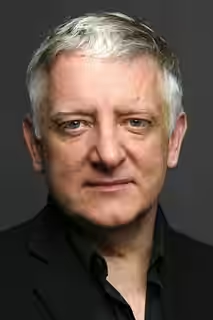
Around him Bennett has assembled the kind of committee he writes better than anyone: Alderman Duxbury (Roger Allam), Joe Fytton (Mark Addy), Herbert Trickett (Alun Armstrong) and the Reverend Woodhead (Ron Cook), each given one dry line per scene and a reason to disapprove of the next man. Allam makes civic self-importance funny without making it cheap. Simon Russell Beale appears briefly as Sir Edward Elgar and plays him as a tired, courteous man who has heard his own music performed badly before. It is the one scene where the comedy and the sorrow sit in the same room without elbowing each other.

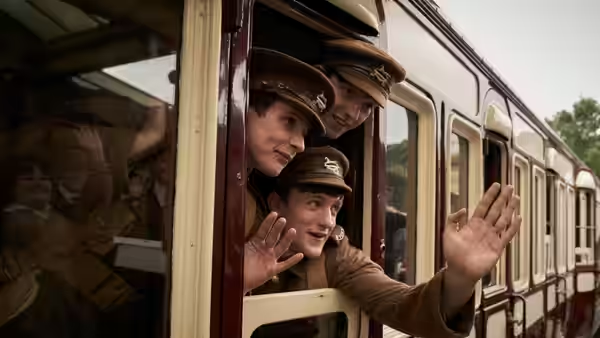
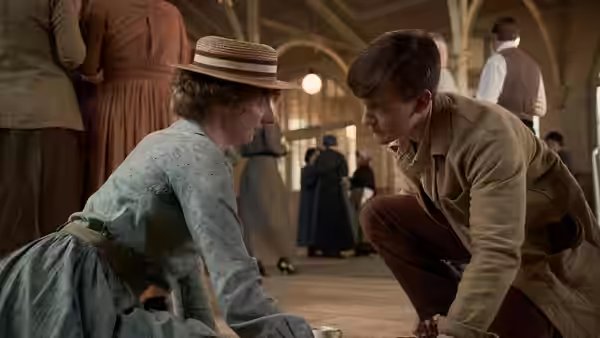
The younger cast are where the film thins out. Mary Lockwood (Amara Okereke), Bella Holmes (Emily Fairn), Mitch (Shaun Thomas) and Clyde (Jacob Dudman) are given situations rather than stories, and the romantic strands among them are set up with care and then left to find their own way out. Robert Emms, as Robert Horner, and Lyndsey Marshal, as Mrs. Bishop, each get a scene that suggests a fuller film we did not see. Bennett’s script has a dozen people in it and a hundred-odd minutes to divide between them, and the arithmetic shows.

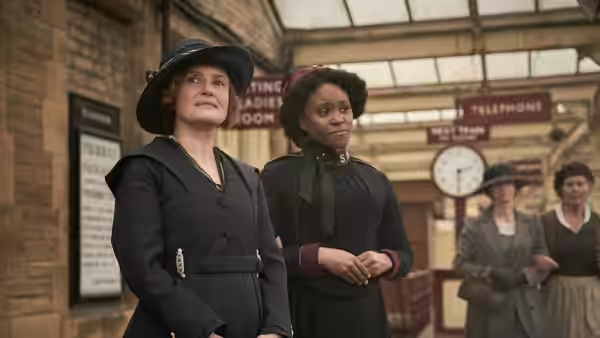
The craft is handsome and quiet. Mike Eley shoots in low grey daylight that comes through tall windows and sits on the faces, and Peter Francis’s rehearsal rooms look used rather than dressed, all scuffed boards and stacked chairs. Jenny Beavan’s clothes have been mended more than once, which tells you more about the town’s money than any line does. George Fenton knows when to stop writing and let the choir sing, and the singing is the best thing here after Fiennes: the auditions, in which people who have never sung in front of anyone stand up and do it, are funny and then, without warning, not. Tariq Anwar cuts the rehearsals with patience and the rest of the film with some anxiety, hopping between strands as if afraid we will forget one, which we did.

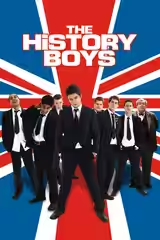
Hytner and Bennett made The History Boys and The Lady in the Van together, and both of those knew what they were about: a classroom, a driveway, one argument carried through. Hytner directs this one as if blocking it for a stage. People face each other across rooms and say their lines, the camera waits, and the war is reported rather than felt. By the middle hour we were bored, and then felt slightly mean about it, because nobody on screen is doing anything badly. They are doing it in a film that does not know which of its stories matters most.

Most critics have landed in the middle and so have we, a little above them. It is 113 minutes, a 12A, and it will do nothing to upset anyone, which is a fair description and not a recommendation. See it for Fiennes with a wounded soldier and a roomful of amateurs finding their note, and forgive the rest if you are in a forgiving mood. At home it will seem perfectly nice, and that is roughly the size of it.

Critical consensus AI synthesised

53
Positive
2
Mixed
5
Negative
4

Most critics find The Choral gentle, low-key and pleasant, a wartime drama that aims for comfort rather than force. The praise gathers around Ralph Fiennes as the choir master, whose quiet, commanding performance several reviews single out as the best thing in it, and around the musical scenes, which are heard as the film’s most honest moments. The ensemble and the handsome period production earn warm words even from critics who dislike the whole.

The reservations are about the script. Several reviews call it overstuffed, with sketched subplots and romantic strands that go nowhere, and find the tone wobbling between comedy and tragedy. The sharper complaint is that the film is emotionally cautious and sidesteps the horrors it sets up. The spread is wide: the warmest notices, from IndieWire and Eye for Film, sit against outright dismissals from The Wrap and The Hollywood Reporter, which calls it closer to a well-appointed television drama than a feature.

IndieWire
6 September 2025 · B- · Kate Erbland
70

Erbland finds the film a light, low-key crowdpleaser whose gentle tone both comforts and occasionally sidesteps its wartime horrors. She praises its affectionate portrayal of people coming together to make music, while noting that its stagey approach and sketched-over storylines limit its impact.

Read the full review →
Variety
19 October 2025 · festival review · Guy Lodge
68*

Lodge finds the film pleasant and diverting, with its strongest moments quietly resisting expectations of cozy wartime comfort. He praises the way Bennett’s writing cuts through the film’s polished nostalgia to reveal war’s emotional and physical damage.

Read the full review →
The New York Times
24 December 2025
64*

The review text is inaccessible, so its verdict cannot be determined. No praise or complaint can be reliably identified.

Read the full review →
Screen Daily
5 September 2025 · Robert Daniels
62*

The headline characterizes the film as a gentle wartime drama, but the review’s verdict is inaccessible. The available text singles out its provincial choir master and wartime setting.

Read the full review →
Time Out
7 November 2025 · ★★★ · Phil de Semlyen
60

The critic finds the film stirring but low-key. The review highlights its hymn to music’s healing power.

Read the full review →
The Guardian
5 September 2025 · festival review · Benjamin Lee
40*

Lee finds the gentle wartime drama pleasant but overstuffed, emotionally cautious and somewhat anticlimactic. He praises Ralph Fiennes’s delicate, commanding performance as the choir master.

Read the full review →

Straight answers AI written, from our review

Is The Choral worth watching?
The Choral is worth watching for Ralph Fiennes and for the singing, and not for much else; we scored it 57. Alan Bennett's script shares its hundred-odd minutes among a dozen people and finishes almost none of their stories, so it suits a forgiving mood more than a demanding one.
How long is The Choral, and what is it rated?
The Choral runs 1h 53m. It is a comedy and drama film.
Where can I watch The Choral in Bulgaria?
The Choral is streaming on HBO Max in Bulgaria, and it is also available to rent from Apple TV and Amazon Prime Video from лв 2.99. Availability is checked daily; the links above go straight to each service.
How violent or frightening is The Choral, and is it suitable for children?
The Choral is a 12A and contains no violence we would warn anyone about: the First World War stays off screen and is reported rather than shown. The one scene with a wounded soldier is quiet and sad rather than frightening, so the film suits older children and teenagers, though its gentle pace may lose younger ones.
How does The Choral compare to Brassed Off?
The Choral is the gentler and slighter of the two, and Brassed Off is the better film. Both put a town's music against a loss it cannot stop, but Mark Herman's film is angry about the pit closing and Nicholas Hytner's keeps the war politely outside. Choose The Choral for Fiennes and civilised comedy, Brassed Off if you want to feel something.
What should I watch after The Choral?
After The Choral, try Brassed Off (1996, Fi1m 79): A colliery band plays on as the pit closes; angrier than this and better for it. Then The History Boys (2006, Fi1m 67): Bennett and Hytner with one room and one argument, which is how they work best.

Cast

If you liked this, try…

  1. Brassed Off (1996, Fi1m 79)A colliery band plays on as the pit closes; angrier than this and better for it.

  2. As It Is in Heaven (2004) · not reviewed yetA burnt-out conductor rebuilds a Swedish village choir; sentimental, but the singing is real.

  3. Les Choristes (2004) · not reviewed yetA new teacher turns a reform school into a choir; the French version of the same wager.

  4. Regeneration (1997) · not reviewed yetPat Barker’s shell-shock hospital on film; the war this one keeps outside, brought indoors.

  5. The History Boys (2006, Fi1m 67)Bennett and Hytner with one room and one argument, which is how they work best.