Alan Bennett’s play comes to the screen with its original cast and most of its wit intact. Nicholas Hytner has filmed it rather than remade it, and the result is talky, generous, often funny and only intermittently a film.
Alan Bennett’s play about a classroom of clever boys and the two men fighting over how to teach them was a hit at the National Theatre, and Nicholas Hytner, who directed it there, has brought it to the screen with the same cast and the same words. The History Boys runs 109 minutes and carries a 15 certificate, and for most of that time it is good company. It is also, plainly, a play with a camera pointed at it. If you want the argument and the jokes, they are here. If you want the thing to have been rethought for cinema, it has not been.
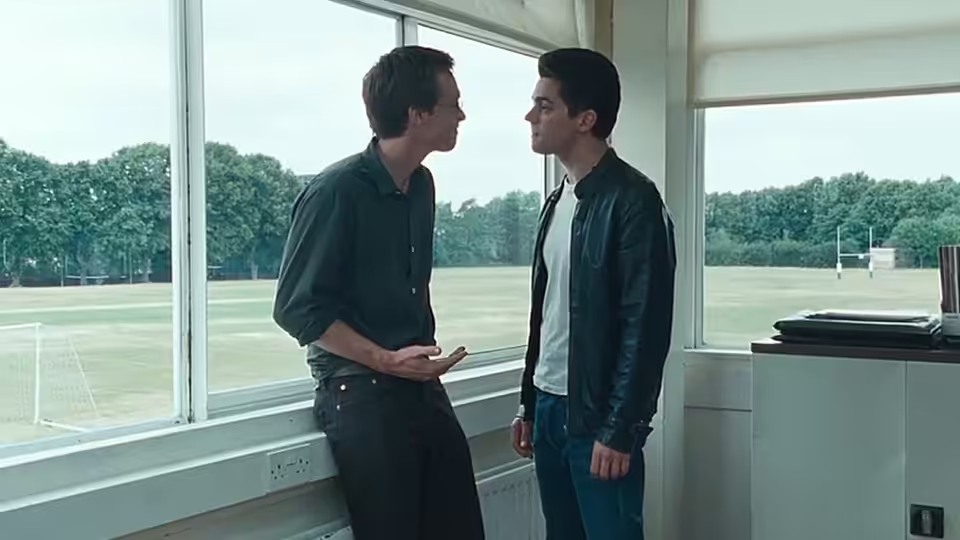
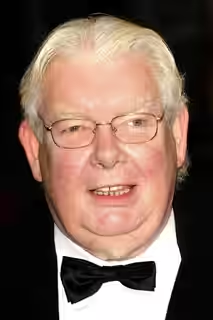
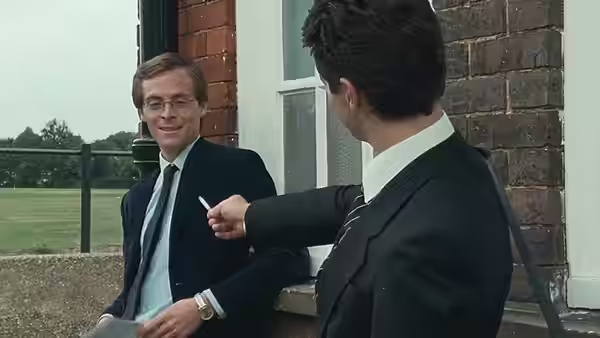
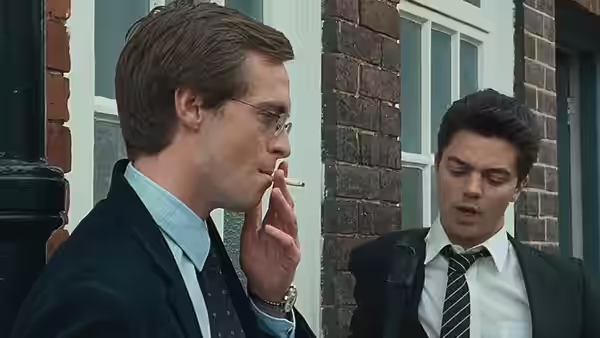
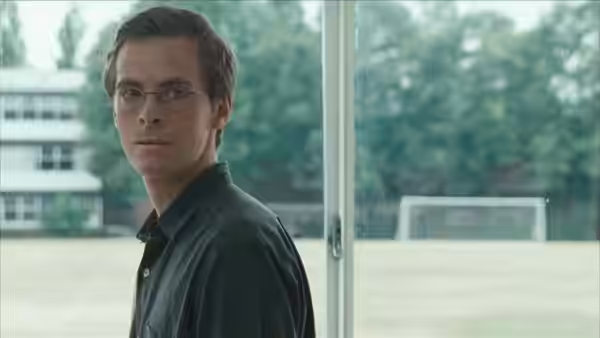
The argument is the point, and it is a proper one. Hector, played by Richard Griffiths with his great bulk wedged behind a desk and his voice pitched somewhere between a sermon and a sigh, believes that poetry is learnt for the day you will need it, and that the day may be forty years off. Irwin, Stephen Campbell Moore’s thin, careful young man in a cheap suit, believes an examiner can be won by taking the wrong side and taking it well. Bennett gives both men their best case and declines to referee. Campbell Moore is the quieter success: he plays Irwin as someone who is already a little ashamed of his own method and uses it anyway.
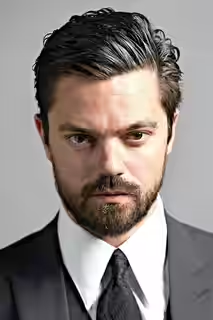
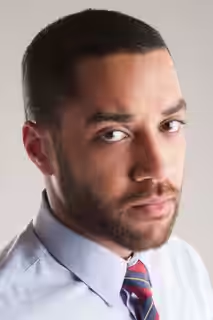
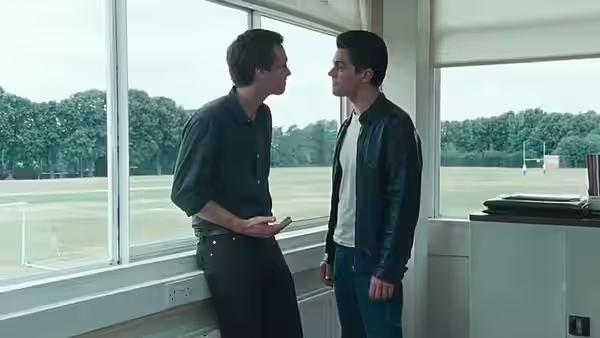
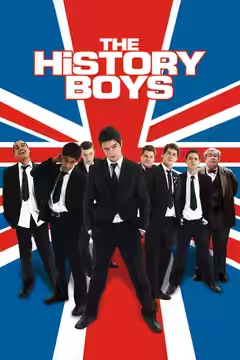
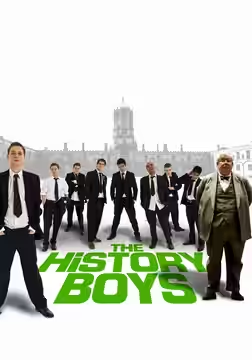
The boys are played by the stage cast, and the first thing you notice is that they are not boys. Dominic Cooper’s Dakin has the stubble and the ease of a man who has already left school, and his seduction of everyone in the building, teachers included, is more plausible because of it. James Corden’s Timms is the class clown who knows exactly how much he can get away with. Russell Tovey’s Rudge is the rugby player nobody expects to get in, and his speech about what history is gives the film its tagline. Jamie Parker’s Scripps keeps a diary and watches, and Sacha Dhawan, Samuel Anderson and Andrew Knott fill out the back row with less to do than they deserve.
Samuel Barnett’s Posner is the heart of it. He is small, Jewish, gay, in love with Dakin and from Sheffield, and he lists all of this as a catalogue of bad luck. Midway through, he stands up in class and sings Bewitched, Bothered and Bewildered to the boy he wants, and most critics go quiet. We had expected to be amused by it. We were moved instead, more than the scene seemed to be asking for, because Barnett sings it straight, to a face that will not look back, and Hytner holds the shot and lets him finish. Frances de la Tour’s Mrs Lintott, meanwhile, gets the best dry lines in the film and delivers each one as if setting down a cup of tea.
Where it goes wrong is wherever it stops talking. Hytner and the editor John Wilson stitch the term together with montages cut to 1980s pop, boys running down corridors, boys on bicycles, boys in the library, and every one of them feels like a stage direction nobody knew how to film. Andrew Dunn lights the classrooms in flat, even daylight, the colour of a wet Tuesday, which is honest about the setting and does nothing for the eye. John Beard’s school is a real-looking place of parquet and radiators, well chosen and barely explored. George Fenton’s score is modest and mostly gives way to the songs, which is the right decision.
There is also the motorbike. Hector gropes the boys he gives lifts to, and the film knows it from early on and treats it as a sadness about him rather than a danger to them. Bennett’s view is that the boys can handle it and that Hector is the one damaged. We found ourselves going along with that in the dark, and then uneasy afterwards about how easily we had. The film does not pretend the question is not there, but it answers it faster than it should.
As a record of a very good stage production this is close to ideal, and as a Bennett script it has a line worth keeping in almost every scene. As a film it is a Tuesday-evening pleasure rather than a Saturday-night one. Watch it with someone who will want to argue about Hector afterwards, because the argument is better than the montages.