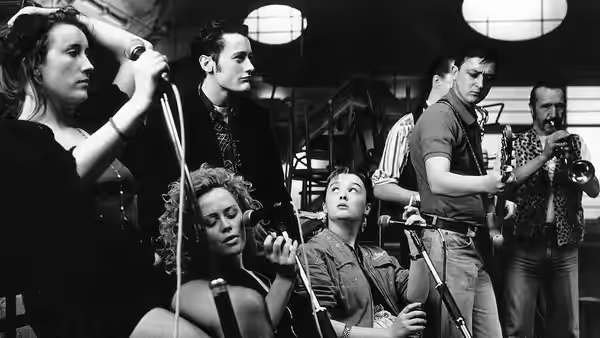
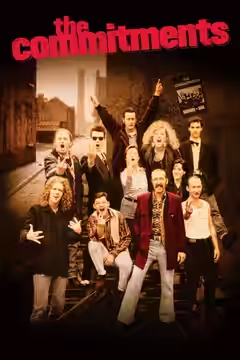
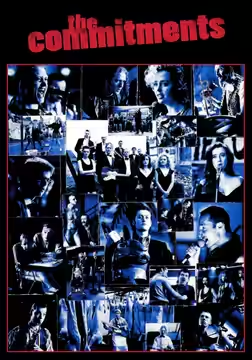
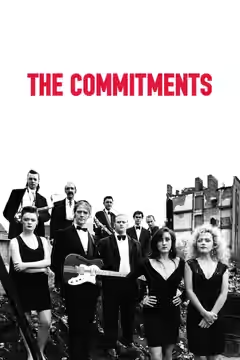
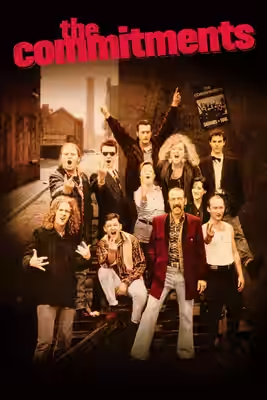
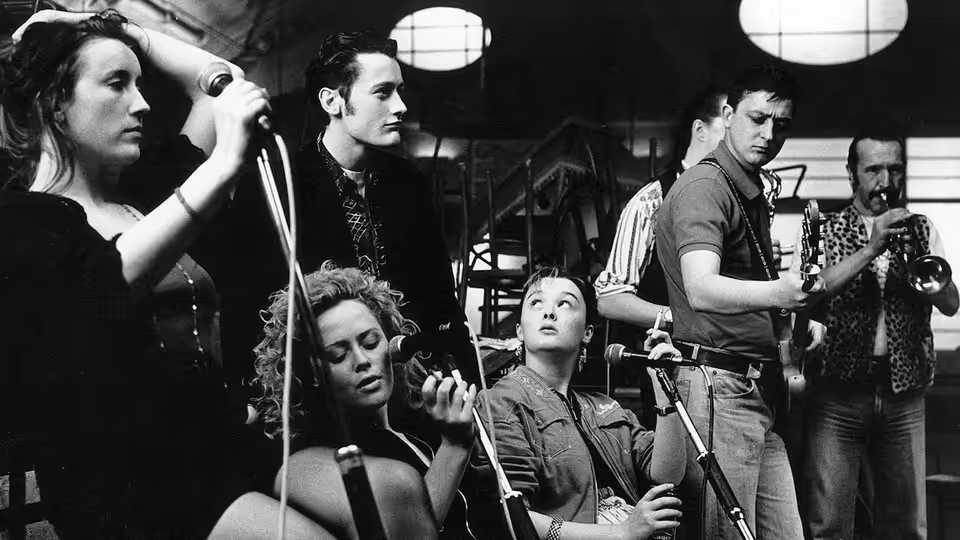
Band members stand and sit holding microphones and instruments in a hall
Film review

The Commitments

1991 · Directed by Alan Parker · 1h 58m

In a sentenceA Dublin soul band with enough talent to fill a stage and enough opinions to make getting there difficult

In Dublin, a group of working-class young people set about forming a soul band. Getting the musicians together means auditions, plenty of talk and an attempt to turn enthusiasm into a group that can perform. Robert Arkins plays Jimmy Rabbitte, with Andrew Strong as Deco Cuffe and Natalie Murphy as Joey ‘The Lips’ Fagan. Angeline Ball, Maria Doyle Kennedy and Bronagh Gallagher play Imelda Quirke, Natalie Murphy and Bernie McGloughlin. Alan Parker directs this adaptation of Roddy Doyle’s novel, which follows the band’s formation and the place American soul music finds among young Dubliners.

Plays from YouTube when you press play; nothing loads from them until then.

Fi1m review

Alan Parker’s Dublin soul-band comedy is funny, warm and carried by performances that make the music matter. A little too much polish creeps in, but we recommend it for the songs and the unruly company.

The Commitments is a funny, affectionate band film that earns its musical pleasures. Alan Parker follows working-class Dublin youngsters trying to put a soul group together, and takes their ambitions seriously without pretending that they are easy company. The songs are the attraction, but the talk earns its place alongside them. We recommend it warmly, with a reservation about the polish that occasionally makes the performers look a little too carefully presented.

Adapted from Roddy Doyle’s novel, the screenplay by Doyle, Dick Clement and Ian La Frenais understands how much character can emerge from people trying to get something organised. The auditions are particularly funny because the practical task of finding musicians allows the comedy to keep changing shape. We laughed more than we expected at this business of putting a group together. The writing gives the performers quick exchanges without making every line sound as though it has been saved for an audience.

Robert Arkins’s Jimmy Rabbitte, Andrew Strong’s Deco Cuffe and Natalie Murphy’s Joey ‘The Lips’ Fagan belong to an ensemble whose conversational timing is a large part of the pleasure. Angeline Ball, Maria Doyle Kennedy and Bronagh Gallagher contribute to the sense that nobody is simply waiting for permission to speak. Parker allows exchanges to feel untidy, which makes the jokes more convincing. The occasional rough edge in the acting is welcome when the alternative would be everyone signalling how amusing they are.

Gale Tattersall’s cinematography gives the music the same unglamorous setting as the comedy. Brian Morris’s production design helps keep the band’s surroundings ordinary, so that singing never seems to transport them somewhere richer. Parker is affectionate towards the place without continually pointing at hardship. Occasionally, that affection becomes an urge to make every performer look appealing, and the pictures seem too carefully polished. It is a small but noticeable limit on the film’s looseness.

Gerry Hambling’s editing handles the quick exchanges and the musical energy without making them feel like separate attractions. The pace is brisk, and the performers’ timing survives it. The songs, with Wilson Pickett among the music credits, are performed with enough conviction to justify the trouble of getting everyone together. We were caught up in the playing because the cast’s enthusiasm makes the modest ambition of performing together feel sufficient. The music is allowed to be worth hearing for its own sake.

The same eagerness can affect the comedy. A few of the fast exchanges hurry past before the characters have much chance to develop, and the script is less satisfying when it seems to be collecting funny encounters. At 118 minutes, there is room for a little more patience. Doyle, Clement and La Frenais are so good at giving people something sharp to say that we occasionally wish they would let them run out of words.

The pleasure here is not dependent on knowing the songs in advance. A fondness for band films helps, though anyone expecting a detailed account of the music business should adjust their expectations: Parker is interested in the people getting together. Watch it with company willing to let the songs play without talking over them.

Critical consensus AI synthesised

79
Positive
9
Mixed
0
Negative
0

The reviews are unanimous in liking it. Most critics agree that Alan Parker’s story of working-class Dublin kids forming a soul band is fast-talking, foul-mouthed and funny, and that the music carries it. The praise clusters on the cast, an ensemble of mostly non-professional Dublin musicians whose spontaneous timing and raw energy several critics find remarkable. The audition scenes and the soul covers come up again and again, and Time Out calls it Parker’s best film to date.

The spread is narrow; nobody dislikes it, and the reservations are mild. The New York Times finds an occasional slickness beneath the hyperkinetic energy, and The New Yorker, though warm, treats it as a loose, friendly comedy that keeps the band’s modest achievements in perspective. Radio Times notes that the cast did not become the stars many expected. Critics returning to it years later say it has stood the test of time.

Los Angeles Times
30 August 1991 · Kenneth Turan
90*

The critic finds the film irresistible thanks to its euphoric soul classics and photogenic youthful performers. He singles out the non-star casting of Dublin musicians and the cheerful vitality they bring to the high-spirited entertainment.

Read the full review →
Time Out
18 May 2016 · GA
85*

This is Parker's best film to date: a foul-mouthed, fast-talking and very funny comedy about working-class Dublin kids forming a soul band. The script captures their witty banter and modest dreams with precision, while the director treats the milieu and music with gritty intimacy and affection without over-emphasising poverty or glamorising the band.

Read the full review →
Empire
1 January 2000 · Jack Yeovil
80*

The film is an infectious musical story of rise-and-fall centered on a Dublin soul band. It is praised for its gritty Dublin humour, funny vignettes, and sense of fun as a pop musical.

Read the full review →
Radio Times
★★★★ · David Parkinson
80

The musical drama is laced with Irish charm and blessed with superb music performed with passion; it is very funny, especially during the band auditions. It brought Roddy Doyle's work to wider attention and won multiple Baftas, though the cast did not become as big stars as expected.

Read the full review →
Variety
31 December 1990 · Variety Staff
80*

The critic calls Alan Parker’s story of young Dubliners forming a soul band fresh, well-executed and original. The ensemble cast of mostly non-actors is singled out for strong performances, along with the film’s visual variety and accomplished editing.

Read the full review →
The New Yorker
19 August 1991 · Terrence Rafferty
70*

The critic calls it a loose, friendly musical comedy that keeps the band's modest achievements in perspective through sharp banter and humor. He singles out the extraordinary ensemble of mostly non-professional actors for their spontaneous timing and vitality.

Read the full review →

Straight answers AI written, from our review

Is The Commitments worth watching?
The Commitments is worth watching for anyone with a taste for band films and unruly Dublin company, and we scored it 82. Alan Parker's soul-band comedy is funny and warm, with an ensemble whose conversational timing matters as much as the songs. Our reservation is a polish that occasionally makes the performers look a little too carefully presented.
How long is The Commitments, and what is it rated?
The Commitments runs 1h 58m. It is a comedy and drama film.
Where can I watch The Commitments in Sweden?
The Commitments is not on any streaming or rental service in Sweden at the moment. It is available in 12 other countries; change your country at the top of the page to see where. Availability is checked daily.
How violent or frightening is The Commitments, and is it suitable for children?
The Commitments is a 15 certificate in the UK and rated R in the United States, so it is not made for children. Our review found nothing violent or frightening in it; the comedy comes from working-class Dubliners arguing their way towards a soul band. The certificate points to strong language rather than anything alarming, and teenagers should find little to trouble them.
Is The Commitments based on a true story or a book?
The Commitments is based on Roddy Doyle's novel of the same name, adapted for the screen by Doyle with Dick Clement and Ian La Frenais. It is not a true story. Knowing the book is not necessary: the film's pleasures lie in the auditions, the talk and the songs, and the review notes that even the music need not be familiar in advance.

Cast

Awards

Academy Awards, 1992

Nominated
Best Film Editing

If you liked this, try…

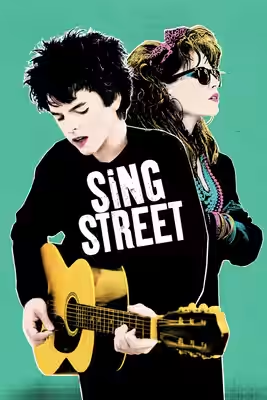
  1. Sing Street (2016) · not reviewed yetAnother Dublin band finds that making music is easier than growing up.

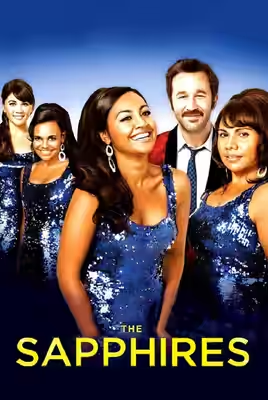
  2. The Sapphires (2012) · not reviewed yetSoul singing and combustible company, with more room for the women.

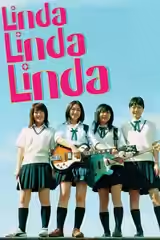
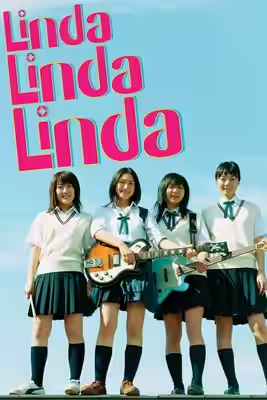
  3. Linda Linda Linda (2005) · not reviewed yetSchoolgirls rehearse for a concert; the small frustrations make the music matter.

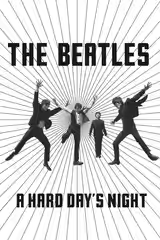
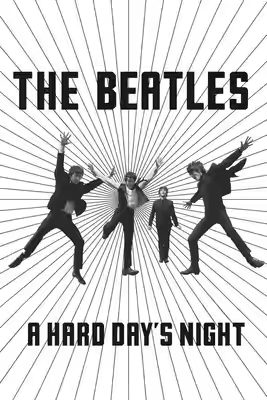
  4. A Hard Day’s Night (1964, Fi1m 86)Quick insults, unruly musicians and songs allowed to justify the whole enterprise.

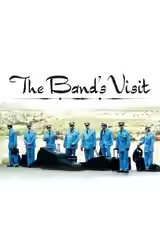
  5. The Band’s Visit (2007) · not reviewed yetA gentler evening with displaced musicians, awkward conversations and unexpectedly welcome company.

Free account

Know what to watch tonight

Two lists that know where things are streaming, collections you can share, your own score beside ours, and Discover that remembers what you have seen.

  • Want to see, sorted by what is streaming now
  • Seen, with your score out of ten
  • No adverts, ever