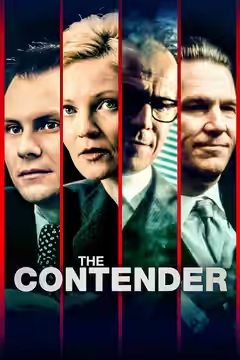
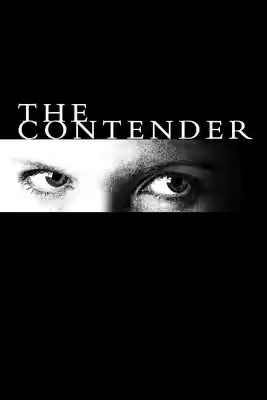
The Contender is an entertaining political drama weakened by a script that explains too much. Joan Allen, Gary Oldman and Jeff Bridges make it worth considering, provided a taste for Washington manoeuvring comes with patience for speeches.
Rod Lurie makes The Contender entertaining enough to keep a politically minded audience occupied, though its writing is too insistent to make it an easy recommendation. The interest lies in watching people use power, defend their beliefs and pass judgement on one another. Washington manoeuvring and an increasingly intrusive press provide ample pressure. The film is most convincing while its actors can make that pressure feel personal, before the screenplay begins explaining more than it needs to.
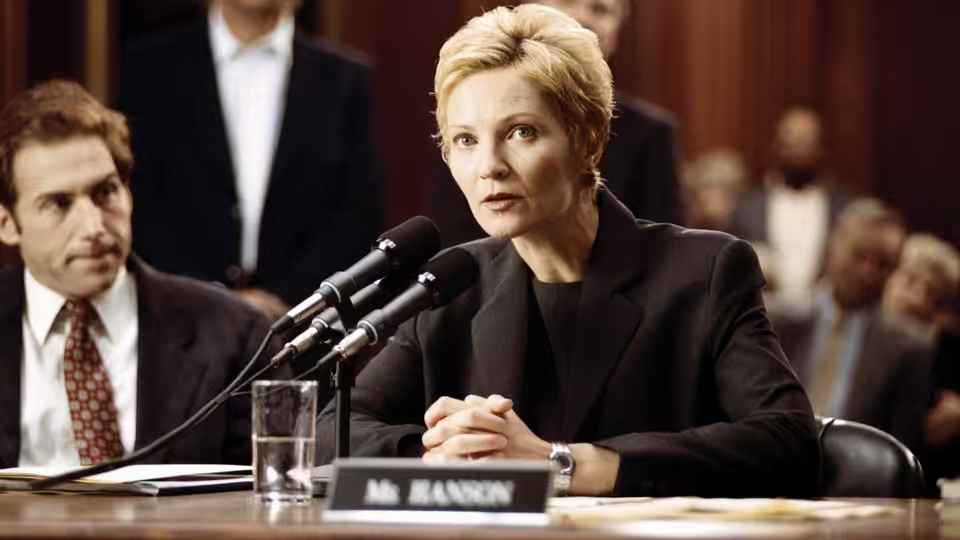
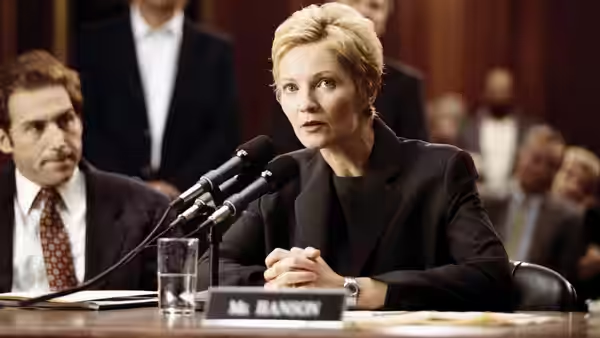
Joan Allen gives Laine Hanson the natural authority on which much of the film depends. We cared about her, because the performance makes a person emerge from material that could easily have reduced her to a political position. There is no need to be told repeatedly that someone with this much presence deserves our attention. Her work makes the more emphatic dialogue particularly frustrating: the film already has an actor capable of persuading us to listen.
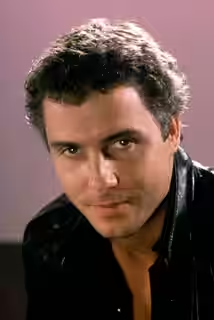
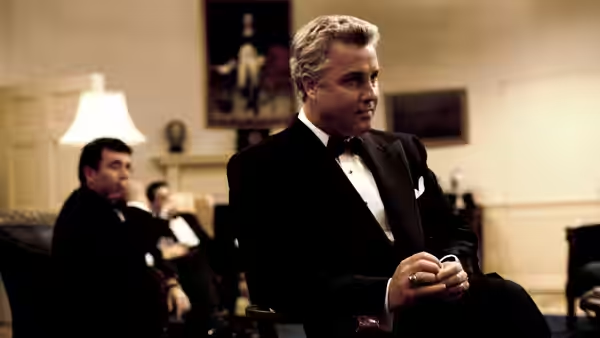
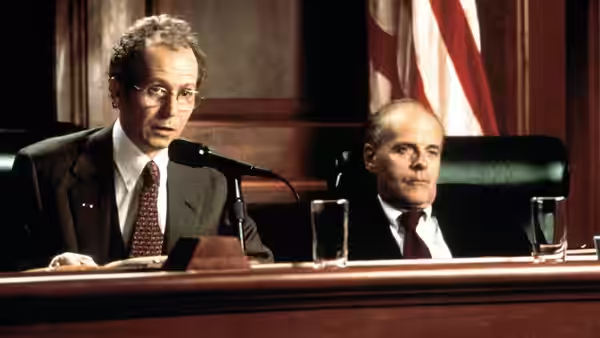
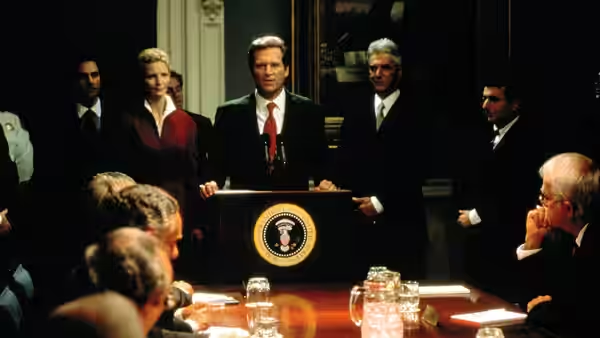
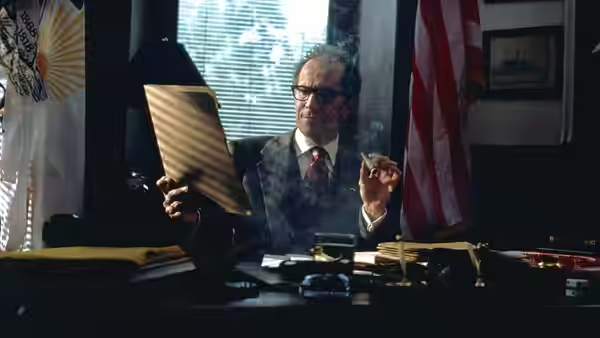
Gary Oldman makes Shelly Runyon interesting by allowing a reactionary to seem sincere. His conviction gives the opposition weight, and Rod Lurie keeps the performance from overwhelming the rest of the cast. Jeff Bridges brings an engaging personality to President Jackson Evans, ensuring that the business of power-brokering remains a pleasure to watch. The three leads make the contest feel human, even where the screenplay arranges it too neatly. That is a considerable help once the plotting starts to strain.
Denis Maloney’s cinematography and Alec Hammond’s production design give the proceedings a credible, professional finish. Neither draws attention away from the performances, which is a sensible priority for this material. Michael Jablow’s editing has to contend with explanatory dialogue that repeatedly slows the political business down. The film is well made, but cutting cannot fix every difficulty in the writing. Too many exchanges spell out positions without allowing much possibility that anyone might reconsider them.
Larry Groupé’s score is less helpful, insisting on the importance of scenes that are already emphatic enough. It makes the speeches harder work and gives the actors less room than they deserve. The greater weakness, however, is Rod Lurie’s screenplay, whose early plausibility gives way to increasingly unconvincing plotting. We will not describe the later developments, but the loss of credibility matters in a drama that asks us to take its political judgements seriously.
A political thriller needs to let us weigh what people say against what they might want. This one is too keen to settle those questions for us, and at 126 minutes its explanations become wearing. Even so, the cast supplies enough uncertainty and personality to keep the film from turning into a lecture throughout. There is a worthwhile evening here for anyone with an appetite for Washington arguments. Choose it for Joan Allen, Gary Oldman and Jeff Bridges, and bring some patience for the speeches.