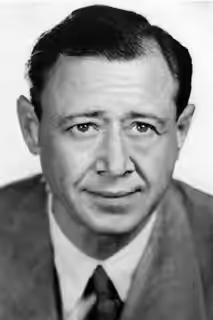
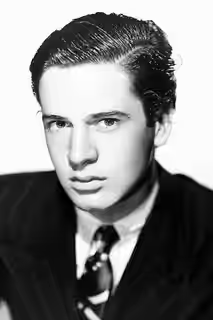
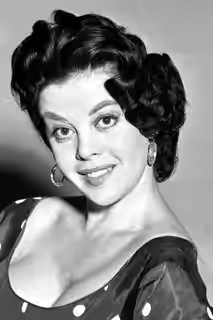
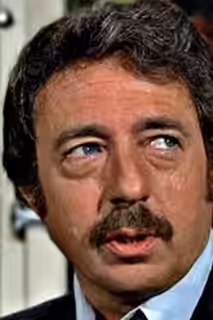
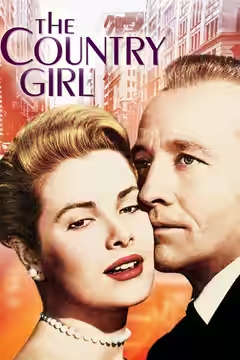
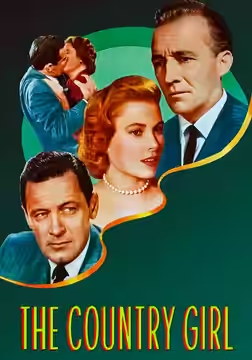
George Seaton’s film of the Clifford Odets play gives Bing Crosby a charming drunk who lies to everyone and Grace Kelly a wife who has stopped expecting better. The speeches have dated; the two performances have not.
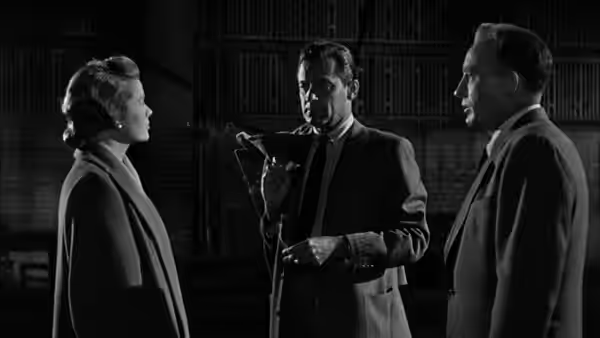
Frank Elgin (Bing Crosby) used to be the biggest name in musical comedy, and now he drinks. Bernie Dodd (William Holden), a director with a show in trouble and no leading man, wants him anyway, over the objections of his producer Philip Cook (Anthony Ross), and the film asks whether Frank can be got to an opening night and who will have to carry him there. George Seaton wrote and directed it from the Clifford Odets play, and it is a backstage drama that is at its best when nobody is on stage. It is worth an evening, and Crosby is most of the reason.
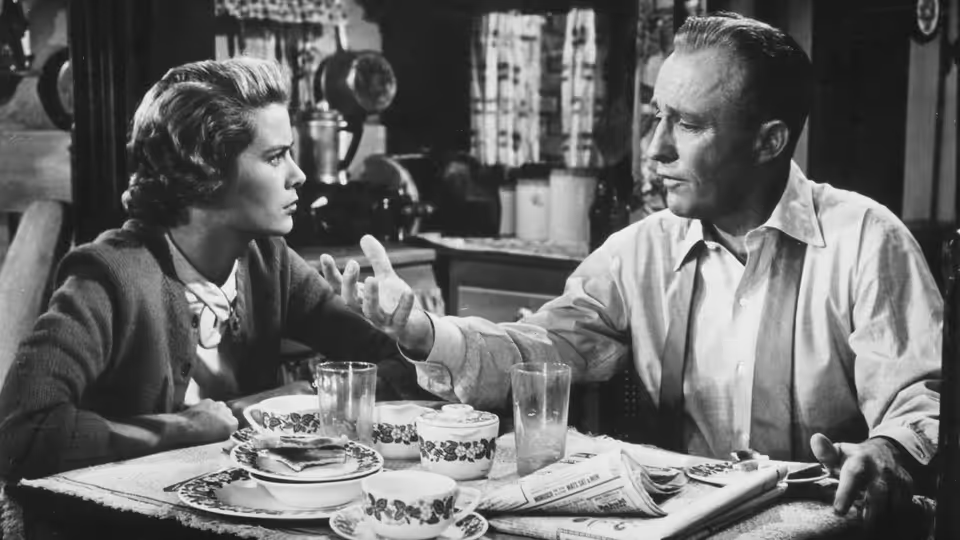
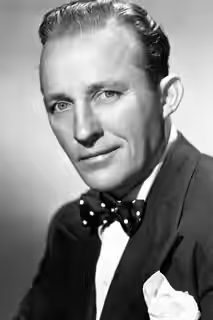
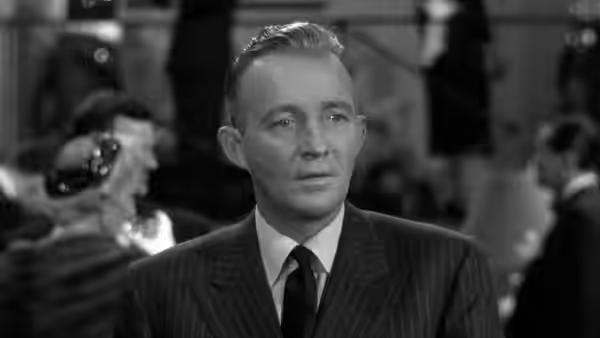
Crosby had spent two decades being the easiest man in pictures, and he puts all of that down here. His Frank is charming the way a good salesman is charming, and every warm word he says is doing a job. He fumbles his audition, stops, asks if they might go again, and his hands will not keep still. Later, alone, he pours a drink with the care of a man who has decided this one does not count. We found it hard to watch and we mean that as praise: he never once asks to be liked, and the film would fall apart if he did.
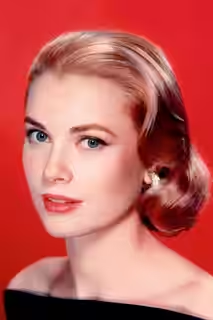
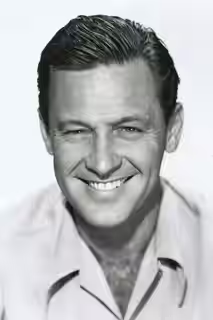
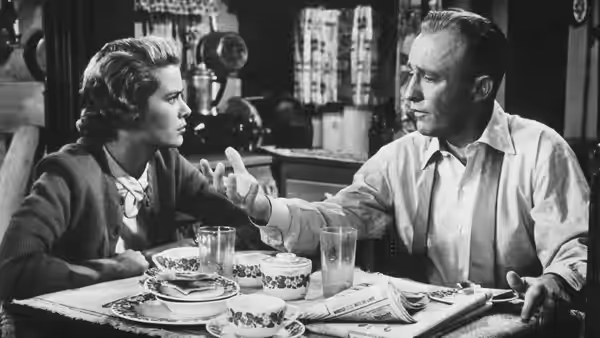
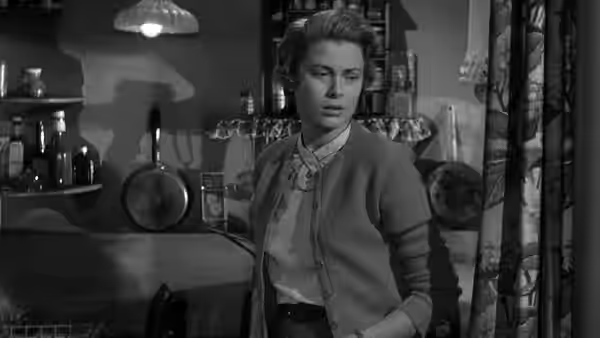
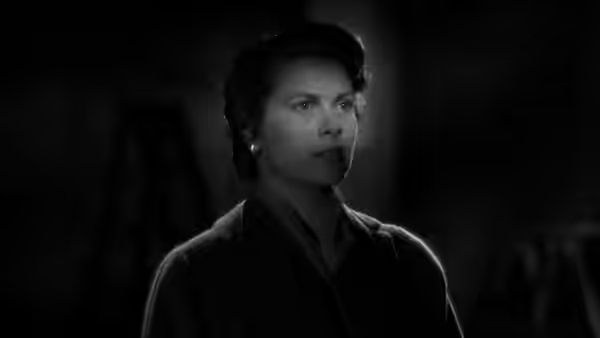
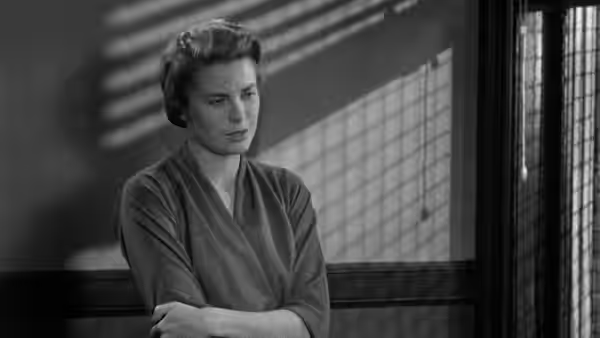
Grace Kelly plays Georgie, his wife. Edith Head puts her in a cardigan buttoned to the throat, flat shoes and spectacles, with her hair scraped back, and the point is not that she is plain but that she stopped bothering some years ago. Kelly gives her a flat, quick way of talking to Frank with all the tenderness worn off it, and there is a moment early on when she finds something he has hidden and says nothing at all that told us more about this marriage than any of the speeches that follow. Holden’s Bernie has decided what Georgie is before he has met her. He plays the certainty well and is even better when it starts to crack.
John F. Warren shoots it in black and white and keeps his camera at eye level in small rooms: the Elgins’ flat with its one window, a dressing room with bulbs around the mirror, the wings of a theatre on the road. It is not squalid. It is a life that has shrunk to fit the rooms. Victor Young’s score keeps quiet for long stretches and then swells at the end of a scene to tell us it has ended, which was the fashion, and we could have done with less of it. The numbers in the show within the show are staged plainly and Ellsworth Hoagland cuts them the same way, staying on Crosby’s face rather than the chorus, which is the right call.
The trouble is the talk. Odets wrote people who make speeches, and Seaton has kept a good many of them, so that characters tell each other what they have just realised in complete sentences. The argument about who is to blame for Frank is run three or four times with small variations, and by the third we were ahead of it. And the last ten minutes tidy up a situation that did not want tidying. We will not describe what happens; we will say the film spends ninety minutes showing us how tangled these three people are and then unpicks them in two scenes.
Backstage pictures of the period liked their drunks lovable. This one does not. Frank uses other people’s pity the way he uses the bottle, and the film knows it and does not let him off. That was rarer than it sounds in 1954, and it is why the picture still holds when the dialogue has gone stiff.
See it for the two leads, and for the sight of Crosby declining to be Bing Crosby for 104 minutes. Most of them are spent in rooms with the door shut, and that is where the film belongs.