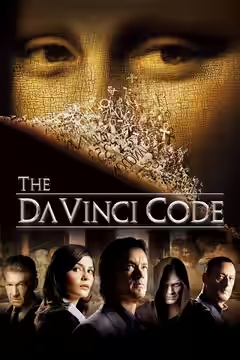
Ron Howard gives Dan Brown’s mystery a solemn, talk-heavy treatment that leaves little room for suspense. Ian McKellen supplies some welcome life, but the explanations exhaust our interest long before the film ends.
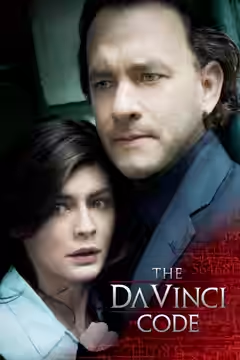
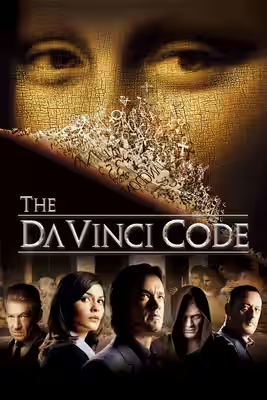
Ron Howard’s The Da Vinci Code is a poor thriller, too occupied with explaining its mystery to make us care about solving it. Adapting a Dan Brown novel, the director takes a sober approach to material that needs some pleasure in its own complications. There is a reasonable wish here to make the story comprehensible and to treat its audience seriously. But Akiva Goldsman’s screenplay keeps stopping to explain, and the explanations become the evening’s principal activity. At 149 minutes, that is a considerable commitment.
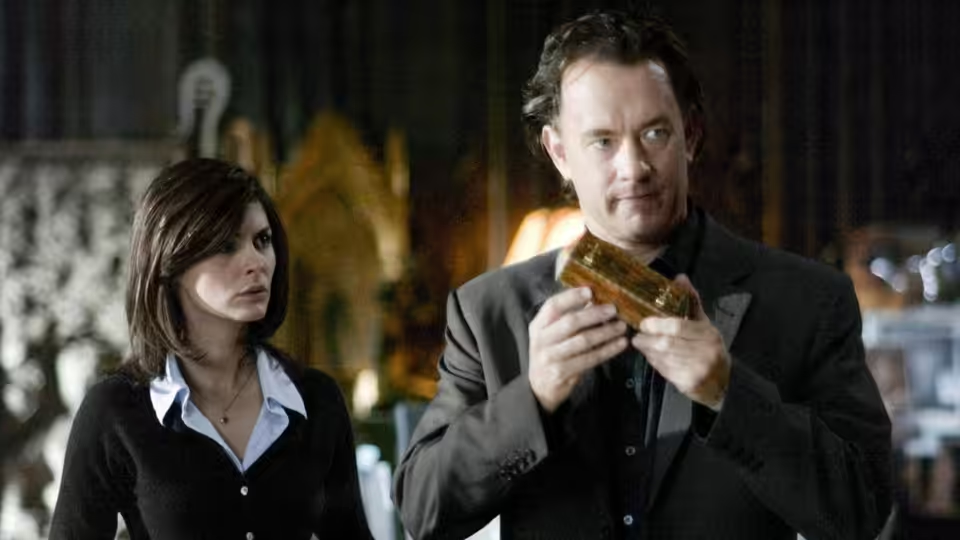
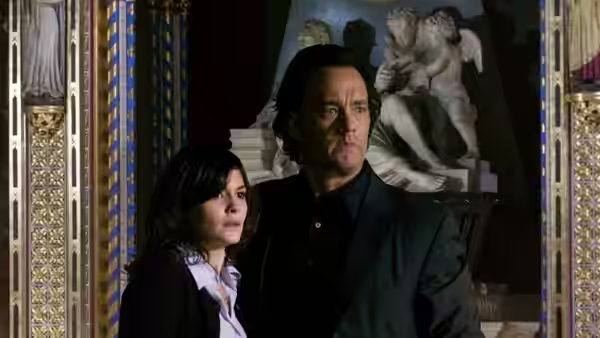
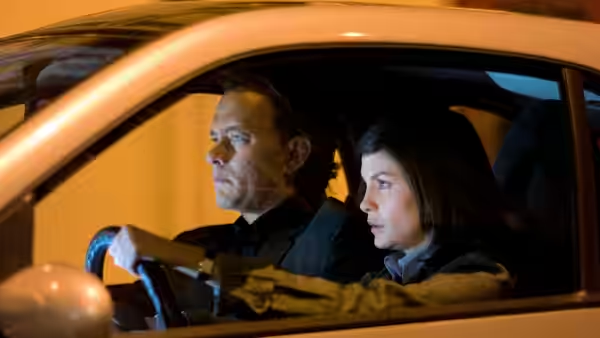
Tom Hanks plays Robert Langdon with a restraint that leaves little for us to engage with. He is so often responding to information that the performance begins to seem passive even when the story requires urgency. Audrey Tautou does better as Sophie Neveu, bringing a conviction that suggests the situation matters to somebody. Yet her energy cannot make the central partnership compelling when so much of their business consists of receiving or delivering information.
We were bored, and the steady succession of explanations was the reason. A mystery can be talkative and still move if each conversation changes our view of the people having it. Here, we are mostly waiting for the next piece of information, without much curiosity about the person supplying it. The dialogue gives the actors plenty to communicate and few chances to surprise us. After a while, the prospect of understanding more is not much of an incentive to keep listening.
Ian McKellen, as Sir Leigh Teabing, provides some welcome relief. He brings enjoyment to the talking, varying its pace and emphasis enough to make the delivery itself worth attending to. We perked up when he appeared; his willingness to have some fun exposes how dutiful the surrounding performances are. Jean Reno gives Captain Bezu Fache a useful firmness, though neither supporting performance can supply the momentum missing elsewhere.
Salvatore Totino’s cinematography does not make the action easy enough to follow, and the muddled staging denies it much excitement. A thriller needs us to understand danger quickly, particularly when the dialogue has already demanded so much concentration. Allan Cameron’s production design has little opportunity to make an impression while the film keeps our attention fixed on spoken explanations. We have time to listen to the characters, but little reason to look around them.
Editors Daniel P. Hanley and Mike Hill face a screenplay whose pauses for instruction are built into its progress. The cutting cannot disguise that repeated stop and start, and the action does not provide a convincing release from it. Hans Zimmer’s score cannot make the lengthy explanations feel urgent, however much weight the music gives them. More room for the performers to play off one another would have helped, especially with a cast capable of making a conversation interesting.
The sober approach will suit anyone chiefly interested in seeing Dan Brown’s story treated with respect. We can understand that attraction, and the adaptation’s care is preferable to contempt for the material. But judged as a mystery thriller, it rarely creates enough suspense to justify the time spent laying everything out. We would leave this one to readers who prize faithfulness above pace.