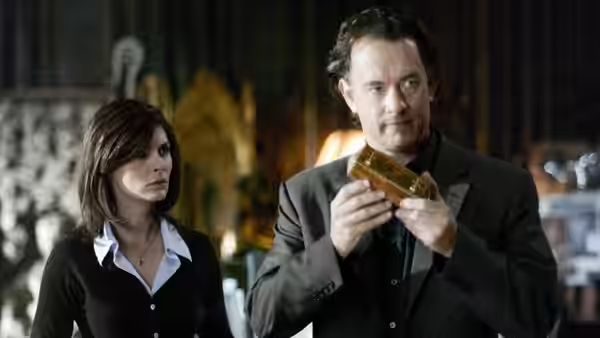
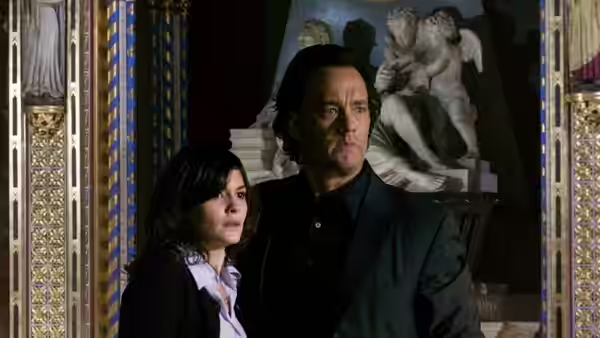
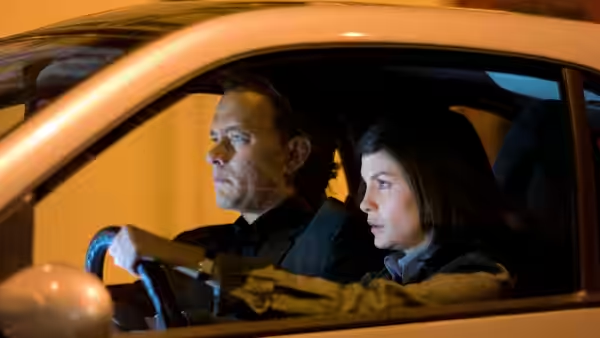
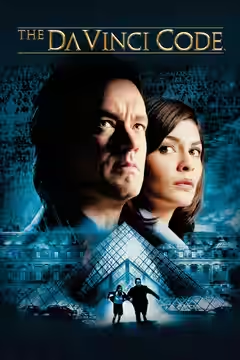
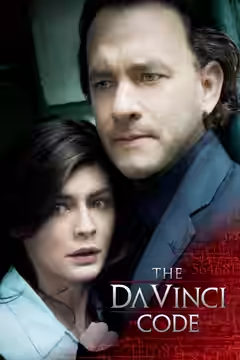
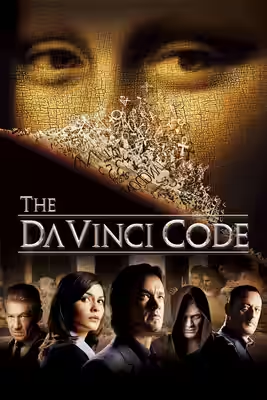
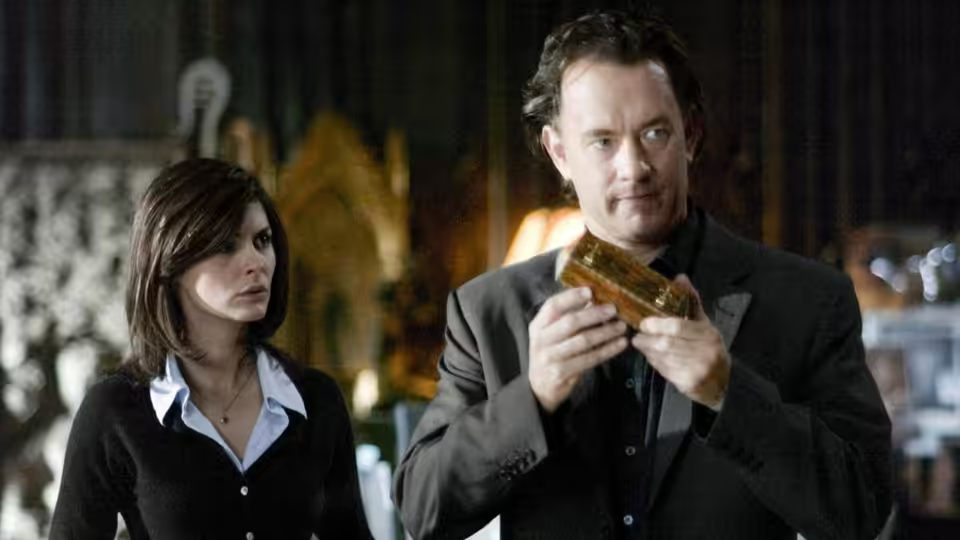
Robert Langdon (Tom Hanks) examines a golden object beside Sophie Neveu (Audrey Tautou) in a museum
Film review

The Da Vinci Code

2006 · Directed by Ron Howard · 2h 29m

In a sentenceTom Hanks listens so carefully that we began to worry there would be a test

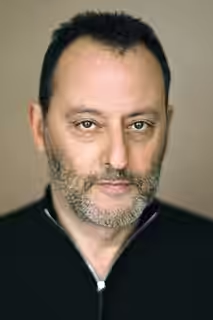
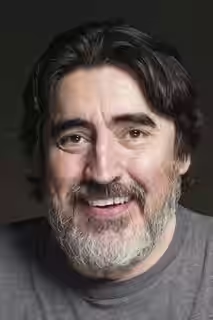
Robert Langdon (Tom Hanks) and Sophie Neveu (Audrey Tautou) are the central characters in this mystery thriller, which also features Sir Leigh Teabing (Ian McKellen). Jean Reno plays Captain Bezu Fache, Paul Bettany plays Silas, and Alfred Molina plays Bishop Manuel Aringarosa. Ron Howard directs this adaptation of Dan Brown’s novel, from a screenplay by Akiva Goldsman. The supporting cast includes Jürgen Prochnow as André Vernet and Jean-Pierre Marielle as Jacques Saunière. The film runs for 149 minutes and carries a 12A certificate.

Fi1m review

Ron Howard gives Dan Brown’s mystery a solemn, talk-heavy treatment that leaves little room for suspense. Ian McKellen supplies some welcome life, but the explanations exhaust our interest long before the film ends.

Ron Howard’s The Da Vinci Code is a poor thriller, too occupied with explaining its mystery to make us care about solving it. Adapting a Dan Brown novel, the director takes a sober approach to material that needs some pleasure in its own complications. There is a reasonable wish here to make the story comprehensible and to treat its audience seriously. But Akiva Goldsman’s screenplay keeps stopping to explain, and the explanations become the evening’s principal activity. At 149 minutes, that is a considerable commitment.

Tom Hanks plays Robert Langdon with a restraint that leaves little for us to engage with. He is so often responding to information that the performance begins to seem passive even when the story requires urgency. Audrey Tautou does better as Sophie Neveu, bringing a conviction that suggests the situation matters to somebody. Yet her energy cannot make the central partnership compelling when so much of their business consists of receiving or delivering information.

We were bored, and the steady succession of explanations was the reason. A mystery can be talkative and still move if each conversation changes our view of the people having it. Here, we are mostly waiting for the next piece of information, without much curiosity about the person supplying it. The dialogue gives the actors plenty to communicate and few chances to surprise us. After a while, the prospect of understanding more is not much of an incentive to keep listening.

Ian McKellen, as Sir Leigh Teabing, provides some welcome relief. He brings enjoyment to the talking, varying its pace and emphasis enough to make the delivery itself worth attending to. We perked up when he appeared; his willingness to have some fun exposes how dutiful the surrounding performances are. Jean Reno gives Captain Bezu Fache a useful firmness, though neither supporting performance can supply the momentum missing elsewhere.

Salvatore Totino’s cinematography does not make the action easy enough to follow, and the muddled staging denies it much excitement. A thriller needs us to understand danger quickly, particularly when the dialogue has already demanded so much concentration. Allan Cameron’s production design has little opportunity to make an impression while the film keeps our attention fixed on spoken explanations. We have time to listen to the characters, but little reason to look around them.

Editors Daniel P. Hanley and Mike Hill face a screenplay whose pauses for instruction are built into its progress. The cutting cannot disguise that repeated stop and start, and the action does not provide a convincing release from it. Hans Zimmer’s score cannot make the lengthy explanations feel urgent, however much weight the music gives them. More room for the performers to play off one another would have helped, especially with a cast capable of making a conversation interesting.

The sober approach will suit anyone chiefly interested in seeing Dan Brown’s story treated with respect. We can understand that attraction, and the adaptation’s care is preferable to contempt for the material. But judged as a mystery thriller, it rarely creates enough suspense to justify the time spent laying everything out. We would leave this one to readers who prize faithfulness above pace.
Critical consensus AI synthesised

47
Positive
0
Mixed
6
Negative
6

The consensus leans towards disappointment, with the reviews split between mixed and negative assessments. Most critics find the adaptation too dependent on explanation, leaving little space for character or suspense. Praise clusters around the supporting performances, particularly Ian McKellen, whose liveliness offers some relief from the solemnity. There is also appreciation for Audrey Tautou’s urgency, though the leads receive less consistent support than the supporting cast.

The main disagreement is over whether fidelity to the novel compensates for the slow, talk-heavy storytelling. Radio Times sees a sober, comprehensive adaptation that should satisfy the book’s fans; less persuaded critics find that same approach inert and overlong. Assessments range from qualified enjoyment to emphatic rejection, with reservations about Tom Hanks’s passivity and the handling of action. Den of Geek offers a more favourable assessment of the extended cut, judging it a substantial improvement over the theatrical version rather than an outstanding thriller.

Screen Daily
17 May 2006 · Mike Goodridge
64*

The review’s verdict is unavailable because the article text is behind a paywall. The visible page does not reveal what the critic praised or criticized.

Read the full review →
The New York Times
64*

The page content is inaccessible, so the critic’s verdict cannot be determined. No specific praise or complaint is visible.

Read the full review →
RogerEbert.com
17 May 2006 · ★★½/4 · Roger Ebert
62

Ebert finds the film entertaining but weighed down by its talk-heavy storytelling. He singles out the constant exposition as a drawback.

Read the full review →
Radio Times
★★★ · Karen Krizanovich
60

Krizanovich says fans of the novel will not be disappointed by the adaptation. She praises its sober, all-encompassing approach and Howard’s direction.

Read the full review →
Slant Magazine
7 November 2006 · ★★★ · Nick Schager
60

Schager finds the film leaden, incompetent, and unintentionally humorous. He especially criticizes Tom Hanks’s blank performance and the film’s clumsy camerawork.

Read the full review →
Los Angeles Times
18 May 2006 · Kenneth Turan
40*

Turan finds the adaptation competent but constrained by its cautious, franchise-protecting approach, and only occasionally thrilling. He praises Audrey Tautou’s urgent, convincing performance as Sophie, while criticizing Tom Hanks as too reactive for Langdon.

Read the full review →

Straight answers AI written, from our review

Is The Da Vinci Code worth watching?
The Da Vinci Code is difficult to recommend as a thriller; we score it 42 out of 100 for its slow pace and shortage of suspense. Ian McKellen brings welcome life to the dialogue, but the solemn, explanation-heavy treatment chiefly suits readers keen to see Dan Brown’s story treated respectfully.
How long is The Da Vinci Code, and what is it rated?
The Da Vinci Code runs 2h 29m. It is a thriller and mystery film.
Where can I watch The Da Vinci Code in Panama?
The Da Vinci Code is available to rent from Apple TV from PAB 3.99. Availability is checked daily; the links above go straight to each service.
How violent or frightening is The Da Vinci Code, and is it suitable for children?
The Da Vinci Code carries a UK 12A certificate, so it is not an unrestricted choice for children: under-12s need an accompanying adult at the cinema. The certificate warrants parental judgement but does not by itself specify how violent or frightening it is; our review finds the lengthy explanations more exhausting than suspenseful.
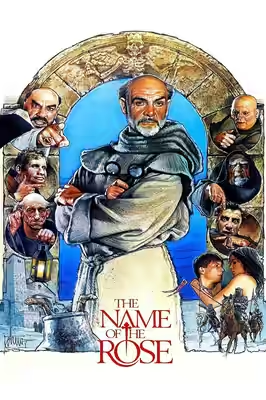
How does The Da Vinci Code compare to The Name of the Rose?
The Da Vinci Code is the weaker choice beside The Name of the Rose, which we recommend for patient mystery lovers who want engaging people as well as ideas. The medieval investigation sometimes drags, but Sean Connery’s warmth and the persuasive abbey setting offer more reward than the repeated explanations in Ron Howard’s film.
Is The Da Vinci Code based on a true story or a book?
The Da Vinci Code is adapted from Dan Brown’s novel, rather than presented as a true-story account, with a screenplay by Akiva Goldsman. We find its treatment respectful but overburdened with explanations, so prior knowledge of the book is not needed to follow the mystery, though devoted readers may appreciate the sober approach more.
What should I watch after The Da Vinci Code?
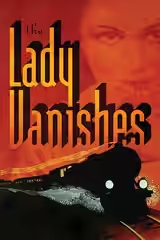
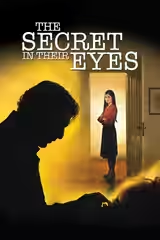
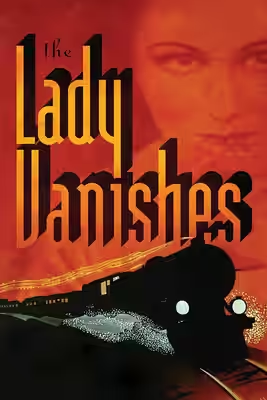
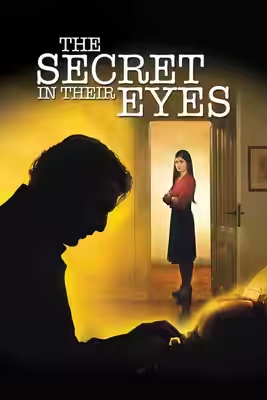
After The Da Vinci Code, try The Name of the Rose (1986, Fi1m 77): A learned murder mystery that gives its arguments people worth following. Then The Lady Vanishes (1938, Fi1m 88): A conspiracy mystery that remembers how much suspense depends on enjoying the company; and The Secret in Their Eyes (2009, Fi1m 78): An investigation whose emotional consequences matter as much as the answer.

Cast

If you liked this, try…

  1. The Name of the Rose (1986, Fi1m 77)A learned murder mystery that gives its arguments people worth following.

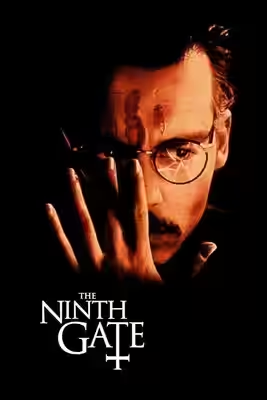
  2. The Ninth Gate (1999) · not reviewed yetAnother scholarly investigation, with enough unease to make the research feel dangerous.

  3. The Lady Vanishes (1938, Fi1m 88)A conspiracy mystery that remembers how much suspense depends on enjoying the company.

  4. The Secret in Their Eyes (2009, Fi1m 78)An investigation whose emotional consequences matter as much as the answer.

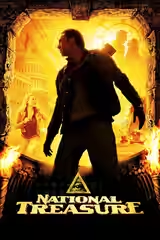
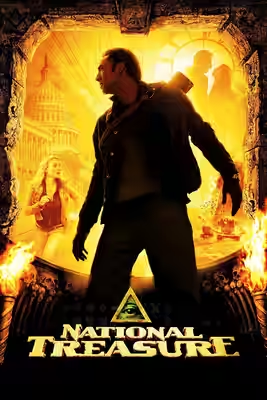
  5. National Treasure (2004, Fi1m 52)Historical clues and elaborate deductions, approached with a welcome sense of fun.

Free account

Know what to watch tonight

Two lists that know where things are streaming, collections you can share, your own score beside ours, and Discover that remembers what you have seen.

  • Want to see, sorted by what is streaming now
  • Seen, with your score out of ten
  • No adverts, ever