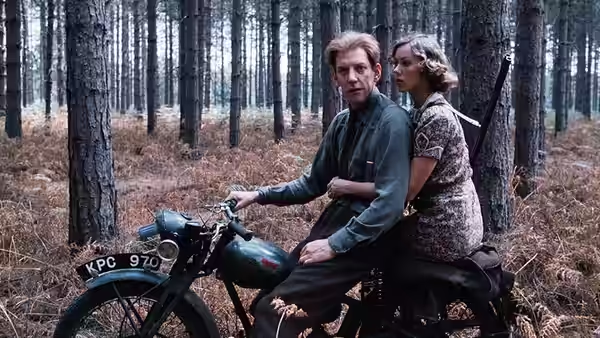
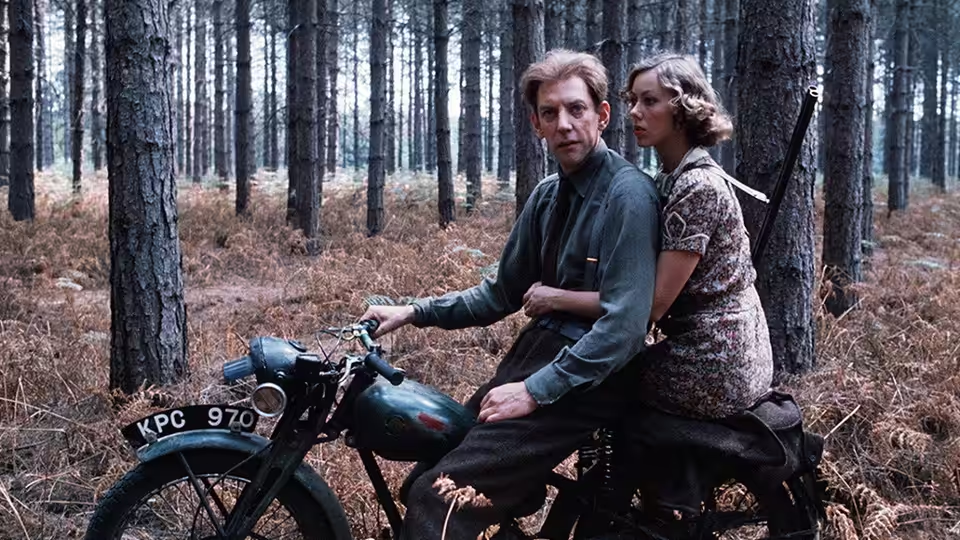
A man and woman ride a motorcycle through a sparse forest
Film review

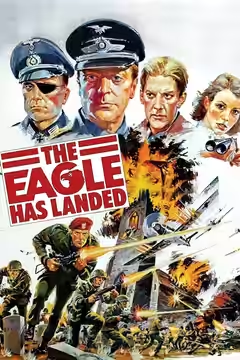
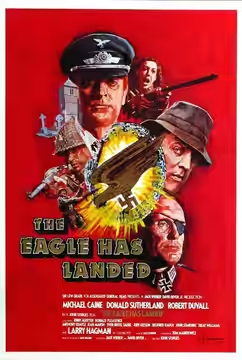
The Eagle Has Landed

1976 · Directed by John Sturges · 2h 15m · MPA PG

In a sentenceA Nazi kidnap plot in which the invaders are the only gentlemen and Donald Sutherland’s Irish accent takes the heaviest casualties

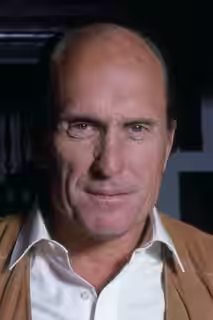
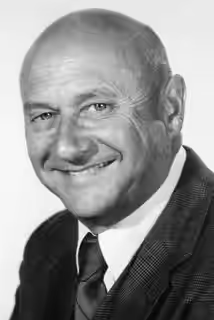
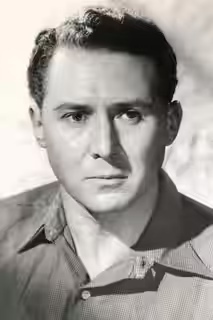
Autumn 1943. After Mussolini’s rescue by paratroops, Berlin wonders whether Churchill could be taken the same way. Col. Max Radl (Robert Duvall), a desk officer under Admiral Canaris (Anthony Quayle), is told to write a study nobody will read; Himmler (Donald Pleasence) reads it, and it becomes an order. Radl needs a village: Studley Constable in Norfolk, where Churchill will spend a weekend, and where Joanna Grey (Jean Marsh) has been radioing Berlin for years. A soldier: Col. Kurt Steiner (Michael Caine), a paratrooper on a penal posting after defying the SS in Warsaw. And a man to go in first: Liam Devlin (Donald Sutherland), an IRA man lecturing in Berlin, who arrives in the village as a marsh warden and catches the eye of Molly Prior (Jenny Agutter).

Plays from YouTube when you press play; nothing loads from them until then.

Fi1m review

John Sturges takes a preposterous idea, German paratroopers dropping on a Norfolk village to kidnap Churchill, and plays it with a straight face and a fine cast. It is slow in the middle and good at both ends, and Michael Caine holds it together.

In the autumn of 1943, with Mussolini just lifted off a mountain by German paratroops, somebody in Berlin wonders aloud whether Churchill could be lifted the same way. Col. Max Radl (Robert Duvall), a one-eyed staff officer with a drawer full of dead files, is told by Admiral Canaris (Anthony Quayle) to write a feasibility study nobody will read. Radl reads it, and then Himmler (Donald Pleasence) reads it, and the joke becomes an order. John Sturges’s film of Jack Higgins’s novel, from a screenplay by Tom Mankiewicz, takes this daft premise and plays it dead straight for 135 minutes. It is better than the premise deserves and slower than it should be, and it is worth an evening if war films are your thing.

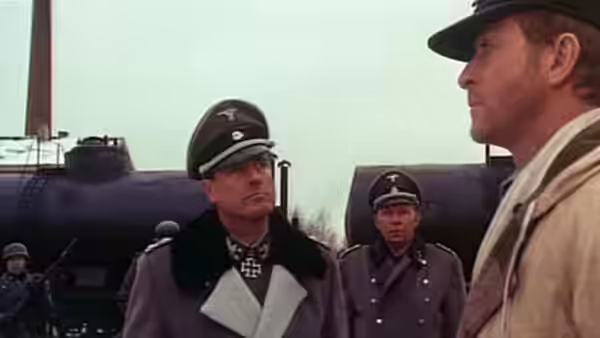
Sturges introduces his hero on a railway platform in Warsaw, where Col. Kurt Steiner (Michael Caine) steps between an SS detail and a Jewish woman they are herding onto a train, and loses his rank and his freedom for it. It is the scene the whole film leans on. It tells us these particular Germans are the kind we are permitted to like, and Caine plays it without a flicker of speechmaking, which is why it works. Donald Sutherland arrives as Liam Devlin, an IRA man lecturing in Berlin, who is sent ahead to Studley Constable to prepare the ground with Joanna Grey (Jean Marsh), a widow who has been sending Berlin the weather for years.

Then the film sits down. Devlin courts Molly Prior (Jenny Agutter), a farm girl who rides across the marsh to see him, and the courtship takes most of the second act. Agutter is warm and Sutherland is funny, and we still found ourselves checking how much was left. Pleasence plays Himmler as a mild, pedantic clerk who never raises his voice, and Duvall watches him with the face of a man reading his own death warrant. Every time the film cut back to Norfolk we felt the air go out of it.

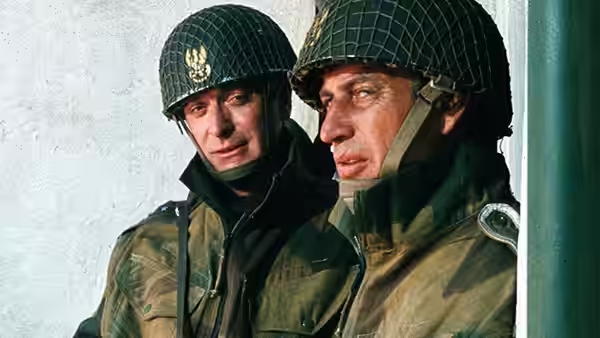
Steiner and his men come down on the marsh dressed as Polish paratroopers, with their own uniforms underneath, on the grounds that a soldier shot in his own colours has died a soldier’s death. From there the last hour is the director of The Great Escape doing what he did best: a small place, a clock, and a plan going wrong in stages. Anthony B. Richmond shoots it flat and grey under a wide sky, and the church by candle and lamp. Lalo Schifrin gives the Germans a brisk snare-drum march and gives Devlin something lighter, close to a folk tune, which tells you where the film’s sympathies lie.

The Americans, when they turn up, are the weak point. Larry Hagman’s Colonel Pitts is a blowhard who wants a war to fight, and the film treats him as comic relief in a stretch that has no room for it; Treat Williams’s Captain Clark is the sensible one and gets little to do but be sensible. John Standing’s Father Verecker and Judy Geeson as his sister Pamela are the village’s conscience, and the script gives them exactly enough.

What we felt, honestly, was surprise. We went in expecting a Sunday afternoon time-passer and for two stretches, the Warsaw platform and the last forty minutes, we were properly caught, leaning forward, minding what happened to men we had every historical reason not to mind about. That is Caine’s doing. He plays Steiner as a tired professional who no longer believes in Germany and still believes in the men he brought with him, and he never asks for our sympathy, which is the only way to earn it from a British audience in 1976. Most critics have called the film far-fetched, and it is; the trick is that everyone on screen behaves as if it were not.

It was Sturges’s last film, and it is not The Great Escape, which knew how to make waiting exciting. This one makes you wait and then rewards you. See it for Caine, for Pleasence, and for the last hour; make a pot of tea for the middle. It runs 135 minutes and carries a 15.

Critical consensus AI synthesised

60
Positive
2
Mixed
2
Negative
1

With only 5 reviews in so far, the lean is mildly positive: most critics find the Churchill-kidnap premise far-fetched and are entertained anyway. The praise gathers around the cast, with Michael Caine’s conviction and Donald Pleasence’s Himmler mentioned repeatedly, and John Sturges’s handling of the action gets a nod. The reservations are about plausibility: the German infiltrators are called unconvincing, and Radio Times finds Donald Sutherland’s Irish accent unlikely. The one outright dissent is Time Out, which calls it a plodding time-passer. For so few reviews, the spread is wide, from warmly indulgent to dismissive.

Variety
31 December 1976 · Variety Staff
75*

The review is positive about the performances in the adaptation. It singles out Sutherland’s credibility, Caine’s conviction, and Pleasence’s portrayal of Himmler.

Read the full review →
Empire
27 April 2006 · Ian Nathan
65*

Nathan finds the film daft but engrossing, and more sly and intriguing than routine war movies. He praises the mystery-like suspense and the memorable performances, particularly Donald Pleasance as Himmler.

Read the full review →
Radio Times
★★★ · Tom Hutchinson
60

The critic calls it a far-fetched but entertaining wartime thriller. They praise John Sturges’s action, while finding the German infiltrators unconvincing and Donald Sutherland’s Irish accent unlikely.

Read the full review →
Time Out
· PT
30*

The review calls it a plodding time-passer. It singles out the Nazi plot to kidnap Churchill as its central premise.

Read the full review →
Eye for Film
22 December 2001 · Angus Wolfe Murray
75*

The critic finds the film an entertaining, exciting war-adventure yarn despite its absurdities. Michael Caine’s presence is singled out as what makes the story work.

Read the full review →

Straight answers AI written, from our review

Is The Eagle Has Landed worth watching?
The Eagle Has Landed is worth an evening if war films are your thing, and we scored it 65. Michael Caine holds it together as a tired German paratrooper, the Warsaw opening and the last hour are properly gripping, and the long Norfolk courtship in the middle is where the air goes out. Make a pot of tea for the second act.
How long is The Eagle Has Landed, and what is it rated?
The Eagle Has Landed runs 2h 15m and is rated PG by the MPA in the US. It is an adventure and drama film.
Where can I watch The Eagle Has Landed in the US?
The Eagle Has Landed is streaming on Amazon Prime Video, Tubi and The Roku Channel in the US, and it is also available to rent from Amazon Prime Video from $2.99. Availability is checked daily; the links above go straight to each service.
How violent or frightening is The Eagle Has Landed, and is it suitable for children?
The Eagle Has Landed carries a UK 15 certificate, so it is not for children, though its violence is the flat, grey soldiering of a 1976 war adventure rather than anything gory. The most upsetting scene is early, on a Warsaw railway platform where the SS herd a Jewish woman onto a train. Teenagers who can take that will manage the rest.
How does The Eagle Has Landed compare to The Great Escape?
The Eagle Has Landed is the weaker of the two John Sturges films, because The Great Escape knew how to make waiting exciting and this one simply makes you wait before rewarding you. Both build to a small place, a clock and a plan going wrong in stages. Watch the earlier film first; come to this one for Caine, Pleasence and its last hour.
Is The Eagle Has Landed based on a true story or a book?
The Eagle Has Landed is based on Jack Higgins's novel of the same name, not on a true story, though it borrows the real rescue of Mussolini by German paratroops as its starting point. The plot to kidnap Churchill from a Norfolk village is invented, and the film plays it dead straight. You need not know the book to follow it.
What should I watch after The Eagle Has Landed?
After The Eagle Has Landed, try The Great Escape (1963, Fi1m 82): Sturges at full strength: one camp, one plan, and waiting made thrilling. Then The Day of the Jackal (1973, Fi1m 84): Another assassination plot we know must fail, and still we hold our breath.

Cast

If you liked this, try…

  1. Went the Day Well? (1942) · not on Fi1m yetGermans in an English village, made while it might still happen; far nastier and better.

  2. The Great Escape (1963, Fi1m 82)Sturges at full strength: one camp, one plan, and waiting made thrilling.

  3. The Day of the Jackal (1973, Fi1m 84)Another assassination plot we know must fail, and still we hold our breath.

  4. Cross of Iron (1977) · not on Fi1m yetPeckinpah’s German soldiers on the Eastern Front, with none of Steiner’s good manners.

  5. Army of Shadows (1969) · not on Fi1m yetMelville’s French Resistance, grey and unglamorous, for when heroics start to feel cheap.