The photography makes John Boorman’s jungle adventure worth considering, despite its clumsy plotting and insistent moral lessons. Powers Boothe gives a father’s search the weight that the writing cannot always supply.
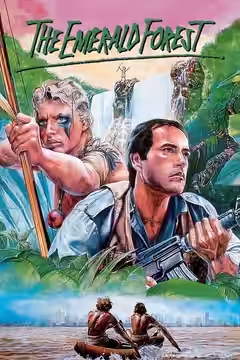
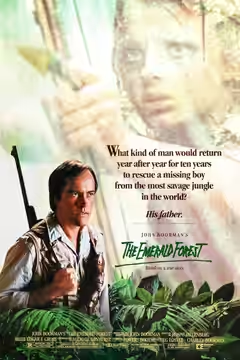
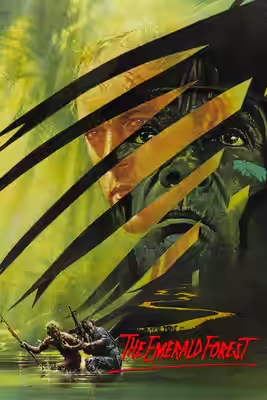
The Emerald Forest is an involving jungle adventure with an unfortunate habit of lecturing us. John Boorman wants us to question what counts as civilisation, and takes the plight of the forest seriously. The screenplay by Rospo Pallenberg too often simplifies the people who must carry those concerns. Its strongest starting point is also its simplest: a father returning year after year for ten years to find his missing son.
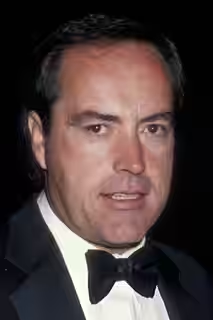
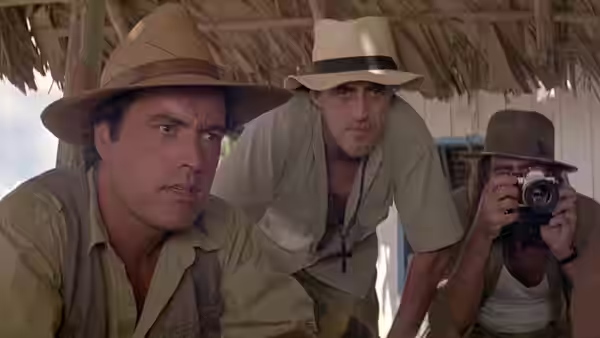
Powers Boothe gives the search a convincing weight. His Bill Markham has enough determination to hold our attention even when the plot becomes awkward, and the performance makes the father’s persistence comprehensible without making it seem easy. We felt for him, because the repeated journeys make a parent’s refusal to give up feel painfully costly. The film needs that human concern whenever its lessons about the forest threaten to take over.
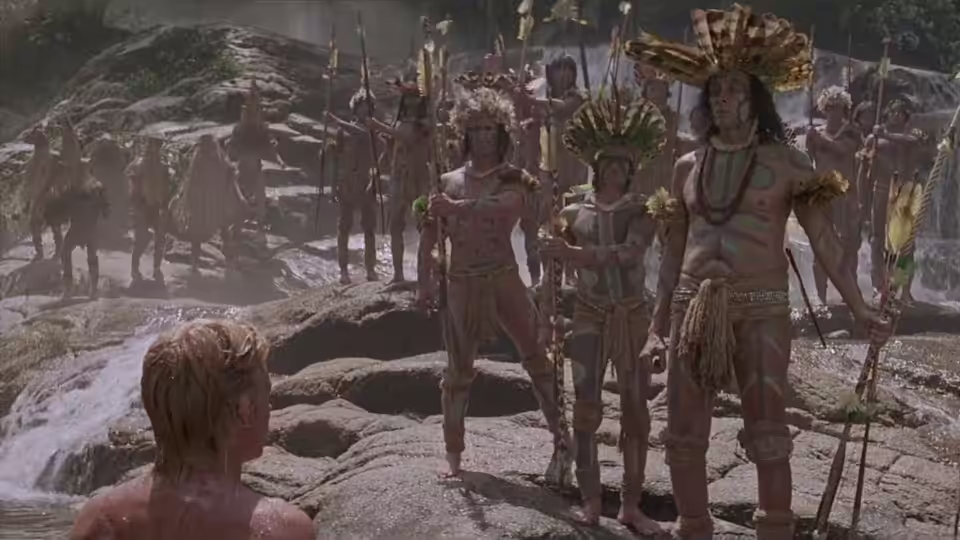
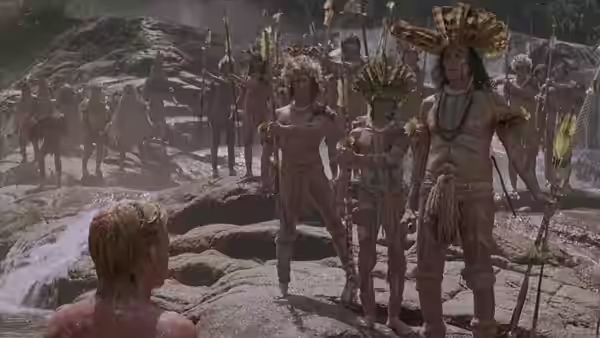
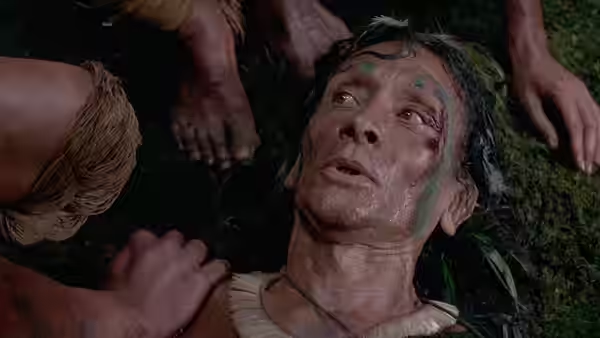
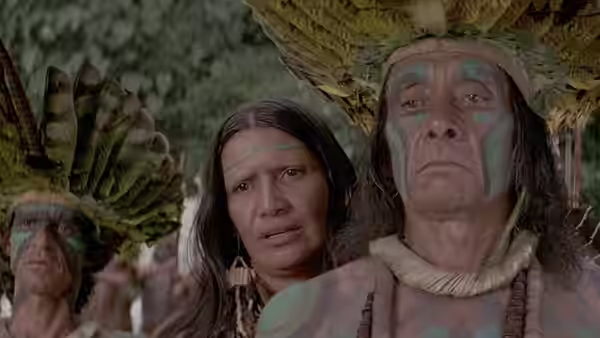
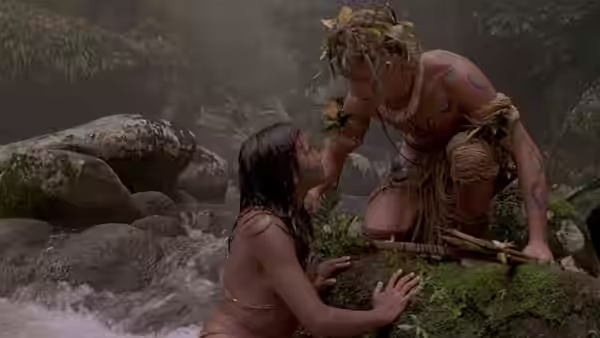
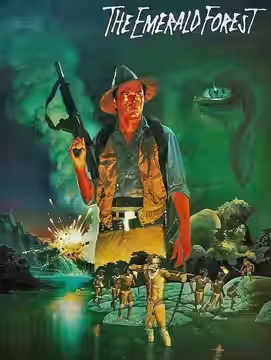
Philippe Rousselot’s photography is the stronger reason to stay. The jungle has variations of light and colour that keep us looking even when the story has stopped surprising us; green need not mean visual monotony. The attention to ritual gives the forest communities a life beyond their function in the search, at least for stretches of the film. Simon Holland’s production design helps give these passages their physical interest, though the writing supplies less detail about the people taking part.
The music by Junior Homrich and Brian Gascoigne gives those passages a seriousness that largely works. It encourages us to attend to the rituals, although the film hardly needs further encouragement to be solemn. Ian Crafford’s editing gives the adventure enough forward movement to survive the screenplay’s clumsier passages. What it cannot do is make the switches between an absorbing journey and an environmental lesson feel consistently natural, and we sometimes become too aware of the point a scene has been arranged to make.
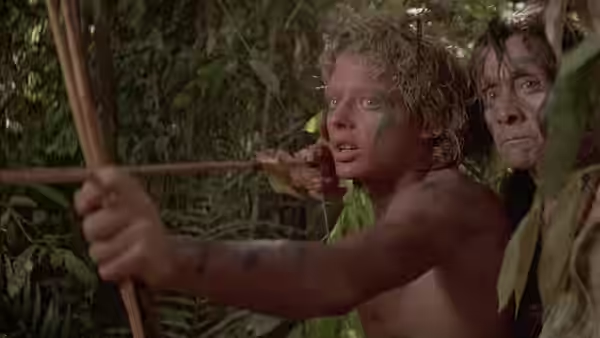
Charley Boorman is a less reliable centre as Tomme. There is an appealing openness to the performance, but also an awkwardness that becomes hard to ignore when the character needs more weight. The affection the film has for him does not supply the missing detail. Rospo Pallenberg’s writing gives the forest communities a related problem: they too often seem required to stand for a purer way of living, with too little room to be difficult, ordinary people.
An adventure can simplify a conflict without giving every character a complicated private life. Here, though, the forest communities are central to what John Boorman wants to say, so their idealisation weakens the film’s claim to take them seriously. We want to know more about these people than whether they confirm the director’s convictions. Try it if jungle adventure is a particular pleasure, with some patience for the lectures.