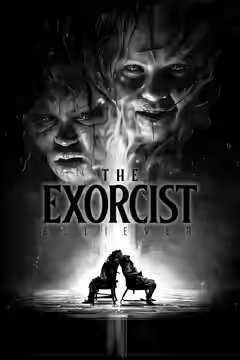
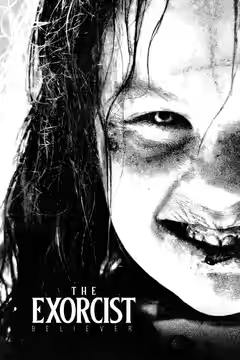
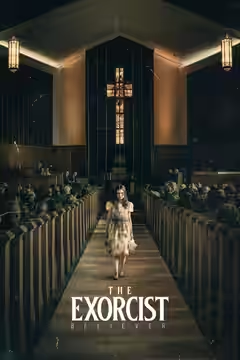
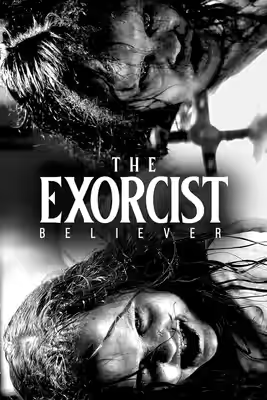
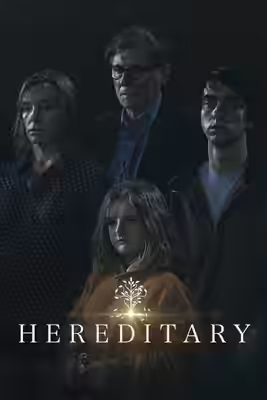
David Gordon Green opens quietly and well, with two missing girls and a father who cannot say what he fears. Then the exorcism arrives, the shouting starts, and a film that set out to widen the faith ends up with hardly any.
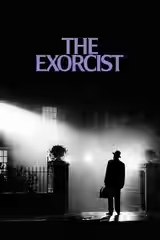
David Gordon Green did this before with Halloween in 2018: take a horror series that had wandered, pretend the later entries never happened, and pick up from the first film. The Exorcist: Believer does the same with William Friedkin’s The Exorcist from 1973. It brings back Ellen Burstyn as Chris MacNeil, doubles the possessed children and runs 111 minutes. The first forty are careful and quietly unsettling. The rest are loud and crowded and not frightening, and the film ends with less to say about faith than the one it follows.
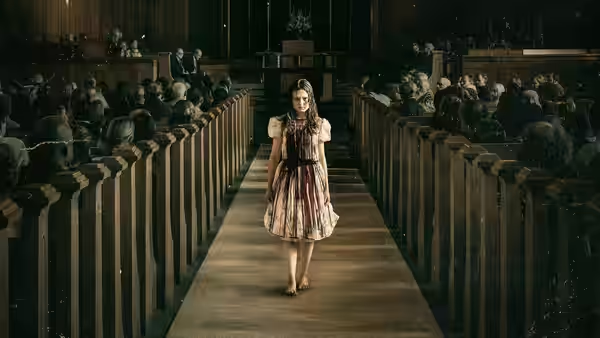
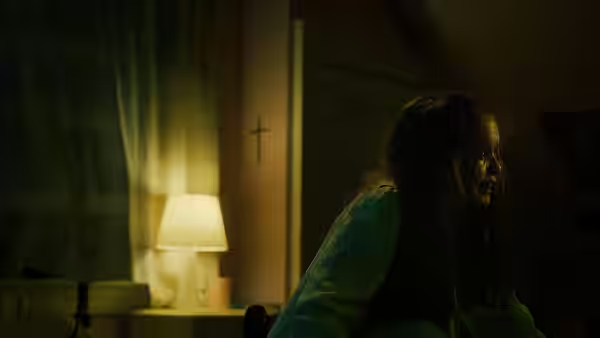
The early stretch is good. Victor Fielding (Leslie Odom Jr.) is a widower who keeps his daughter Angela (Lidya Jewett) on a short lead, and Odom plays him tight and courteous. When Angela and her friend Katherine (Olivia O’Neill) walk into the woods after school and do not come back, Michael Simmonds shoots the search in flat daylight, no fog, no blue filter, just a father looking at trees. Timothy Alverson holds the shots long enough for us to watch Odom not cry. David Wingo and Amman Abbasi keep the music to a low hum. We were properly uneasy, because nobody was trying to frighten us yet.
The girls come home. Jewett and O’Neill are good at the half-here quality of children who have been somewhere they cannot describe, and the best scene in the film is a plain one: the two of them in hospital beds, certain they have been gone a few hours, while the adults around them go quiet. Brandon Tonner-Connolly’s houses are ordinary and lived in, and the sofas look owned. Lizz Wolf dresses the two families a class apart without making a point of it. For a while the film knows that dread is built from people not saying things.
Ann Dowd, as the nurse next door, is the first to say the word possession, and she says it as if it were a diagnosis. She points Victor towards Chris MacNeil, and Burstyn arrives with the original behind her and not much screen time in front. She is good in what she has. She talks about Regan, about what the church would not let her see, and she looks at Victor the way one parent looks at another who is about to learn something. What the script then does with her we will not describe, except that it is the most wasteful decision in the film.
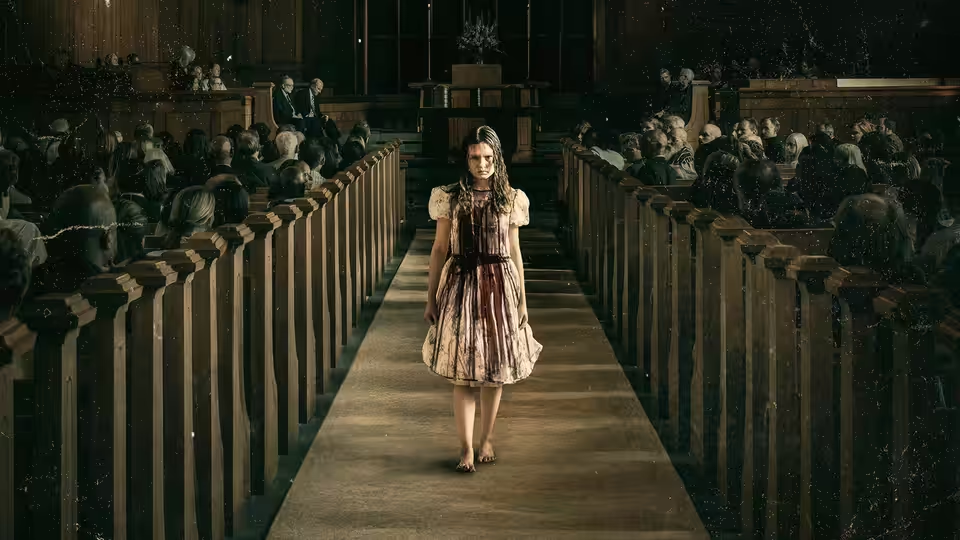
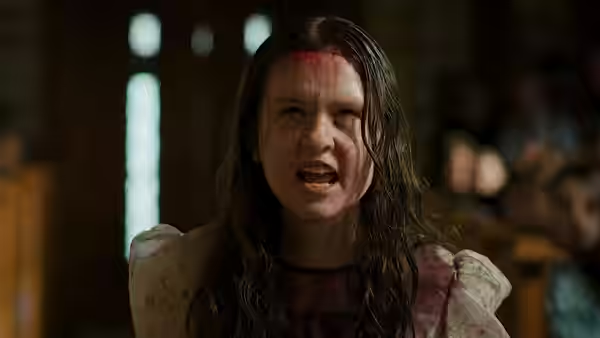
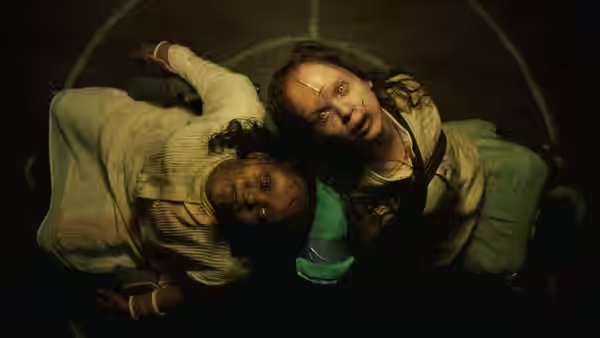
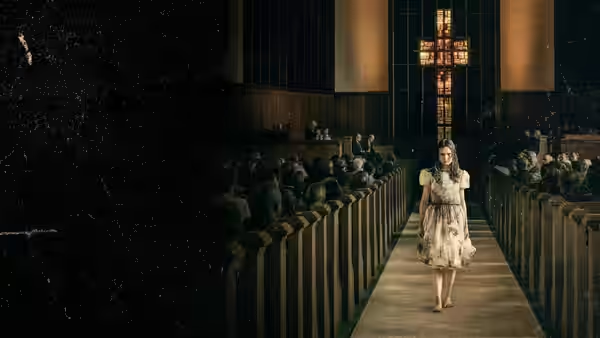
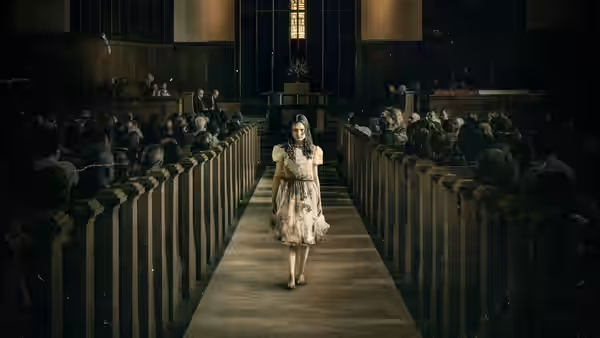
The exorcism is where it comes apart. Peter Sattler and Green’s script has one idea that could have carried a film: the priest, Father Maddox (E.J. Bonilla), is told by his superiors to stay away, so the parents gather whoever will come, a pastor (Raphael Sbarge), a healer (Okwui Okpokwasili), and try it themselves. Whether faith works without the institution is a real question. The film asks it and then turns up the volume. The two girls sit tied to chairs, growling in the same processed voice. Alverson cuts faster and faster, Wingo and Abbasi’s hum becomes a roar, and Simmonds lights it all like a basement gig. Nothing in it made us jump. We were bored, then irritated, because the first half had promised better.
Friedkin’s film was frightening because it believed in something and put a mother who did not into the same room. Green and Sattler want a broader church, but they do not believe in that either. The climax rests on a choice we will not describe, and it is the sort of thing a script reaches for when it wants a moral and has run out of scares. Green’s Halloween had its lapses and still knew what Michael Myers was for. Here nobody seems sure what the devil is after.
Odom, Jewett and O’Neill would all be worth seeing in a better film, and Dowd is worth seeing in anything. But a sequel to The Exorcist has one job, which is to frighten grown adults in the dark, and this one manages it for about forty minutes before it starts explaining itself. Watch it for what Burstyn does with a monologue. Then, if the evening is still young, watch the one from 1973.