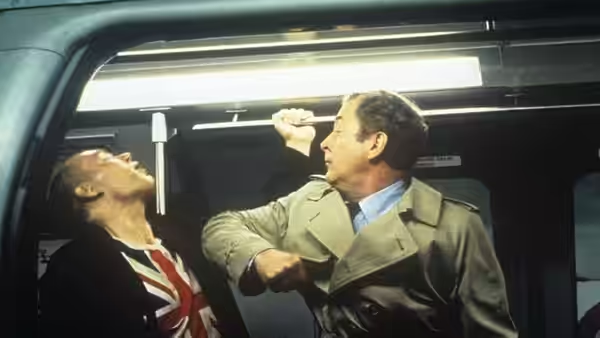
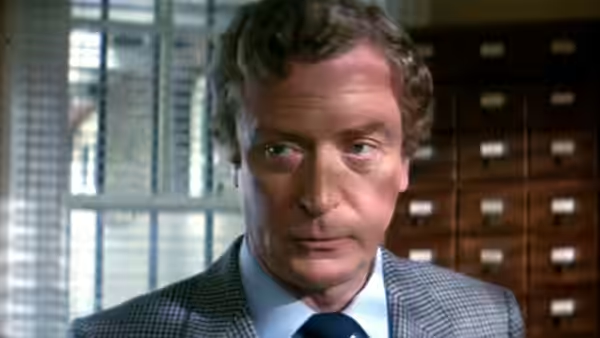
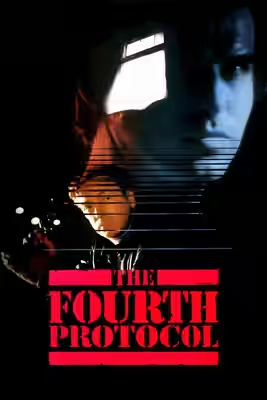
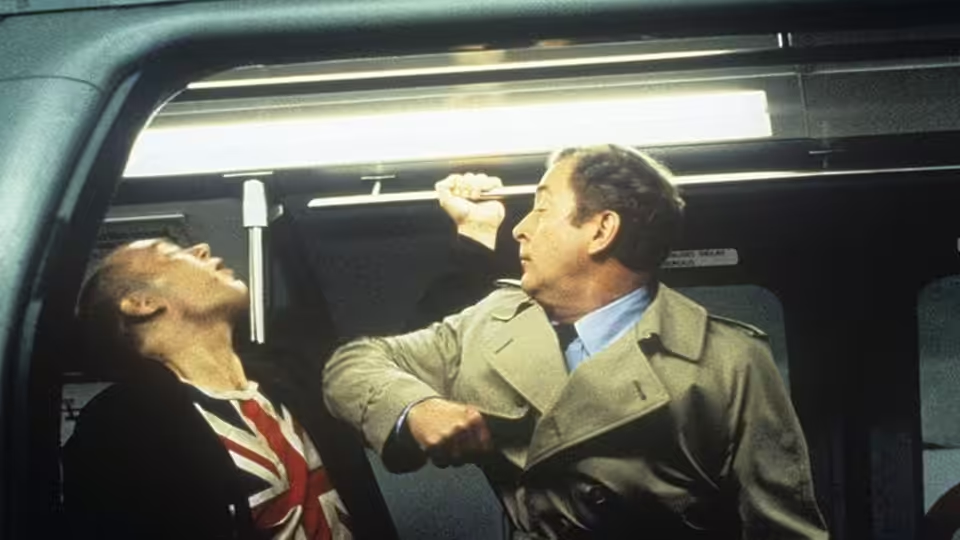
John Preston (Michael Caine) grapples with a man inside a vehicle
Film review

The Fourth Protocol

1987 · Directed by John Mackenzie · 1h 59m

In a sentenceA nuclear threat in a bedsitter, patiently waiting for the explanations to finish

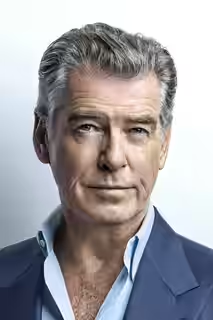
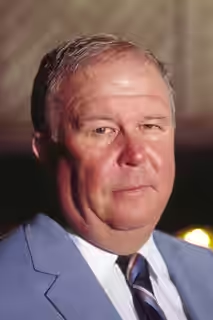
A breach of the Fourth Protocol threatens a nuclear explosion in a bedsitter, with no warning before the blast. John Preston (Michael Caine) is caught up in the danger, alongside the Soviet agent Valeri Petrofsky / James Edward Ross (Pierce Brosnan) and Borisov (Ned Beatty). Irina Vassilievna (Joanna Cassidy) is also involved in the affair. This Cold War spy story turns on the possibility of stopping the breach before it happens. The threat places an ordinary domestic room at the centre of a potential nuclear attack.

Plays from YouTube when you press play; nothing loads from them until then.

Fi1m review

Michael Caine gives this nuclear thriller more urgency than its elaborate plotting earns. Pierce Brosnan supplies a useful chill, but the careful handling cannot stop the suspense from repeatedly slipping away.

The Fourth Protocol has a properly unpleasant premise: a nuclear explosion in a bedsitter, with no warning. John Mackenzie treats it seriously, and that domestic address gives the danger a disturbing proximity. There is a respectable thriller here, helped considerably by Michael Caine, but too much of it is spent trying to make an elaborate plot feel urgent. The 119 minutes feel longer whenever the story needs explaining, which happens rather more often than the suspense can afford.

Caine’s John Preston gives us someone to attend to while the plot gets going. There is energy in the performance without much sense that Caine is being asked to do anything difficult, and that turns out to be a sensible fit. He makes the business of understanding a threat seem worth the effort. His directness is especially welcome in a film that can make following its story feel like preparation for an examination.

Pierce Brosnan’s Valeri Petrofsky / James Edward Ross provides a useful contrast. His Soviet agent is cold and ruthless, with little invitation to look for a warmer person underneath. We found Brosnan unsettling because his Petrofsky gives so little sense that human consequences concern him. Yet Frederick Forsyth’s screenplay gives that coldness too little variation, leaving a performance that establishes the danger efficiently and then has limited room to develop beyond that first impression.

Phil Meheux’s cinematography keeps the presentation sober, while Allan Cameron’s production design helps make the surroundings credible. A story that locates nuclear danger in a bedsitter needs that plausibility, and the film benefits from resisting grandeur. The ordinary scale makes the premise easier to take seriously. The limitation is that the visual restraint becomes monotonous when Mackenzie cannot find enough tension in the people, leaving us with a convincing setting and too little reason to lean forward.

Graham Walker’s editing has the less enviable task of moving us through Forsyth’s plotting. The adaptation of Forsyth’s own novel feels anxious to preserve the complications, even when the suspense would benefit from getting on with it. Walker cannot give every piece of information equal attention and still keep the pressure up. Lalo Schifrin’s music supplies some unease, but there are stretches when the score seems to be doing work that the scenes should already have done.

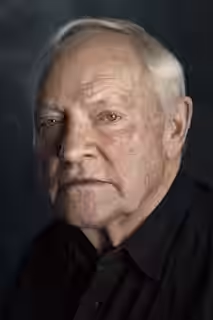
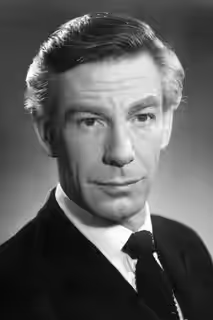
The supporting cast offers the further reassurance of Julian Glover, Michael Gough and Ian Richardson. Their presence makes sense in a film so dependent on professional composure, but Forsyth does not give the supporting characters enough distinct interest. A procedural spy thriller can ask us to concentrate, and there is pleasure in watching capable people take complicated business seriously. Mackenzie still needs to make each complication matter enough to justify the attention it requires.

Devotees of Cold War intrigue may tolerate the explanations for the pleasure of watching Caine and Brosnan work. We would not choose it simply for suspense. Allow more patience than a thriller about a nuclear explosion ought to require.
Critical consensus AI synthesised

44
Positive
1
Mixed
1
Negative
2
Variety
31 December 1986 · Variety Staff
70*

The review finds the thriller compellingly contemporary, with a fine aura of realism. It praises Michael Caine’s thorough performance while noting that the role does not stretch his abilities.

Read the full review →
Time Out
· WH
50*

The review describes the adaptation as neither fish nor fowl, suggesting a mixed verdict. It singles out Pierce Brosnan’s portrayal of an ice-cool, ruthless Soviet agent.

Read the full review →
Radio Times
★★ · John Ferguson
40

The critic finds the Cold War thriller tired and no longer particularly relevant. The familiar British cast is singled out as part of its appeal, but the story’s former diverting quality has faded.

Read the full review →
Los Angeles Times
28 August 1987 · SHEILA BENSON
15*

Benson finds the spy caper confusing and ultimately lifeless, despite its promising ingredients. She praises Michael Caine’s energetic performance but says it cannot keep the elaborate plot afloat.

Read the full review →

Straight answers AI written, from our review

Is The Fourth Protocol worth watching?
The Fourth Protocol earns 57/100 from us: Michael Caine and Pierce Brosnan give Cold War enthusiasts reasons to watch, but we would not recommend it simply for suspense. Its nuclear threat is unsettling, yet repeated explanations slow the film and demand more patience than the plotting rewards.
How long is The Fourth Protocol, and what is it rated?
The Fourth Protocol runs 1h 59m. It is an action and thriller film.
Where can I watch The Fourth Protocol in Canada?
The Fourth Protocol is not on any streaming or rental service in Canada at the moment. It is available in 6 other countries; change your country at the top of the page to see where. Availability is checked daily.
How violent or frightening is The Fourth Protocol, and is it suitable for children?
The Fourth Protocol has a UK 15 certificate and is not suitable for children under 15; its nuclear threat and cold, ruthless Soviet agent make it unsettling. We find Brosnan’s indifference to human consequences disturbing, but the emphasis is on procedural intrigue rather than sustained fright, and the certificate warrants caution for younger viewers.
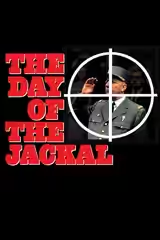
How does The Fourth Protocol compare to The Day of the Jackal?
The Fourth Protocol is the weaker thriller beside The Day of the Jackal, which we recommend for the way its patient preparation steadily increases the pressure. Both adapt Forsyth, but The Fourth Protocol repeatedly lets explanation interrupt suspense; Caine and Brosnan provide much of the interest when the elaborate plotting slows it down.
Is The Fourth Protocol based on a true story or a book?
The Fourth Protocol is adapted from Frederick Forsyth’s novel, with Forsyth also writing the screenplay. We find the adaptation too concerned with preserving the plot’s complications, often at the expense of suspense; familiarity with the book is not necessary, though following the film’s explanations requires patience.
What should I watch after The Fourth Protocol?
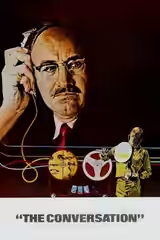
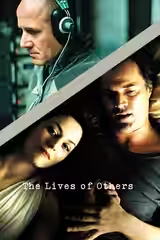
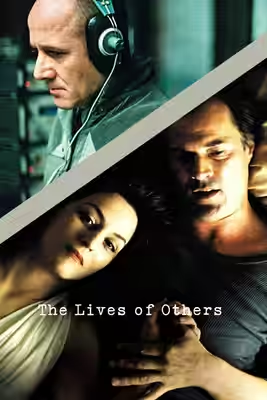
After The Fourth Protocol, try The Day of the Jackal (1973, Fi1m 84): Another Forsyth adaptation, with patient preparation that steadily increases the pressure. Then The Conversation (1974, Fi1m 92): Surveillance becomes more disturbing when the professional doing it starts to worry; and The Lives of Others (2006, Fi1m 84): For a more intimate account of surveillance and the people doing it.

Cast

If you liked this, try…

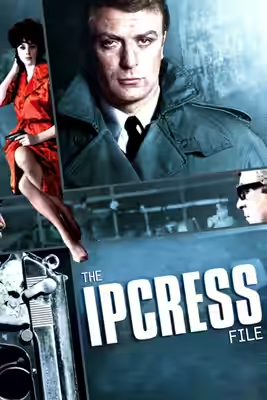
  1. The Ipcress File (1965) · not reviewed yetMore Caine, with procedural detail put to sharper and stranger use.

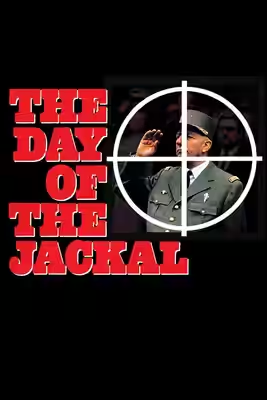
  2. The Day of the Jackal (1973, Fi1m 84)Another Forsyth adaptation, with patient preparation that steadily increases the pressure.

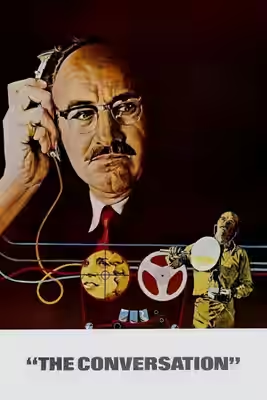
  3. The Conversation (1974, Fi1m 92)Surveillance becomes more disturbing when the professional doing it starts to worry.

  4. The Lives of Others (2006, Fi1m 84)For a more intimate account of surveillance and the people doing it.

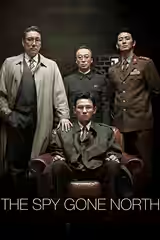
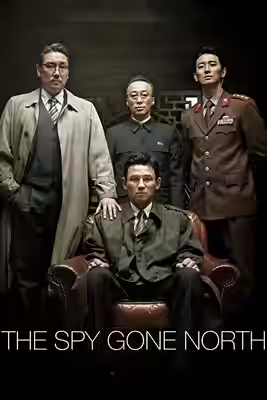
  5. The Spy Gone North (2018) · not reviewed yetPatient espionage with more attention to the relationships that secrecy makes difficult.

Free account

Know what to watch tonight

Two lists that know where things are streaming, collections you can share, your own score beside ours, and Discover that remembers what you have seen.

  • Want to see, sorted by what is streaming now
  • Seen, with your score out of ten
  • No adverts, ever