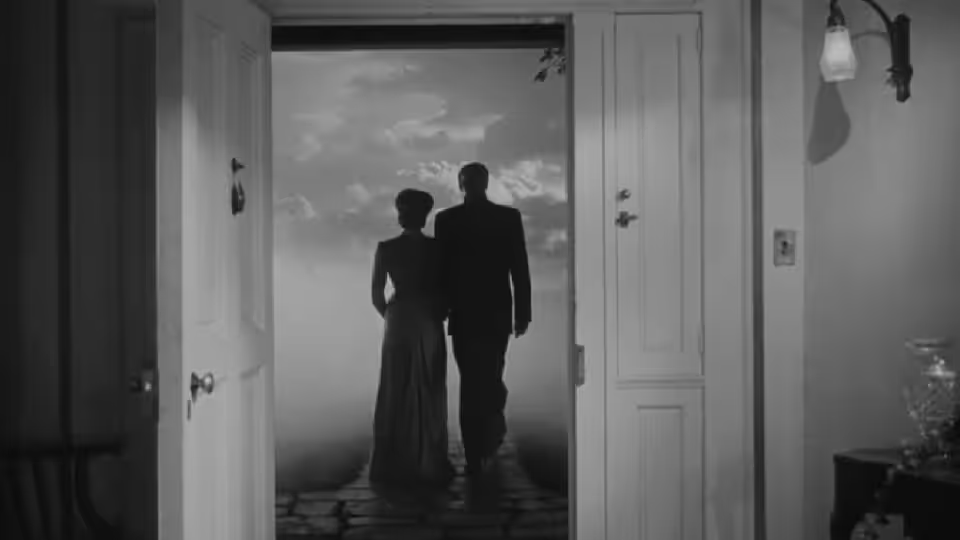
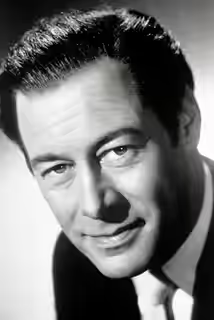
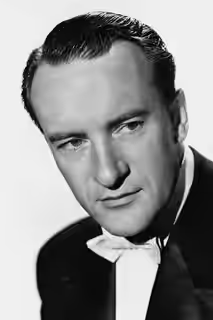
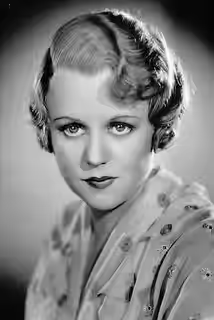
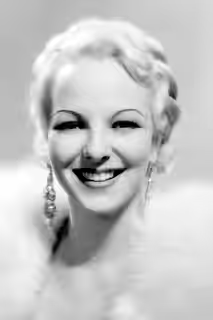
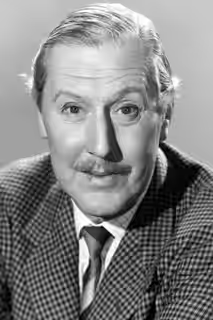
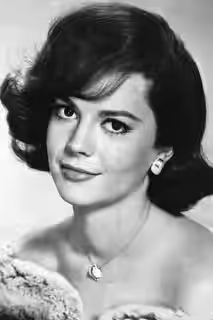
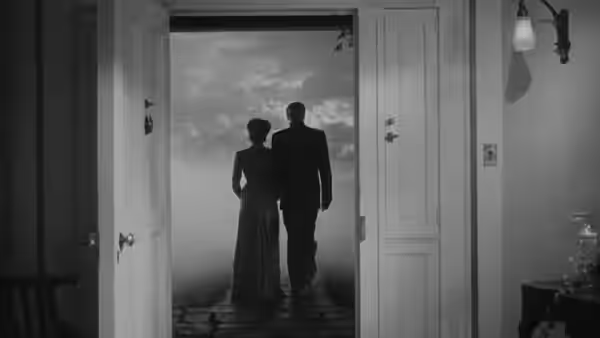
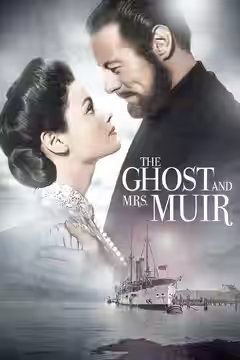
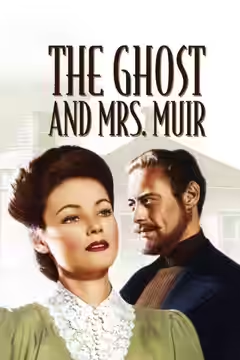
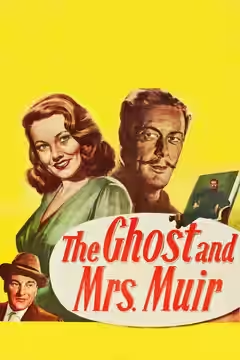
Gene Tierney and Rex Harrison make this ghostly romance tender and persuasive, with Charles Lang’s close-ups and Bernard Herrmann’s music doing much of the work. Its leisurely pace needs patience, but the feeling earns it.
Joseph L. Mankiewicz takes an improbable romance seriously, and The Ghost and Mrs. Muir rewards that faith. This is a tender, persuasive film with a pace that sometimes tests our patience. The supernatural premise gives it something more interesting to consider than the mechanics of haunting: what Lucy Muir needs from the companion she finds. It gives the couple room to talk, and expects us to care about what passes between them.
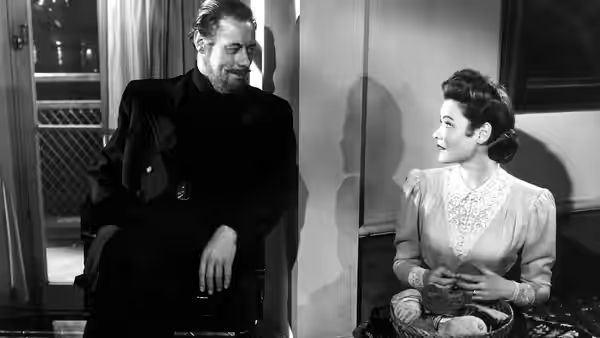
Gene Tierney keeps Lucy at the centre even when Rex Harrison’s Capt. Daniel Gregg commands our attention. Her performance makes the human side of the relationship engaging enough that the ghost’s existence need not become a puzzle to be solved. Harrison brings authority to Gregg without making the romantic pairing feel overwhelmed by it. We believe that these two people find one another interesting, which is the first thing a romance has to establish and surprisingly often neglects.
Philip Dunne’s screenplay gives their conversations room for more than one reading. Gregg can be accepted as a ghost, or understood as an expression of Lucy’s imagination, without either possibility cancelling the pleasure of their company. That uncertainty makes us pay closer attention to her investment in the exchanges. The dialogue is worth listening to, though the film sometimes seems more confident than we are that another stretch of conversation will deepen the attachment.
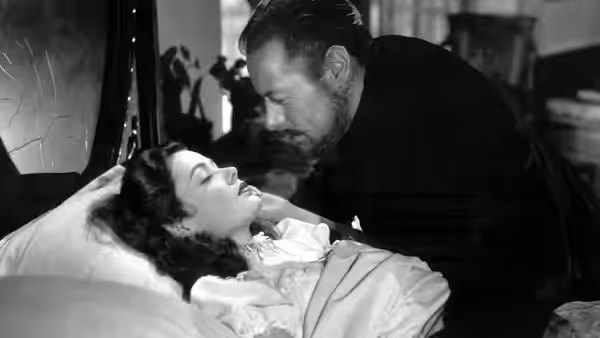
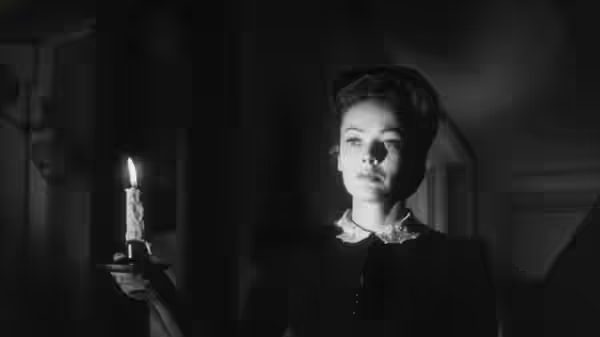
Charles Lang’s photography is especially persuasive in the close-ups of the leads. We were moved by those faces: the attention given to them makes the longing in this unlikely relationship easy to recognise. The camera grants Lucy as much importance as the man with the supernatural advantage, so the romance never depends entirely on our fascination with him. The beauty of the images helps, but their usefulness lies in keeping us attentive to the performers.
Bernard Herrmann’s music gives the romance a warmth that the supernatural premise alone could never supply. The score allows more feeling into the film than the dialogue alone could carry, and its generosity suits the close attention to the actors. Dorothy Spencer’s editing leaves ample space for the performances, although the leisurely rhythm can become too comfortable. Some passages need a firmer move onwards, particularly when we have already understood the attraction and are waiting for the film to develop it.
As a romantic fantasy, the film is unusually willing to let conversation do the work. There is a risk that the whole affair will seem precious, especially if the central pairing fails to win us over. We found enough warmth and curiosity in the performances to stay with it, even when the pace slackened. Anyone looking for a brisk ghost story should make another choice; this one asks for the time to watch two people become important to each other.