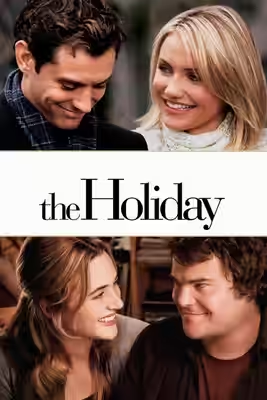
The Holiday is agreeable Christmas escapism, with Kate Winslet and Eli Wallach supplying the warmth its romantic plotting sometimes lacks. Nancy Meyers gives the actors room to charm us, then rather too much time to keep doing it.
Nancy Meyers gives The Holiday a simple task: make Christmas heartbreak bearable in the company of attractive, funny people. The result is a pleasant romantic comedy with enough warmth to justify its formula, provided patience is part of the evening’s plan. At 136 minutes, it asks the cast to sustain considerably more charm than the story needs. We enjoyed the company, though we kept wishing the film would trust a good moment enough to leave it alone.
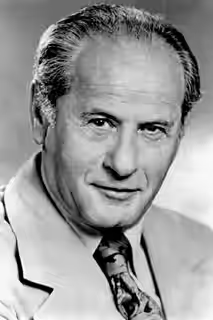
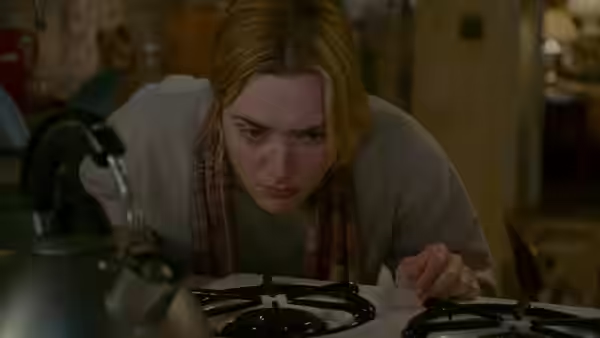
Kate Winslet gives Iris a vulnerability that makes the familiar romantic disappointments matter. We were moved by her exchanges with Eli Wallach as Arthur: their affection feels less forced than much of the surrounding romance. There is pleasure in seeing two performers make conversation worth the time it takes. Their scenes also expose how insistently the rest of the screenplay explains emotions the actors could have conveyed without assistance.
Jack Black is appealingly restrained as Miles, letting his charm emerge without treating every pause as an invitation to perform. The chemistry with Kate Winslet gives their scenes an ease that the writing does not always earn. Yet there is a limit to how long a romantic part can remain interesting on charm alone, and Nancy Meyers stretches this one. His restraint remains one of the film’s more agreeable choices.
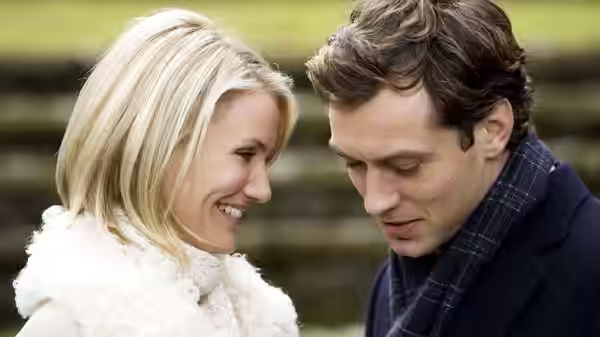
Cameron Diaz and Jude Law bring assurance to Amanda and Graham, and the cast is never the chief difficulty. The writing repeatedly makes heartbreak tidy enough to be dealt with through a reassuring conversation. For a while, that kindness is welcome; then the predictable plotting and polished dialogue begin to make the characters seem overprotected. Nancy Meyers leaves them too little room to be difficult or surprising. The knowing jokes about film storytelling help, until the dialogue starts to sound like a lecture.
The attractive finish owes much to Dean Cundey’s cinematography and Jon Hutman’s production design. Their work makes spending time with these people appealing even when the conversation ceases to surprise us. We need not demand realism from a Christmas comedy, but such careful prettiness can make distress feel like a brief inconvenience. When the performers let a little awkwardness through, the film becomes easier to believe.
Joe Hutshing’s editing gives the performers space, but too many scenes continue after their emotional point has registered. The leisurely pace helps the quieter exchanges and does the more explanatory dialogue no favours. Hans Zimmer’s music contributes to the prevailing reassurance, although the film scarcely needs further encouragement to be tender. A firmer cut would have preserved the warmth while asking less of the cast, particularly when the screenplay has already made its meaning clear.
Romantic comedy does not need to surprise us at every turn, but it does need to make the time between its expected moments enjoyable. Here, the performances keep the film agreeable without quite overcoming the length or the softened treatment of hurt. It is a reasonable choice for committed Christmas romantics, with a substantial caveat about the running time. Save it for an evening when nobody needs an early night.