John Cassavetes’s gangster film is barely interested in gangsters. It follows a strip-club owner who wants only to put on his show, and Ben Gazzara plays him so plainly that a shabby room with a painted Paris backdrop becomes worth dying for. Slow, ragged and hard to shake.
John Cassavetes writes and directs a gangster film in which the gangsters are the least interesting people on screen. Cosmo Vittelli (Ben Gazzara) owns the Crazy Horse West, a strip club on the Sunset Strip, and has just paid off the loan that bought it. Within a night he owes the mob again, and the mob has a job for him. That is the plot, and Cassavetes treats it as an interruption. What he cares about is the club, the dancers, the dreadful songs, and a man who has decided that this small room is his life’s work. It runs 135 minutes and is in no hurry.
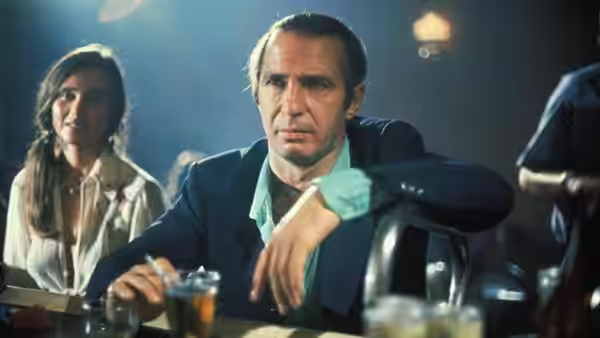
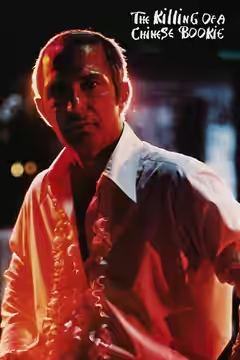
Gazzara plays Cosmo in a tuxedo with a carnation, cigarette held low, talking to his dancers like a headmaster who adores his pupils. He never raises his voice at the moment you expect him to. When he loses at cards he goes on smiling; when Flo (Timothy Carey) and Mort Weil (Seymour Cassel) explain what he owes, he listens as if to a slightly boring anecdote. The performance is made of small things: a hand on a shoulder, a glance at the stage during a bad number, the way he says the club’s name. The reviews that admire the film mostly admire him, and they are right to.
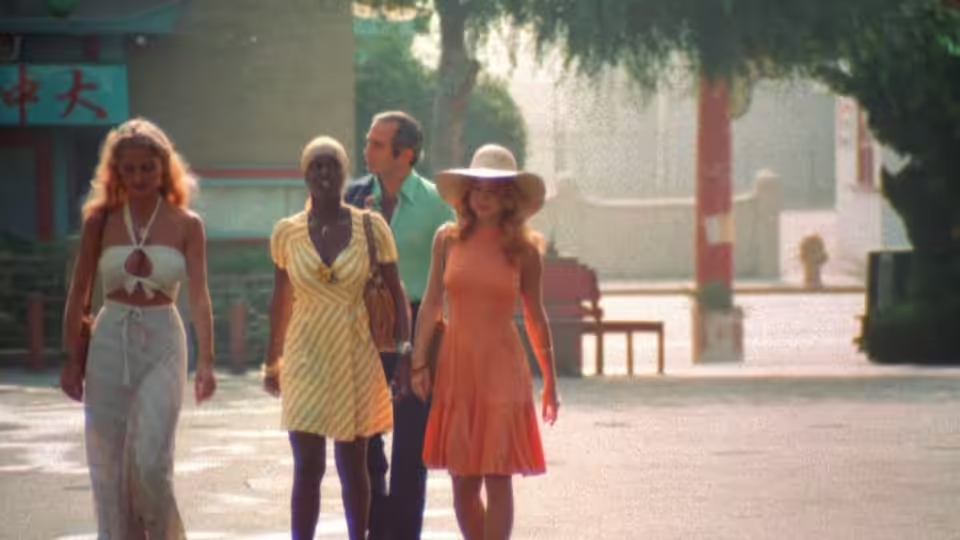
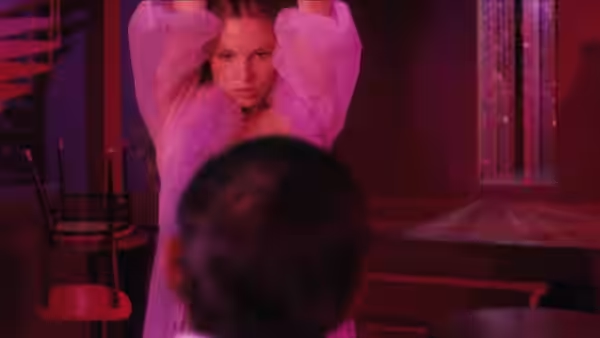
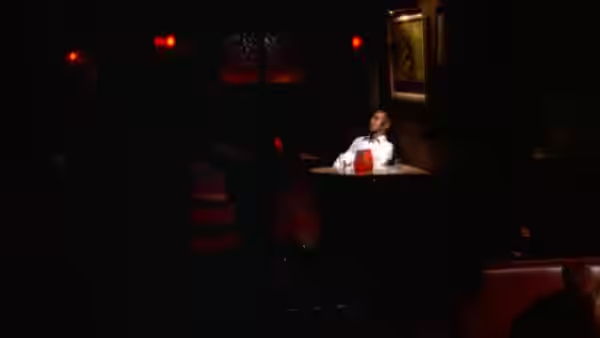
Sam Shaw’s set is a stage the size of a garage with a painted Paris skyline behind it and a top hat the MC, Mr Sophistication, cannot keep straight. Al Ruban and Mitch Breit shoot it under the club’s own coloured lamps, so faces go red and blue and sometimes out of focus altogether, and the camera hunts for whoever is speaking and often finds them late. One early trade review called the photography poor. We think that misses what it is doing: the film looks like a night out you cannot quite remember, and that is the right look for this man’s life. Bo Harwood’s music, thin piano and a wobbling vocal, is the sound of an act that has played the same room too long and knows it.
The mob scenes are good in a low-key way. Cassel is all warmth and open hands, Carey enormous and nearly inaudible, and Morgan Woodward’s Boss speaks like a bank manager turning down an overdraft. The poker night is staged as a party that slowly stops being one. Then, for a stretch in the middle, Cassavetes shows he can build suspense when he wants to: a drive across the city, a house, a dog, a gate, and almost no dialogue. We will not say how the errand ends. What follows it is the film’s real subject.
Here is the moment that got us. There is a scene late on, which we will not place, when Cosmo stands at the back of his own club and watches the show he has fought for. The show is bad. He loves it. We had spent an hour finding the numbers embarrassing and then found we minded terribly that they might stop. Cassavetes lets you sneer at the thing until the man who loves it has become your friend, and then the sneer costs you something.
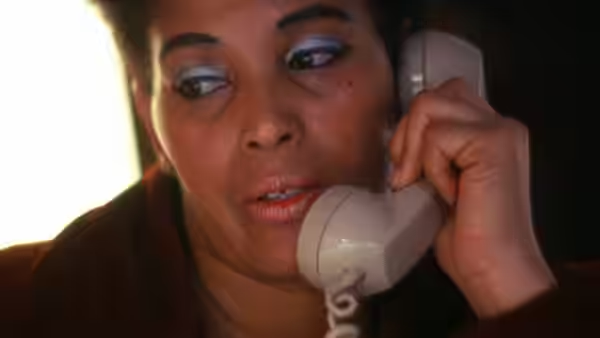
Most critics are cooler than we are; the reviews so far average out to a shrug, with two outright pans. Some of their complaints stand. The middle sags, scenes run well past the point where they have said what they have to say, and the sound is muddy enough that lines go missing in the dressing room. Azizi Johari’s Rachel and Virginia Carrington’s Mama are given scenes that promise a home life and then wander off. Tom Cornwell’s editing keeps long takes long when a cut would have helped. But the pans judge it as a thriller, and it fails as a thriller because it is not one. It is a film about a man and his work, and on those terms it holds.
Against Cassavetes’s own films this is the quietest. A Woman Under the Influence (1974) shouts; this one murmurs, and Gazzara is allowed to carry whole scenes on a look. See it late, on your own, with the sound up, and be patient through the first card game. The club will grow on you, which is exactly what it does to Cosmo, and he has paid far more for the privilege than you will.