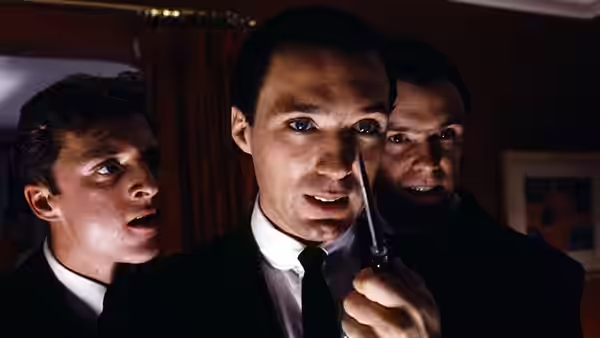
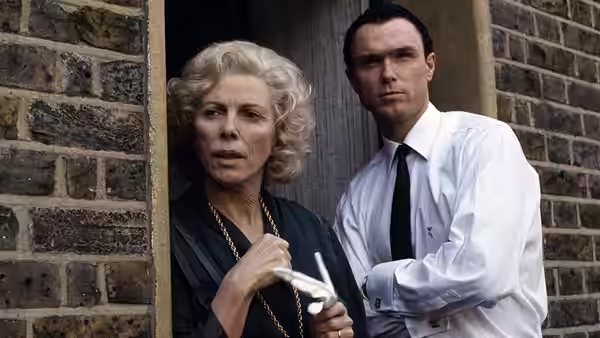
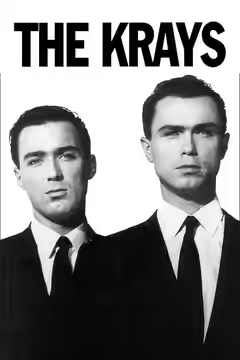
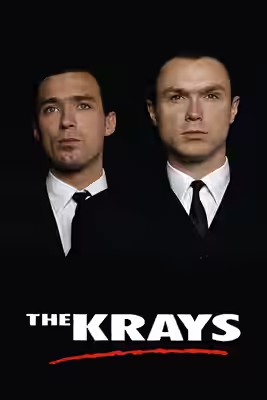
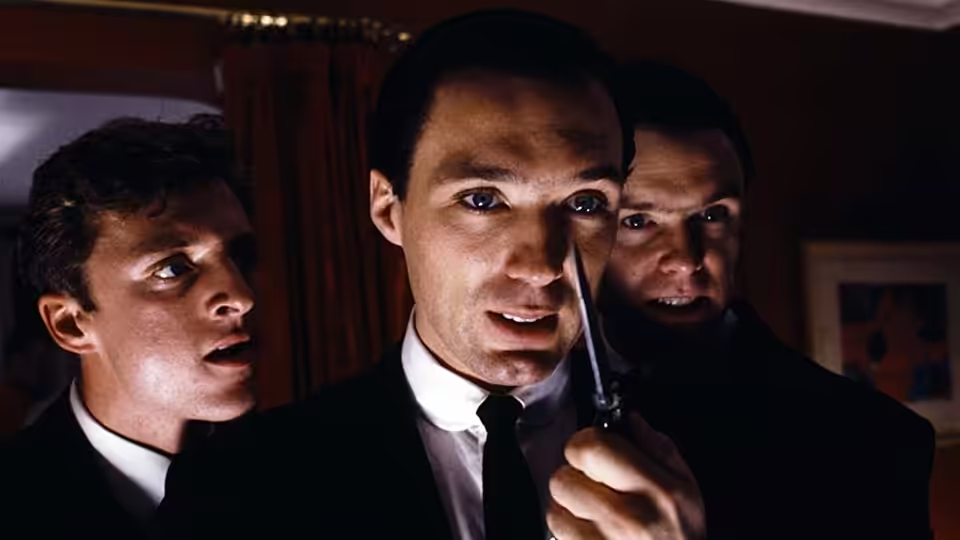
Ronald Kray (Gary Kemp) pressing a blade to his cheek with two men behind
Film review

The Krays

1990 · Directed by Peter Medak · 1h 59m

In a sentenceTwo grown gangsters, and Mum still seems the hardest person to cross

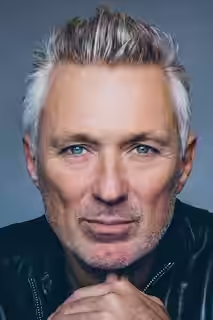
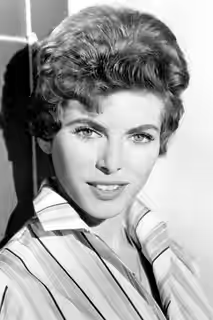
Ronald Kray (Gary Kemp) and his twin brother Reggie (Martin Kemp) are London criminals whose lives remain bound up with their mother, Violet (Billie Whitelaw). Their violence outside the family sits alongside dependence and loyalty at home. Peter Medak directs Philip Ridley’s screenplay, which follows the twins’ rise through their family relationships as well as their criminal activities. The supporting cast also includes Kate Hardie as Frances, Susan Fleetwood as Rose and Tom Bell as Jack ‘The Hat’ McVitie.

Fi1m review

Peter Medak’s The Krays is worth seeing for the Kemp brothers and Billie Whitelaw, whose mothering makes its criminals more disturbing. The family scenes hold our attention; the crime story repeats itself and sometimes struggles to frighten.

Peter Medak’s The Krays is a good crime film that becomes more interesting whenever it turns towards the family. It asks how two men can behave like dutiful sons and still be capable of appalling violence, without pretending that the first cancels out the second. We recommend it for that uncomfortable domestic emphasis and for three performances that make it worth pursuing. Anyone looking chiefly for mounting tension, however, will find stretches where Medak holds the same chilly mood for too long.

Philip Ridley’s screenplay gives the twins’ attachment to their mother enough weight to shape our understanding of them. Billie Whitelaw plays Violet with a conviction that makes her affection troubling, even when there is nothing outwardly threatening about her. We were unsettled by her tenderness towards them, because she makes indulging dangerous men look like the ordinary business of being their mother. That domestic loyalty gives the film something more difficult to consider than the familiar question of which gangster is in charge.

Gary Kemp’s Ronald is the stronger of the two central performances, making the coexistence of primness and savagery feel credible. Martin Kemp gives Reggie sufficient presence that the pairing never depends merely on the idea of twins. Together they are convincing enough to prevent the family’s closeness from becoming an amusing gangster eccentricity. The problem is that their threatening behaviour does not always produce much fear, so we sometimes find ourselves studying them when the film seems to want us recoiling.

Alex Thomson’s cinematography helps Medak sustain the cold, uneasy atmosphere, though the visual control can leave the brothers seeming remote. Michael Kamen’s music contributes effectively to that unease, but cannot compensate when the drama itself becomes repetitive. Both serve Medak’s approach faithfully; neither makes the criminal world consistently frightening. The performances within the household offer more variation, allowing affection, dependence and cruelty to trouble us without the film having to insist on its menace.

The repetition becomes a structural problem. Martin Walsh’s editing leaves the film feeling longer than its 119 minutes, largely because further evidence of the twins’ disturbed closeness does not necessarily deepen our understanding of it. Ridley also places more explanatory weight on Violet than the character can reasonably bear. However forcefully Whitelaw plays her, a mother’s possessiveness starts to look like too convenient an answer to the question of why her sons become violent.

Within the gangster biography, this is a worthwhile change of emphasis. Medak avoids treating a police pursuit as the only possible way to organise the twins’ story, and he does not ask us to enjoy cruelty simply because its perpetrators command attention. Yet the carefully maintained atmosphere occasionally puts us at a safe distance from what these men do. The film falls short of the genre’s tougher examples when it gives us too little sense of what their behaviour means for people outside the family.

There is still enough here to justify the evening, particularly for anyone interested in the domestic lives of criminals. The Kemps are persuasive, and Whitelaw gives the family scenes an authority the more openly threatening material cannot consistently match. Allow it an unhurried evening, and give Whitelaw your attention.

Critical consensus AI synthesised

62
Positive
4
Mixed
1
Negative
1

Most critics come down modestly in favour of Peter Medak’s biopic, with four positive notices against one mixed and one negative. The praise clusters around the performances: Gary and Martin Kemp are found convincing as the twins by nearly everyone, and Billie Whitelaw as their mother is singled out again and again. Several reviews credit the film with rooting the story in family and kitchen rather than the usual cops-and-gangsters routine, and Medak’s cold, eerie atmosphere is noted with approval.

The reservations gather around pace and menace. Empire finds the film short on real darkness, and Variety and the Los Angeles Times both call it monotonous, the latter going furthest, describing a draggy, classy freak show that dwells on viciousness without making the brothers human. The spread is wide, and the American reviews are noticeably cooler than the British ones, though even the harshest give the Kemps their due.

Radio Times
★★★★ · John Ferguson
80

An intelligent biopic of the Kray twins that largely avoids glamorising their violent world and instead explores their complex personalities. Strong support comes from convincing performances by Martin and Gary Kemp alongside a standout turn by Billie Whitelaw as their mother.

Read the full review →
Time Out
10 September 2012 · SGr
75*

Medak's biopic avoids standard cop clichés by rooting the twins' story in family and domestic life as much as the streets. It benefits from strong turns by the Kemp brothers and vivid cameos, proving better than expected if not in the same league as top crime films.

Read the full review →
Empire
1 January 2000 · Owain Yolland
70*

The critic finds the film a qualified success overall. Gary Kemp's performance as Ronnie stands out positively alongside a strong supporting cast and well-researched screenplay, but the movie lacks real darkness or menace.

Read the full review →
The New York Times
9 November 1990 · Janet Maslin
70*

The film is a spooky and transfixing character study of the Kray twins as savage thugs who are also prim mama's boys. Maslin singles out Medak's chilling and effective direction for praise.

Read the full review →
Variety
31 December 1989 · ** · Variety Staff
50*

The Krays is a chilling if somewhat monotonous biopic of the rise and fall of the London hoods, whose psychosexual warping leads to ultraviolence. Ridley deftly explores the destructive effect of smothering mom Billie Whitelaw on her sociopathic twins, while Medak conjures a cold and eerie atmosphere.

Read the full review →
Los Angeles Times
9 November 1990 · Peter Rainer
30*

The film draws strength from its real-life origins but is draggy, monotonous, and undernourished, turning into a classy freak show that aestheticizes viciousness without grounding the characters as human. Rainer singles out the twins' dual natures and the performances by the Kemp brothers for note amid the film's Freudian shortcomings.

Read the full review →

Straight answers AI written, from our review

Is The Krays worth watching?
The Krays is worth watching for anyone interested in the home lives of criminals, and we scored it 74. Gary and Martin Kemp are persuasive as the twins, and Billie Whitelaw's Violet makes indulging dangerous sons look like ordinary mothering, which unsettled us more than the violence did. Viewers wanting mounting tension will find the crime story repeats itself and holds one chilly mood too long.
How long is The Krays, and what is it rated?
The Krays runs 1h 59m. It is a drama and crime film.
Where can I watch The Krays in Ecuador?
The Krays is not on any streaming or rental service in Ecuador at the moment. Availability is checked daily.
How violent or frightening is The Krays, and is it suitable for children?
The Krays carries an 18 certificate in the UK and is not suitable for children. It is a film about two violent London gangsters, and their cruelty is shown rather than implied, though we found it disturbed more than it frightened; the film keeps its brutality at a cool distance. The most troubling material is domestic, not graphic, which makes it an adult film in temper as well as in rating.
How does The Krays compare to The Long Good Friday?
The Krays is the quieter and more domestic of the two, while The Long Good Friday is the tighter thriller and the more frightening. Peter Medak organises his film around the twins' mother rather than a police pursuit or a criminal empire under threat, so it studies its gangsters where John Mackenzie's film races with them. Choose the earlier film for suspense and Bob Hoskins; choose this one for Billie Whitelaw.
What should I watch after The Krays?
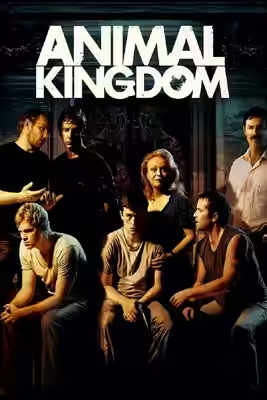
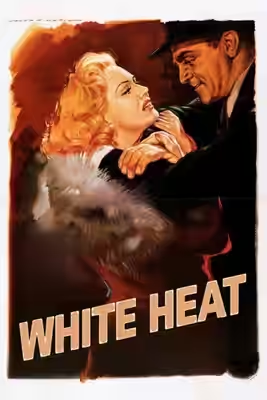
After The Krays, try The Long Good Friday (1980, Fi1m 88): A criminal empire built on confidence, with the fear kept close. Then Animal Kingdom (2010, Fi1m 84): Another criminal family whose domestic loyalties make escape difficult to imagine; and White Heat (1949, Fi1m 86): For a more volatile gangster and an equally consequential attachment to mother.

Cast

If you liked this, try…

  1. The Long Good Friday (1980, Fi1m 88)A criminal empire built on confidence, with the fear kept close.

  2. Animal Kingdom (2010, Fi1m 84)Another criminal family whose domestic loyalties make escape difficult to imagine.

  3. White Heat (1949, Fi1m 86)For a more volatile gangster and an equally consequential attachment to mother.

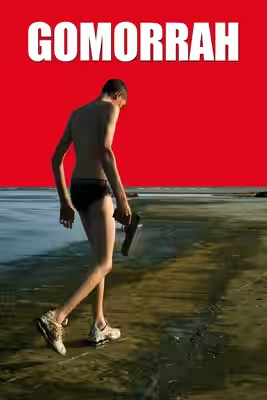
  4. Gomorrah (2008, Fi1m 84)Criminal power seen through ordinary lives, with little interest in flattering anyone.

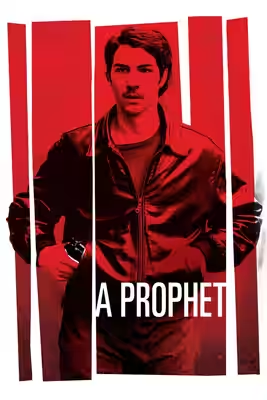
  5. A Prophet (2009, Fi1m 86)A patient account of criminal education, with stronger tension and fewer comforts.

Free account

Know what to watch tonight

Two lists that know where things are streaming, collections you can share, your own score beside ours, and Discover that remembers what you have seen.

  • Want to see, sorted by what is streaming now
  • Seen, with your score out of ten
  • No adverts, ever