Maggie Smith is magnificent as the woman who parked in Alan Bennett’s drive and stayed fifteen years. The film around her is gentle, tidy and rather pleased with itself, and it explains every feeling the moment she has made it plain.
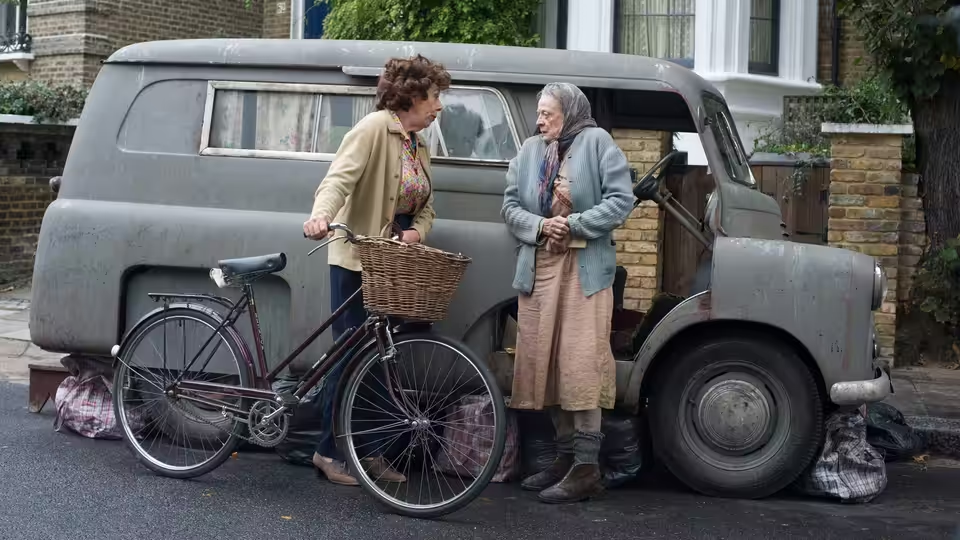
Alan Bennett has been telling this story for a long time, first on the page and then on the stage, where Nicholas Hytner directed Maggie Smith in it in 1999. Now the three of them have made the film, and the tagline calls it “a mostly true story”, which is fair warning. A homeless woman called Miss Shepherd parked her van outside Bennett’s house in Gloucester Crescent, Camden; he let her move it into his drive for a few months; she stayed fifteen years. Smith is reason enough to watch. The rest is pleasant, soft and far more comfortable than it needs to be.
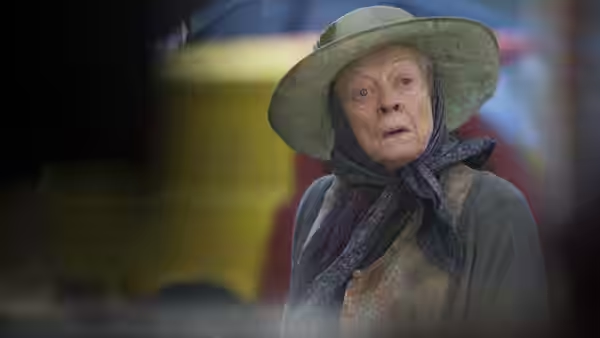
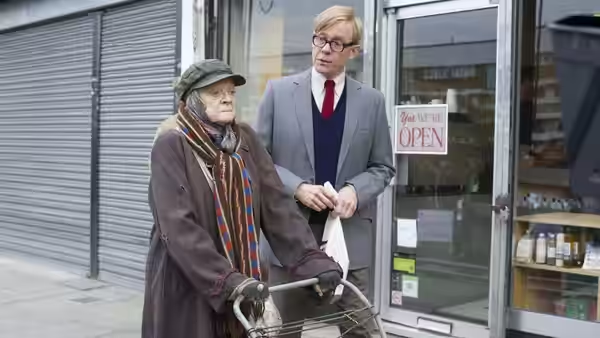
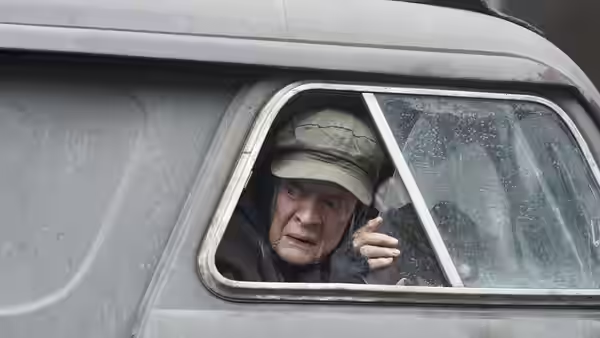
She plays Miss Shepherd without a flicker of appeal for our sympathy. The voice is clipped and certain, the eyes dart for the next advantage, and she takes every kindness as a right and every question as an impertinence. She smells, and the film says so, and she is cross about being told. What makes it more than a turn is the stillness in between, a woman sitting alone in the van who has plainly been somebody else and is not going to tell us who.
Alex Jennings plays Bennett as two men who share a study, the one who lives the life and the one who writes it down, and they bicker about which of them is the coward. Jennings has the voice exactly, the Leeds vowels sanded flat, the hands that never know what to do. For twenty minutes the device is a good joke about the writer’s guilt. Then the film starts using it to tell us what we have just seen. Meanwhile Bennett’s mother (Gwen Taylor) is failing in Yorkshire, visited out of duty, and the film draws the line between the two old women and then has Bennett say it aloud in case we missed it.
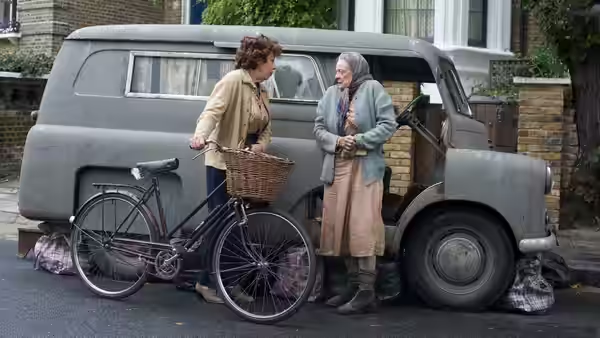
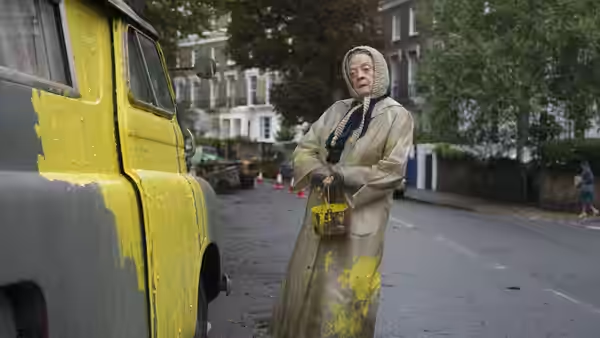
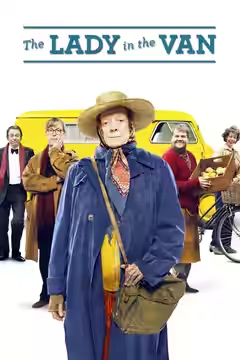
Andrew Dunn shoots the crescent in soft, warm light that makes Camden look like a village, and the van, which Miss Shepherd repaints herself with a brush and a tin of yellow, is the only loud thing in any frame. John Beard fills its interior with carrier bags in layers like rock strata. Natalie Ward dresses Smith in coats that look slept in, which they have been, with a hat on top like an afterthought. George Fenton’s score is piano and strings and does not push. Tariq Anwar cuts the two Bennetts’ conversations so that they feel like one man thinking, which is a harder trick than it looks.
The moment that got us was not a large one. Early on, Bennett watches from his window as Miss Shepherd settles herself in the van for the night, and Smith, with nobody left to perform for, lets the certainty drain out of her face for a few seconds before the door shuts. We were moved more than we expected to be, and a little annoyed that the film had not trusted us with more of that and fewer of the jokes about the lavatory.
The street is full of good actors with nothing to do. Frances de la Tour, as the composer’s widow Ursula Vaughan Williams, and Roger Allam, as a neighbour called Rufus, are there to be liberal and embarrassed, and they do it well, but they are a sketch. Jim Broadbent turns up at night as Underwood, a man who taps on the van and wants money, and the film lets him be frightening twice before setting him aside. Several of the young cast of The History Boys, Dominic Cooper and James Corden among them, pass through in parts the size of a postage stamp, which will please anyone who saw that film and puzzle everyone else.
The last ten minutes take a flight we will not describe and did not believe. Against Hytner and Bennett’s earlier films together, The Madness of King George (1994) and The History Boys (2006), this is the slightest, the one most content to be charming. It runs 104 minutes and carries a 12A, and it is a good evening for anyone who wants to watch Maggie Smith be impossible at length. Just do not expect it to let her be sad for long.