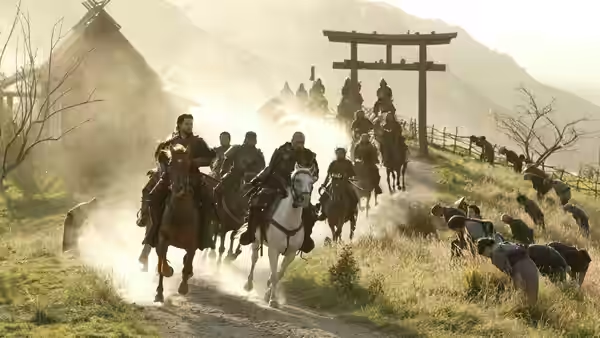
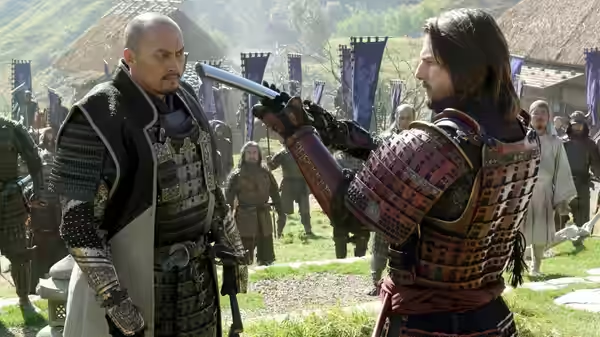
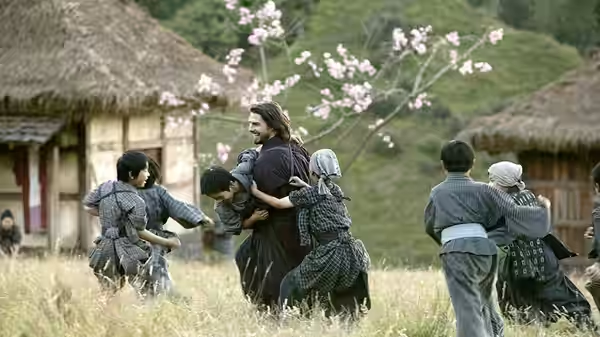
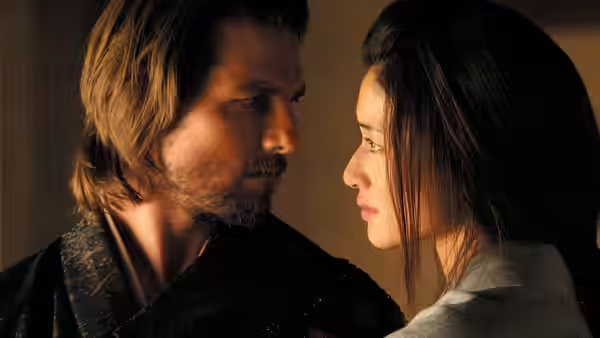
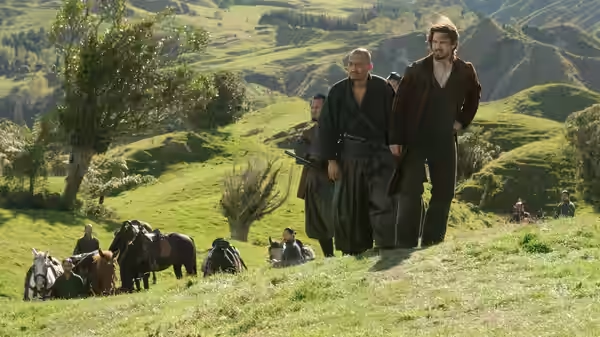
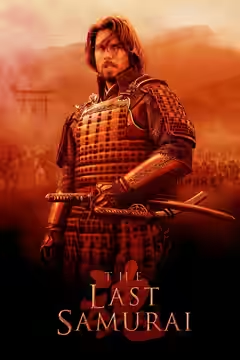
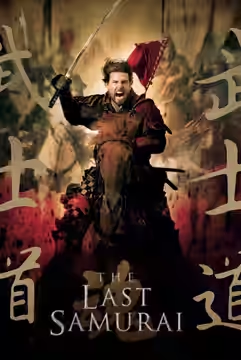
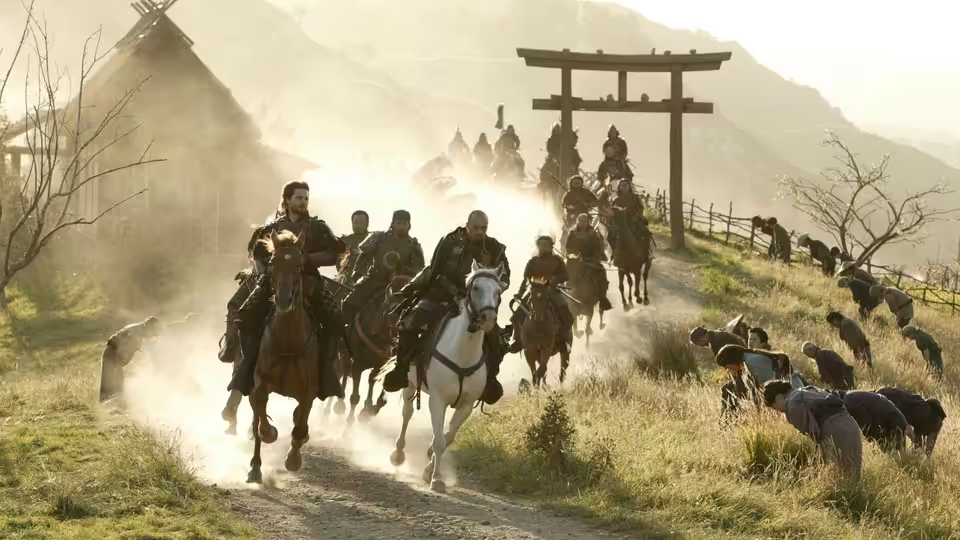
Samurai riders charge down a dusty village road beneath a wooden gate
Film review

The Last Samurai

2003 · Directed by Edward Zwick · 2h 34m · ICAA 12

In a sentenceEveryone takes the swords seriously, and Ken Watanabe makes us understand why

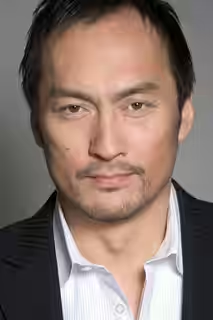
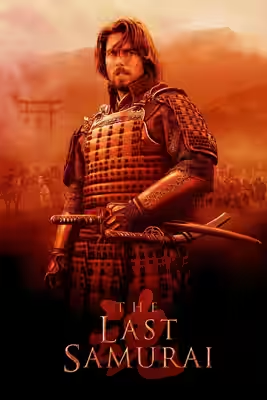
Samurai emerge through mist in the Japanese countryside, where old and new cultures collide. At the centre are Nathan Algren (Tom Cruise) and Moritsugu Katsumoto (Ken Watanabe), with Simon Graham (Timothy Spall), Ujio (Hiroyuki Sanada) and Taka (Koyuki) among the surrounding characters. Emperor Meiji (Nakamura Shichinosuke II), General Hasegawa (Togo Igawa) and Col. Benjamin Bagley (Tony Goldwyn) also feature in a conflict shaped by tradition and change. Algren’s personal journey accompanies the battles, as competing ideas about honour and progress find expression in armed conflict.

Plays from YouTube when you press play; nothing loads from them until then.

Fi1m review

Edward Zwick’s war drama earns its scale through forceful action and Ken Watanabe’s commanding presence. The sentimental writing is harder to defend, but there is enough feeling and physical conviction here to reward a taste for old-fashioned spectacle.

Edward Zwick’s The Last Samurai is a good, rather self-important war film, worth seeing for its performers and the force of its action. It wants the solemnity of a historical drama and the immediate excitement of a sword fight, and it is much surer of the latter. There is care in the making, with room for faces as well as fighting. The trouble comes whenever that care is offered as proof that the film has thought hard about the past.

Tom Cruise gives Nathan Algren an earnestness that mostly survives the film’s tendency to admire him. His restraint is welcome, although the performance becomes less persuasive when the drama demands emotional depths that the writing has already explained for us. Ken Watanabe, as Moritsugu Katsumoto, is more compelling: he can hold our attention without making every moment feel like an announcement of importance. We keep watching his face, which offers more interest than the dialogue’s certainties.

John Toll’s cinematography supplies the scale without making the countryside feel like a decorative interval between fights. The samurai’s entrance through mist is particularly effective, giving their arrival a menace that the film’s more reverential passages lack. We felt a real flicker of dread at that arrival. For a moment the film stops telling us how noble and significant everything is, and lets armed men approaching through uncertain visibility be frightening on their own.

Lilly Kilvert’s production design helps make the period setting convincing, even when the people occupying it seem to have been arranged for a lesson. There is pleasure in the care taken over this world, and the action benefits from having somewhere substantial to happen. Hans Zimmer’s score is less willing to leave us alone with what we can see. Its insistence on the size of the emotion can make the film’s already solemn passages feel overburdened.

The screenplay by John Logan, Edward Zwick and Marshall Herskovitz makes the clash between old and new cultures too comfortable to contemplate. We are invited to admire honour and discipline, but the film gives us too little reason to question the flattering picture it draws of the samurai. The simplification matters because this is a drama asking to be taken seriously, not merely an excuse for well-staged combat. Its sentiment is sincere enough; a less reverential treatment would have given these people more room to be difficult.

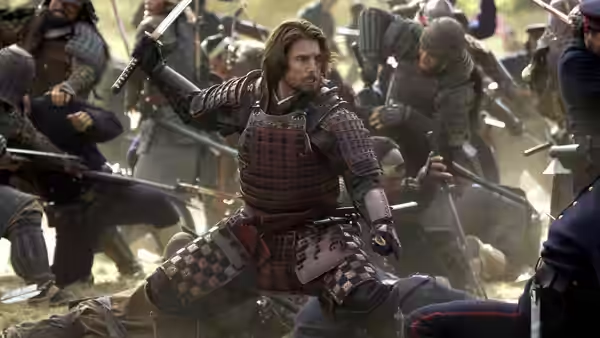
Editors Victor Du Bois and Steven Rosenblum help the sword fights retain their urgency, though the quieter stretches could use some of that economy. At 154 minutes, the film has time to repeat feelings we understood on their first appearance. As a war drama, it delivers the physical excitement its scale promises, but it follows a familiar route through admiration and personal change. The lack of surprise would matter less if the writing allowed more doubt into those exchanges.

The performances are good enough to keep that predictability from becoming fatal, and the action has proper force. We would recommend it to anyone in the mood for a substantial, earnest war film, with reservations about how readily it congratulates itself. Ken Watanabe is reason enough to stay attentive between the battles. Allow it its fondness for ceremony, but do not mistake that ceremony for a reliable account of the past.
Critical consensus AI synthesised

64
Positive
4
Mixed
5
Negative
3

The reviews lean towards qualified approval, with praise clustering around the battle sequences, period craftsmanship and Ken Watanabe’s commanding presence. Even several detractors find the swordplay and spectacle effective, while the more enthusiastic critics see a satisfying blend of Western and samurai traditions. Tom Cruise’s performance divides opinion: Empire praises his restraint, but the Los Angeles Times finds his emotional range limited despite enjoying much of the spectacle.

The main reservations concern sentimentality, predictability and a romanticised account of cultural conflict. For some critics, those weaknesses are tolerable within a rousing action drama; for others, the historical fantasies and reverence for Cruise’s character make the film self-congratulatory. The spread is wide rather than a matter of minor caveats: admirers respond to the performances and action, while detractors find the storytelling simplistic even when they praise the staging.

Empire
1 January 2000 · Will Lawrence
95*

The critic gives the film a strongly positive verdict, calling it brisk, rich and more fun than a history lesson. He singles out Tom Cruise’s understated performance and Ken Watanabe’s commanding Katsumoto.

Read the full review →
The Hollywood Reporter
1 December 2003 · Kirk Honeycutt
90*

Honeycutt calls the film a hugely satisfying entertainment and praises its successful blend of Western and samurai movie. He singles out the performances of Tom Cruise and Ken Watanabe, along with the film’s battle sequences and period craftsmanship.

Read the full review →
Radio Times
★★★★ · Sloan Freer
80

Freer describes the film as a sweeping action drama with a poignant personal odyssey. The review singles out its clash between old and new cultures, while noting its use of the “noble savage” image.

Read the full review →
Total Film
9 January 2004 · ★★★★ · Total Film
80

The review finds the film predictable but satisfying, with Tom Cruise giving one of his strongest performances. It praises Edward Zwick’s large-scale battle scenes as especially thrilling.

Read the full review →
Los Angeles Times
5 December 2003 · Manohla Dargis
65*

Dargis finds the film flawed but ultimately enjoyable as an epic spectacle. She praises Ken Watanabe’s commanding presence and the pulse-pounding sword fights, while criticizing the film’s historical fantasies and Cruise’s limited emotional depth.

Read the full review →
Screen Daily
3 December 2003 · Peter Brunette
64*

The page identifies Peter Brunette’s review of the 2003 film, but its critical verdict is unavailable in the accessible text. No praise or complaint can be reliably identified from the page.

Read the full review →

Straight answers AI written, from our review

Is The Last Samurai worth watching?
The Last Samurai is worth watching for its forceful action and Ken Watanabe’s commanding performance; we score it 72 out of 100. It suits a taste for substantial, old-fashioned war drama, provided we allow for sentimental writing, a flattering view of samurai honour and quieter stretches that make its 154 minutes feel long.
How long is The Last Samurai, and what is it rated?
The Last Samurai runs 2h 34m and is rated 12 by the ICAA in Spain. It is a drama and action film.
Where can I watch The Last Samurai in Spain?
The Last Samurai is streaming on Netflix in Spain, and it is also available to rent from Apple TV from €3.99. Availability is checked daily; the links above go straight to each service.
How violent or frightening is The Last Samurai, and is it suitable for children?
The Last Samurai has a UK 15 certificate, and its forceful sword fights and battle scenes make it unsuitable for children under 15. The samurai’s approach through mist creates real dread, though we find the emphasis is on combat rather than sustained fright. Older teenagers comfortable with war drama are a more suitable audience than younger children or viewers uneasy with fighting.
How does The Last Samurai compare to Harakiri?
The Last Samurai offers forceful battle spectacle, but we recommend Harakiri as the more searching and persuasive examination of samurai honour. Where the former tends towards admiration and sentiment, Harakiri finds cruelty beneath the ceremony, with anger held under formal restraint. Choose the former for action and scale, the latter for a harrowing drama whose patient storytelling asks more of us.
What should I watch after The Last Samurai?
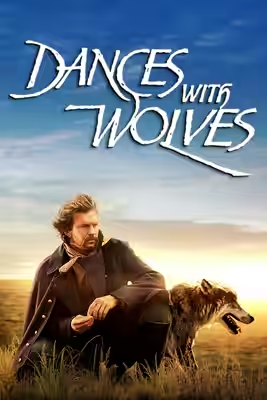
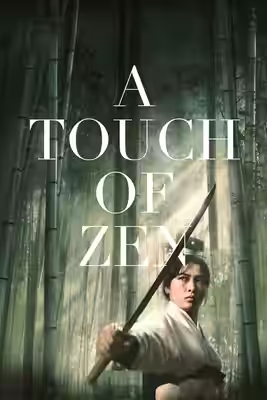
After The Last Samurai, try Harakiri (1962, Fi1m 91): A sterner examination of samurai honour, with anger beneath the formal restraint. Then Dances with Wolves (1990, Fi1m 80): Another expansive drama of cultural encounter, carrying similar pleasures and uncomfortable assumptions; and A Touch of Zen (1971, Fi1m 86): For swordplay staged with patience, spatial clarity and an appetite for wonder.

Cast

Awards

Academy Awards, 2004

Nominated
Best Costume Design
Nominated
Best Production Design
Nominated
Best Sound
Nominated
Best Supporting Actor

If you liked this, try…

  1. Harakiri (1962, Fi1m 91)A sterner examination of samurai honour, with anger beneath the formal restraint.

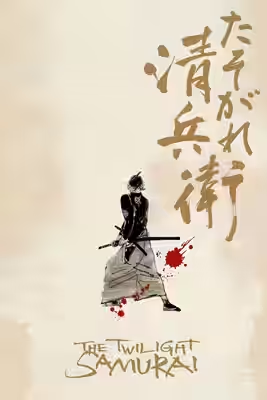
  2. The Twilight Samurai (2002) · not reviewed yetPatient attention to everyday obligations gives its samurai drama a different weight.

  3. Dances with Wolves (1990, Fi1m 80)Another expansive drama of cultural encounter, carrying similar pleasures and uncomfortable assumptions.

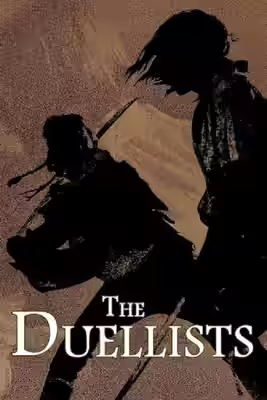
  4. The Duellists (1977) · not reviewed yetMilitary pride and ritual sharpen a smaller, colder drama of male obstinacy.

  5. A Touch of Zen (1971, Fi1m 86)For swordplay staged with patience, spatial clarity and an appetite for wonder.

Free account

Know what to watch tonight

Two lists that know where things are streaming, collections you can share, your own score beside ours, and Discover that remembers what you have seen.

  • Want to see, sorted by what is streaming now
  • Seen, with your score out of ten
  • No adverts, ever