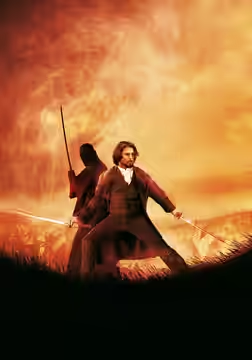
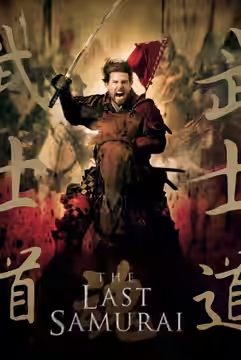
Edward Zwick’s war drama earns its scale through forceful action and Ken Watanabe’s commanding presence. The sentimental writing is harder to defend, but there is enough feeling and physical conviction here to reward a taste for old-fashioned spectacle.
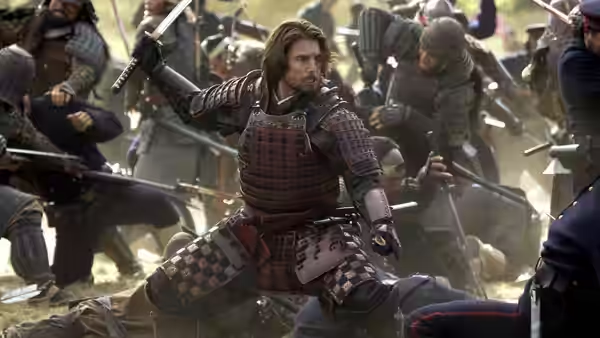
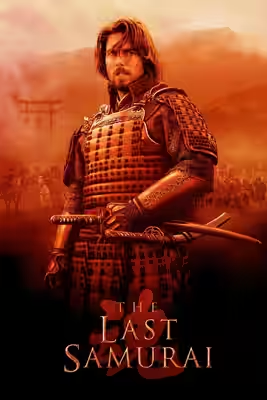
Edward Zwick’s The Last Samurai is a good, rather self-important war film, worth seeing for its performers and the force of its action. It wants the solemnity of a historical drama and the immediate excitement of a sword fight, and it is much surer of the latter. There is care in the making, with room for faces as well as fighting. The trouble comes whenever that care is offered as proof that the film has thought hard about the past.
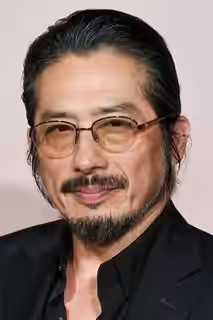
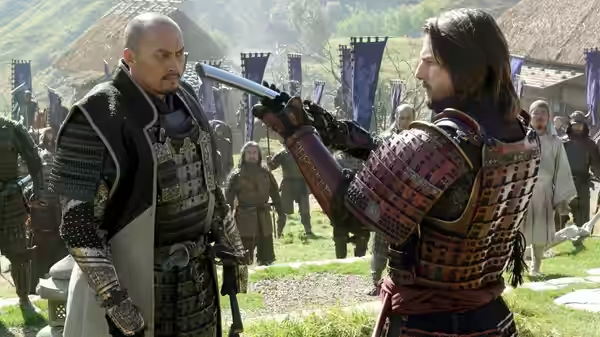
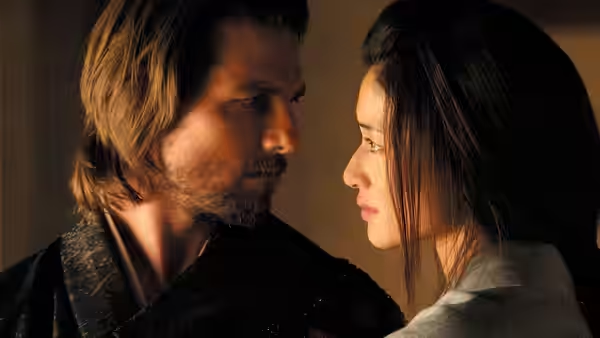
Tom Cruise gives Nathan Algren an earnestness that mostly survives the film’s tendency to admire him. His restraint is welcome, although the performance becomes less persuasive when the drama demands emotional depths that the writing has already explained for us. Ken Watanabe, as Moritsugu Katsumoto, is more compelling: he can hold our attention without making every moment feel like an announcement of importance. We keep watching his face, which offers more interest than the dialogue’s certainties.
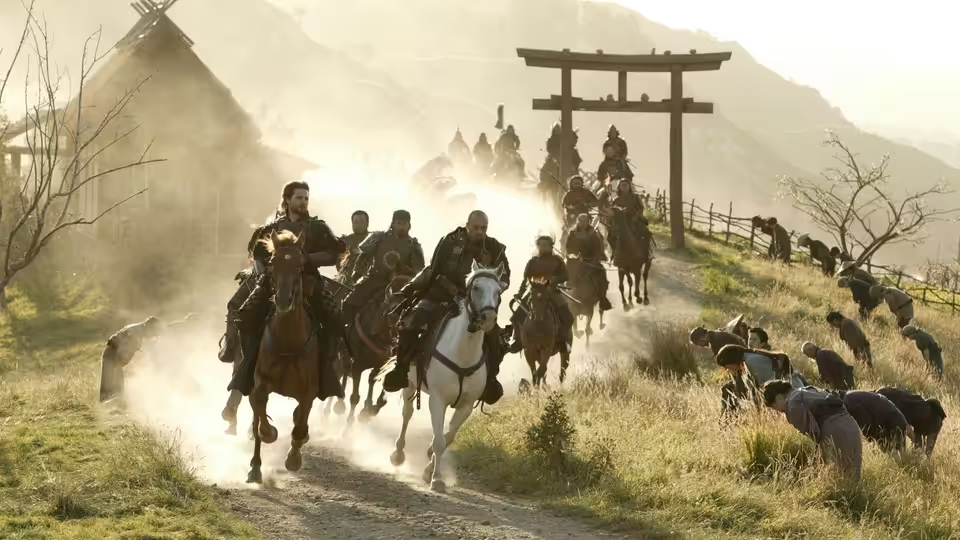
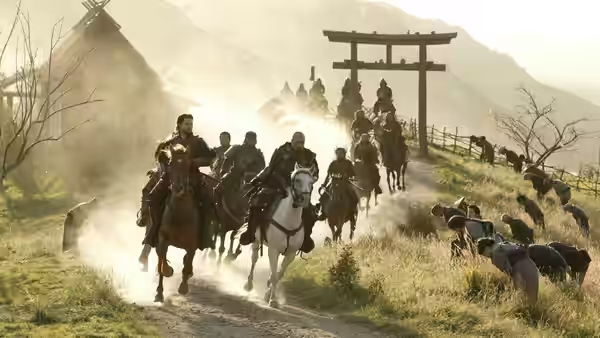
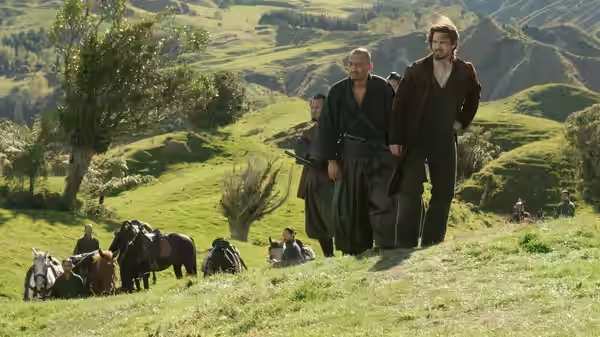
John Toll’s cinematography supplies the scale without making the countryside feel like a decorative interval between fights. The samurai’s entrance through mist is particularly effective, giving their arrival a menace that the film’s more reverential passages lack. We felt a real flicker of dread at that arrival. For a moment the film stops telling us how noble and significant everything is, and lets armed men approaching through uncertain visibility be frightening on their own.
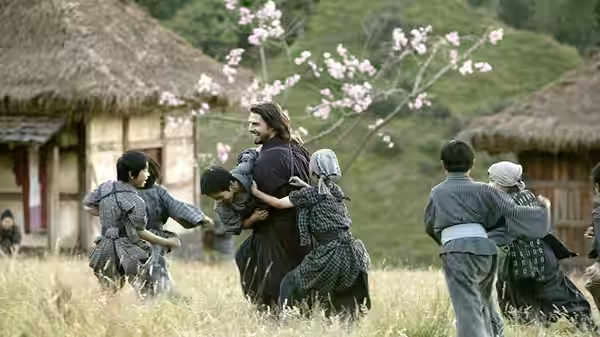
Lilly Kilvert’s production design helps make the period setting convincing, even when the people occupying it seem to have been arranged for a lesson. There is pleasure in the care taken over this world, and the action benefits from having somewhere substantial to happen. Hans Zimmer’s score is less willing to leave us alone with what we can see. Its insistence on the size of the emotion can make the film’s already solemn passages feel overburdened.
The screenplay by John Logan, Edward Zwick and Marshall Herskovitz makes the clash between old and new cultures too comfortable to contemplate. We are invited to admire honour and discipline, but the film gives us too little reason to question the flattering picture it draws of the samurai. The simplification matters because this is a drama asking to be taken seriously, not merely an excuse for well-staged combat. Its sentiment is sincere enough; a less reverential treatment would have given these people more room to be difficult.
Editors Victor Du Bois and Steven Rosenblum help the sword fights retain their urgency, though the quieter stretches could use some of that economy. At 154 minutes, the film has time to repeat feelings we understood on their first appearance. As a war drama, it delivers the physical excitement its scale promises, but it follows a familiar route through admiration and personal change. The lack of surprise would matter less if the writing allowed more doubt into those exchanges.
The performances are good enough to keep that predictability from becoming fatal, and the action has proper force. We would recommend it to anyone in the mood for a substantial, earnest war film, with reservations about how readily it congratulates itself. Ken Watanabe is reason enough to stay attentive between the battles. Allow it its fondness for ceremony, but do not mistake that ceremony for a reliable account of the past.