Pamela Anderson is moving in Gia Coppola’s uneven drama about an ageing Las Vegas showgirl. Her performance deserves attention, but the thin supporting characters and drifting pace will test anyone looking for a fuller story.
Gia Coppola approaches The Last Showgirl with a respect for performing that the film does not always turn into convincing drama. Shelly’s attachment to her work deserves to be taken seriously, and Pamela Anderson gives that attachment enough force to hold our attention. The result is a modest, affecting film for viewers interested in an actor finding the right part. Its thin writing and tendency to linger make that a qualified recommendation.
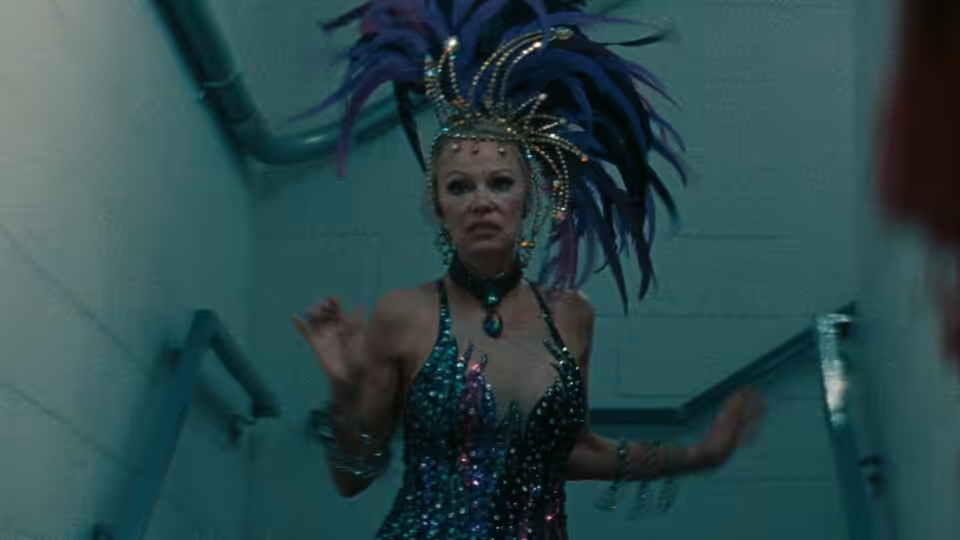
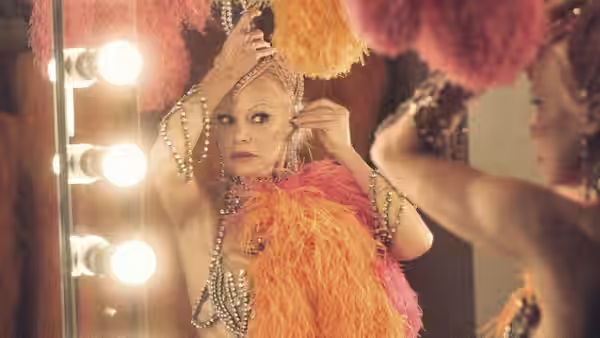
The central performance works because Shelly does not seem to be waiting for permission to believe her job matters. Pamela Anderson lets pride, uncertainty and an incomplete understanding of herself coexist, without tidying them into a lesson about self-acceptance. We were moved by the seriousness she gives Shelly’s pride in performing. Her distinctive voice helps: even when the writing is too plain about what hurts, she makes the hurt feel particular to this woman.
Kate Gersten’s screenplay is less persuasive about the people who share Shelly’s life. The mother-daughter material feels familiar, and familiarity does too much of the work of characterisation. We understand that motherhood matters to this story before the relationship has given us enough particular reasons to care about these people together. Against that, Dave Bautista brings a welcome attentiveness to Eddie, and his scenes with Pamela Anderson suggest a relationship with more going on than the dialogue can state.
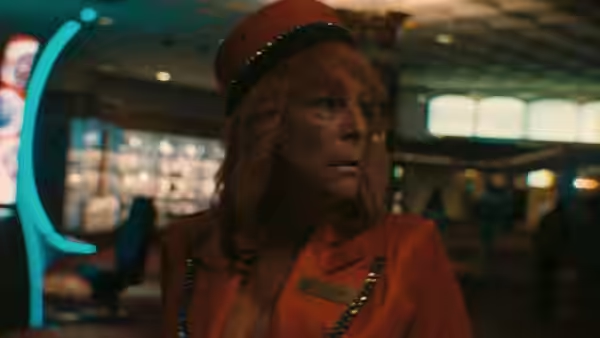
Jamie Lee Curtis gives Annette a force that the surrounding film sometimes lacks, although the role leaves us wanting more of the person behind it. Brenda Song’s Mary-Anne and Kiernan Shipka’s Jodie are also caught in a script that gives the supporting cast too little room. This matters in a film interested in a community: Shelly cannot be the only person whose life feels complicated. Too often, leaving her means waiting to get back to her.
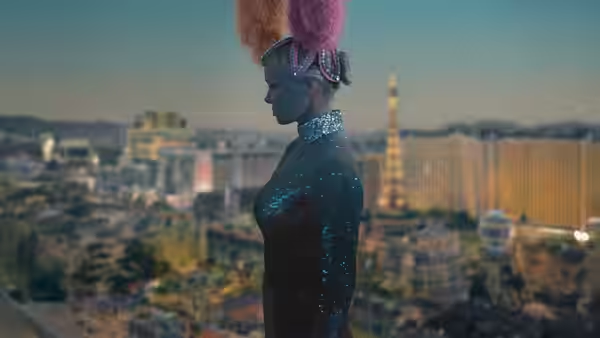
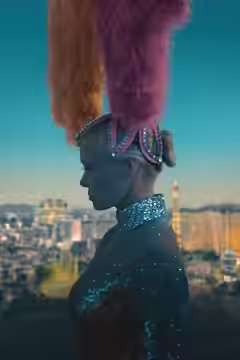
Autumn Durald’s cinematography finds something tender in Las Vegas’s faded glamour, although its softness sometimes gets between us and the people. Shelly’s film room is a useful visual detail because it gives her an interest beyond being looked at. Natalie Ziering’s production design works well on that domestic scale, allowing us to consider Shelly through the space she occupies away from performing. Elsewhere, the film is too ready to linger over an image when a scene needs to develop.
Editors Blair McClendon and Cam McLauchlin give the atmosphere plenty of space, but the repetitions become noticeable within an 89-minute running time. Andrew Wyatt’s music helps sustain the mood, though it cannot make those stretches feel necessary. Slow pacing is reasonable here, and a busier plot would not automatically improve the film. The difficulty is that we spend too many of these passages learning nothing further about Shelly.
In a drama about an ageing performer, admiration can become a substitute for curiosity. Gia Coppola avoids the worst of that through a central character whose pride is not always comfortable to watch. Even so, the film needed to be more curious about the lives around her. Give it an evening if performance-led character studies are your preference, and be prepared for the writing to do less than its leading actor.