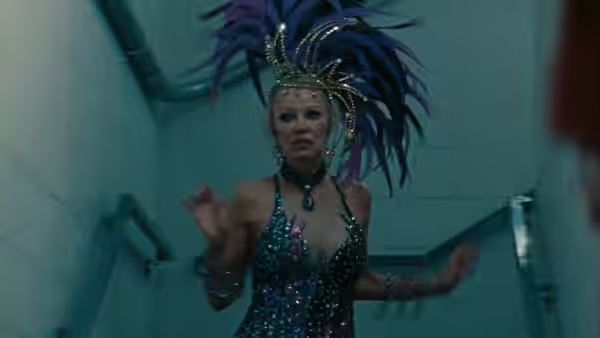
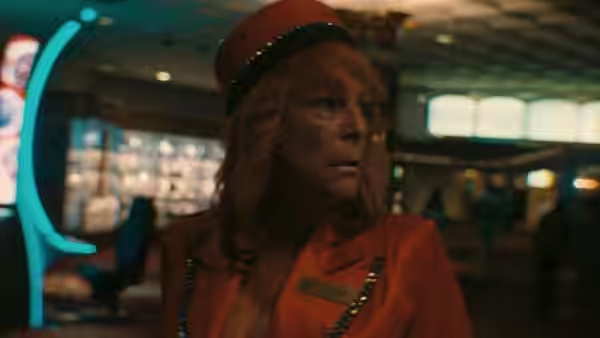
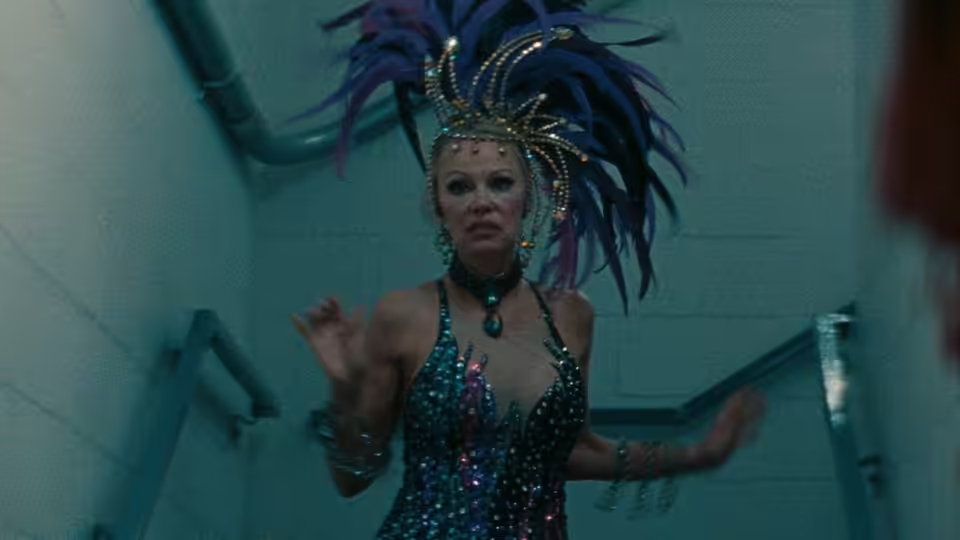
Shelly (Pamela Anderson) in a sequined showgirl costume moves through a backstage corridor
Film review

The Last Showgirl

2024 · Directed by Gia Coppola · 1h 29m

In a sentencePamela Anderson does the work while the rest of the film admires the lighting

In Las Vegas, Shelly (Pamela Anderson) takes pride in being a showgirl, even as ageing makes her place in that life less secure. Around her are Annette (Jamie Lee Curtis), Eddie (Dave Bautista) and a community of women whose work depends on being watched. Shelly wants her performing to matter, while her relationship with her daughter brings her choices as a mother into question. Away from the stage, her film room offers another part of her life. Work and motherhood make competing demands, and she struggles with being valued less as she gets older.

Plays from YouTube when you press play; nothing loads from them until then.

Fi1m review

Pamela Anderson is moving in Gia Coppola’s uneven drama about an ageing Las Vegas showgirl. Her performance deserves attention, but the thin supporting characters and drifting pace will test anyone looking for a fuller story.

Gia Coppola approaches The Last Showgirl with a respect for performing that the film does not always turn into convincing drama. Shelly’s attachment to her work deserves to be taken seriously, and Pamela Anderson gives that attachment enough force to hold our attention. The result is a modest, affecting film for viewers interested in an actor finding the right part. Its thin writing and tendency to linger make that a qualified recommendation.

The central performance works because Shelly does not seem to be waiting for permission to believe her job matters. Pamela Anderson lets pride, uncertainty and an incomplete understanding of herself coexist, without tidying them into a lesson about self-acceptance. We were moved by the seriousness she gives Shelly’s pride in performing. Her distinctive voice helps: even when the writing is too plain about what hurts, she makes the hurt feel particular to this woman.

Kate Gersten’s screenplay is less persuasive about the people who share Shelly’s life. The mother-daughter material feels familiar, and familiarity does too much of the work of characterisation. We understand that motherhood matters to this story before the relationship has given us enough particular reasons to care about these people together. Against that, Dave Bautista brings a welcome attentiveness to Eddie, and his scenes with Pamela Anderson suggest a relationship with more going on than the dialogue can state.

Jamie Lee Curtis gives Annette a force that the surrounding film sometimes lacks, although the role leaves us wanting more of the person behind it. Brenda Song’s Mary-Anne and Kiernan Shipka’s Jodie are also caught in a script that gives the supporting cast too little room. This matters in a film interested in a community: Shelly cannot be the only person whose life feels complicated. Too often, leaving her means waiting to get back to her.

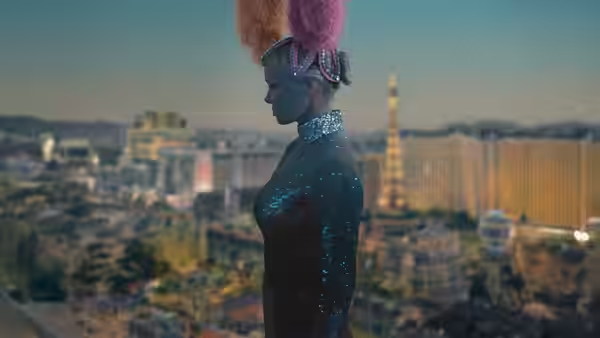
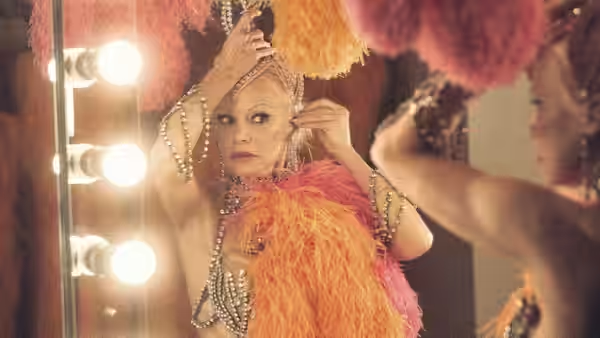
Autumn Durald’s cinematography finds something tender in Las Vegas’s faded glamour, although its softness sometimes gets between us and the people. Shelly’s film room is a useful visual detail because it gives her an interest beyond being looked at. Natalie Ziering’s production design works well on that domestic scale, allowing us to consider Shelly through the space she occupies away from performing. Elsewhere, the film is too ready to linger over an image when a scene needs to develop.

Editors Blair McClendon and Cam McLauchlin give the atmosphere plenty of space, but the repetitions become noticeable within an 89-minute running time. Andrew Wyatt’s music helps sustain the mood, though it cannot make those stretches feel necessary. Slow pacing is reasonable here, and a busier plot would not automatically improve the film. The difficulty is that we spend too many of these passages learning nothing further about Shelly.

In a drama about an ageing performer, admiration can become a substitute for curiosity. Gia Coppola avoids the worst of that through a central character whose pride is not always comfortable to watch. Even so, the film needed to be more curious about the lives around her. Give it an evening if performance-led character studies are your preference, and be prepared for the writing to do less than its leading actor.

Critical consensus AI synthesised

64
Positive
12
Mixed
9
Negative
4

The reviews lean cautiously positive, with much firmer agreement on Pamela Anderson than on the film around her. Most critics praise the vulnerability and sincerity of her performance, finding emotional weight in Shelly’s pride in her work and uncertainty about her future. Praise also gathers around the film’s sympathy for ageing women and its portrait of Las Vegas’s faded glamour, though the soft visuals do not work for everyone.

The verdicts range widely, but reservations repeatedly concern thin writing, underdeveloped relationships and a tendency to meander. Even several admirers find the storytelling slight; less persuaded critics see repetition and atmosphere covering for a shortage of dramatic substance. Variety offers a notable dissent on Anderson herself, finding both her performance and the role limited, while singling out Jamie Lee Curtis for praise. The central divide is over how much Anderson can compensate for the screenplay.

IndieWire
10 January 2025 · B+ · Kate Erbland
83

Erbland praises the film as a deeply affecting showcase for Pamela Anderson, while noting that it loses focus when it moves away from her character. She singles out Anderson’s emotionally intense, vulnerable performance as the film’s great strength.

Read the full review →
Evening Standard
15 February 2025 · ★★★★ · Hayley Spencer
80

Spencer finds the film a heartfelt success and calls Anderson’s performance captivating. She praises the sensitive visual portrait of the Las Vegas showgirl community.

Read the full review →
The Guardian
2 March 2025 · ★★★★ · Wendy Ide
80

Ide finds the film bruising and beautiful, though its storytelling can feel flimsy. She especially praises Pamela Anderson’s subtle performance, which she says transforms how audiences see her as an actor.

Read the full review →
Time Out
8 January 2025 · ★★★★ · Elizabeth Weitzman
80

Weitzman calls the film a touching elegy to Las Vegas razzle-dazzle and says Anderson hits a career high. She singles out Anderson’s performance as a revelation.

Read the full review →
The New York Times
9 January 2025 · Manohla Dargis
75*

The review is broadly positive about Gia Coppola’s film. It singles out Pamela Anderson’s performance for praise.

Read the full review →
Los Angeles Times
9 January 2025 · Amy Nicholson
70*

Nicholson finds the film slight and occasionally padded, but says Pamela Anderson’s layered performance transcends it. She especially praises Anderson’s sincerity and self-awareness in portraying Shelly’s hazy contradictions.

Read the full review →

Straight answers AI written, from our review

Is The Last Showgirl worth watching?
The Last Showgirl is worth watching for Pamela Anderson’s moving performance if performance-led character studies are your preference; we score it 68 out of 100. We were moved by the seriousness she gives Shelly’s pride in her work, but thin supporting characters and drifting pacing make this a qualified recommendation.
How long is The Last Showgirl, and what is it rated?
The Last Showgirl runs 1h 29m. It is a drama film.
Where can I watch The Last Showgirl in Switzerland?
The Last Showgirl is not on any streaming or rental service in Switzerland at the moment. It is available in 27 other countries; change your country at the top of the page to see where. Availability is checked daily.
How violent or frightening is The Last Showgirl, and is it suitable for children?
The Last Showgirl has a UK 15 certificate, making it a choice for older teenagers and adults rather than children. Its concerns include ageing, work and motherhood, but the certificate alone does not establish how violent or frightening it is, so we cannot offer specific reassurance to squeamish viewers.
How does The Last Showgirl compare to The Wrestler?
The Last Showgirl offers a softer, more drifting portrait of a performer attached to work than The Wrestler, which we recommend more strongly for its tenderness and humour despite the discomfort. Both depend on their central performances and have familiar writing, but Anderson has less support from the surrounding characters; choose her film if a gentler character study appeals.
What should I watch after The Last Showgirl?
After The Last Showgirl, try The Wrestler (2008, Fi1m 85): For another performer whose attachment to work makes everything outside it difficult. Then The Dresser (1983, Fi1m 80): Backstage labour and professional pride, with more attention paid to the supporting player; and Pina (2011, Fi1m 80): For the dancing itself, and bodies expressing what dialogue cannot quite manage.

Cast

If you liked this, try…

  1. Gloria (2013) · not reviewed yetAnother woman allowed desire, awkwardness and a life beyond other people’s expectations.

  2. The Wrestler (2008, Fi1m 85)For another performer whose attachment to work makes everything outside it difficult.

  3. The Dresser (1983, Fi1m 80)Backstage labour and professional pride, with more attention paid to the supporting player.

  4. Support the Girls (2018) · not reviewed yetWomen at work receive the patient ensemble attention Shelly’s colleagues could have used.

  5. Pina (2011, Fi1m 80)For the dancing itself, and bodies expressing what dialogue cannot quite manage.