Soderbergh and Burns turn the Panama Papers into a 96-minute revue hosted by the villains, talking straight to camera. Streep’s widow gives it a heart it keeps wandering away from, then asks us to be angry on her behalf anyway.
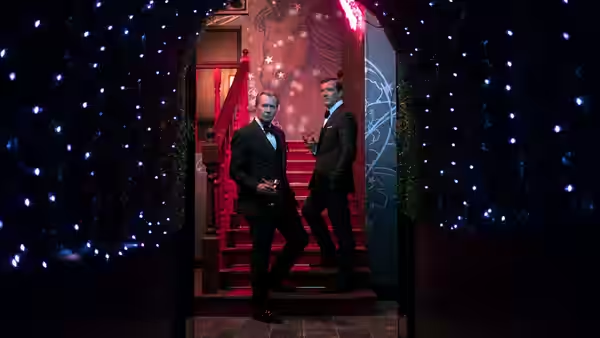
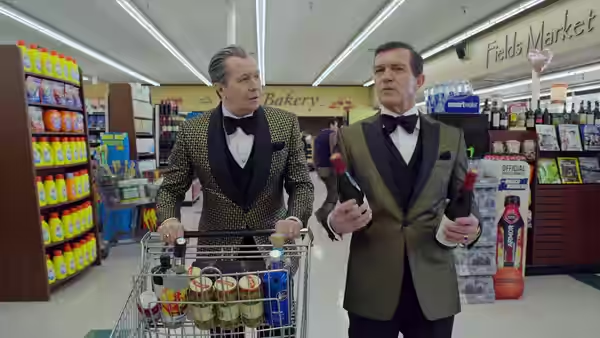
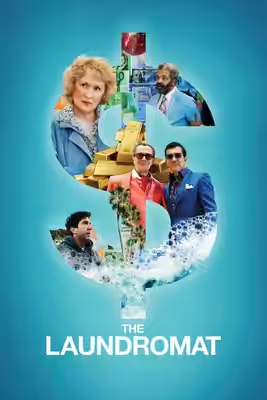
Steven Soderbergh’s account of the Panama Papers runs 96 minutes and is hosted by the two men whose firm the papers came from. Jürgen Mossack (Gary Oldman) and Ramón Fonseca (Antonio Banderas) talk straight to camera and explain money from the beginning. Scott Z. Burns’s script then breaks the scandal into chapters, each with a small story attached. It is a decent way to explain something that resists explaining. It is a poor way to build a film around a person, and this one has a person it keeps putting down.
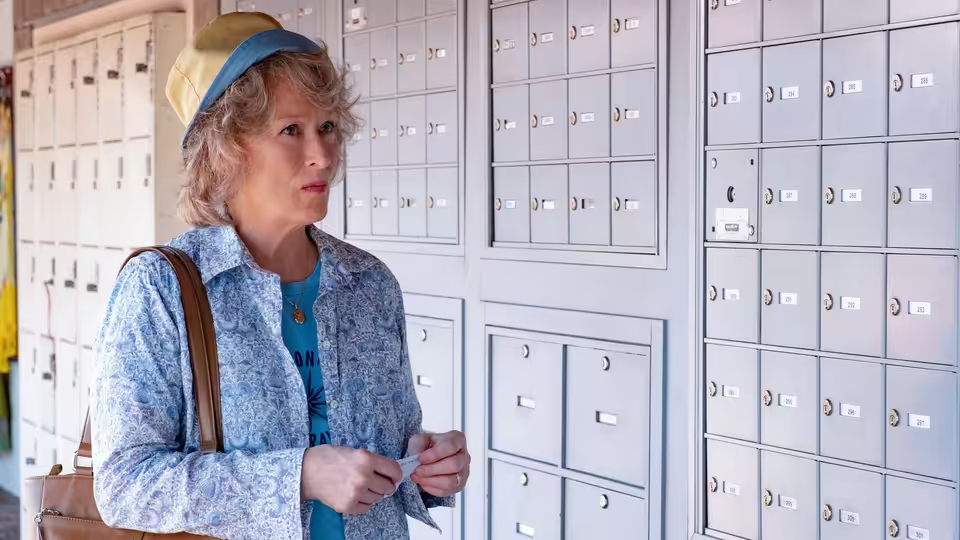
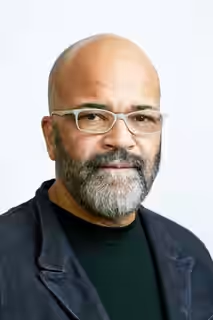
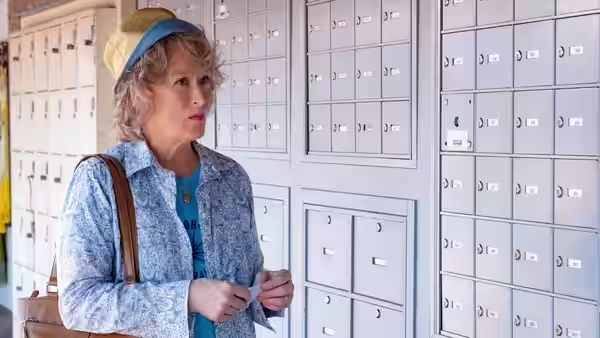
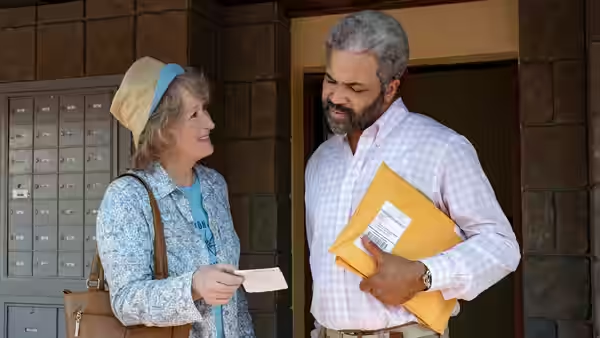
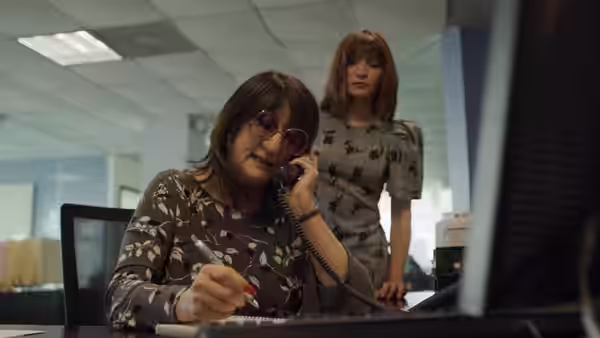
She is Ellen Martin (Meryl Streep), a widow trying to find out who owes her what and why nobody will say. David Schwimmer and Jeffrey Wright turn up along the way, each a link in a chain that leads back to Panama. Streep plays Ellen as a woman who has been polite all her life and is now discovering, phone in hand, what politeness buys. We felt the anger build in her and in us over those calls: the hold music, the second number, the man who cannot say who he works for. It is the best stretch of the film, and Soderbergh leaves it far too soon.
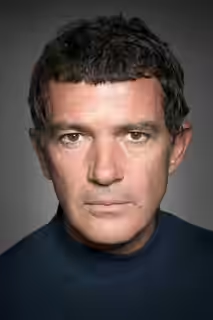
Oldman and Banderas are the reason he leaves. Oldman does a German accent that a school revue would send back; Banderas is silkier and more amused, and the better of the two. Ellen Mirojnick dresses them like men who have never been told no, and Soderbergh, shooting it himself, puts them in flat, bright, saturated frames, a beach like a brochure, a bar like a set. The look suits them: men who sell cardboard companies living in a cardboard world. But they are on screen a great deal, they are having a good time, and by the third occasion they assure us it is all perfectly legal the film has started having a good time with them.
The other chapters are where it comes apart. They go off to other countries and other crooks, none of them has a Streep in it, and they play like sketches cut from a longer, better-organised film. Soderbergh edits as well, and he cuts between the strands cleanly enough, but there is nothing for the cuts to connect. Howard Cummings builds the Panama offices as glass and beige, rooms in which nothing is meant to happen, and David Holmes scores the whole thing as a caper, organ and brushed drums, so that even the widow’s chapter bounces along when it might have been allowed to hurt. We were bored by the chapters without her, which is odd, because on paper they are the most dramatic things here.
The Big Short did this four years earlier, with the same direct address and the same famous faces explaining paperwork, and The Laundromat knows it and does not mind. The better comparison is closer to home. Burns wrote Contagion for Soderbergh in 2011, and that film followed half a dozen strands across the world and never lost hold of one of them. Here they have a widow with a stronger claim on our attention than any of those strands and keep handing the camera to the men who cheated her.
We had stopped caring somewhere in the second half, and the fault was the film’s: it spends forty minutes telling us how clever the fraud was and about eight telling us who paid for it, then asks us to be angry on the widow’s behalf as if it had not been the one changing the subject. Most critics landed about where we have, some finding it fun while it lasts, more finding it a lecture with sketches, and we do not think either camp is wrong.
It is 96 minutes and rated 15. Watch it at home on a week night. Streep’s phone calls are worth that much, and the rest will go past without asking much of you.