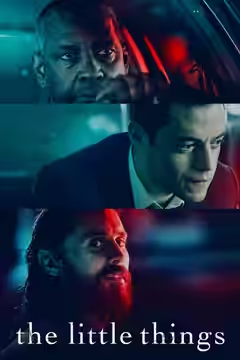
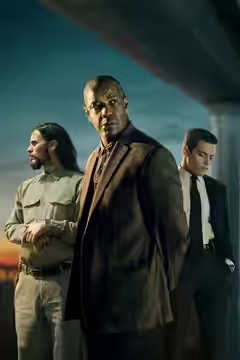
John Lee Hancock’s serial-killer procedural is set in a 1990s Los Angeles it plainly misses, and Denzel Washington gives it more than the script deserves. It is patient, handsome and derivative, and its last act is the only part we still think about.
John Lee Hancock has made the kind of serial-killer film studios stopped making around the turn of the century: two detectives, one older and broken and one younger and hungry, a suspect who enjoys being suspected, and a city of night streets and bad coffee. He wrote it himself, and he writes it the way they used to be written. That is not an insult. The Little Things knows exactly what it is, and for about ninety minutes it is a decent example of it. The question is whether decent is enough, and we are not sure it is.
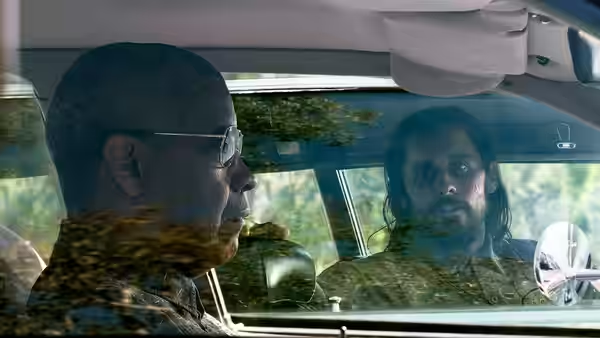
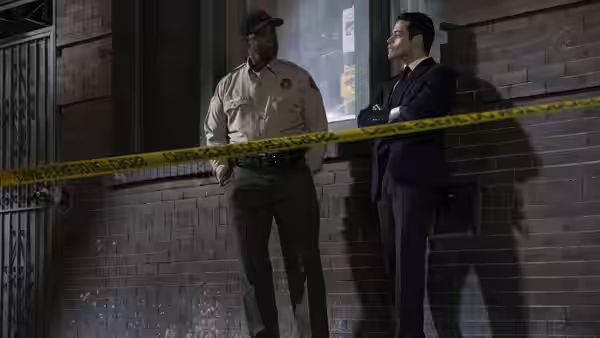
Washington plays Deke as a man who has learned to take up as little room as possible. He drives slowly, speaks softly, and stands at the edge of crime scenes until the younger men have finished being clever. Hancock gives him a motel room and a habit of talking to the dead, who sit on the bed and wait for him, and Washington plays these scenes without a flicker of self-pity, which is the only way they could have worked. There is a moment when he is alone at night and his face simply gives way. It lasts a few seconds and it is the best thing in the film. We were more moved by it than the story around it had earned.
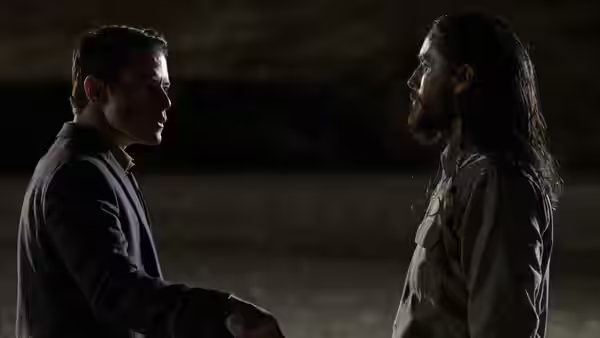
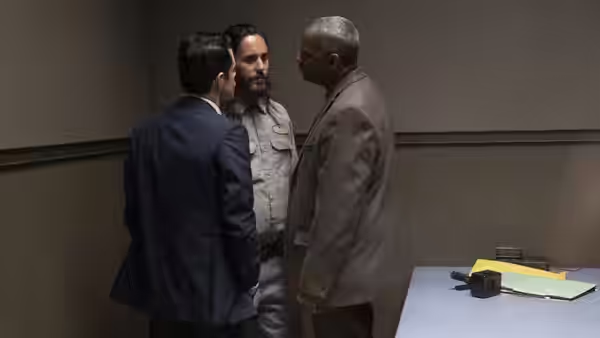
Malek is stiffer. Baxter is meant to be the department’s rising man, and Malek plays him wound tight, precise, a little pleased with his own suits, which Daniel Orlandi cuts sharper than anyone else’s in the building. He is good when he is listening to Washington and less good when he has to carry a scene, and the film asks him to carry a great many. Leto arrives near the hour mark with a paunch, greasy shoulder-length hair and a walk like a man stepping off a boat, and how much of him you can take will depend on your appetite for actors who have plainly enjoyed the make-up chair. In the interrogation room he is unsettling for ten minutes. After that we found we were watching an actor rather than a suspect.
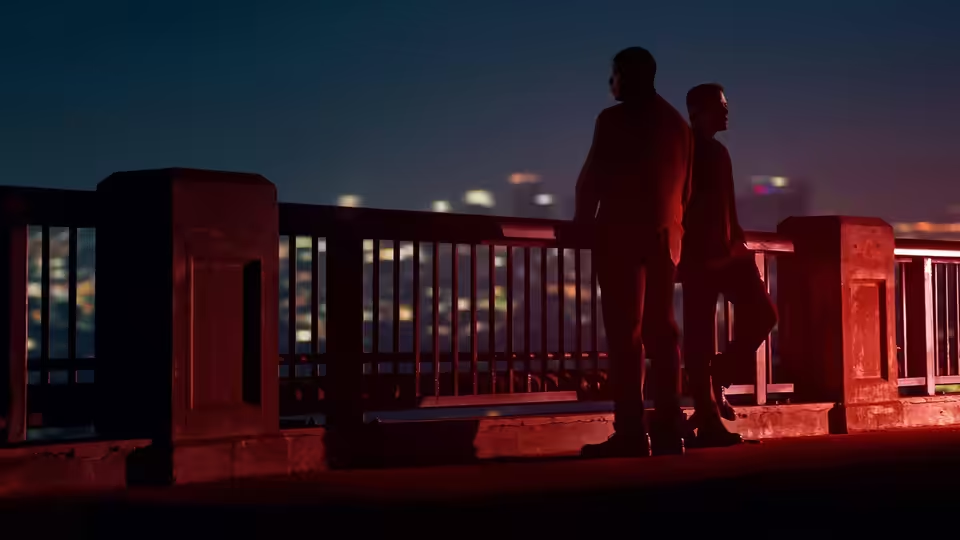
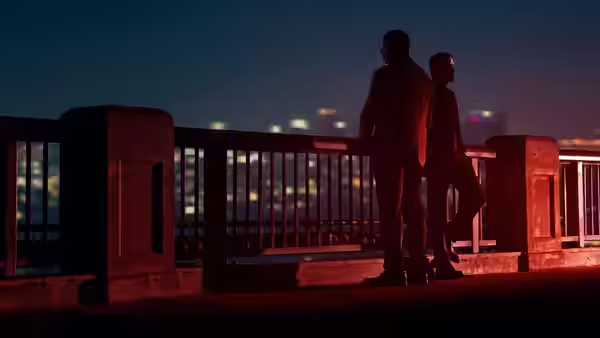
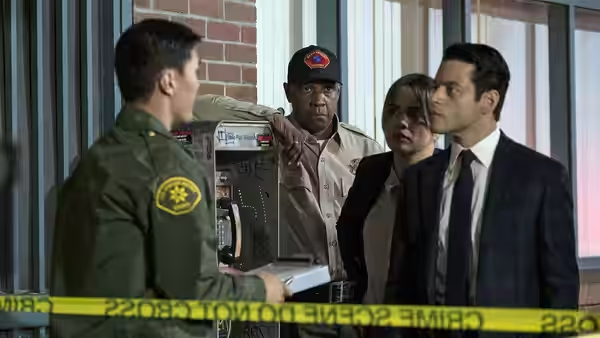
The craft is sound. John Schwartzman shoots Los Angeles at night in sodium orange and its interiors in a sickly green, the green of fluorescent tubes over a morgue slab, and he lets the dark keep most of what it holds. Michael Corenblith’s homicide bullpen is metal desks, rotary phones and a corkboard of dead women’s faces, and Sparma’s flat is a mess we could smell. Thomas Newman’s score is a low pulse with a few plaintive notes on top, and it knows when to stop, which is rarer than it should be. Robert Frazen cuts the investigation cleanly and the flashbacks less so; the flares from Deke’s past come without warning and we spent too long working out when we were.
The trouble is that the plot does not hold. Hancock wants a film about what police work does to the men who do it, and he has borrowed the mechanics of a whodunit to carry the idea, and the two keep tripping each other. Leads are followed because the running time needs them followed. A stakeout goes on far longer than any real sergeant would allow. Natalie Morales, as Detective Jamie Estrada, and Chris Bauer, as Detective Sal Rizoli, are given one function each. The women who die are photographs on a board, which the film half-notices and does nothing about.
Then the last half hour takes a turn we will not describe. It is the boldest thing Hancock has done as a writer, it explains what the film was for all along, and it makes a good deal of the previous ninety minutes look like padding. We left it unsettled rather than satisfied, and we have argued about it since, which is more than most films of this kind manage. Whether that is the film’s achievement or an accident of a script that had run out of clues, we could not tell you.
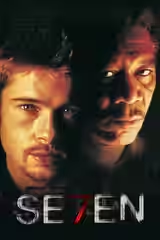
Set against Se7en (1995) and Zodiac (2007), the two films it cannot stop thinking about, it is smaller and less frightening. Set against Hancock’s own work it is his strangest and probably his most interesting. Watch it at home, late, with the lights off, and forgive it its borrowings for the sake of Washington’s face and that final turn. It runs 128 minutes and carries a 15.