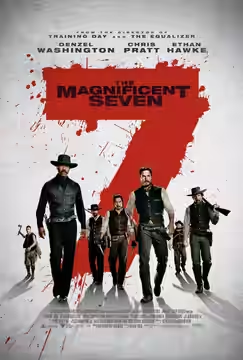
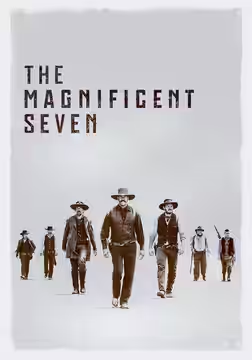
Antoine Fuqua’s Western has a capable cast and a saloon confrontation worth sitting up for. Too much of the rest is thin characterisation and prolonged gunfire, with Denzel Washington doing more than the screenplay to hold our attention.
Antoine Fuqua’s The Magnificent Seven has enough good actors to keep us watching, but too little interest in the people they play. It attempts a straightforward Western about an outmatched group standing up to a bully, and there is no shame in that. The disappointment is how often Nic Pizzolatto and Richard Wenk’s screenplay relies on the cast to supply distinctions it has barely written. At 132 minutes, it has had time to introduce these men properly.
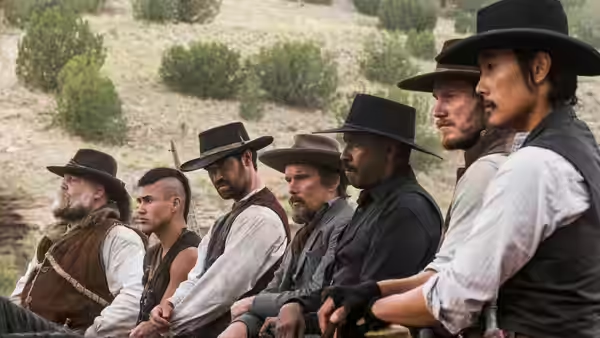
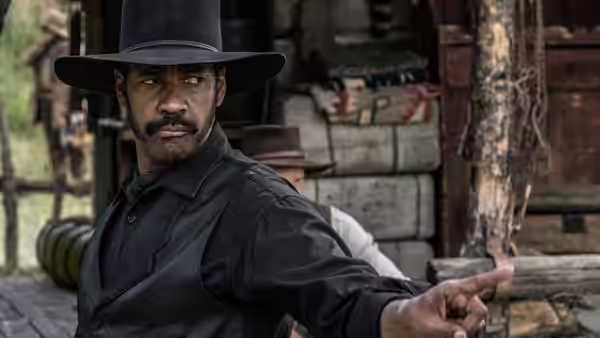
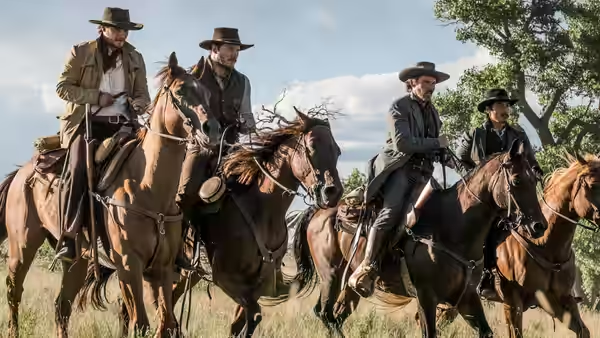
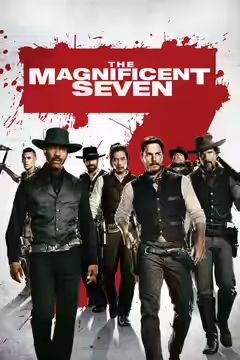
Denzel Washington gives Sam Chisolm an authority that makes him easy to accept as the group’s leader. Chris Pratt’s Joshua Farraday supplies the easier charm, though some of the humour seems to be waiting for applause. Ethan Hawke’s Goodnight Robicheaux offers a welcome suggestion of a life beyond the immediate job, while Vincent D’Onofrio makes Jack Horne an eccentric enough presence to interrupt the routine. The script gives each an introduction without quite giving them enough to do together.
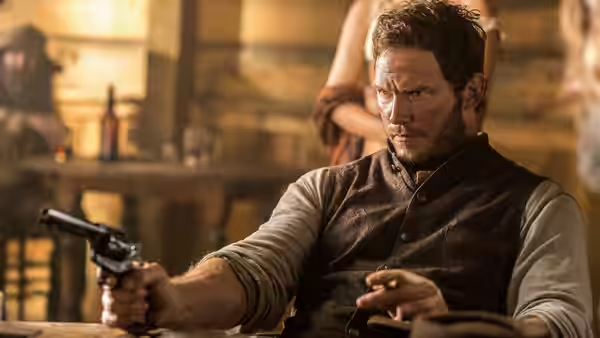
The saloon confrontation briefly supplies the film we had hoped for. Mauro Fiore’s cinematography keeps the men’s faces as interesting as their weapons, while John Refoua’s editing gives the dialogue time to register without letting the exchange sag. We were gripped, because the talk makes these people seem capable of surprising one another. It is a small piece of action in which the actors remain worth watching, and it makes the later dependence on extended shooting harder to excuse.
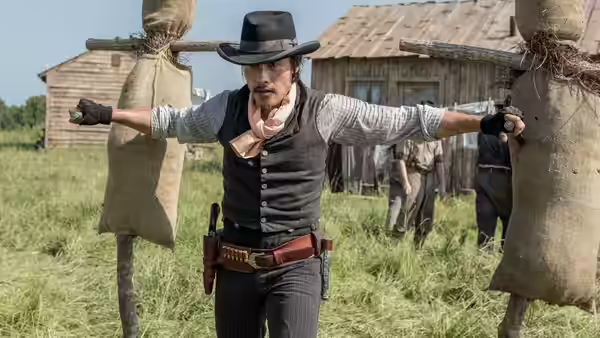
Derek R. Hill’s production design makes the saloon feel worth spending time in even without a confrontation. Sharen Davis’s costumes are useful introductions, distinguishing men whom the dialogue too often leaves interchangeable. James Horner and Simon Franglen’s music gives the fighting urgency, though it struggles to compensate for our limited interest in the people involved. These are craftspeople doing sound work on scenes that needed another pass at the writing.
Peter Sarsgaard can make Bartholomew Bogue unpleasant, but the screenplay gives him too little beyond being the villain. The same thin writing limits the other side. With so many different men brought together, there should be friction over more than the practical business of fighting; instead, the film hurries past the questions their company raises. The townsfolk also struggle to become people we care about, which is a considerable problem in a Western built around defending them.
The action grows longer and louder without solving any of this. Some passages have an agreeable physical force, and Antoine Fuqua can organise enough movement to keep the eye occupied. Yet the extended gunfire gradually becomes tiring, because the film has not made the risk personal enough. It is possible to appreciate the work involved in staging these encounters while feeling little concern about what happens within them, and that is where too much of the film leaves us.
An ensemble Western does not need an unfamiliar plot to justify itself, since the company can be reason enough to stay. Here, there are flashes of warmth and oddness, especially from Vincent D’Onofrio, but too little of either to sustain more than two hours. An affection for the cast will have to do much of the work.