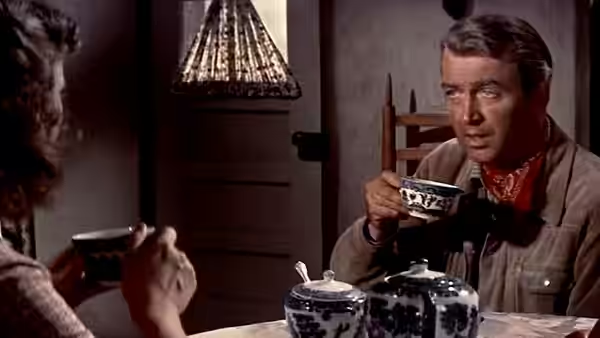
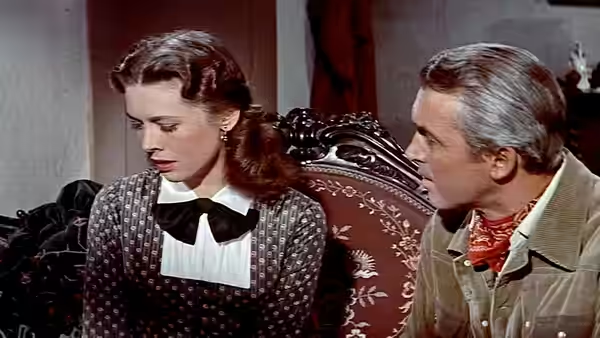
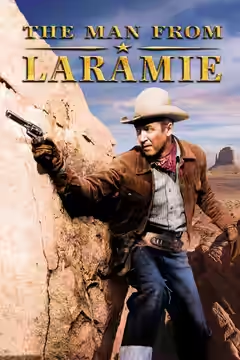
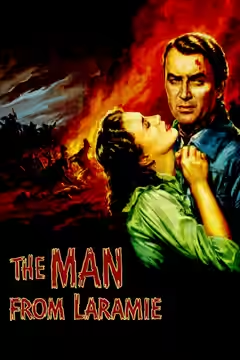
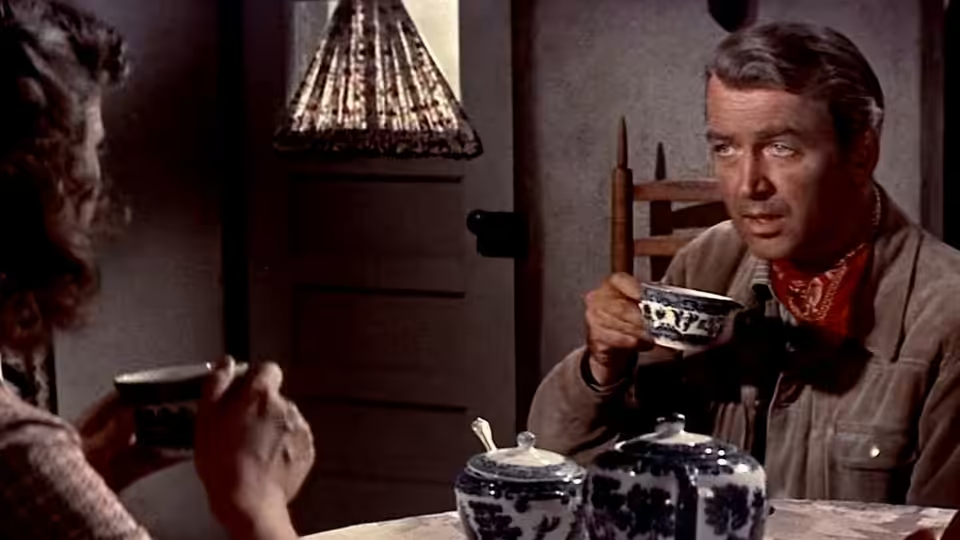
Will Lockhart (James Stewart) drinks tea across the table from a woman
Film review

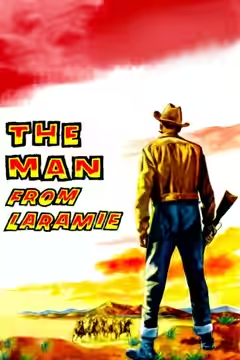
The Man from Laramie

1955 · Directed by Anthony Mann · 1h 43m

In a sentenceJames Stewart makes all that open country feel like somewhere we should give him space

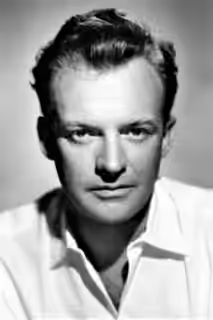
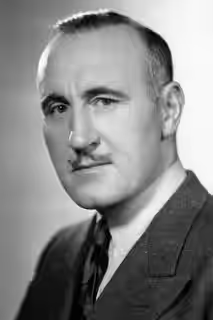
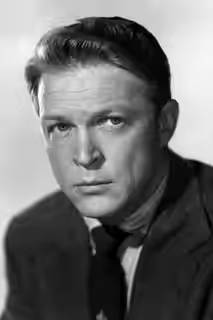
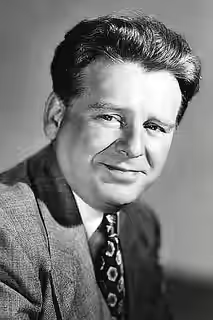
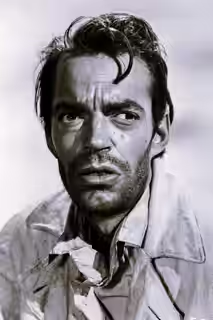
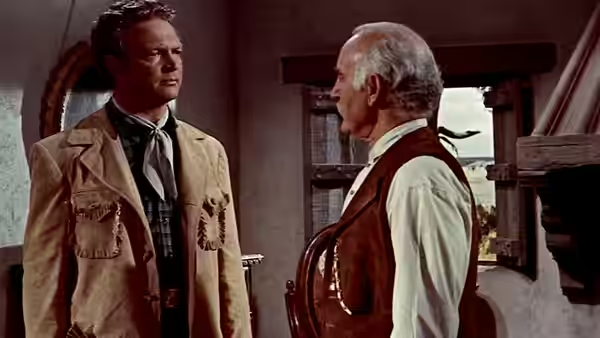
Will Lockhart (James Stewart) is the central figure in this Western directed by Anthony Mann. The ensemble includes Vic Hansbro (Arthur Kennedy), Alec Waggoman (Donald Crisp), Barbara Waggoman (Cathy O’Donnell) and Dave Waggoman (Alex Nicol). Aline MacMahon plays Kate Canaday, with Wallace Ford as Charley O’Leary and Jack Elam as Chris Boldt. Open country, violence and psychological conflict shape the drama, which places Lockhart among a range of troubled personalities. Written by Frank Burt and Philip Yordan, the film runs for 103 minutes.

Plays from YouTube when you press play; nothing loads from them until then.

Fi1m review

Anthony Mann’s Western is tense, handsomely photographed and carried by a troubling James Stewart. Its psychological complications occasionally feel forced, but the harshness of the violence and the expressive landscape make it worth the discomfort.

The Man from Laramie is a forceful Western, worth seeing for James Stewart’s disquieting performance and Anthony Mann’s use of open country. It wants to make violence feel ugly, and to give the people responsible more than a convenient appetite for trouble. That makes it more demanding than a simple account of a dangerous man in a dangerous place, though it also leaves the writing with rather a lot to explain. We recommend it, with a reservation about the strain of its psychological ambitions.

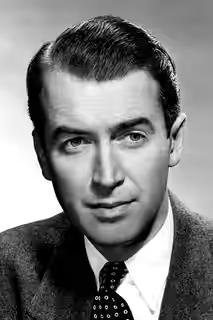
James Stewart plays Will Lockhart with a darkness that makes the prospect of a reassuring leading man seem remote. We were unsettled by him: the anger on his face leaves so little room for ease, even when we want to find some. Anthony Mann gives that discomfort enough space to become the main attraction. The performance does not need our sympathy at every moment, and the film is stronger for allowing that.

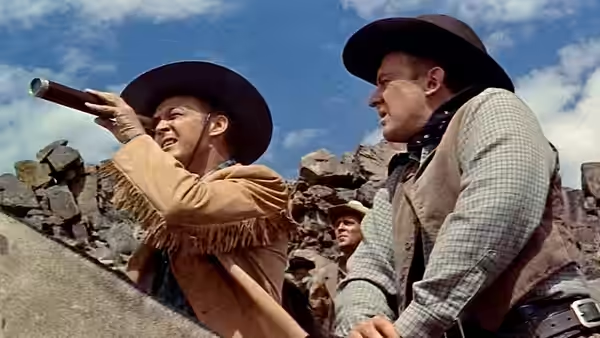
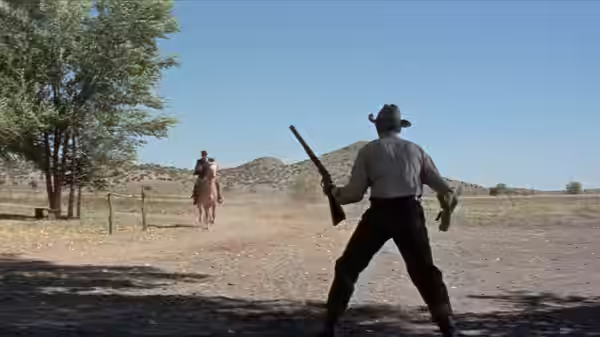
Charles Lang’s photography is a substantial part of why this works. The open country gives the eye room to travel, but the shadows and the weight of the landscape keep the people from looking comfortably in charge of it. The views are pleasurable to look at without making the violence within them look inviting. Anthony Mann uses the landscape to make human aggression seem more exposed, and Charles Lang’s images sustain that unease even across the wide expanses.

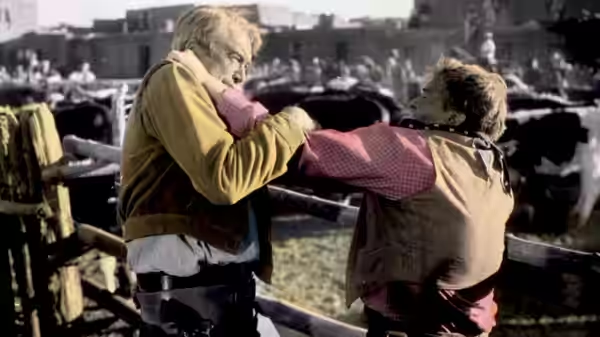
William Lyon’s editing is strongest in its handling of violence, which feels unpleasantly clear rather than merely busy. We can register the damage without having our attention drawn to the cutting that delivers it. That clarity is less consistent in the psychological drama, where the accumulation of troubled personalities begins to make the film feel crowded. The individual scenes can be forceful while the connections between them demand more patience.

The screenplay by Frank Burt and Philip Yordan gives the supporting cast substantial temperaments to contend with. Arthur Kennedy as Vic Hansbro and Donald Crisp as Alec Waggoman help prevent James Stewart from being the only person worth watching. Still, the script sometimes presses so hard for psychological significance that the characters seem to have been given too much to demonstrate. A plainer passage or two would have made their troubles more convincing.

George Duning’s music brings energy, although its emphasis can feel unnecessary beside such a tense central performance. The film is already good at making us uneasy through a face, a stretch of country or the threat of violence. When the score urges the same response, it can make a firm point feel laboured. This is a small reservation, but it belongs with the writing’s tendency to insist on what the acting has already made clear.

Within the Western, Anthony Mann’s achievement here is to make toughness feel troubling without draining the genre of its physical pleasures. The country remains worth looking at, and the confrontations have force, even when the explanations grow cumbersome. At 103 minutes, the film has room for its difficult people, though we would have welcomed a little less insistence on their difficulties. Choose it for James Stewart in an uncomforting mood, and expect the scenery to provide only temporary relief.
Critical consensus AI synthesised

76
Positive
4
Mixed
0
Negative
0
Radio Times
★★★★ · David Parkinson
80

Parkinson views the western as a tougher entry in Anthony Mann’s psychological cycle. He singles out the hand-shooting scene and climactic showdown as especially memorable.

Read the full review →
Time Out
· NF
75*

The review calls the Western magnificent, though slightly over-ambitious. Its main reservation is that the film’s ambitions may exceed its reach.

Read the full review →
Slant Magazine
8 June 2014 · ★★★½ · Jake Cole
70

Cole praises the film’s psychological intensity and considers it an ambitious, revisionist western. He singles out Mann’s expressive use of landscape, shadows, and stylized violence.

Read the full review →
The Skinny
20 December 2016 · ★★★★ · Tom Grieve
80

Grieve praises the film as a knotty, deeply idiosyncratic western that impresses on every front. He singles out Mann’s precise world-building, Stewart’s dark performance and the grand-scale Technicolor CinemaScope photography.

Read the full review →

Straight answers AI written, from our review

Is The Man from Laramie worth watching?
The Man from Laramie is worth watching for James Stewart’s unsettling performance and Anthony Mann’s expressive use of open country; we score it 82 out of 100. We recommend it to anyone who likes Westerns with troubling characters and harsh violence, though the psychological explanations sometimes feel forced and the music presses harder than necessary.
How long is The Man from Laramie, and what is it rated?
The Man from Laramie runs 1h 43m. It is a drama and western film.
Where can I watch The Man from Laramie in the Philippines?
The Man from Laramie is not on any streaming or rental service in the Philippines at the moment. It is available in 20 other countries; change your country at the top of the page to see where. Availability is checked daily.
How does The Man from Laramie compare to Johnny Guitar?
The Man from Laramie is the stronger choice for landscape and physical confrontation, while Johnny Guitar suits a taste for fierce, theatrical drama. We recommend the former for James Stewart’s tightly held anger, the latter for Joan Crawford and Mercedes McCambridge’s painfully credible hatred; both become less persuasive when the writing pushes their troubled characters to explain too much.
What should I watch after The Man from Laramie?
After The Man from Laramie, try Johnny Guitar (1954, Fi1m 84): Anger, desire and suspicion crowd a Western with little room for comfort. Then Harakiri (1962, Fi1m 91): Ritual courtesy gives way to cruelty in a drama of wounded pride; and Unforgiven (1992, Fi1m 92): A harsher reckoning with the damage done by supposedly necessary violence.

Cast

If you liked this, try…

  1. The Gunfighter (1950) · not on Fi1m yetAnother Western where a man’s reputation makes ordinary peace difficult.

  2. Johnny Guitar (1954, Fi1m 84)Anger, desire and suspicion crowd a Western with little room for comfort.

  3. Harakiri (1962, Fi1m 91)Ritual courtesy gives way to cruelty in a drama of wounded pride.

  4. The Proposition (2005) · not on Fi1m yetOpen country offers scant relief from ugly violence and divided loyalties.

  5. Unforgiven (1992, Fi1m 92)A harsher reckoning with the damage done by supposedly necessary violence.