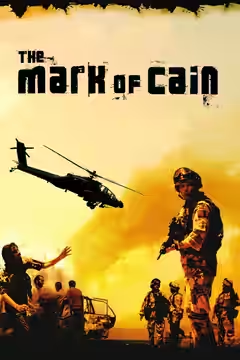
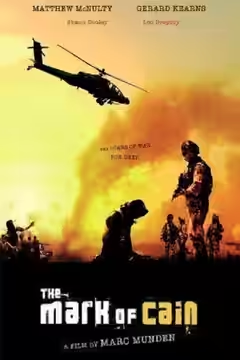
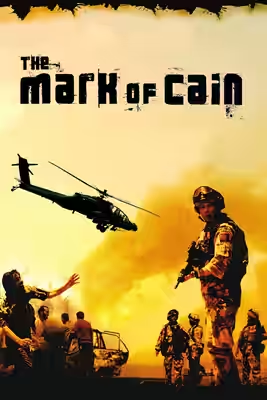
Tony Marchant’s drama about two young British soldiers in Iraq is angry, closely acted and only 87 minutes long, and it knows exactly who it blames. The second half says so more often than it needs to, but Gerard Kearns makes the first half hard to shake.
Tony Marchant’s script takes two eighteen-year-old privates to Basra in the months after the 2003 invasion and asks what happens when the men with rank want something done and do not want to be seen asking for it. The Mark of Cain is a short, angry drama and for most of its length a good one. It is at its best in the first half, when it shows us what it thinks. In the second it starts telling us, and it tells us the same thing more than once.
Gerard Kearns plays Mark Tate, known as Treacle, as a boy who has not yet decided what sort of man he is going to be. He watches, he goes along, and he keeps a face so still you can see the thinking happening behind it. Matthew McNulty’s Shane Gulliver is the louder of the two, the one who talks himself into things, and the pair have the easy rhythm of lads who have known each other since school. Leo Gregory’s Lance Corporal Quealey is the sergeant-figure every war film needs, except that Gregory plays him not as a sadist but as a tired man passing on what was passed to him. Elliot Cowan’s Worriss, the captain, gives his orders in sentences that could be read out at an inquiry without a word of them being wrong.
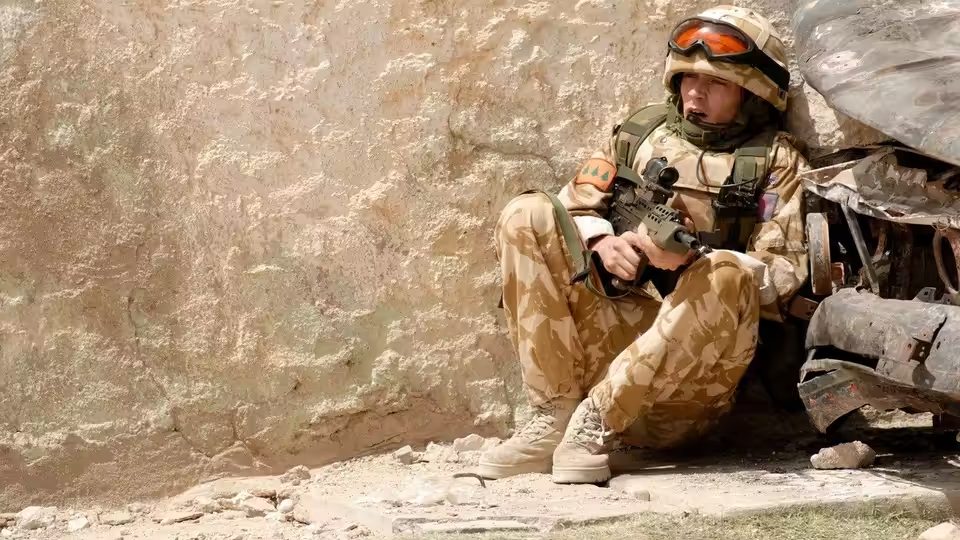
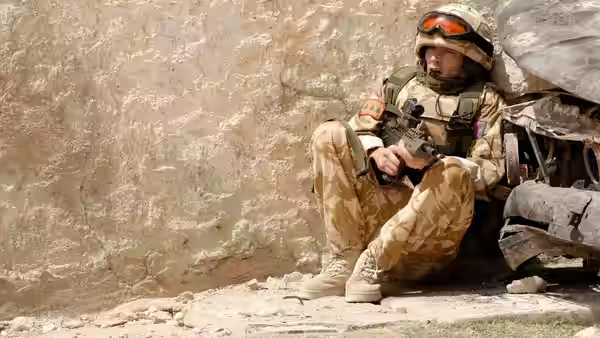
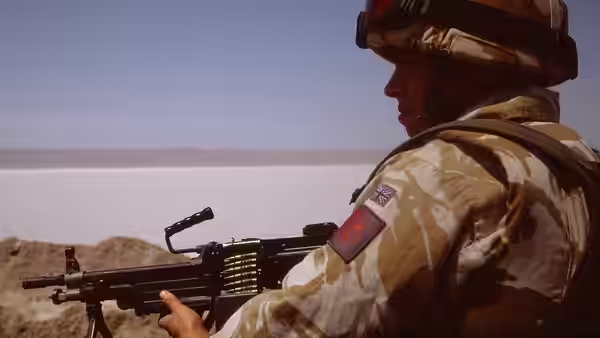
Marc Munden directs the Iraq scenes with real nerve. Matt Gray shoots the Basra streets handheld and over-exposed, so the white light flattens every face and the shadows in the doorways go completely black, and we spent the first patrol scanning the frame for a rifle the way the soldiers do. Luana Hanson’s base is breeze-block, tarpaulin and a bare holding cell under a strip light, and the cell looks as cheap as the decision that filled it. Ben Bartlett’s score mostly keeps out of the way, which is right. Philip Kloss cuts the night with the prisoners in short, ugly pieces, so that we are never allowed to settle into watching it.
That night is where the film earned our attention and then made us feel ill. It was not the blows, which Munden keeps at the edge of the frame or out of it altogether. It was Kearns, standing against a wall with his hands at his sides, looking from the men on the floor to Quealey and back, and the half-second before he moved. We had thought we knew which way he would go. We were wrong, and we sat with that for the rest of the film.
The trouble begins when the story comes home. Heather Craney’s Brenda Tate and Brendan Coyle’s Davey Gulliver are given scenes whose job is to say out loud what the Iraq half had already made plain: that the boys were used, that somebody higher up should answer, that the Army looks after its own. Coyle, who can do more with a glance than most actors manage with a page, is handed the page anyway. Shaun Dingwall’s Major Godber and Pip Torrens’s Colonel Hampton are written as the sort of officers who exist to be disliked, and both actors play them better than that. The plotting in the final third also leans on a coincidence we will not describe, and the film needs it more than it should.
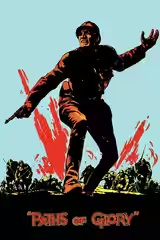
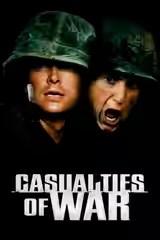
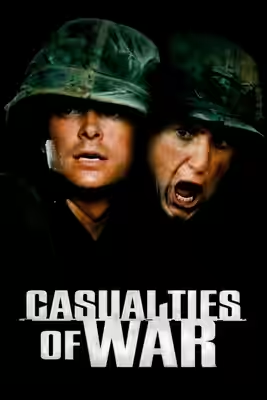
The standard here is Paths of Glory (1957) and Casualties of War (1989), both of which let the audience work out who the guilty men were before anybody in the film did. Marchant does not trust us that far. By the end nearly every character has made a speech, and the speeches all point the same way. We agreed with them. We would have agreed more if we had been left to say them ourselves.
Still, it runs 87 minutes, which is the right length for this kind of fury, and the first forty of them are as good as any British screen drama about that war. Watch it for Kearns, and for Gregory, and for that strip-lit cell. Then go and read what happened at the real camp, because the film is in no doubt that you should.