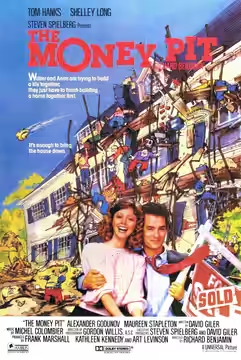
Tom Hanks earns some laughs amid the collapsing house, but Richard Benjamin lets the disasters become repetitive. The romance cannot sustain the quieter stretches, leaving a capable cast with too little to play.
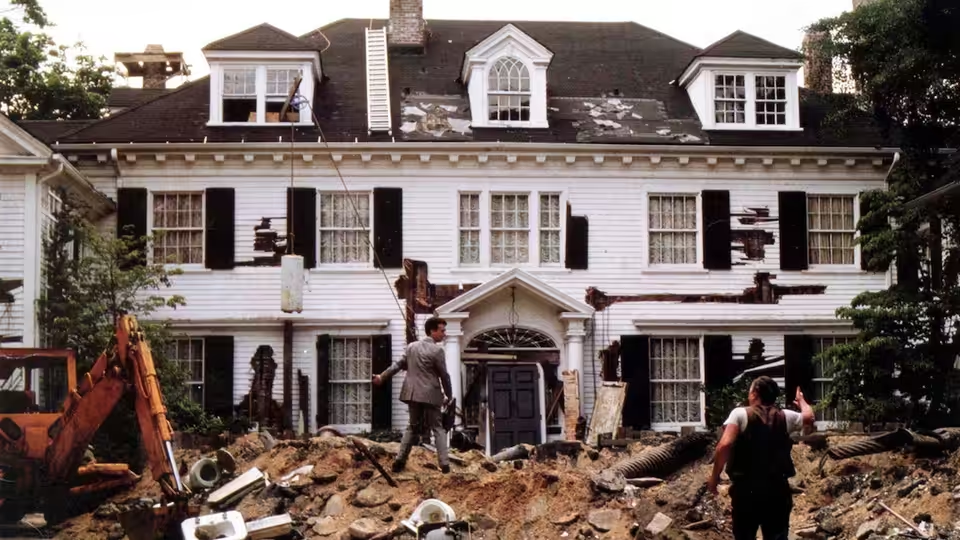
The useful thing about a house falling apart is that it requires little explanation. We can see the problem, understand the expense and enjoy being somewhere else. Richard Benjamin builds The Money Pit around that pleasure, and for a while the destruction is funny enough to justify the attention it gets. But the joke wears out before the film stops repeating it. At 91 minutes, this is a modest comedy that manages to feel overextended.
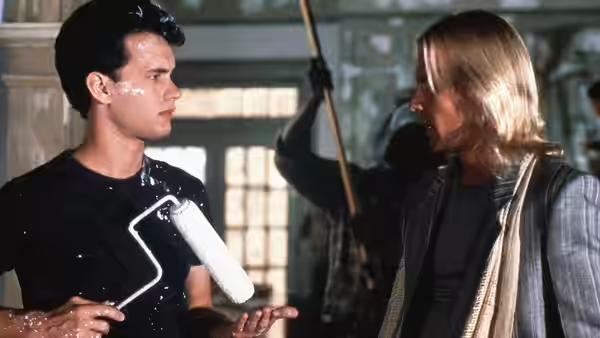
Tom Hanks plays Walter Fielding, Jr., the man moving into this uncooperative property, and he is the strongest reason to persevere. He gives the physical comedy a human scale, making it possible to care about an indignity that would otherwise be merely another excuse for something to break. We laughed at his helplessness as the house came apart; his response makes the damage funny. The director keeps finding fresh trouble for him, though the performance occasionally needs more breathing space between disasters.
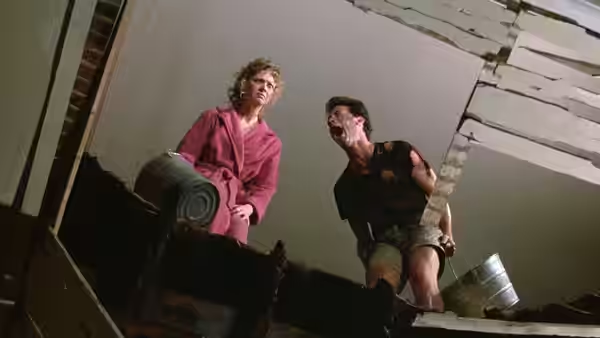
The romantic comedy is much less assured. Shelley Long, as Anna Crowley, and Alexander Godunov, as Max Beissart, are capable comic performers, but David Giler’s screenplay gives them too little to sustain our interest between catastrophes. There is pleasure in their company, without much concern for what happens to their characters. The writing needs to make their difficulties worth following even when the building is behaving itself, and it seldom manages that. The quieter passages consequently feel like time spent waiting for the next accident.
Patrizia von Brandenstein’s production design is a substantial advantage, giving the house enough character to compete with the cast. The staircase is a particularly effective piece of comic construction, and the inventiveness of the destruction deserves credit even when its frequency becomes tiring. Gordon Willis’s cinematography lets us read the physical damage clearly, so that the effort put into these elaborate gags registers. The trouble is that looking forward to another structural failure can become the main reason to keep watching.
Jacqueline Cambas’s editing gives the individual calamities a momentum that the film as a whole cannot maintain. The repeated escalation makes the sequence of jokes increasingly predictable, however much effort has gone into the next mishap, and the interruptions for romance do not supply enough contrast. Michel Colombier’s music helps maintain the cheerfulness, but that tone begins to work against a comedy that needs its frustrations to sting. A little more discomfort might have made the characters’ problems feel worth our attention when nothing is breaking.
The premise touches a useful domestic fear: a home is meant to provide security, and instead it demands more than its occupants can manage. A sharper farce would keep that anxiety present through the commotion, so that we had a reason to worry as well as laugh. Here the destruction grows so busy that it becomes difficult to feel much beyond anticipation of the next gag. Anyone looking for a romantic comedy should be prepared to spend a considerable amount of the evening watching a building.