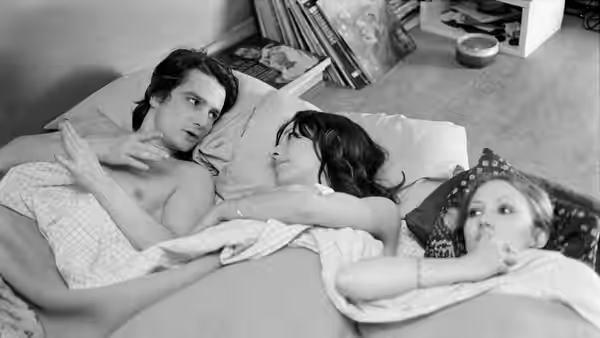
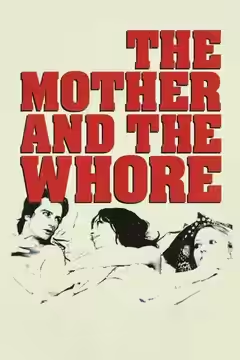
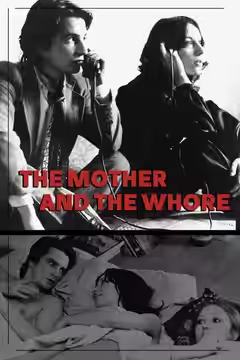
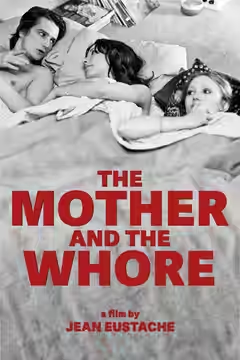
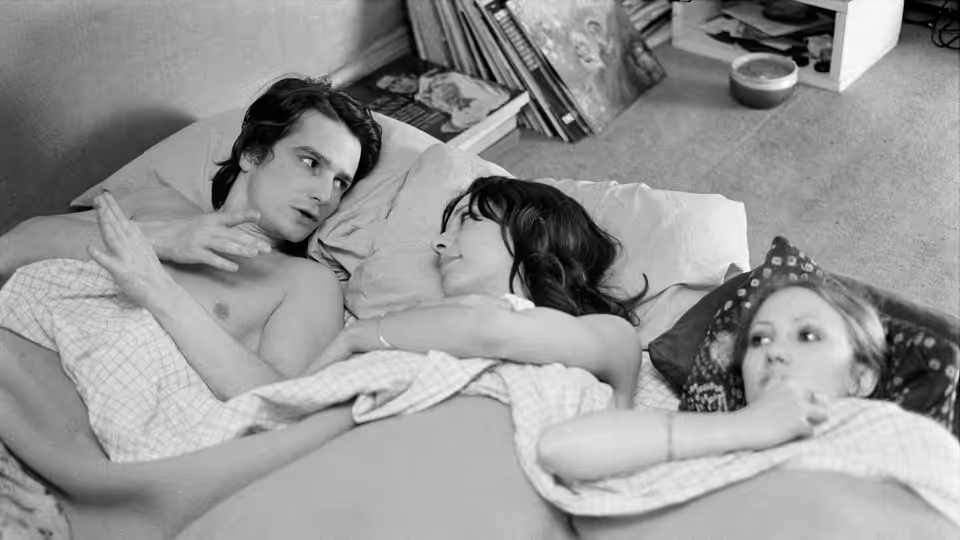
Alexandre (Jean-Pierre Léaud) lies in bed beside a woman and a child under the covers
Film review

The Mother and the Whore

1973 · Directed by Jean Eustache · 3h 39m

In a sentenceA long evening with a man who has confused talking about women with understanding them

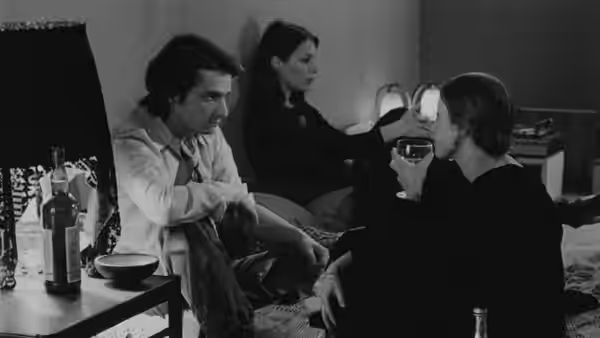
Alexandre (Jean-Pierre Léaud) talks about love and sex as though his ideas should settle things for everyone. Marie (Bernadette Lafont) and Veronika (Françoise Lebrun) have their own desires, fears and reasons for speaking. Alexandre wants his view of women to prevail, but what the women say about sex and hurt complicates his efforts to control the conversation. The three talk at length, with attraction and cruelty sharing the same exchanges and each speaker exposing something the others would rather leave unexamined.

Plays from YouTube when you press play; nothing loads from them until then.

Fi1m review

Jean Eustache’s long, talk-heavy romantic drama earns its demands through three performances that make selfishness painful to watch. Some exchanges outstay their usefulness, but the women’s emotional force makes this worth the time.

The Mother and the Whore is a demanding, frequently painful romantic drama that we recommend, provided an evening of talk sounds like an evening worth having. Jean Eustache gives it 219 minutes, and expects us to stay with people whose ideas about love do not make them any kinder. The length matters because we have to keep listening after we think we have understood somebody. The performances provide ample reason to do so.

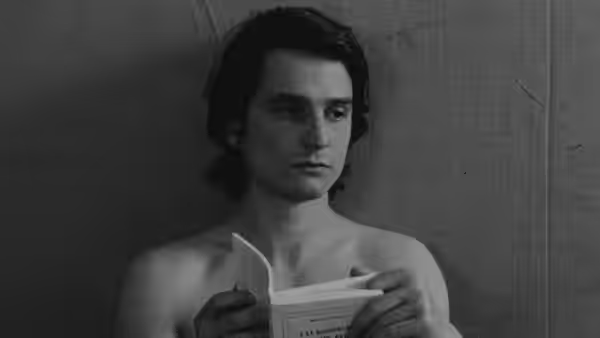
Jean-Pierre Léaud plays Alexandre with an assurance that becomes more unpleasant the longer we listen. He has plenty to say about women, but his confidence gives us no reason to believe he understands them. We grew angry listening to him. His habit of treating women’s desires as something to be defined on his terms makes the talk feel coercive, and Jean-Pierre Léaud does not soften that effect by asking for our affection.

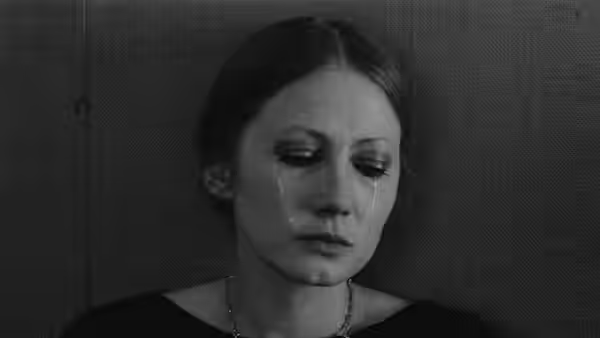
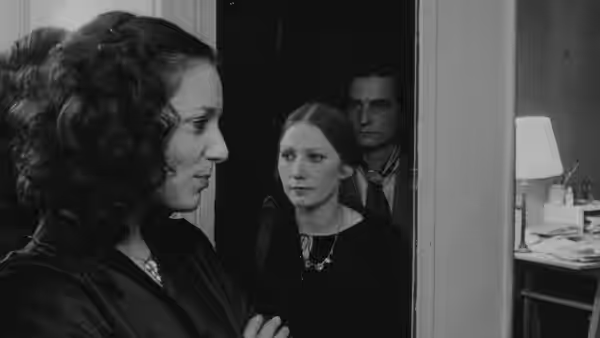
Bernadette Lafont’s Marie and Françoise Lebrun’s Veronika prevent that voice from becoming the film’s only account of love. Their emotional and sexual vulnerability makes Alexandre’s judgements harder to sit through. Both performances give weight to feelings he would prefer to explain away, and neither makes distress tidy or conveniently instructive. We remain interested in what these women want, even when Alexandre seems more interested in what their desires allow him to claim about them.

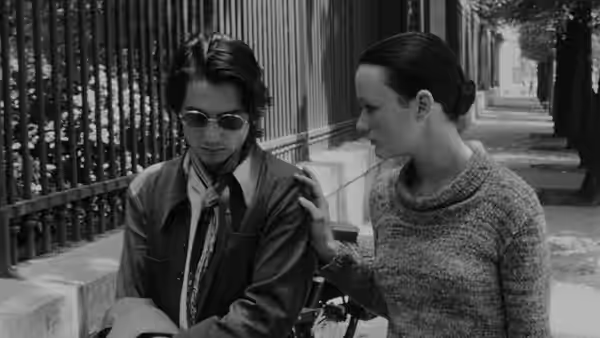
Pierre Lhomme’s black-and-white cinematography is direct and unobtrusive, which is precisely what this much speech needs. It does not keep competing with the actors for our attention. Jean Eustache’s long takes leave us to listen through the stretches when a speaker becomes uncomfortable company, and the plainness of the images makes that discomfort harder to shrug off. We can watch somebody talking without being told by a visual flourish that this is the important bit.

Denise de Casabianca and Jean Eustache share the editing credit, and their willingness to let an exchange continue is central to the effect. The film does not hurry to rescue us from an ugly thought or hurry past the feeling it causes. That patience is often rewarding, but it has a cost. There are stretches when another run of talk makes Alexandre no more revealing, merely more tiring, and the length stops feeling necessary.

As a romantic drama, it puts an unusual amount of pressure on the act of listening. People can speak openly about sex and still be selfish, controlling or cruel; Jean Eustache does not mistake frankness for good behaviour. Nor does he offer the comfortable distance of turning Alexandre into a joke we can dismiss. The sustained attention is what distinguishes the film, although it also means anyone already exhausted by this man’s opinions has a long evening ahead.

Make time for it, but not as casual company after a tiring day. The performances need sustained attention, and the long conversations ask us to stay alert to more than the cleverness of whoever happens to be speaking. Choose an evening when listening to somebody you dislike will not immediately send you looking for the remote.

Critical consensus AI synthesised

85
Positive
5
Mixed
0
Negative
0
The AV Club
29 March 2002 · Nathan Rabin
95*

Rabin regards the film as a profound, emotionally apocalyptic work that captures life without judging its characters. He especially praises the painful intimacy of Eustache’s long takes and the gut-wrenching honesty of the performances.

Read the full review →
Los Angeles Times
1 June 1998 · KEVIN THOMAS
90*

Thomas considers the film a timeless, worthwhile achievement that rewards its demanding running time. He especially praises its direct, understated visual style and Pierre Lhomme’s black-and-white cinematography.

Read the full review →
Time Out
· VG
85*

The critic says that the lengthy film about people talking is anything but boring. The review singles out Eustache’s handling of the talk-heavy premise as its strength.

Read the full review →
Slant Magazine
5 January 2025 · ★★★★ · Jake Cole
80

Cole praises the film as a richly observed masterpiece and says the Criterion release presents it in an immaculate transfer. He singles out the women’s emotional and sexual vulnerability as a powerful challenge to Alexandre’s manipulative, misogynistic view of them.

Read the full review →
The New Yorker
3 October 2022 · Richard Brody
75*

Brody sees the film as an overwhelming, formally traditional masterwork whose radicalism exposes cruelty and reactionary values. He praises its torrential dialogue and emotional intensity, while emphasizing its disturbing portrayal of male power and desire.

Read the full review →

Straight answers AI written, from our review

Is The Mother and the Whore worth watching?
The Mother and the Whore is worth watching for its three painful, absorbing performances, provided a long evening of talk appeals; we score it 86 out of 100. Its 219 minutes demand sustained attention, and some exchanges become repetitive, but Marie and Veronika’s emotional force gives us reason to keep listening to a man whose confidence exceeds his understanding.
How long is The Mother and the Whore, and what is it rated?
The Mother and the Whore runs 3h 39m. It is a drama and romance film.
Where can I watch The Mother and the Whore in Portugal?
The Mother and the Whore is not on any streaming or rental service in Portugal at the moment. It is available in 8 other countries; change your country at the top of the page to see where. Availability is checked daily.
How does The Mother and the Whore compare to My Night at Maud's?
The Mother and the Whore is harsher and more exhausting than My Night at Maud's, though both examine sex and principle through a self-justifying man. We recommend Rohmer’s witty, intimate romance for a more inviting evening, while Eustache’s film is the stronger choice for sustained emotional discomfort. Its women’s performances make the long conversations painful to witness, even when the talk becomes tiring.
What should I watch after The Mother and the Whore?
After The Mother and the Whore, try My Night at Maud's (1969, Fi1m 81): More talk about sex and principle, with another self-justifying man. Then Wanda (1970, Fi1m 83): Another unsparing study of a woman poorly served by men; and The Souvenir (2019, Fi1m 84): For another young man whose charm excuses far too much.

Cast

Awards

Cannes Film Festival, 1973

Won
Cannes Film Festival Grand Prix

If you liked this, try…

  1. My Night at Maud's (1969, Fi1m 81)More talk about sex and principle, with another self-justifying man.

  2. Wanda (1970, Fi1m 83)Another unsparing study of a woman poorly served by men.

  3. The Green Ray (1986) · not on Fi1m yetFor loneliness and romantic uncertainty observed without hurrying anyone along.

  4. Happy Hour (2015) · not on Fi1m yetLong conversations give women’s friendships the time they so rarely receive.

  5. The Souvenir (2019, Fi1m 84)For another young man whose charm excuses far too much.