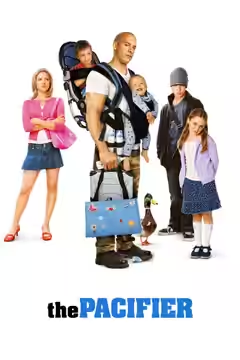
Vin Diesel gamely submits to a family comedy that keeps mistaking nappies for punchlines. Adam Shankman’s film has a little warmth, but predictable writing and sluggish comic timing make 95 minutes feel overgenerous.
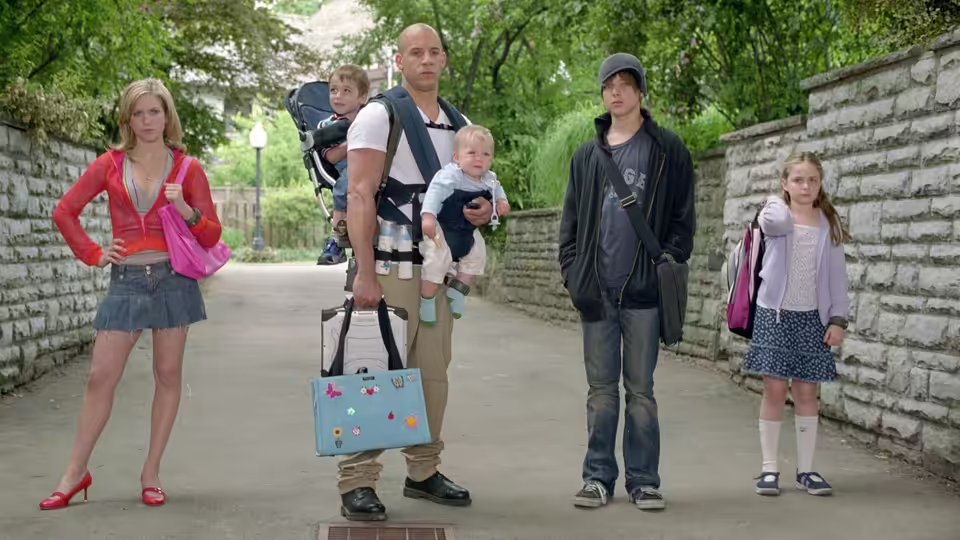
Adam Shankman’s The Pacifier is a poor family comedy with a willing star and too few jokes. Its plan is straightforward: take Vin Diesel’s imposing presence and make it funny by putting it to domestic use. There is something agreeable about a performer allowing his toughness to become a source of embarrassment, and Diesel does not appear to consider the work beneath him. But Ben Garant and Thomas Lennon’s screenplay keeps returning to bodily functions, as though casting the leading man had completed the writing.
Diesel plays Shane Wolfe with a seriousness that occasionally helps. He does not strain to announce that he is being funny, which leaves some room for affection, and his sheer bulk is a serviceable comic starting point. The trouble is that the performance seldom develops beyond that starting point. His restraint becomes stiffness when the joke needs a little variation, and the film gives him too few alternatives.
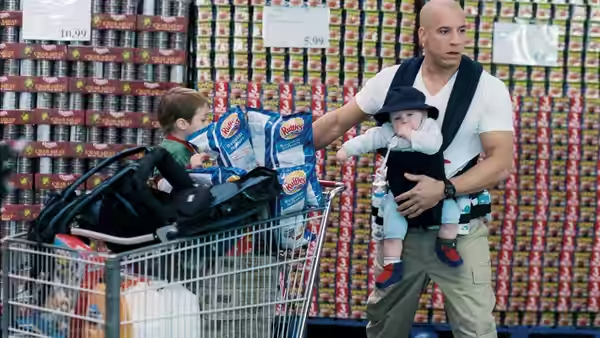
We were bored by the repeated nappy jokes, because each return offers the same small indignity without a better surprise. Bodily-function humour can be funny; there is no need to pretend that family entertainment ought to be well behaved. Here, though, recognising what is about to happen occupies more time than laughing at it. At 95 minutes, the film is not unusually long, but its thin supply of ideas makes it feel so.
Christopher Greenbury’s editing is too patient with material this slight, giving predictable business time it has not earned. A brisker cut would not invent better jokes, but it might stop us waiting quite so long for the obvious ones. John Debney’s music has a similarly unrewarding task, trying to keep a comedy buoyant when its dialogue and physical gags keep letting it down. The result feels laboured even when the demands on our attention are small.
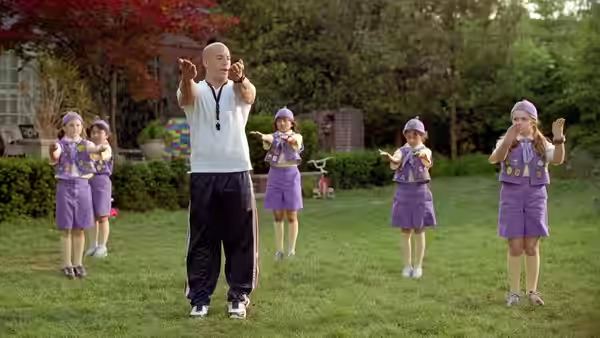
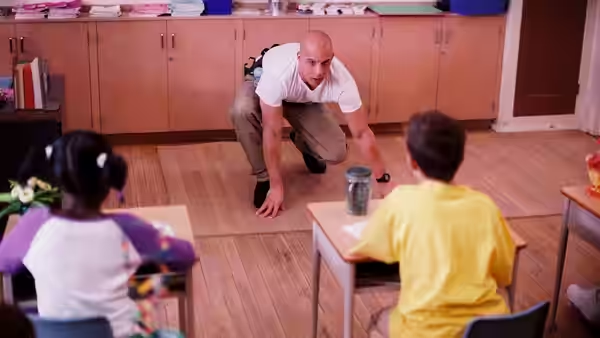
Peter James’s cinematography and Linda DeScenna’s production design are serviceable, but neither finds much extra comedy in the mismatch between the leading man and domestic life. The visual humour depends heavily on Diesel looking too formidable for the indignities involved. That works briefly, then becomes another thing to repeat. A family comedy need not be elaborate to look interesting, but it does need to offer the eye something beyond confirmation of the premise.
Brad Garrett, as Vice Principal Murney, supplies some welcome comic energy, suggesting how much a more varied performance can help. Shankman is right to allow broadness; there is nothing inherently wrong with a family comedy pitched this plainly. Yet the direction too often seems satisfied once the situation has been established. The quieter appeal is Diesel’s willingness to soften his image, which gives an otherwise mechanical exercise a little warmth.
The family action comedy has a modest but perfectly respectable job: keep the physical business moving and let the unlikely arrangement produce a few good laughs. This one spends too much time assuming that its arrangement is already funny enough. Children deserve invention as much as the adults sitting beside them, even when the joke involves a nappy. A fondness for Diesel is the strongest reason to spend an evening with it.