Olivia Colman and Benedict Cumberbatch are so good at being unkind to each other that we forgave this remake a great deal. Not everything: Jay Roach’s film is sunny, well upholstered and unwilling to draw blood until it is too late to matter.
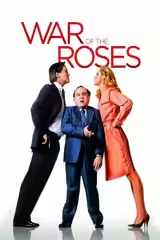
Jay Roach and the screenwriter Tony McNamara have gone back to Warren Adler’s novel, filmed by Danny DeVito in 1989 as The War of the Roses, and made a different bet on it. DeVito’s film hated its couple and let us enjoy hating them. Roach’s likes them, and hopes that if we like them too the eventual wreck will hurt more. It is a reasonable idea. It does not work, and the reason it does not work is the same reason the film is a pleasant evening for most of its 105 minutes.
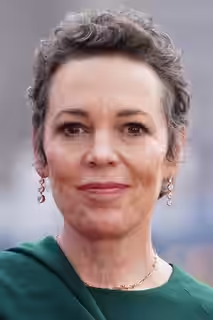
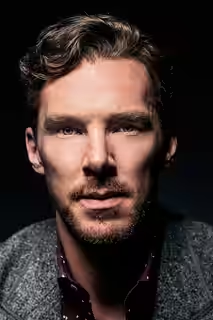
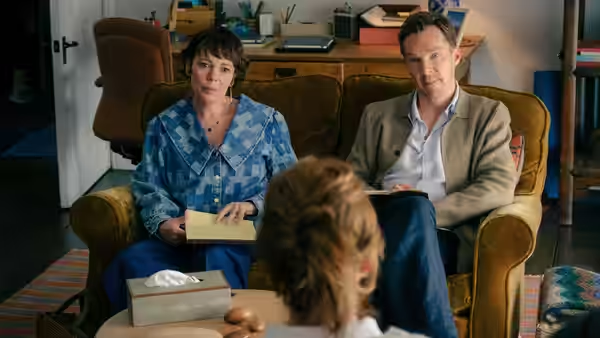
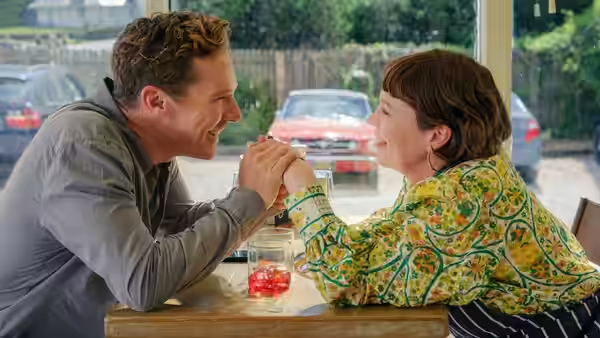
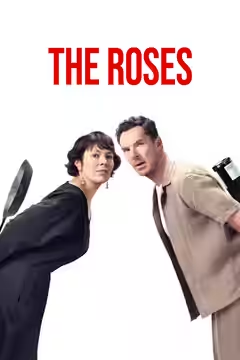
The pleasure is the two of them. Cumberbatch plays Theo as a man who cannot hear a sentence without correcting it, all tight smiles and clenched helpfulness, and he is funniest when Theo is trying hardest to be reasonable. Colman gives Ivy a warmth that never quite switches off even when she is saying something unforgivable, and she says a great many unforgivable things, usually while pouring someone a drink. McNamara, who wrote The Favourite and Poor Things, hands them short, barbed lines and they hit each one back over the net. We laughed a lot, and the dinner party in the middle, where the Roses stop performing for their guests and start performing for each other, is as sharp a stretch of marital comedy as we have seen in some time.
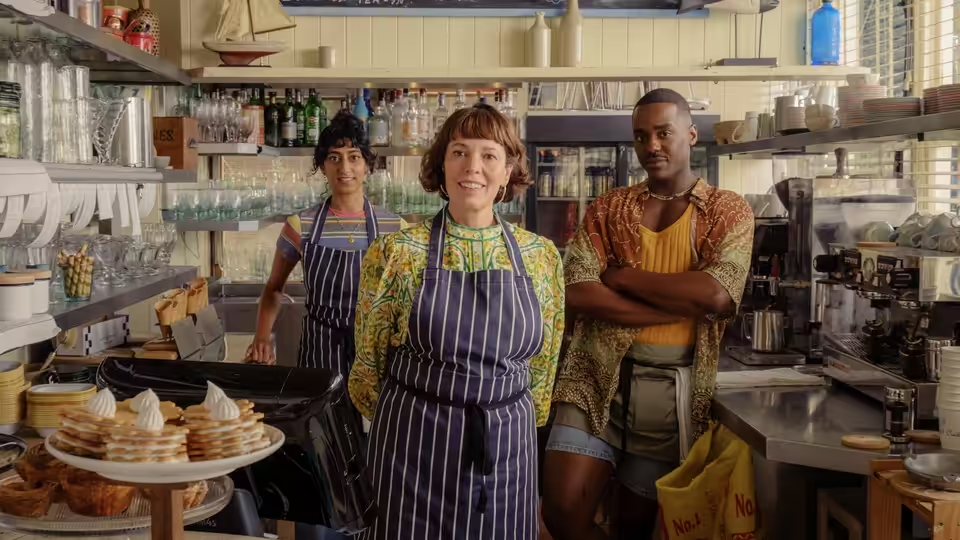
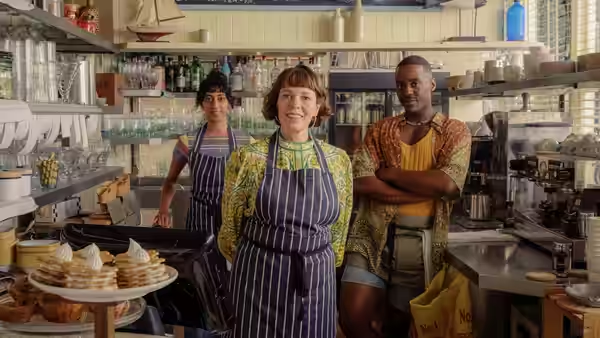
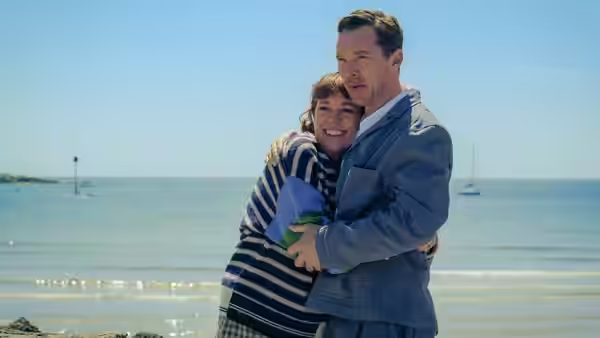
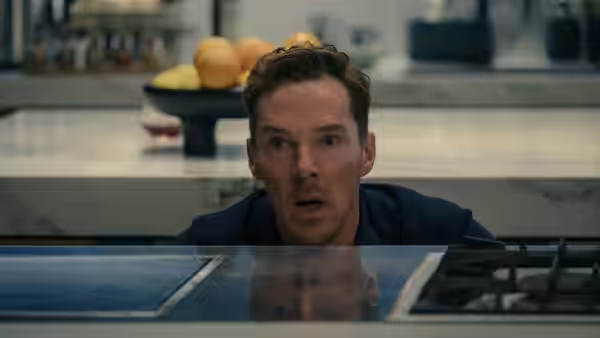
It all looks expensive and it all looks safe. Florian Hoffmeister shoots the coast in soft, even light, blue sea and pale wood and no shadows anywhere, so that the film resembles the brochure for the life the Roses think they are living. That is the joke, and it lands once. It does not survive being the whole picture, because a film about a marriage coming apart needs at least one room that looks as though something could break in it. Mark Ricker’s house is a handsome box of glass and timber. PC Williams moves Ivy from chef’s whites into cashmere as her star rises and lets Theo shrink into cardigans, which tells the story more economically than several of the scenes do. Theodore Shapiro’s score is bright and brisk and never once suggests trouble.
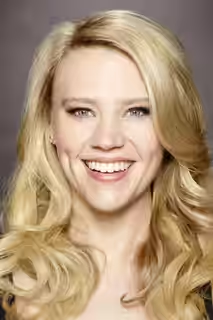
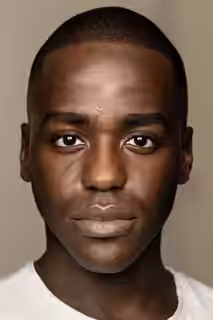
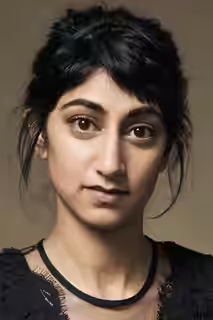
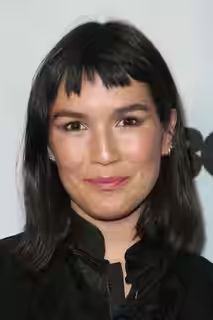
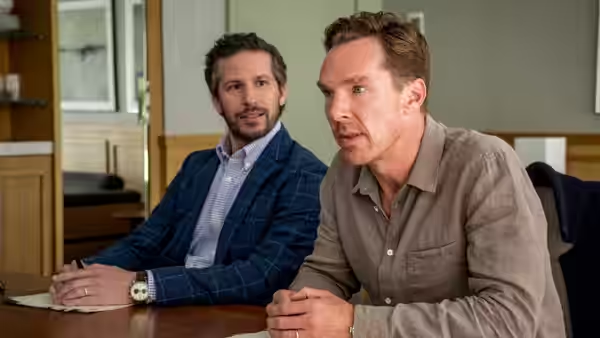
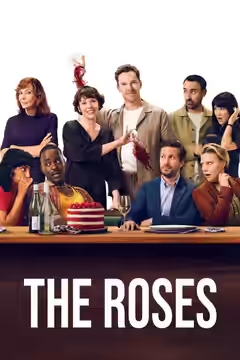
Around the edges the casting is generous and the writing is not. Andy Samberg and Kate McKinnon, as the friends whose own marriage is a running skirmish, are there to show the Roses what they might become; Samberg underplays it nicely, McKinnon does not, and her scenes are pitched at a volume the rest of the film is not using. Ncuti Gatwa, Sunita Mani, Zoë Chao and Jamie Demetriou are all good actors given one trait each and told to wait. Allison Janney arrives late and is funnier in her few minutes than most of the second act. Jon Poll cuts the years in quick montage, which keeps things moving and also means we skip past the exact moments where the love drains out, so that when the film tells us it has gone we have to take its word.
The second half takes a turn we will not describe. What we can say is that it arrives fast, and that the film has spent an hour making sure we know these two still fancy each other. So when it asks us to be appalled, we were not. We were slightly puzzled, then a little bored, and that is a bad way to feel during what is meant to be the payoff. The nastiness is real enough on screen; it is simply not connected to anything we have been shown.
DeVito’s film was ugly on purpose and knew what it hated. This one is pretty on purpose and is not sure. McNamara’s own The Favourite let its women be monstrous without asking us to forgive them, and this script keeps apologising for its couple even as it hands them the knives.
See it for Colman and Cumberbatch, who deserve a meaner film and make this one worth an evening anyway. It suits the sofa better than the cinema; the arguments land softer at home, and you can pause to have your own. It runs 105 minutes and carries a 15.