Norman Jewison’s cold-war farce is louder and longer than it needs to be, but Alan Arkin’s courteous, harassed Soviet lieutenant is a pleasure from his first scene, and the final stretch has a warmth the shouting does not prepare you for.
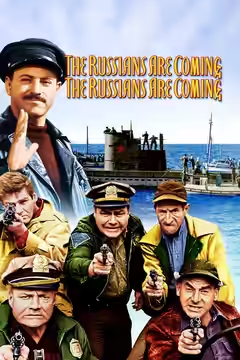
In 1966 the joke was the point: a Soviet submarine runs aground off a New England island and the islanders cannot decide whether to shoot the sailors or offer them coffee. William Rose, adapting Nathaniel Benchley’s novel, wants both, and Norman Jewison stages it as a farce at full volume for 126 minutes. Jewison’s film is good-natured, often funny and frequently too much, and it has one thing in it that is close to perfect. That thing is Alan Arkin.
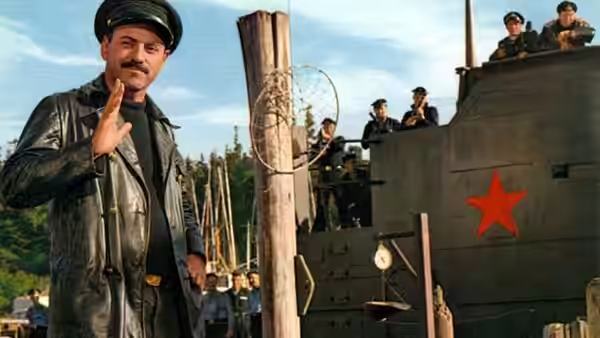
Arkin plays Lieutenant Rozanov, the officer sent ashore to find a boat, as a competent man doing an impossible job with limited English and a great deal of patience. His order to a street full of islanders comes out with the words in the wrong order, and Arkin lets us watch him hear the mistake and decide he has no time to fix it. He is never a buffoon. The comedy comes from a sensible man surrounded by fools of two nationalities, and when he finally loses his temper with Reiner’s Whittaker the film has earned it. We laughed out loud at him several times, which is more than we can say for most of the people chasing him.
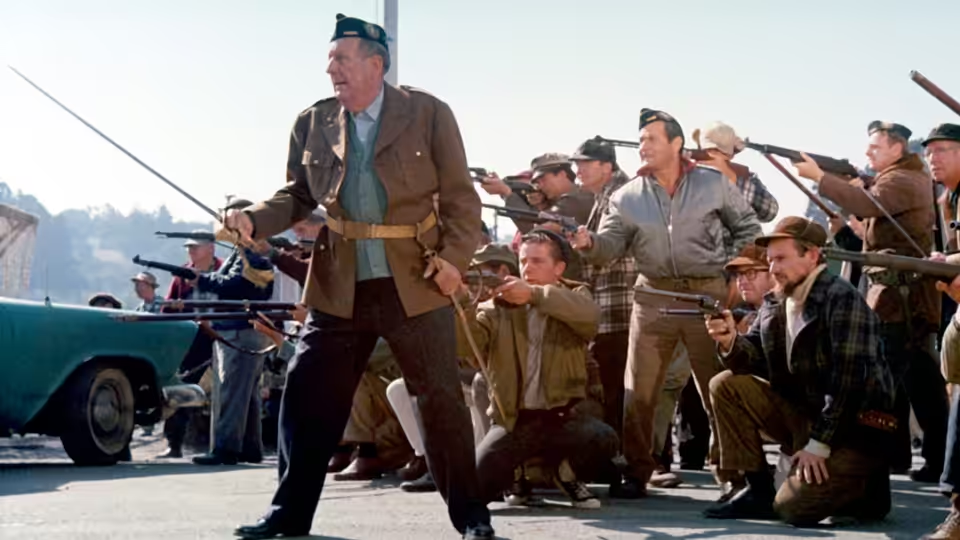
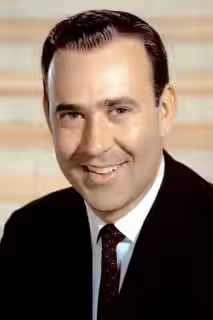
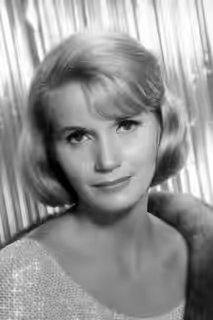
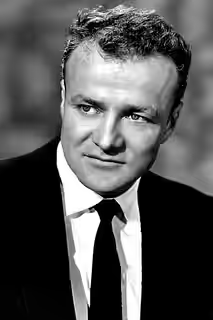
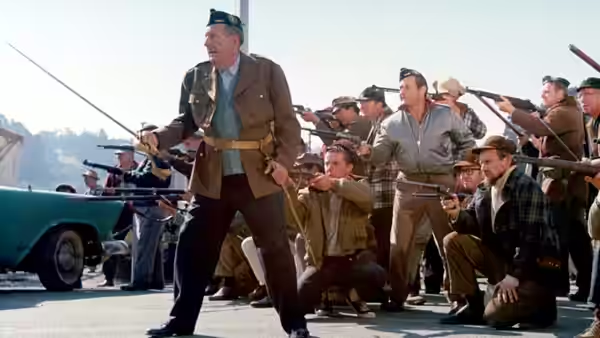
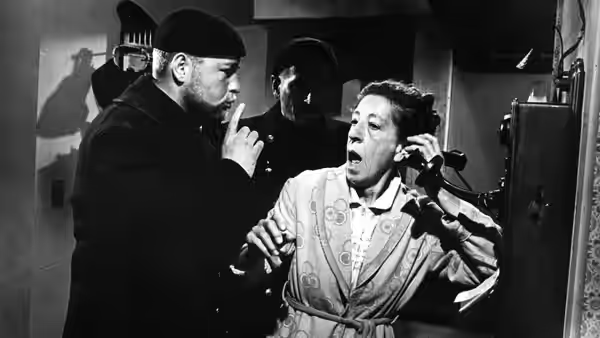
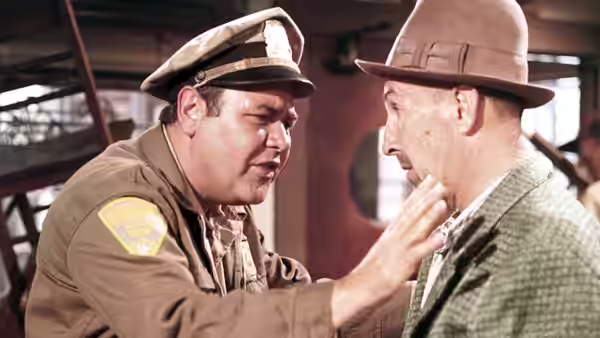
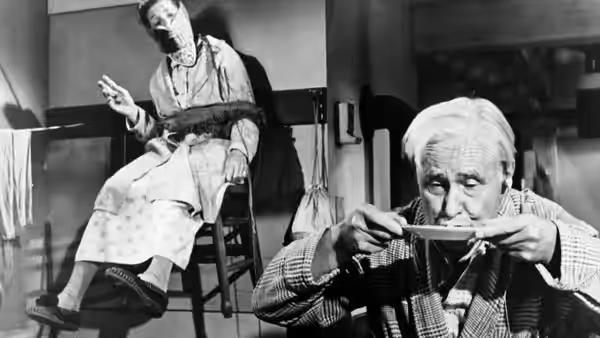
Carl Reiner, as the playwright with a rented house and a family to get off the island, is the straight man and plays it well, with the tight smile of someone being reasonable at strangers holding a gun. Eva Marie Saint has less to do than she should and does it gracefully. Brian Keith’s police chief is the film’s other adult, growling at his own townspeople because he can see where this is going. Paul Ford’s Fendall Hawkins, the old soldier who raises a militia out of the bar, and Jonathan Winters as Norman Jones, the deputy who cannot stop talking, make most of the noise. Tessie O’Shea’s switchboard operator, tied to a chair and still trying to spread the news, gets the best of the physical gags.
Joseph F. Biroc shoots the island as white clapboard and blue water, so that the Russians in their dark uniforms look wrong in every frame, which is the joke and it holds. Johnny Mandel’s score marches the landing party ashore on a Russian-sounding theme and keeps bringing it back, quieter, as the sailors get further from the water. The editors, Hal Ashby and J. Terry Williams, cut the town’s panic as a chain of short scenes, one rumour handed to the next, so that by the time the militia has assembled we have watched a handful of sailors grow into an invasion. Ashby would go on to direct Harold and Maude, and you can see the timing here.
Where it goes wrong is scale. Rose’s script is a small farce, one house, one town, one afternoon and a night, and Jewison directs it as if it were a war film. Every chase has more cars than the last and every crowd more shouting. There is a stretch in the second hour of islanders running up and down the same street that we watched with our patience draining, and we were bored, plainly, for about twenty minutes, which a comedy cannot afford. John Phillip Law’s young sailor and Andrea Dromm’s babysitter have a sweet, quiet romance in the house by the shore, and the film keeps leaving it to put another car in a ditch.
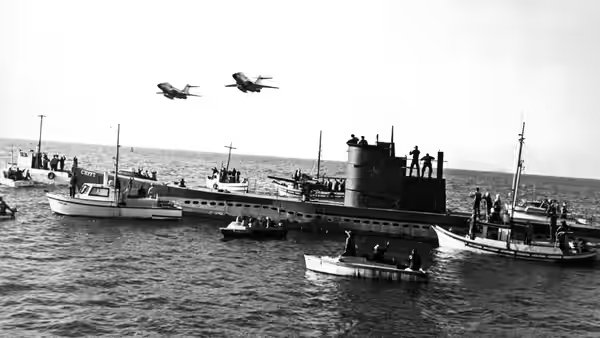
And then it pulls itself together. The last stretch, in the harbour, does something we will not describe, and it caught us off guard. After two hours of people yelling at each other across a language barrier, the film finds one plain image of Russians and Americans doing a job together because it needs doing, and it moved us far more than a film this silly had any business managing. It is the scene Rose was writing towards all along.
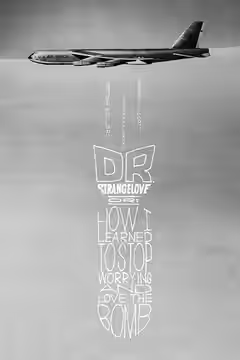
It sits beside Dr. Strangelove (1964), which got to the same fear two years earlier and was crueller and funnier; this is the version for people who would rather be reassured than frightened. The title has two exclamation marks. Jewison directs as if he believed both of them, and the film would be better with none. Watch it for Arkin, forgive it the middle, and stay to the end.