Film review

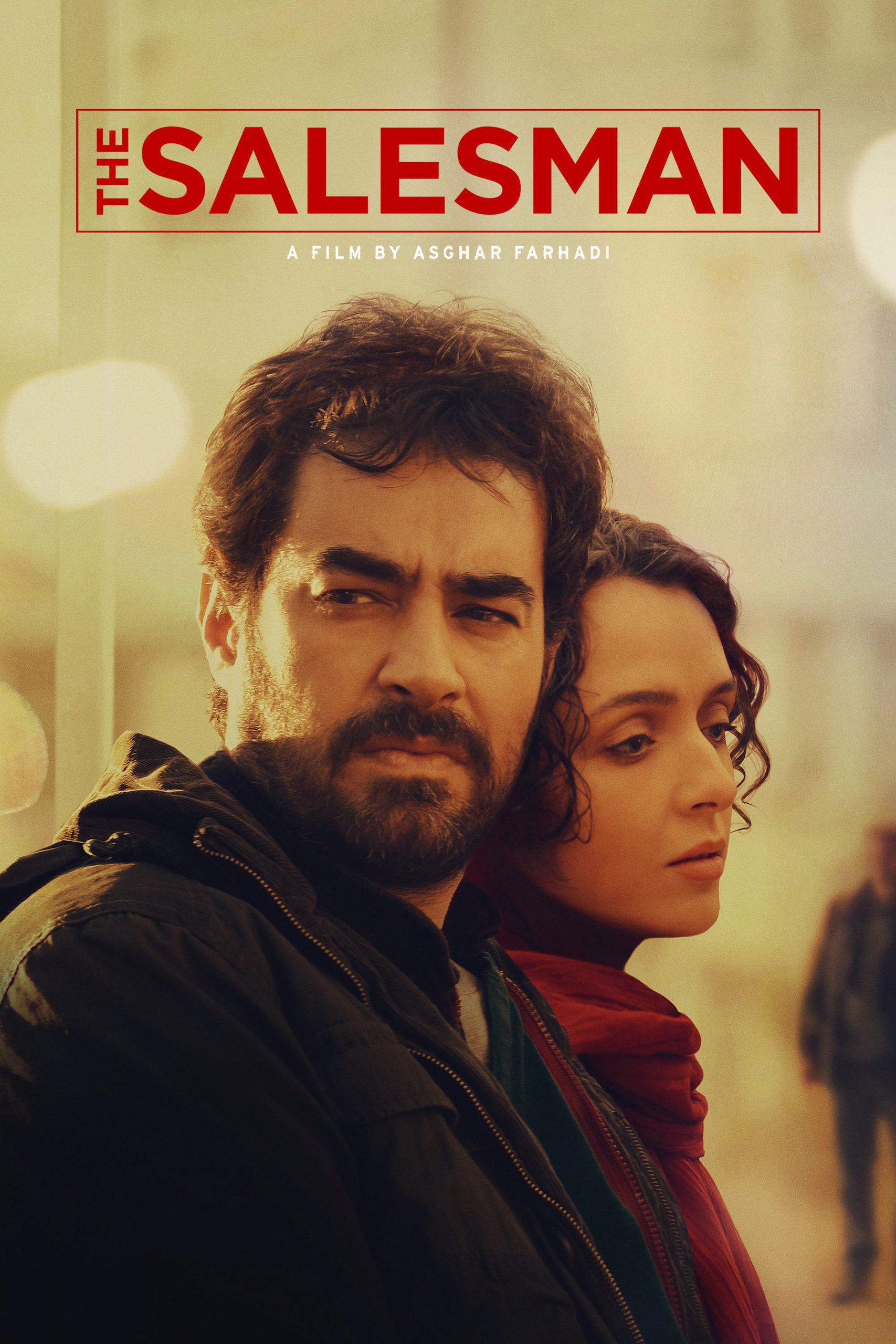
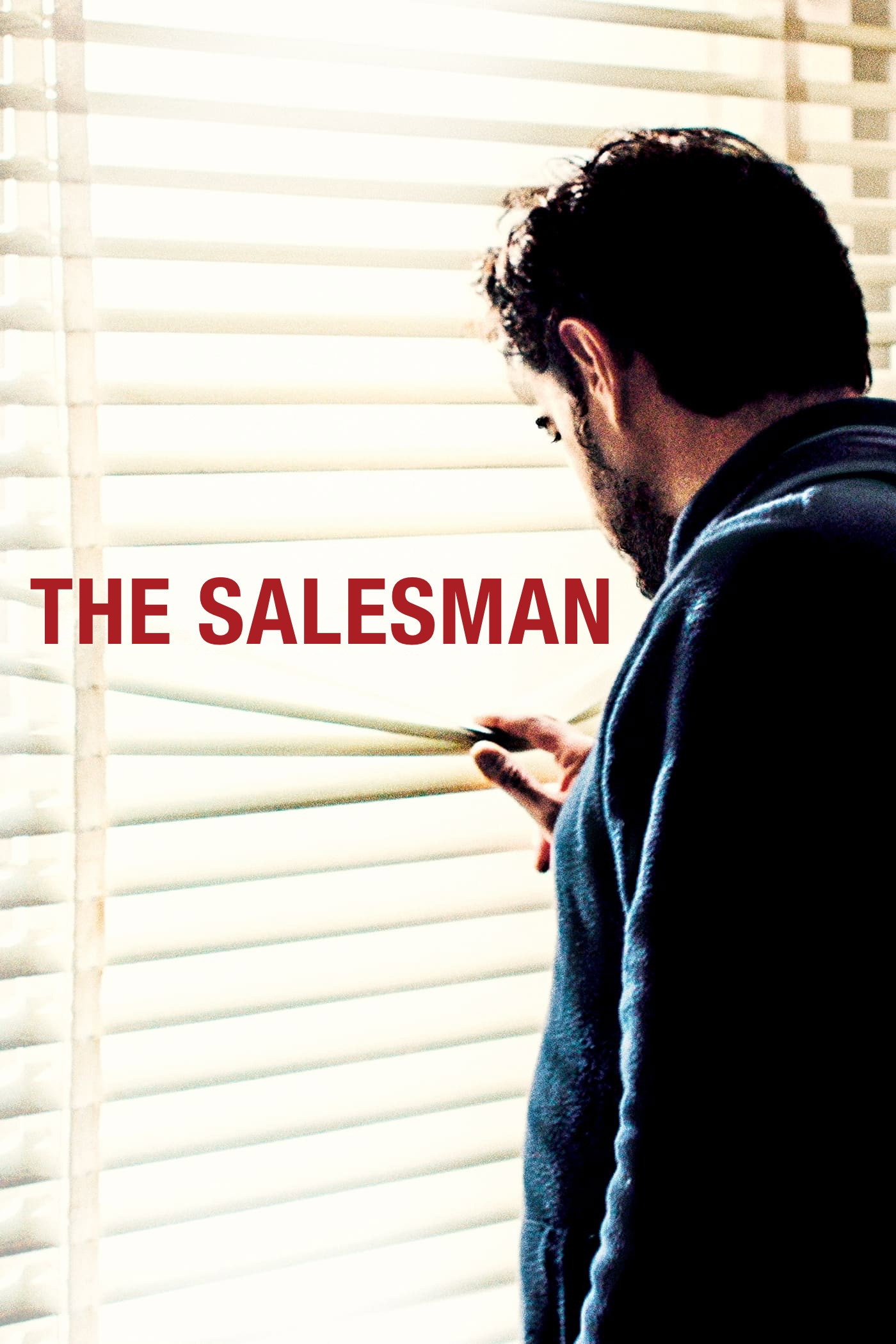
The Salesman

2016 · Directed by Asghar Farhadi · 2h 05m · MPA PG-13

In a sentenceDeath of a Salesman, performed nightly by a man too angry to notice he is in it

DramaThriller

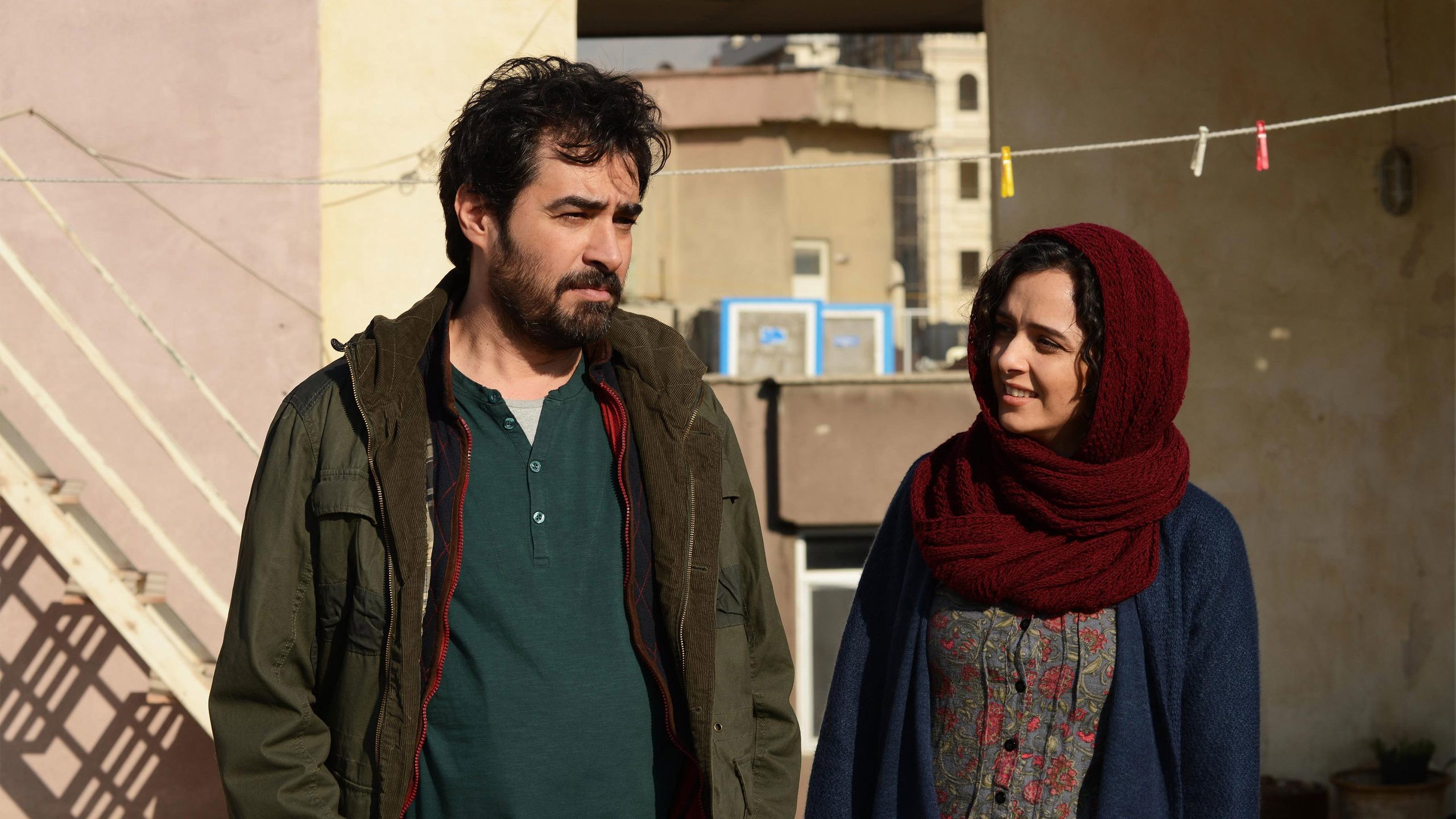
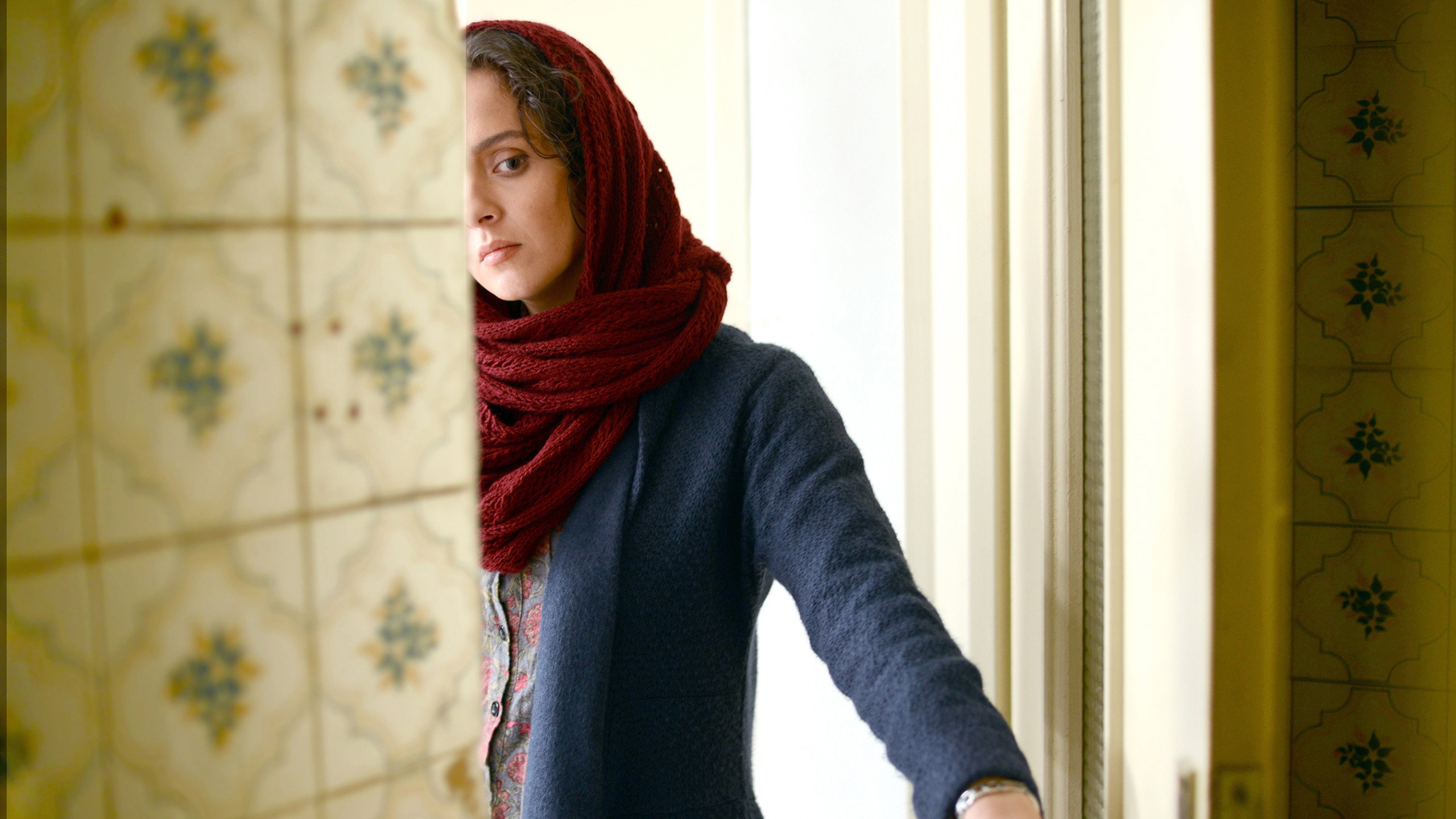
Tehran. Emad Etesami (Shahab Hosseini) teaches literature at a boys’ school and acts by night, with his wife Rana (Taraneh Alidoosti), in an amateur production of Arthur Miller’s Death of a Salesman. One night their block of flats shifts on its foundations as a digger works next door; cracks run down the walls, windows burst, and the residents are turned out onto the street. Babak (Babak Karimi), a fellow cast member, offers them a flat he owns. The previous tenant has left her belongings behind a locked door and a child’s drawings on the wall, and the neighbours will not say much about her. A few nights later Rana, expecting Emad, buzzes the street door open and steps into the shower. Someone else comes up the stairs.

Plays from YouTube when you press play; nothing loads from them until then.

Fi1m review

Asghar Farhadi’s Tehran drama about a couple, an intrusion and a stranger’s pickup truck grips hard for an hour and a half, then wants us to notice how closely it resembles the play its actors are performing. Worth your evening; not his best.

Asghar Farhadi’s films begin with something small and domestic, a divorce petition in A Separation, and keep digging until nobody in them is standing on solid ground. The Salesman starts with the ground itself. A Tehran block of flats cracks in the night because of a digger next door, and Emad Etesami (Shahab Hosseini) and his wife Rana (Taraneh Alidoosti), both actors in an amateur production of Arthur Miller’s Death of a Salesman, have to find somewhere else to live. For ninety minutes this is as tight as anything he has made. Then he starts pointing at the play, and the film gets worse the harder he points.

Hossein Jafarian opens on an empty stage set, the Loman bedroom with its brass bed and neon sign, lights coming up on nobody. Then he is in a stairwell with a handheld camera while a building empties, a man carrying his grown son on his back. Hayedeh Safiyari cuts the evacuation quick and everything after it slow, so the new flat, offered by fellow cast member Babak (Babak Karimi), feels like a place to catch breath. It is not. The previous tenant has left her belongings behind a locked door and a child’s drawings on the wall, and the neighbours go quiet when she is mentioned.

The event the film turns on happens off screen. Rana, expecting Emad, buzzes open the street door and gets in the shower. Farhadi cuts from the buzzer to Emad coming up the stairs; there is blood on the steps, and a neighbour, Shirin Aghakashi’s Esmat, is already mopping. We were horrified, and he had shown us almost nothing: a bathroom, a door left open, red on concrete. Because we never see it, we do what Emad does for the rest of the film: imagine it. He also has a stranger’s pickup truck outside.

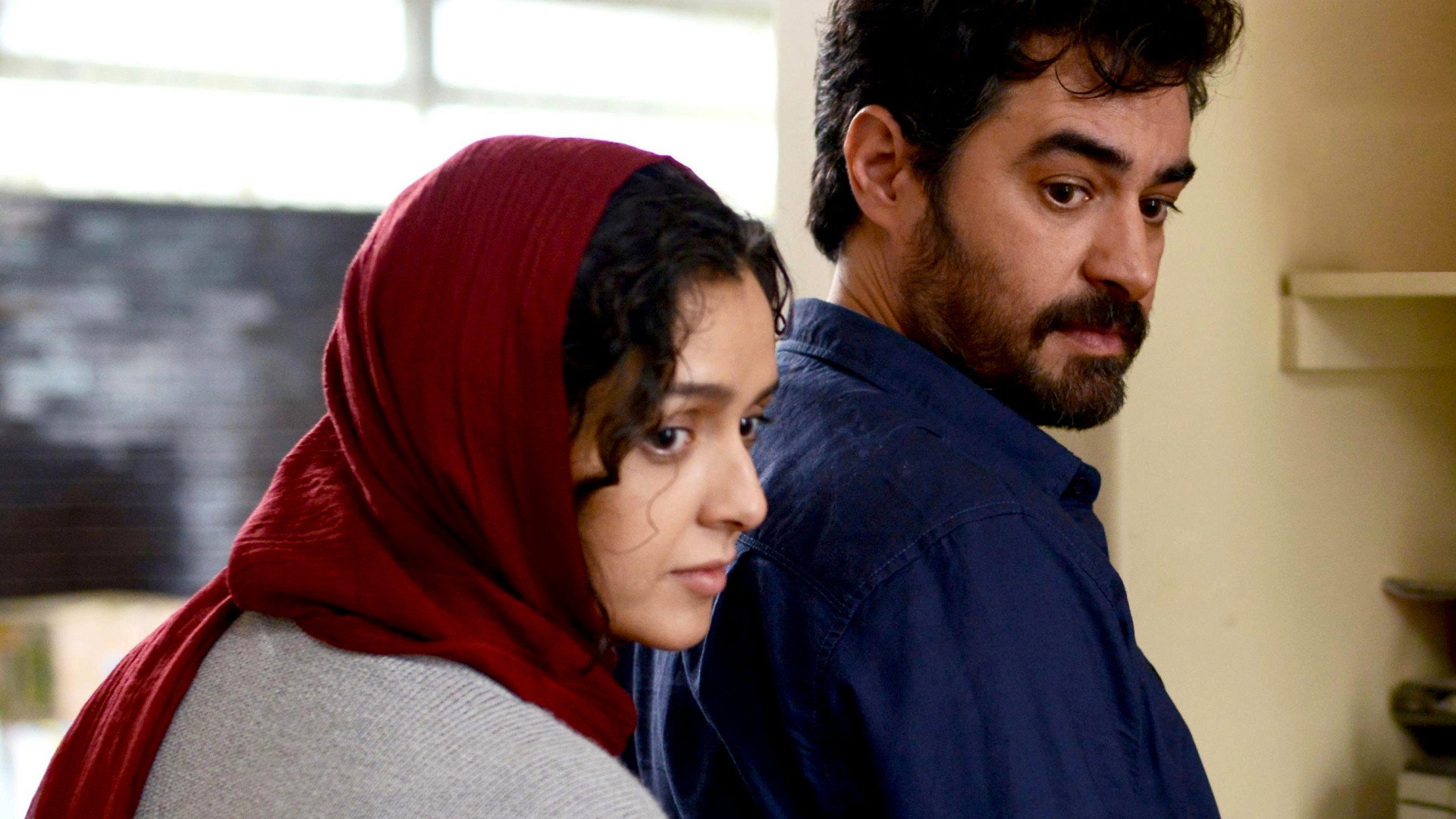
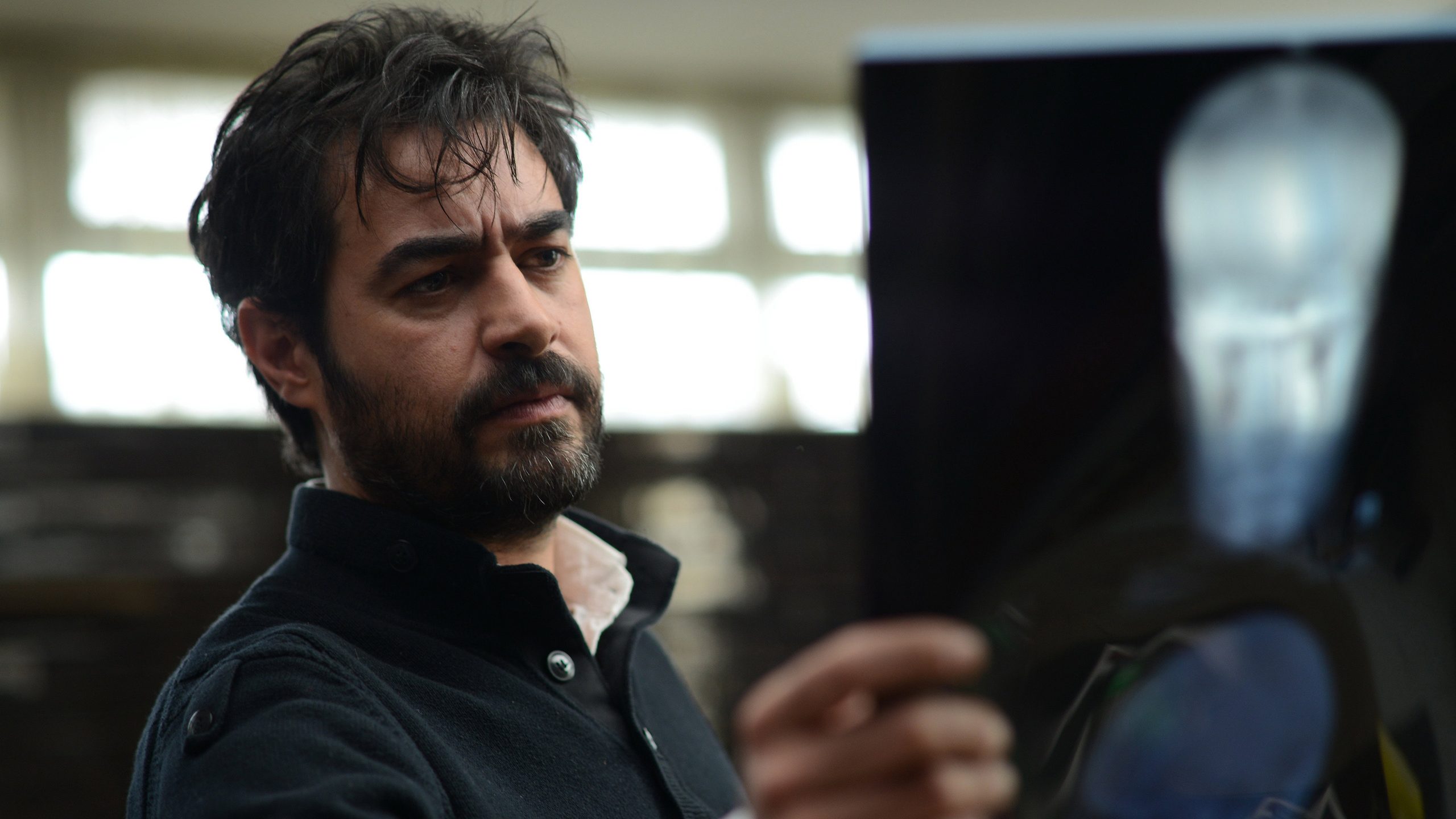
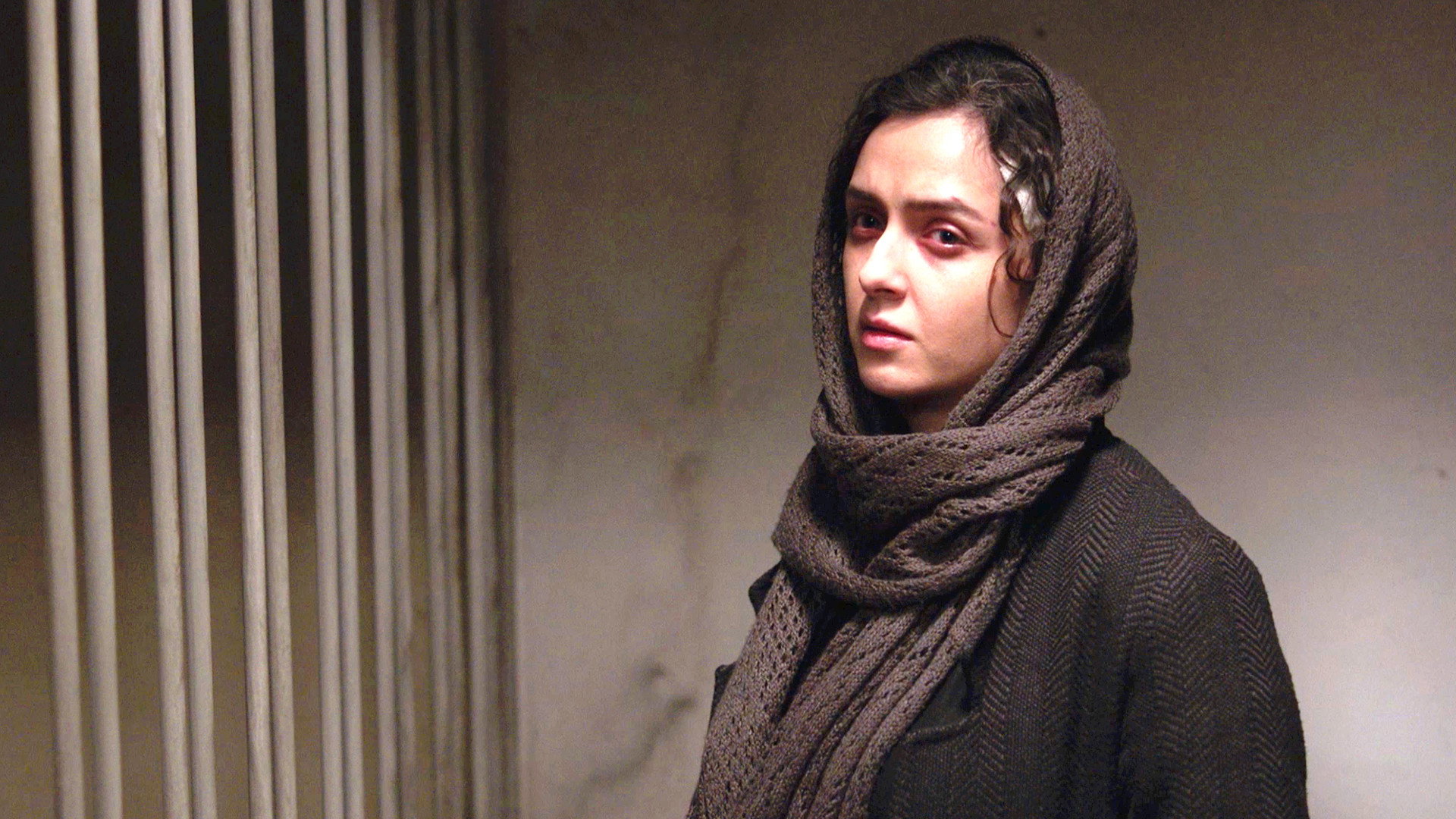
Hosseini plays Emad as a decent man going sour. The boys at his school like him; watch how that changes when he catches a pupil with a phone. Alidoosti plays Rana as someone who cannot stay in the flat alone, cannot say what happened, and flinches every time the buzzer goes. Hers is the harder performance and the film gives it less room. Most critics have noticed that the second hour follows the husband. Her fear is what he is angry about, and the film spends its time on his anger.

Sattar Oraki keeps his music almost entirely on the stage. The flat runs on fridge hum and traffic, and the play gets the strings. Sara Samiee dresses Rana in a grey wig as Linda Loman and a headscarf as herself, and there is a good joke in rehearsal when Mina Sadati’s Sanam has to play the Woman in Boston in a raincoat because the stage cannot show what the scene requires. The cast laugh. The film has just told us what it is about: what can be said aloud in this city and what cannot.

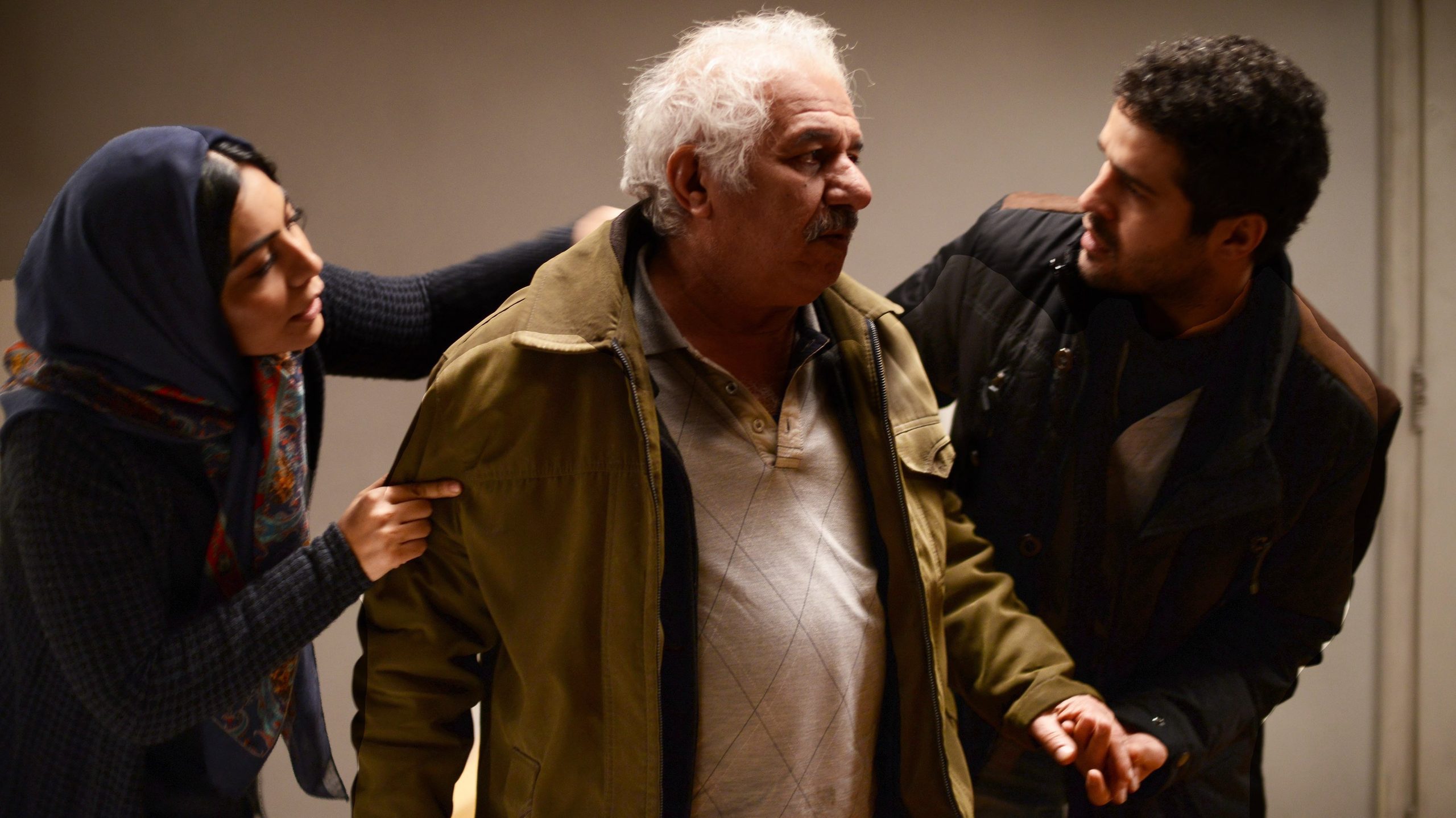
Emad searches for the man without the police, and the film is clear about why: a report means questions, and questions mean the neighbours find out. The middle stretch, Emad driving the truck round Tehran, Rana cooking a dinner he then refuses to eat, is the best of it. The last half hour is set almost entirely in one flat. We will not describe it, except to say that Farhadi has placed everyone in it so that an argument about shame and mercy can be had in full. The placing shows. Farid Sajjadi Hosseini gives the best performance in the film there, and even he cannot hide the carpentry.

The trouble is the play. Willy Loman is a proud man brought low, and Farhadi wants us to hold that next to Emad, so he cuts to the stage whenever the flat gets close to the point. Once would have done. By the end the parallels are drawn in thick pen, and A Separation, where everyone had a case, looks the better film for having trusted us more.

It runs 125 minutes and is a 12A. See it with someone you can argue with afterwards about what Emad should have done. You will not agree, and that is the part Farhadi got right.
Critical consensus AI synthesised

74
Positive
19
Mixed
4
Negative
0

Most critics like The Salesman, and none dismiss it. Nineteen of twenty-three reviews are positive, and the praise gathers around Farhadi’s plotting: a marriage upended by an attack in a new Tehran flat, built from ordinary incidents into something closer to a thriller. The performances are singled out almost everywhere, Hosseini’s husband in particular, played as a study in wounded male pride. Several reviews admire the long chamber sequence that closes the film.

That same closing stretch is where the reviews split. The Guardian, Time Out and The Hollywood Reporter find it contrived and overwrought, and a handful call the film a lesser Farhadi. Consequence thinks the parallels with Death of a Salesman are laid on too thick. Empire notes it dwells on the husband’s reaction more than the wife’s trauma. The lone lukewarm review, from the Evening Standard, argues the characters shrink into positions on justice rather than people. The spread is otherwise narrow.

The New York Times
26 January 2017 · Critic's Pick · A.O. Scott
90*

Farhadi constructs a meticulous and suspenseful story from ordinary incidents in a Tehran marriage, packing it with resonant ideas about trust, honor, and violence. The integration of Arthur Miller's play adds a powerful layer to the tale of crime, punishment, and class.

Read the full review →
Slant Magazine
23 January 2017 · ★★★½/4 · Chuck Bowen
88

Farhadi merges Iranian thriller-procedural with American melodrama via parallels to Death of a Salesman, yielding tonal friction that is tragic and transcendent; the critic singles out the powerful chamber-drama sequences and the film's exacting empathy for praise.

Read the full review →
The New Yorker
23 January 2017
85*

Farhadi masterfully disorients viewers while probing questions of intimacy, respect, and violation in a Tehran couple's life after a disturbing incident. The final chamber piece delivers a piercing moral debate through shifting sympathies and cultural insight.

Read the full review →
Variety
20 May 2016 · festival review · Owen Gleiberman
85*

Farhadi delivers another finely cut gem of neorealist suspense about a Tehran couple whose lives are upended after moving into a new apartment. The film critiques the Iranian male gaze through strong performances and a true filmmaker's perspective.

Read the full review →
Empire
6 March 2017 · Andrew Lowry
80*

Farhadi brings moral seriousness and class to a rape/revenge story through meticulous construction, elegant visuals and strong performances, though the film dwells more on the husband's reaction than the wife's trauma.

Read the full review →
Los Angeles Times
26 January 2017 · Justin Chang
80*

The film unfolds an emotionally complex domestic tragedy centered on a couple's apartment troubles and stage roles, building to a devastating payoff in its final scenes. Hosseini delivers a study in emasculated rage amid the story's sleuthing and moral tensions.

Read the full review →

Cast

Awards

Academy Awards, 2017

Won
Best International Feature Film

International Submission to the Academy Awards, 2017

Nominated
International Submission to the Academy Awards

If you liked this, try…