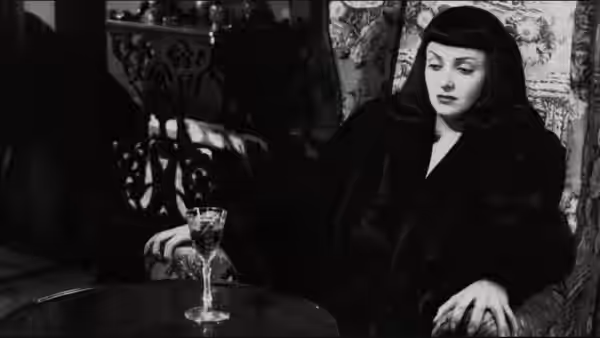
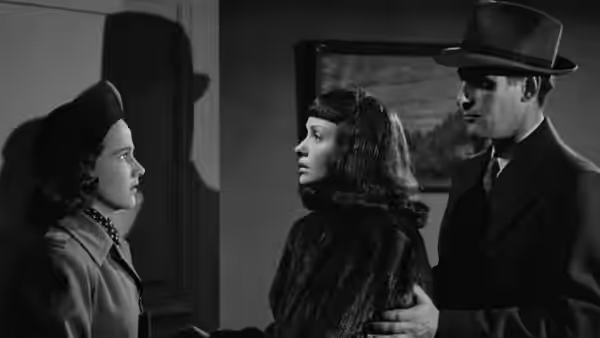
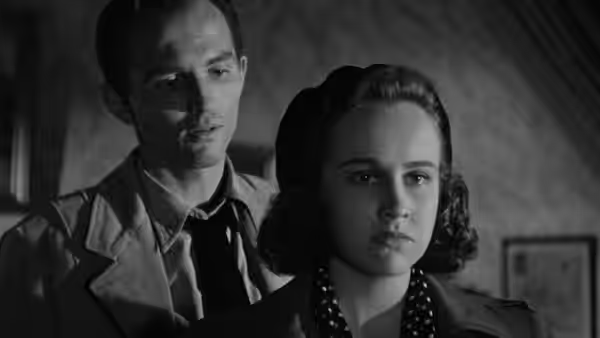
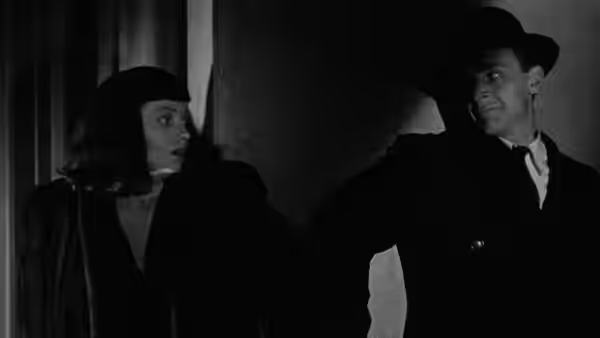
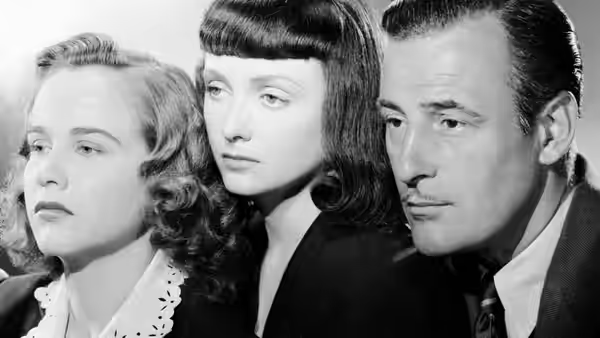
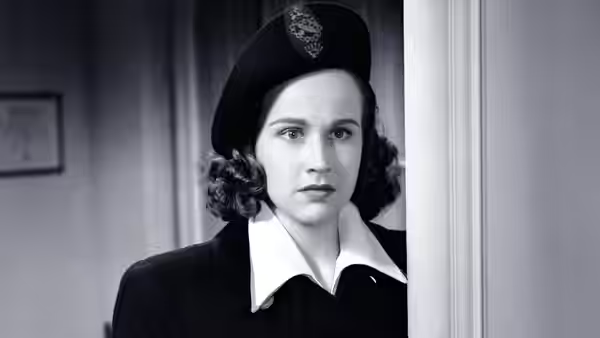
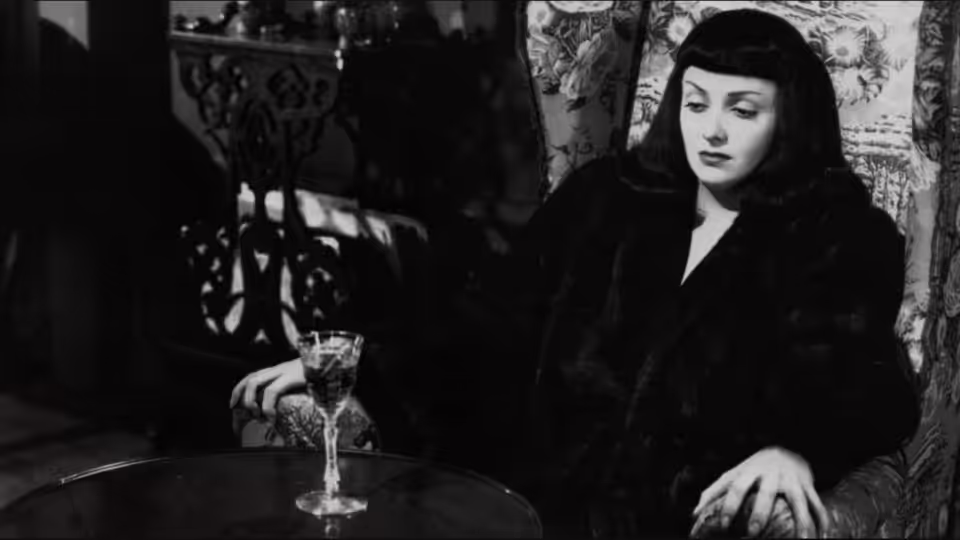
Jacqueline Gibson (Jean Brooks) sits at a table beside a wine glass
Film review

The Seventh Victim

1943 · Directed by Mark Robson · 1h 11m

In a sentenceSeventy-one minutes, and the shadows have been better introduced than most of the people

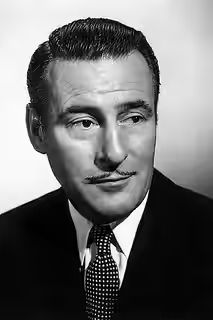
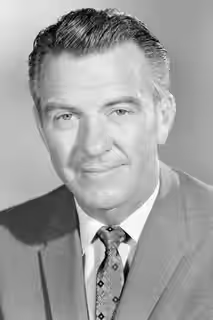
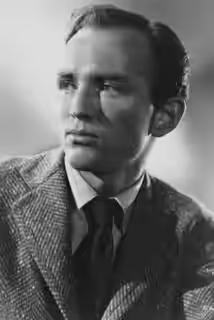
Mary Gibson (Kim Hunter), Jacqueline Gibson (Jean Brooks) and Dr. Louis Judd (Tom Conway) are among the figures in a mystery involving Gregory Ward (Hugh Beaumont) and Jason Hoag (Erford Gage). Frances Fallon (Isabel Jewell) and Natalie Cortez (Evelyn Brent) also form part of the story. Mark Robson directs this 71-minute combination of horror, mystery and drama, produced by Val Lewton and written by DeWitt Bodeen and Charles O’Neal, with cinematography by Nicholas Musuraca, editing by John Lockert and music by Roy Webb.

Fi1m review

Kim Hunter and Nicholas Musuraca’s photography make The Seventh Victim quietly unsettling, but its tangled writing keeps getting in their way. Worth considering for admirers of subdued horror, with patience required for the mystery.

The Seventh Victim is an unsettling horror film weakened by confused writing. Mark Robson directs with a feeling for unease, but the dramatic material cannot always support the attention he asks us to give it. At 71 minutes, the film has little room to waste. Its brevity does not excuse the gaps in the writing, though it does prevent them becoming exhausting. There is enough here for admirers of subdued horror who can tolerate an awkward mystery.

Kim Hunter gives the strongest performance, making Mary Gibson worth attending to when the script makes that harder than it should. She brings enough conviction to the part for us to keep looking for a convincing story around her. Tom Conway, as Dr. Louis Judd, is satisfactory without having the same effect. The difference matters in a film that needs its cast to make uncertain material feel credible, and that does not give them equal help in doing so.

Nicholas Musuraca’s cinematography gives the film its strongest claim on our attention. The noir imagery makes darkness feel oppressive, allowing unease to persist when the complicated plotting threatens to dispel it. We felt uneasy looking into those shadows, even when the story had stopped holding our attention. That response matters: the photography gives us a reason to stay with a film whose explanations are not always worth the effort of following.

The screenplay by DeWitt Bodeen and Charles O’Neal is the difficulty. A mystery can leave us uncertain about what will happen while remaining clear about what matters now. Here the complicated plotting too often demands attention that the thinly written drama has not earned. We can accept unlikely events in horror; we still need a reason to care about how one follows another. The director does not consistently give us that reason, and obscurity becomes a nuisance when it should be making us nervous.

John Lockert’s editing cannot fully disguise those weaknesses, and the short running time should not be mistaken for assured pacing. Some of the difficulty feels like compression, although cutting alone cannot repair characters who need more convincing writing. Roy Webb’s music helps sustain the unease through these uncertainties. It does useful atmospheric work, but there are passages where sustaining the mood is about all the film can manage.

The horror can feel dispiriting. That is a virtue, up to a point: the creepy atmosphere is not simply an invitation to enjoy a fright. Yet the drama needs characters whose troubles we can follow. Too much of that work falls to the performers, leaving the photography to sustain a seriousness that the writing has not fully earned.

For admirers of subdued horror, the photography makes this worth trying, with the warning that the mystery can be irritating. It is a sombre choice, and not one we would make simply to enjoy a few agreeable scares. Choose a different mystery if untangling the clues is the evening’s main pleasure.

Critical consensus AI synthesised

52
Positive
1
Mixed
1
Negative
2
Slant Magazine
21 October 2024 · ★★★★ · Chuck Bowen
80

Bowen regards The Seventh Victim as haunted, gorgeous, and profound, though its plot can be frustratingly hard to follow. He praises its noir imagery and its intimate treatment of depression and suicide.

Read the full review →
Time Out
· CA
64*

The page identifies this as a film review, but its review text is unavailable. The available metadata does not establish the critic's verdict or a specific point of praise or complaint.

Read the full review →
Radio Times
★★ · Adrian Turner
40

Turner finds the film underwritten but atmospheric and agreeably creepy. He praises Kim Hunter’s performance, which he says outshines Tom Conway’s.

Read the full review →
Variety
1 January 1943 · Variety Staff
25*

The review finds the film unsuccessful, blaming its poor script and unbelievable plot. It notes that even Tom Conway’s generally satisfactory performance cannot overcome the story’s maze of circumstances.

Read the full review →

Straight answers AI written, from our review

Is The Seventh Victim worth watching?
The Seventh Victim is worth considering for admirers of subdued horror, and we score it 62 out of 100. Kim Hunter’s performance and Nicholas Musuraca’s oppressive shadows sustain the unease, but the tangled writing makes it a frustrating choice if following a well-constructed mystery is the main pleasure.
How long is The Seventh Victim, and what is it rated?
The Seventh Victim runs 1h 11m. It is a horror and mystery film.
Where can I watch The Seventh Victim in Hong Kong?
The Seventh Victim is not on any streaming or rental service in Hong Kong at the moment. It is available in 3 other countries; change your country at the top of the page to see where. Availability is checked daily.
How violent or frightening is The Seventh Victim, and is it suitable for children?
The Seventh Victim is quietly unsettling and sombre, with oppressive shadows and horror that can feel dispiriting rather than offer enjoyable scares. No UK or US certificate is supplied, so we cannot give an age-rating recommendation or a firm account of its violence; its atmosphere calls for caution with children sensitive to frightening material.
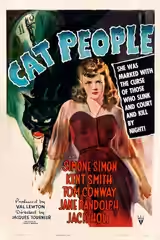
How does The Seventh Victim compare to Cat People?
The Seventh Victim is the less satisfying of these two subdued horror films; we recommend Cat People for its firmer dramatic grip. Both benefit from Nicholas Musuraca’s shadows, but where stiff supporting performances and occasional vagueness barely weaken Cat People, confused plotting repeatedly interrupts the unease in The Seventh Victim.

Cast

If you liked this, try…

  1. Cat People (1942, Fi1m 86)Another compact horror in which troubled people give the shadows their force.

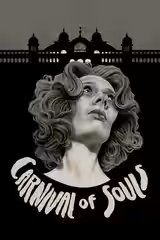
  2. Carnival of Souls (1962) · not on Fi1m yetFor the same unease about ordinary places and people who seem unreachable.

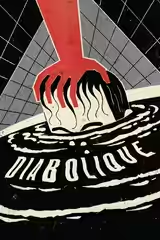
  3. Les Diaboliques (1955) · not on Fi1m yetA more firmly plotted mystery, with ample room for dread and suspicion.

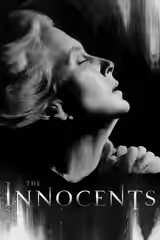
  4. The Innocents (1961) · not on Fi1m yetDark rooms and uncertain perceptions, with a stronger hold on its storytelling.

  5. Cure (1997) · not on Fi1m yetAn investigation whose unsettling mood takes hold well before the explanations arrive.

The Seventh Victim (1943) review: Good horror let down by plotting (Hong Kong) | Fi1m