Guillermo del Toro’s creature romance is tender, persuasive and sometimes too eager to tell us how to feel. Sally Hawkins and Doug Jones make the attraction convincing, even when the fairy tale becomes a little too tidy.
The Shape of Water is a persuasive romance, and its great advantage is that Guillermo del Toro takes the attraction seriously from the start. Elisa Esposito, played by Sally Hawkins, is a cleaner who cannot speak; Doug Jones plays the Amphibian Man she falls for. The premise invites a certain amount of audience giggling, which the film has little interest in encouraging. We recommend it warmly, with a reservation about how often its fairy-tale sweetness needs underlining.
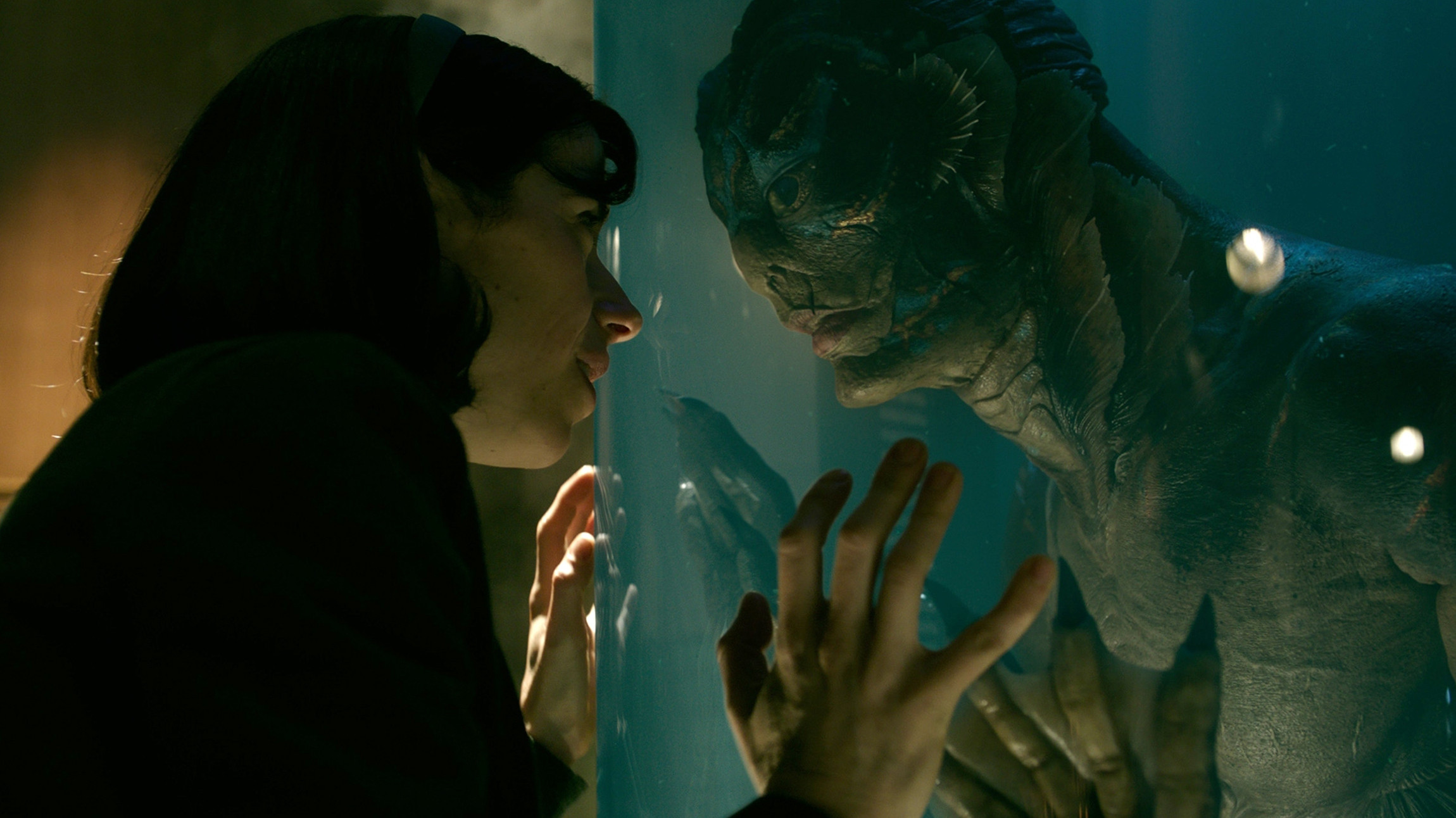
Sally Hawkins gives Elisa Esposito an appetite for closeness that never feels like an appeal for pity. Her wordless performance makes desire clear without turning every expression into an instruction for the audience. We were moved by how directly she communicates her attraction to the creature: there is no embarrassment in it, and no request that we make allowances. That conviction does more to establish the romance than any explanation of why these two belong together could.
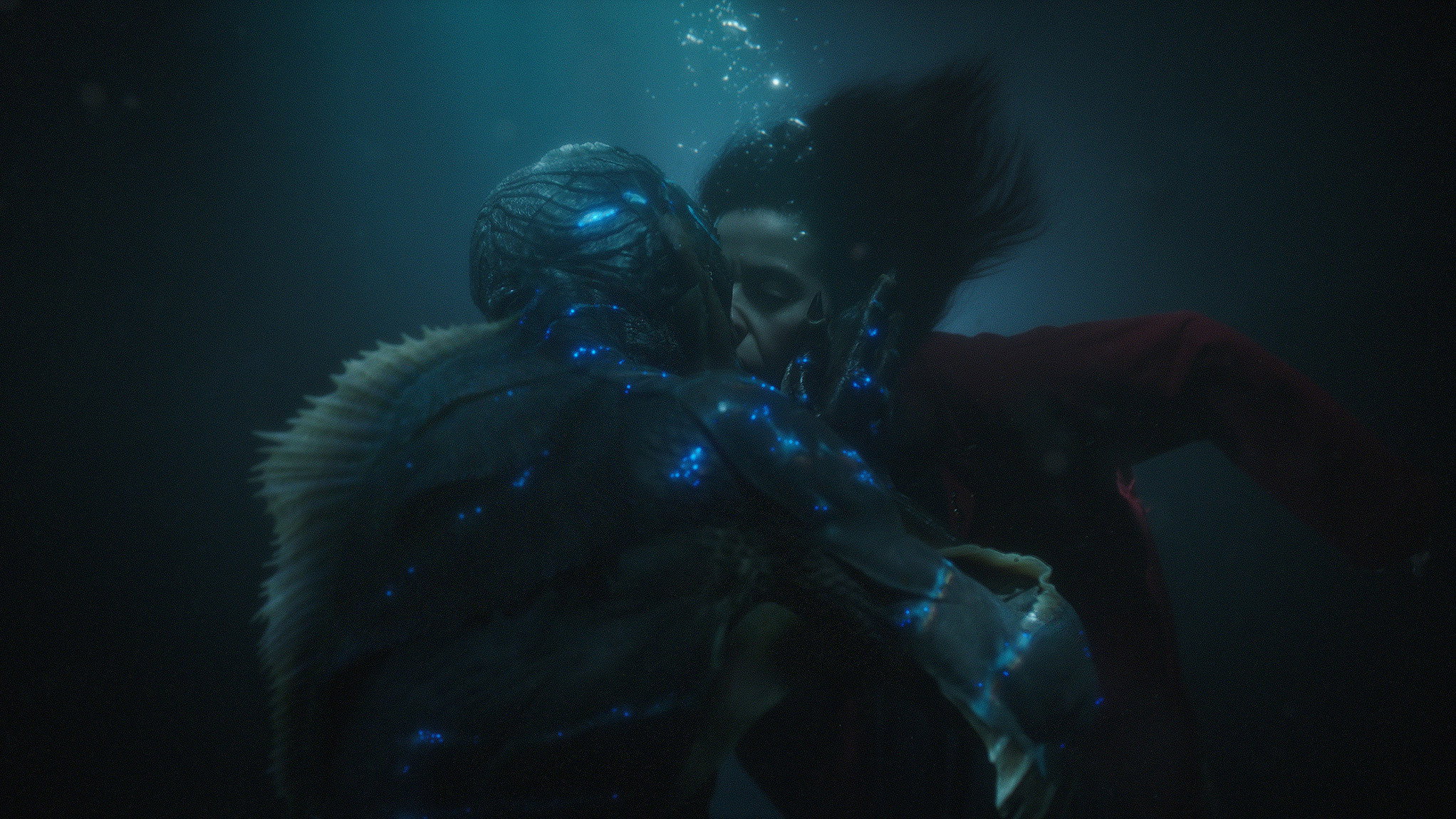
Doug Jones matters just as much to this. An amphibious lover could remain an object for the camera while the human actor supplied all the feeling; his performance makes the relationship feel reciprocal. He gives Sally Hawkins someone to respond to, and the film gains intimacy from their non-verbal exchanges. For all the invitation to read them as representatives of everyone excluded from respectable society, the couple hold our attention as two particular beings who want contact.
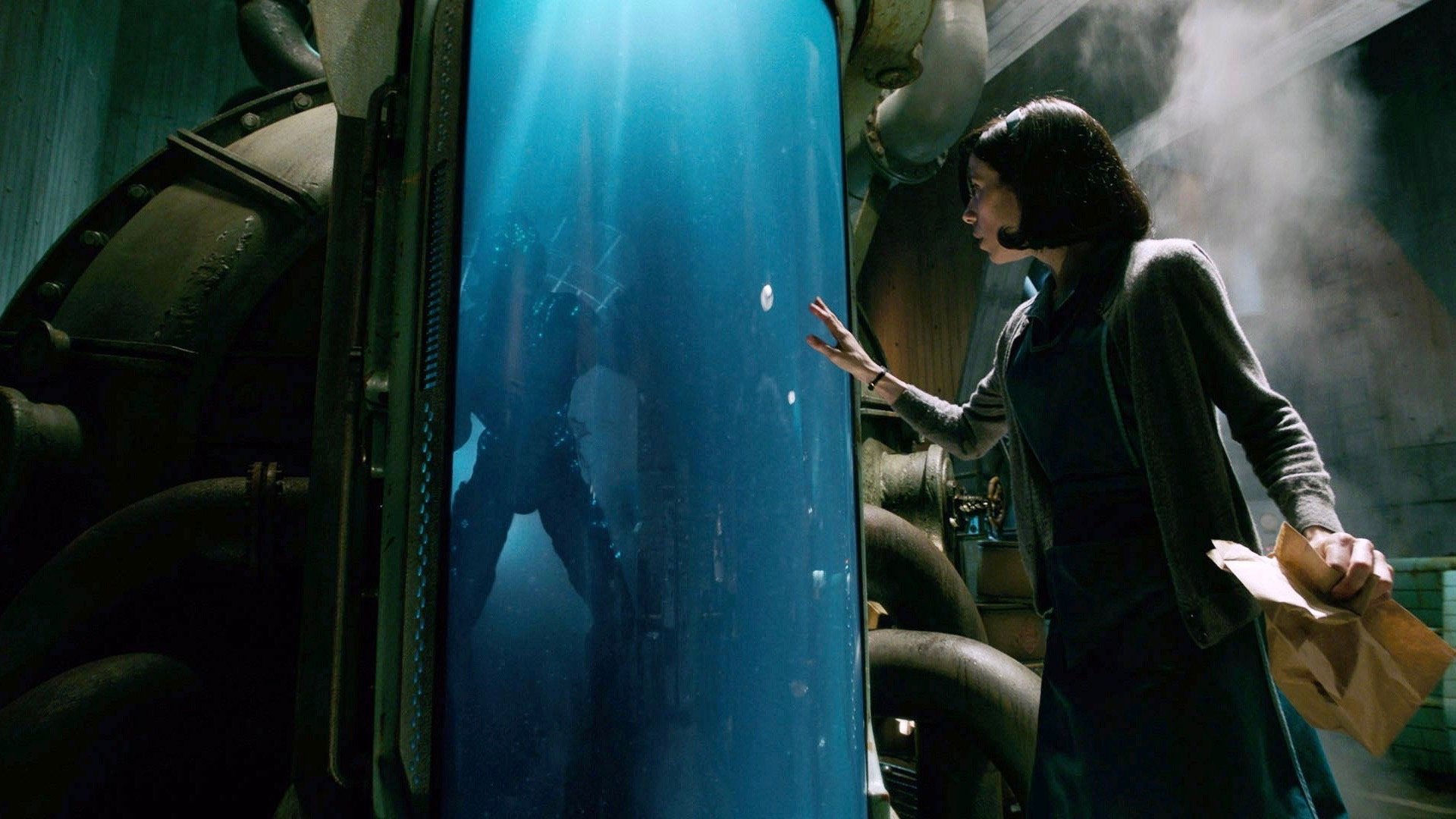
Paul D. Austerberry’s production design establishes the 1960s government laboratory as a setting for a fairy tale without losing its period character. Dan Laustsen’s photography encourages us to look closely at the creature rather than recoil, which is an important part of making the attraction credible. There is pleasure in the finish of these images, though sometimes too much pleasure for the unease to survive. The prettiness occasionally reassures us before the scene has earned that reassurance.
Sidney Wolinsky’s editing has to accommodate romance, fantasy and the harsher demands of a creature film, and the central relationship is given enough room to develop. The shifts between tenderness and menace are mostly assured. Alexandre Desplat’s music is effective at encouraging surrender to the romance, less useful when the performances have already made the feeling clear. At those points, we would prefer to be left with the actors; the film’s eagerness to carry us along becomes a small distraction.
The limitation lies in the writing by Guillermo del Toro and Vanessa Taylor. The sympathy for people pushed aside is welcome, but the screenplay makes its sympathies so clear that there is little chance of being unsettled by them. A story about desire crossing such an enormous physical difference might allow more discomfort than this one does. We do not need the film to punish its lovers, or to apologise for them, but a little less reassurance would make their attachment more absorbing.
As an adult fairy tale, it succeeds through the seriousness of its actors and its willingness to let physical desire matter. Its creature-film elements provide a harsher edge, although the sentiment keeps smoothing it down. Anyone expecting the romance to arrive with an apologetic joke should know that Guillermo del Toro means it. Watch it for the lovers, and forgive the occasional nudge to love them.