Lubitsch’s comedy of two quarrelling Budapest clerks is as light as its reputation says and sadder than it lets on. Sullavan and Stewart are a pleasure; Frank Morgan, as their boss, is the one who stays with you.
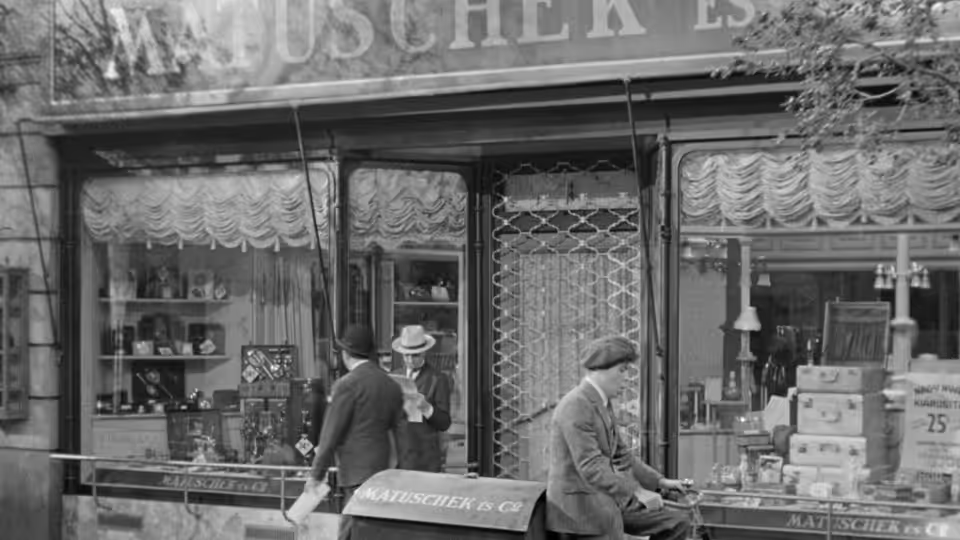
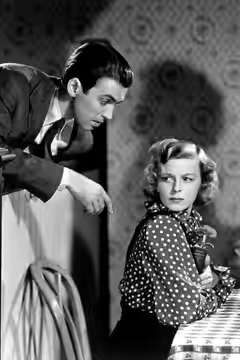
Ernst Lubitsch made his name on films about rich people in evening dress lying to each other, and here he gives all that up for a leather goods shop in Budapest. Matuschek and Company sells wallets, suitcases and, against the advice of its head clerk, a cigarette box that plays a tune when you open it. Alfred Kralik (James Stewart), the head clerk, is writing to a woman he found through a newspaper advertisement and has never met. Klara Novak (Margaret Sullavan) talks her way into a job by selling one of the boxes, and the two of them take against each other within the hour. The Shop Around the Corner is as good as its reputation and sadder than the reputation allows. We recommend it with hardly any reservation.
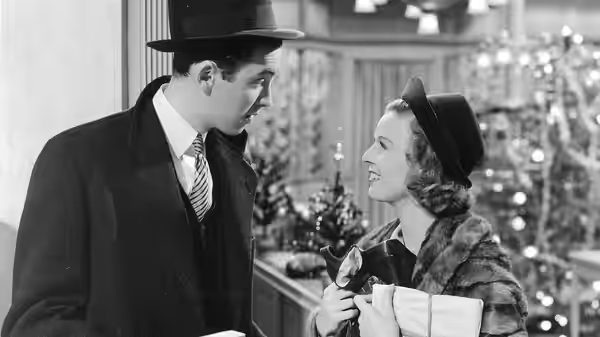
Nearly everything happens in the shop, which is one set: a front room with the counter, a back office, a stockroom, and a snowy street outside. William H. Daniels shoots it plainly, in soft grey light at eye level, and the camera waits in doorways rather than following anyone. The point of the place is the staff. Pirovitch (Felix Bressart) makes himself scarce whenever the boss asks for an honest opinion. Vadas (Joseph Schildkraut) agrees with whoever is nearest. Pepi (William Tracy) runs errands and resents it. Samson Raphaelson’s script cares as much about who gets a raise as who gets the girl, and that is why it still works.
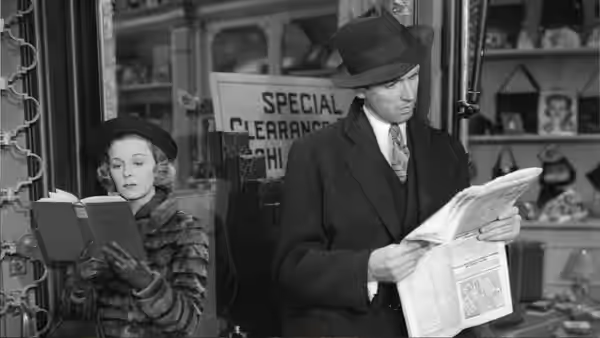
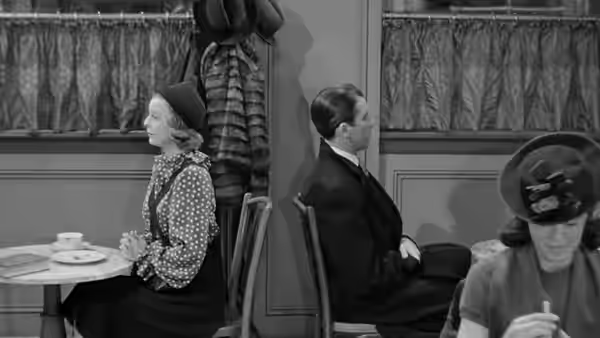
Stewart and Sullavan quarrel well. He is tall, awkward and sure he is right; she is quick and husky-voiced and sure he is not; and their rows over how to display a handbag are the best comedy here because each of them is partly right. The letters are another matter. Raphaelson has the correspondents write in a high-minded style, about books and souls, and the joke is that two people who are sharp in person are solemn bores on paper. There is a long café scene, when Kralik goes to meet his correspondent, that we will not describe, except that Gene Ruggiero barely cuts and Stewart does more with his face than most actors manage with a speech.
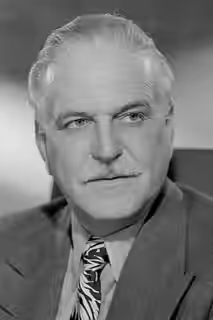
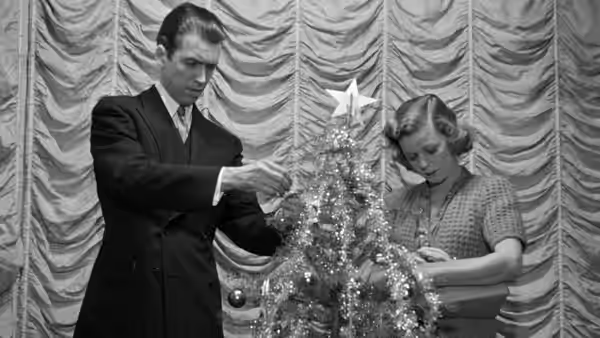
Then there is Frank Morgan. Hugo Matuschek is bluff, vain and fond of being agreed with, and at first Morgan plays him for easy laughs. Then the man goes cold towards his favourite clerk, for reasons the film keeps back, and the laughs stop. There is a scene in the back office that upset us more than a comedy has any business doing, because Morgan did so little: he sat down, his voice went small, and the shop went on selling wallets outside the door. It was Morgan we were still thinking about afterwards.
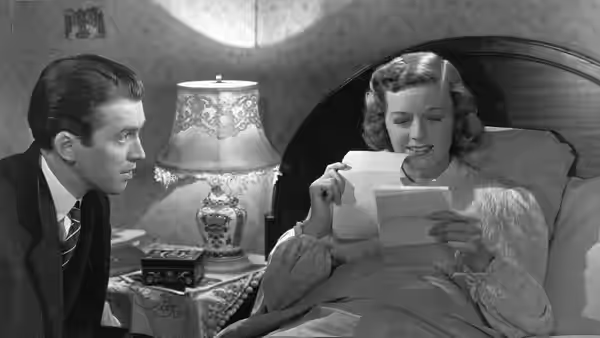
The flaws are small. Vadas is a villain in a film that did not need one, and Schildkraut plays him a shade broader than everyone else. The second half is a long delay, with one party knowing more than the other and the film enjoying the gap longer than we did; a sickbed scene in Klara’s flat is the one stretch where 99 minutes feels like more. Werner R. Heymann’s score is mostly the tune in the cigarette box and a few bars at the start and finish, which suits the film but leaves the ending to do its work on dialogue alone. And nobody on screen sounds Hungarian; the film does not pretend otherwise.
Among Lubitsch’s films, this is the one with the least champagne in it. Trouble in Paradise is cleverer and Ninotchka is funnier line for line. This is kinder than either, and the only one in which we worried whether anyone could pay the rent. It was remade as You’ve Got Mail, which kept the letters and lost the shop, and the shop was the point.
It ends on Christmas Eve, and December is the right month for it, with the radiators on. Britain first saw it on 1 May 1940 and it does not need snow outside to work. It only needs the two of you to disagree about something small, which it will arrange.