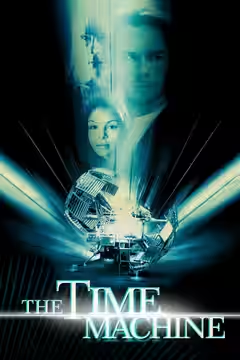
Simon Wells gets the brass, the gaslight and the first giddy run through the centuries right, then lands in a future with nothing to say and a chase to fill it. Pearce and Jones deserved a longer, stranger film.
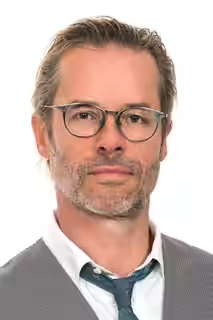
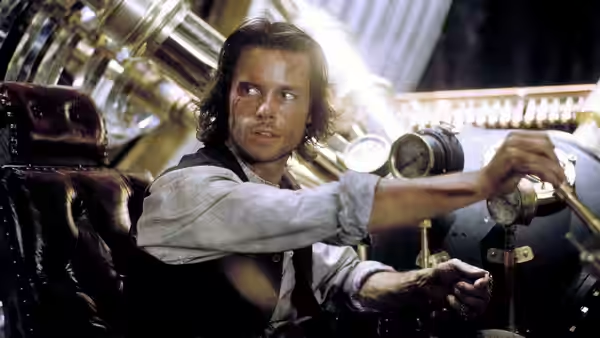
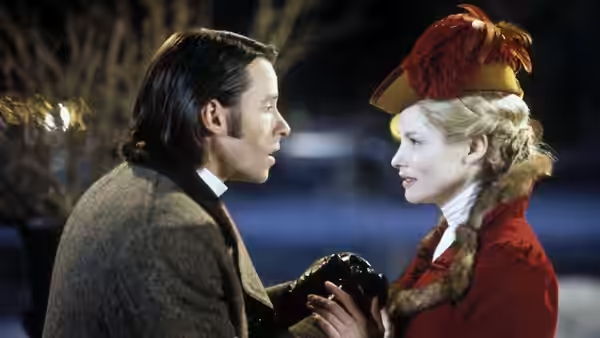
Alexander Hartdegen (Guy Pearce) teaches at a university in New York in 1899 and would rather be in his workshop. One night in Central Park a mugger shoots his fiancée Emma (Sienna Guillory), and he spends the next four years building a machine to go back and stop it. That is the first twenty minutes, and it is the clearest the film ever is about what it wants. John Logan, credited alongside David Duncan, has taken H. G. Wells’s 1895 novel and given its nameless traveller a name, a grief and a reason, and Simon Wells, the author’s great-grandson, directs. A man who can go anywhere in time and wants only one afternoon back is a good idea. The film has it for twenty minutes and then forgets it.
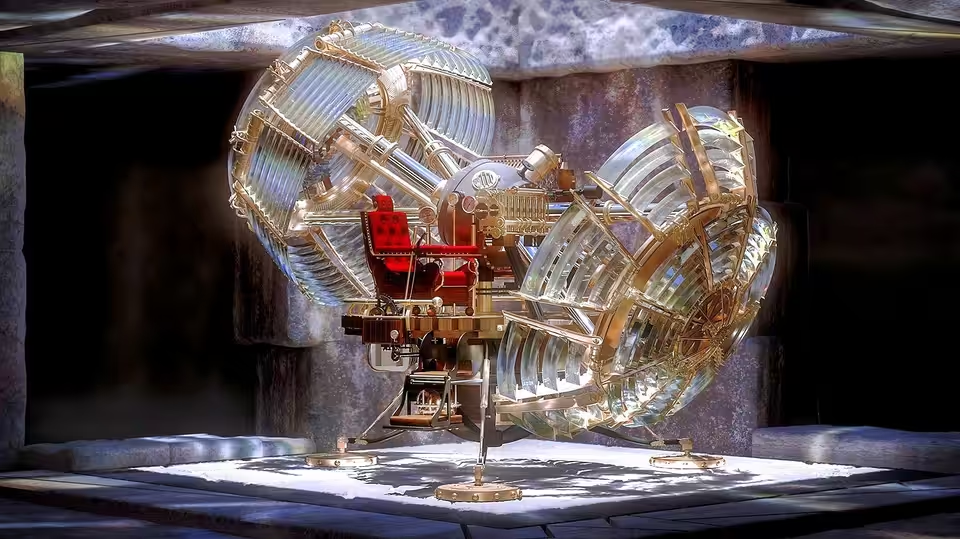
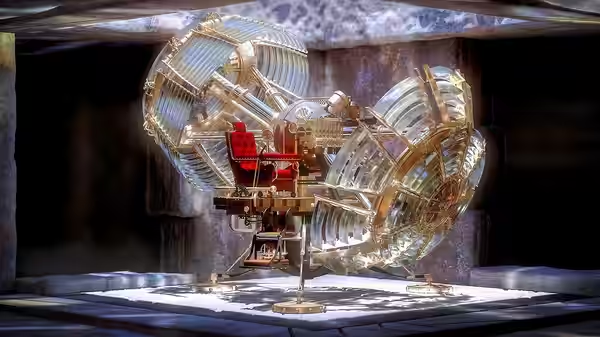
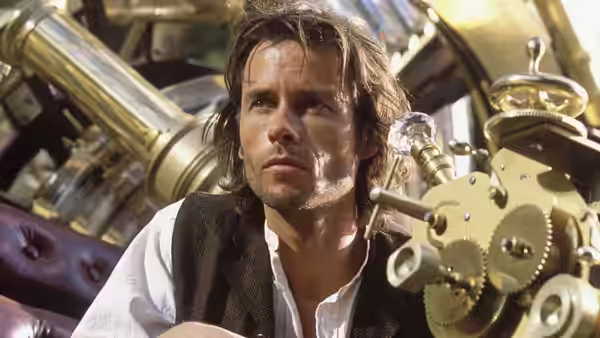
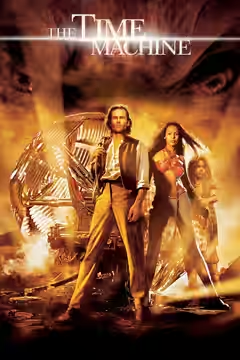
The early stretch is well made. Donald McAlpine shoots the city in snow and gaslight, brown rooms and yellow windows, and Oliver Scholl’s machine is a proper object: a brass seat under a frame of spinning glass discs that throw light across Pearce’s face as he winds it up. When it first moves, the windows of the workshop frost and clear as winters flicker past; then Wells takes the machine outside, and the skyline rises and falls, glaciers come down the valley and go back, and the rock is carved out from under it as the centuries pass. We felt, for perhaps three minutes, the thing the whole film is after, which is plain wonder at the size of time. Nothing else in it comes close.
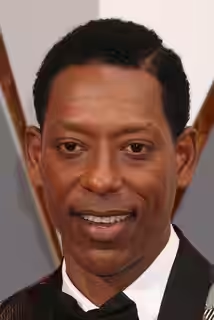
Orlando Jones is the other reason to sit through it. He plays Vox, a holographic librarian in a public library in 2030, lit from inside a glass panel, who answers questions nobody has asked and quotes from things he has catalogued. Jones plays him as a man delighted to have someone to talk to, and the scenes are quick and funny in a way the rest of the script is not. Pearce, gaunt and chalk-dusted, plays loss as irritation; he is decent, and he is given almost nothing to say once he leaves 1899. Mark Addy has two warm scenes as his friend David Filby, and Phyllida Law a few lines as the housekeeper Mrs. Watchett, and both are gone before the half-hour.
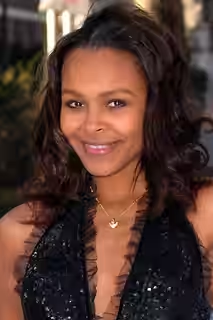
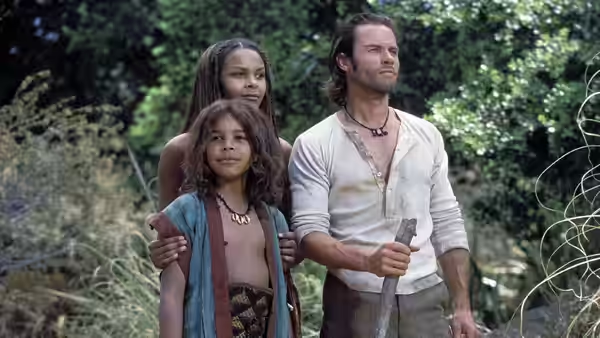
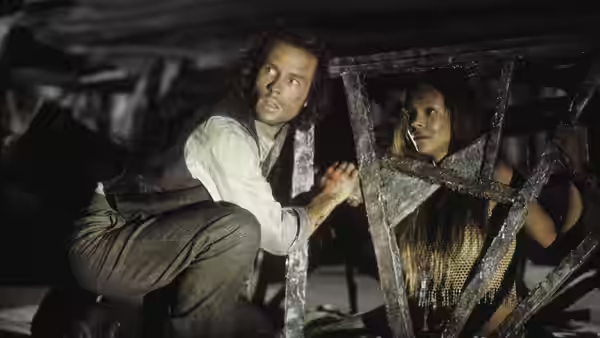
Then the machine stops in the year 802,701, and the film stops with it. The Eloi live in woven dwellings pinned to a cliff face, which Scholl has designed with care, and Deena Appel and Bob Ringwood dress them in earth-coloured cloth and beads. Mara (Samantha Mumba) teaches Hartdegen to speak and her brother Kalen (Omero Mumba) follows him about, and Mumba is calm and likeable, but the script gives her explanation where it should give her a person. The Morlocks, when they come, are grey, hunched things that bound on all fours and burst out of the sand, performers in suits rather than drawings, and the first attack is a real jolt. After that Wayne Wahrman cuts the film as a chase, and Klaus Badelt’s choir sings over every yard of it.
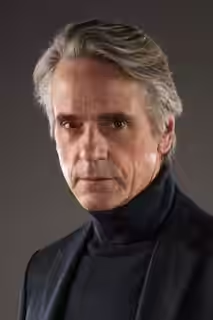
Jeremy Irons arrives late as the Über-Morlock, white as a candle, with his spine on the outside, and speaks in a murmur. He has one scene. In it the two men sit and talk, and we will not describe what is said, except that it is cut short so that they can hit each other. We were cross about that, and we stayed cross to the end, because that one scene is the only stretch of the film with an idea in it, and the film treats it as something to get through.
The 1960 version, directed by George Pal, was slower and cheaper and is still the one people remember, because it kept Wells’s point: that the Eloi and the Morlocks were the two halves of one society, grown apart until one preyed on the other. This one keeps the names and swaps the argument for a rescue. At 96 minutes it is short, and the future still feels padded, which tells you where the thought went.
See it for the brass and for Jones, and for three minutes of glaciers. It is a PG, and a child who has not read the book will have a perfectly good time with the Morlocks. The machine is the best character in it.