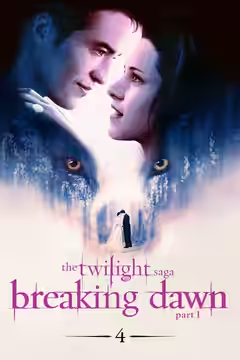
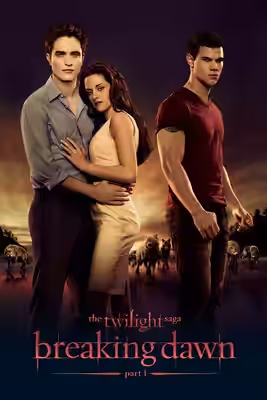
Bill Condon stages the wedding with real care and then finds a body-horror film inside a teen romance, which the 12A certificate will not let him make. Fans will get what they came for; everyone else gets a long honeymoon and some talking wolves.
Melissa Rosenberg’s screenplay takes the first half of Stephenie Meyer’s final novel and makes 117 minutes of it, and what those minutes contain is a wedding, a honeymoon and a pregnancy. That is the whole of the plot. Bill Condon, whose earlier films include Gods and Monsters (1998) and Dreamgirls (2006), is not an obvious hire for a franchise about chaste vampires, and the interesting thing about this one is that you can see him looking for the film he would rather be making. He finds it about an hour in, and the certificate will not let him have it.
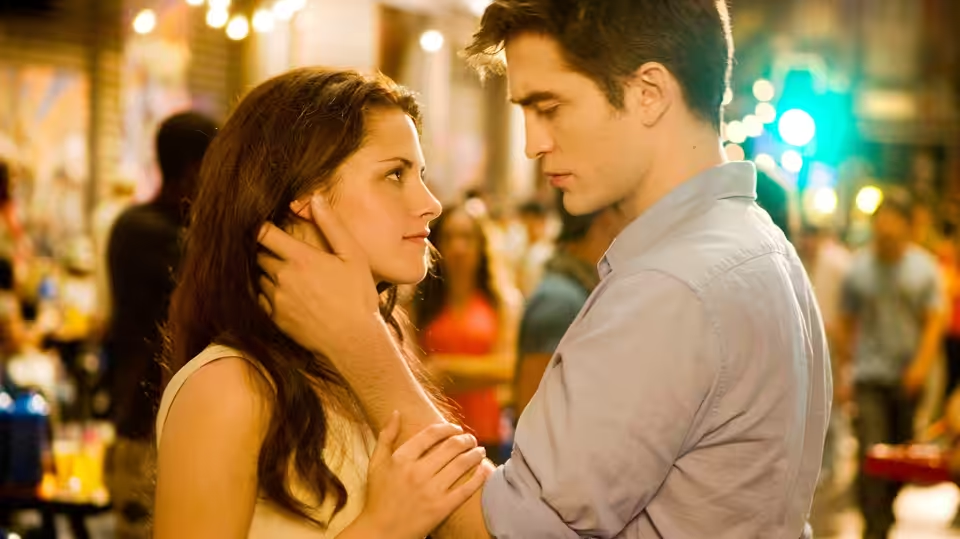
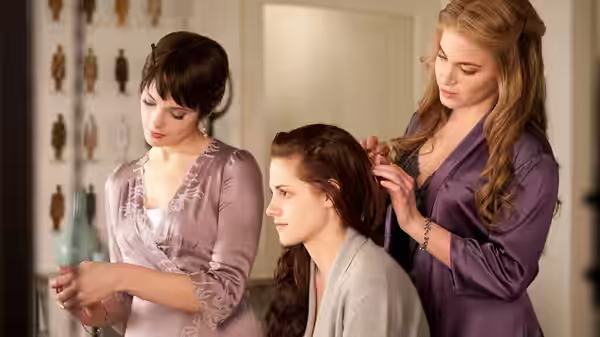
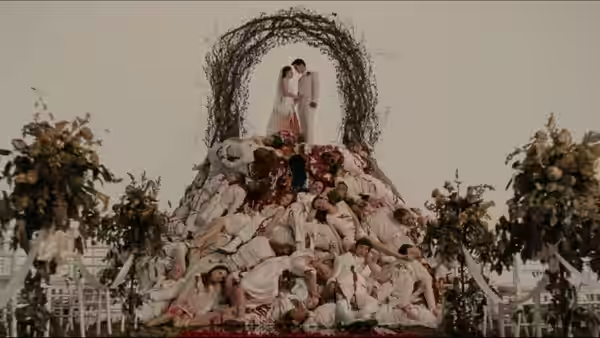
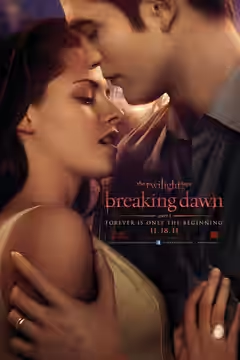
The wedding is the best stretch, and most critics have said so, so we are not alone. Richard Sherman dresses the Cullens’ garden in white blossom and hanging moss, Guillermo Navarro lights it as a late afternoon going gold, and Michael Wilkinson’s dress for Bella Swan (Kristen Stewart) is cut plain enough to be believed. Carter Burwell’s piano does the work the dialogue cannot. Billy Burke, as her father Charlie, gets the one scene of ordinary feeling in the picture, a man straightening his tie and trying not to look at his daughter, and Anna Kendrick’s Jessica gives a toast at the reception that is the only joke anyone was allowed to write down.
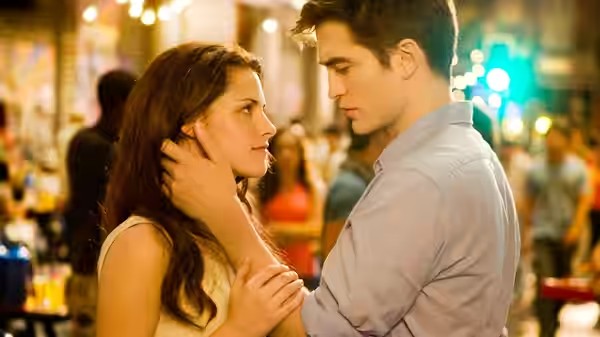
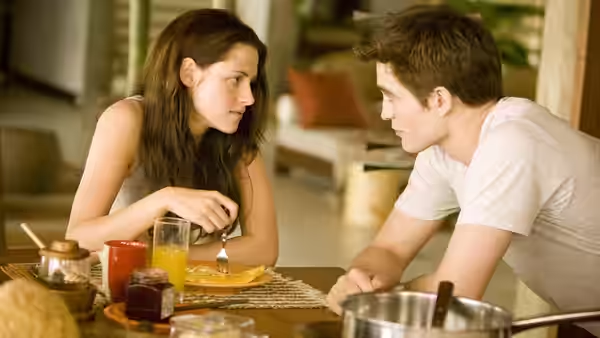
Then the honeymoon, on an island the Cullens own off the Brazilian coast, and the film’s first problem. Three films have been building towards Bella and Edward Cullen (Robert Pattinson) going to bed, and when it comes Condon cuts to a broken headboard and a room full of feathers and leaves the rest to the audience. It is a tasteful choice and a timid one, and the games of chess that follow are not an acceptable substitute. Virginia Katz cuts these scenes at the pace of a wedding video. The couple are beautiful and the sea is blue and we were restless by the second morning.
Then Bella is pregnant, and the film becomes something else. The thing growing in her is breaking her from the inside, and Condon shoots it as horror: Navarro drains the colour from the Cullen house until it is all grey wood and wet windows, and the make-up hollows Stewart’s face and thins her arms until she looks like a patient in a hospice. We were horrified, more than we expected a 12A to manage, and the reason is Stewart. She stops doing the lip-biting that has been her whole method across three films and simply lies there, grey and stubborn, and lets us look. It is the best acting in the series and it is nearly wasted, because the film keeps cutting away from her to the wolves.
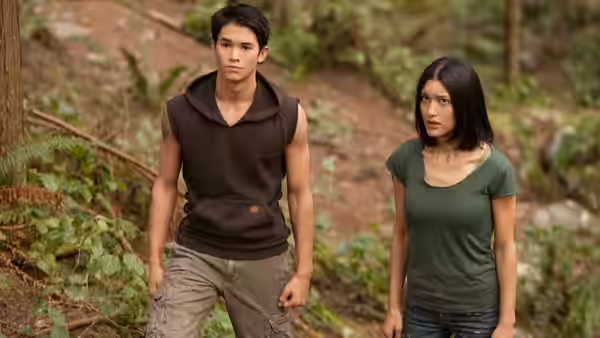
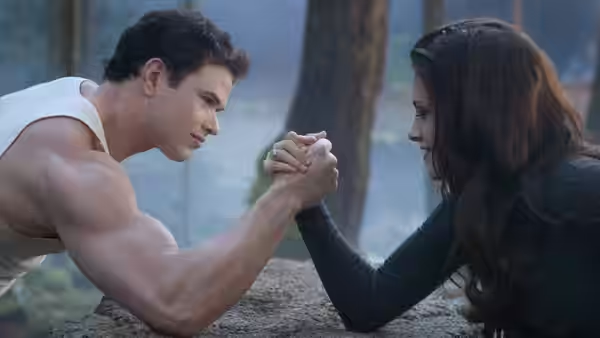
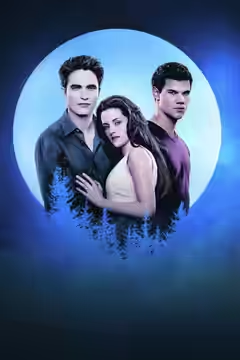
The wolves. Jacob Black (Taylor Lautner) spends the film torn between his pack and the Cullens, and the film cannot stage this without a scene in which a dozen computer-generated animals growl at one another in a forest while the actors’ voices boom over the top as thoughts. It is the worst scene in the film and one of the worst in the series: the animals have no weight, their eyes are wrong, and the lines are written in capital letters. Lautner, who is fine as a man standing in the rain, is given nothing to play as a man and less as a dog. Peter Facinelli’s Carlisle and Nikki Reed’s Rosalie get an argument about the baby that is the one piece of adult drama in the second half, and it is over in two minutes. Michael Sheen is sixth in the cast list and in the film for about as long as it takes to read it.
Rosenberg’s script is the most grown-up of the four, about a marriage, a body and a choice nobody around Bella wants her to make, and the franchise will not let it finish the thought. Splitting the novel in two gives us two hours in which one thing happens, and the last shot is the moment a different film would have started.
If you have seen the first three, you will see this one and nothing we say will change that; you will get a wedding worth the ticket and a second half braver than you were told. If you have not, there is no way in. The film assumes you know everyone and never introduces anyone.