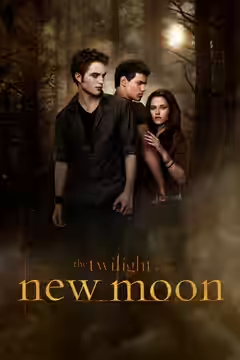
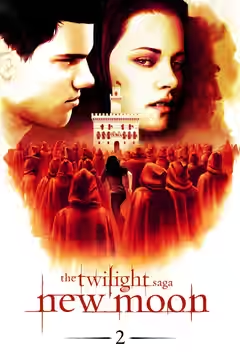
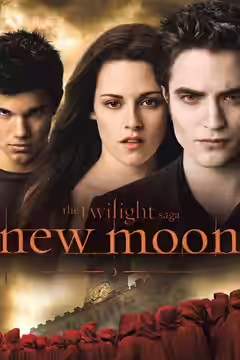
Chris Weitz has made a handsomer, steadier film than the first Twilight and a much slower one, built around an absent boyfriend and a heroine who misses him. Kristen Stewart holds it together; Michael Sheen arrives late to remind everyone it could have been fun.
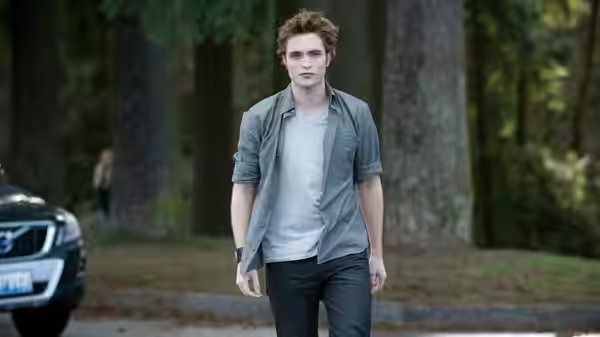
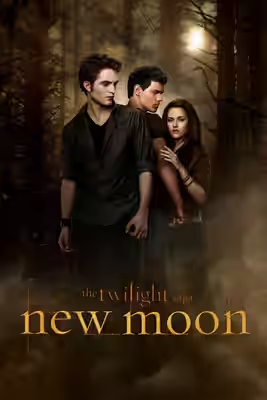
Edward Cullen (Robert Pattinson) leaves Forks about twenty minutes into New Moon, and the film’s trouble is that he takes its pulse with him. Chris Weitz, taking over from Catherine Hardwicke, has made a better-built picture than Twilight: the camera has stopped wobbling, the colours have deepened, and there is a proper composer. He has also made one in which the heroine spends the middle hour grieving a boyfriend, and Melissa Rosenberg’s screenplay, which follows Stephenie Meyer’s novel closely, is not willing to shorten the grief. At 131 minutes it is long for a film in which the main thing that happens is that somebody goes away.
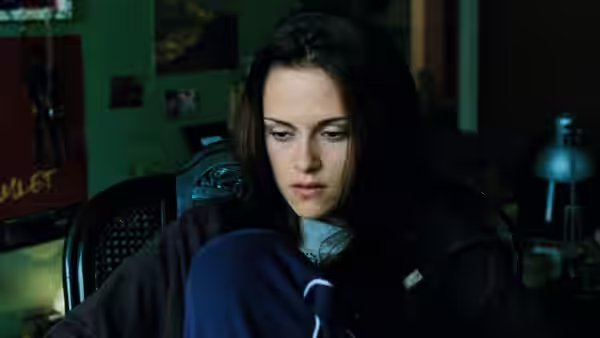
Kristen Stewart carries it, and more capably than she is usually given credit for. Bella’s months without Edward are played as a dull ache rather than a tantrum. She sits in a chair by her window while Javier Aguirresarobe’s camera circles her and the trees outside go from October to December to spring, the light on the glass changing with them. We will admit that shot got to us: the slow turn, the drizzle, Alexandre Desplat’s piano picking out a line and letting it drop. Then Rosenberg has Bella explain the same feeling in voiceover, in unanswered emails to Alice Cullen (Ashley Greene), and the feeling goes.
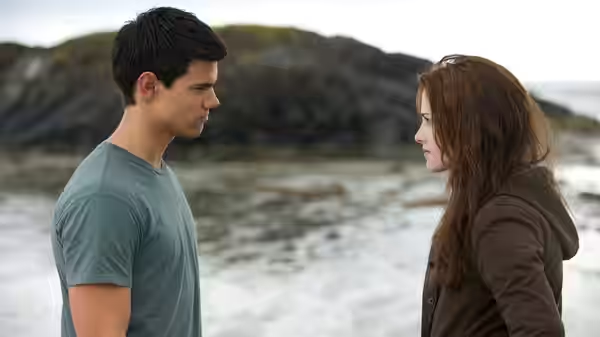
Taylor Lautner’s Jacob Black is what the film finds to fill the gap, and the garage scenes, two kids pulling motorbikes apart and putting them back together, are the loosest and warmest stretch. Lautner is sunny and uncomplicated and the camera likes him. But Rosenberg writes Jacob as patient, then as angry, then as patient again, and the film is more interested in his chest than in his head. When Bella comes off a bike and Jacob removes his shirt to dab the blood from her forehead, we laughed, and we were not certain the film was laughing with us. There is a good deal more of this. Tish Monaghan appears to have been told to budget for cut-off jeans.
Jacob’s secret, which the trailer gives away, arrives as a pack of computer-generated wolves the size of horses, and they are the weakest thing on screen. The fur does not move with the body, the paws never quite land on the forest floor, and Peter Lambert cuts round them as fast as he decently can. A skirmish in the woods with Victoria (Rachelle Lefevre) is over before it has become legible. The first film had cheap effects and hid them; this one has better effects and shows them off, which turns out to be worse.
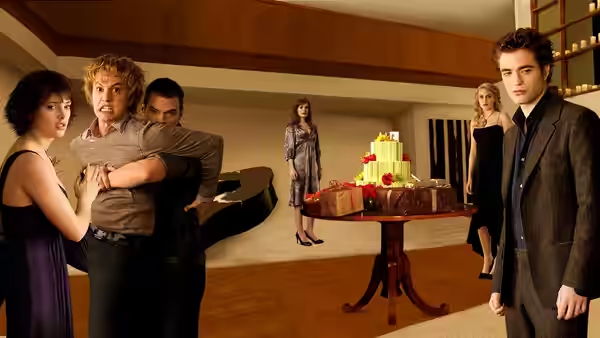
The rest of the craft is sound. Aguirresarobe has swapped Hardwicke’s blue-green for amber and brown, so Forks looks like a place where it rains on leaves rather than on concrete. David Brisbin’s Cullen house, all glass and pale wood, is as good as before, and he gives the late Italian scenes a stone chamber with real weight to it. Desplat’s score is the single biggest improvement over the first film: strings and piano that take the romance seriously without underlining every line of it. Billy Burke’s Charlie remains the one adult who behaves like one, and his worry over his daughter moved us more than any of the vampire business.
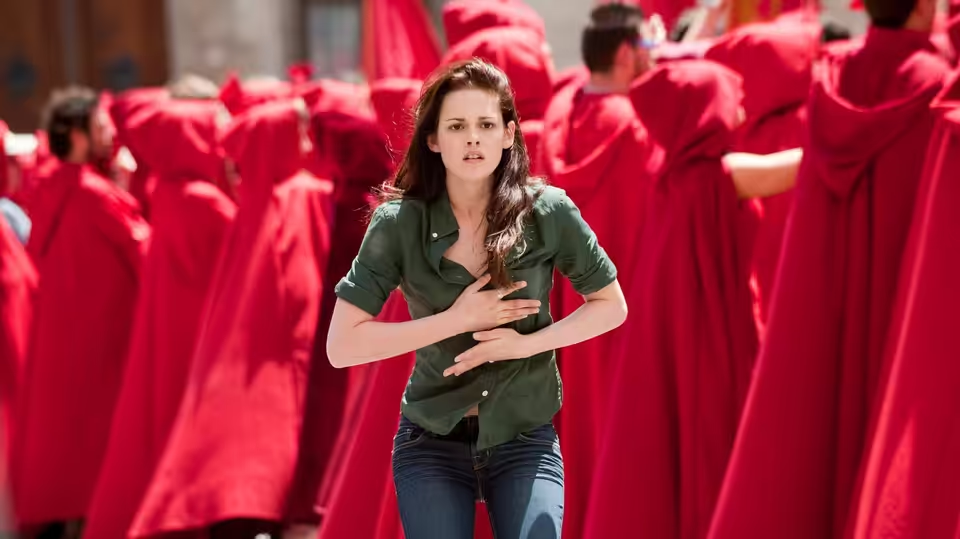
Michael Sheen and Dakota Fanning turn up in the last half hour, and we will not describe what they are there for. Sheen plays Aro as a delighted host, clasping hands and beaming, and his first scene is the only moment where the film seems to know how silly it is and to enjoy that. Fanning, as Jane, says almost nothing and is properly unsettling in Monaghan’s black and red. Both are gone too soon.
Weitz made About a Boy, which was about a grown man learning to be around other people, and The Golden Compass, which spent a fortune on a polar bear and ran out of story. Here he sits between the two: tasteful, competent and apparently under instruction not to leave anything out. Gothic romance runs on danger, and the vampires here are so polite that the only real threat for most of the running time is a girl’s low mood.
If you loved the books you will have a decent evening and did not need us to tell you so. If you did not, you are watching a 131-minute wait for a boy to change his mind, and the 12A means the danger never gets more than mildly damp.