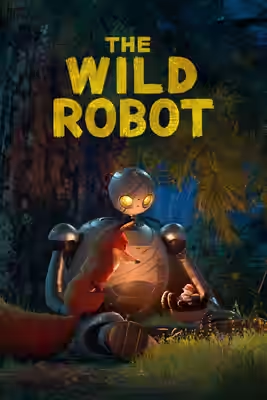
Chris Sanders’s film about a robot raising a gosling is the warmest film DreamWorks has made in years, painted like a picture book and honest about death. We recommend it, with a caveat: the last third swaps feeling for action.
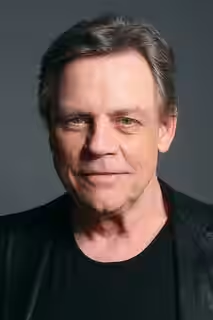
For its first twenty minutes The Wild Robot is a comedy about a machine that cannot find a customer. Roz wakes on a beach, folds herself upright and asks, in a bright shop-floor voice, whether anyone needs assistance. A crab does not. A grizzly bear (Mark Hamill) answers by chasing her off a cliff. Chris Sanders, who wrote the script from Peter Brown’s children’s novel, plays it as slapstick, and we laughed more than we expected to at a robot being knocked into the sea. Then the film changes, into something we recommend warmly, with a caveat about the last third.
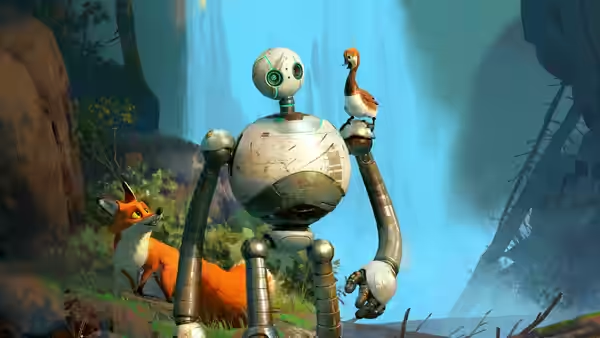
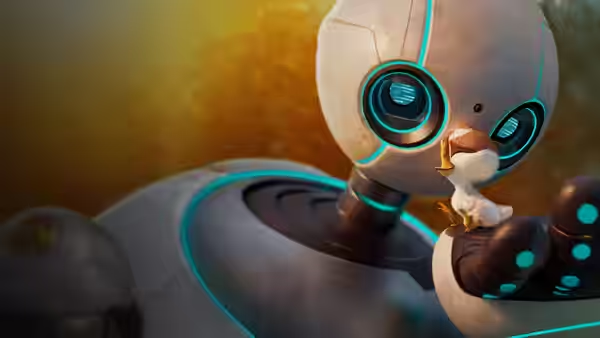
The change comes with an egg. Roz lands on a goose’s nest and crushes everything in it but one egg, which a fox called Fink (Pedro Pascal) would like for breakfast. The gosling hatches, looks up at the machine standing over him and imprints. Pinktail (Catherine O’Hara), a possum with a great many children, explains what a mother is for: he has to eat, he has to swim, and he has to fly before the geese leave in autumn. Roz hears a task with a deadline and accepts it. For a while the film treats this as a joke about a robot. It stops being a joke.
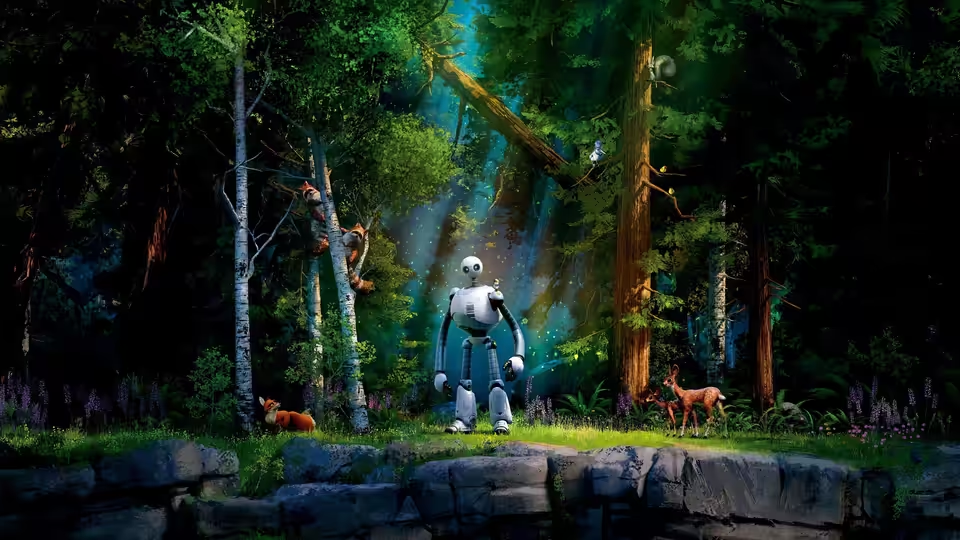
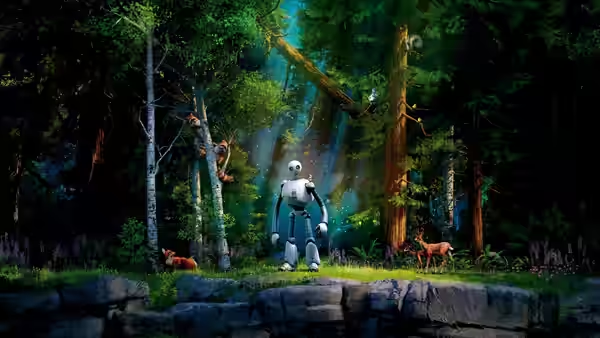
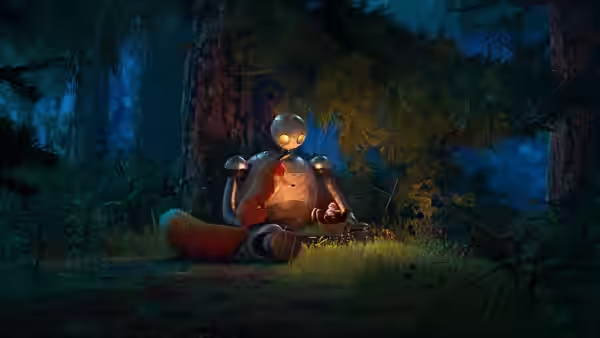
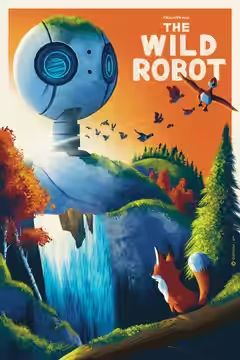
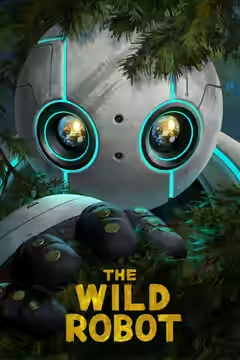
Raymond Zibach’s production design is why the film looks like nothing else Sanders has made. The island is not rendered leaf by leaf; it is painted in visible brushstrokes, ferns as smears of green, mist as a wash, light coming through the canopy in soft blocks. Roz’s smooth white and grey shell is the only hard edge in it, and by the end she is scratched, dented and grown over with moss. Kris Bowers holds his strings back for the flying and gives the comedy almost nothing, which is right. Mary Blee’s editing is at its best when Roz sits down to learn the animals’ language and a whole season passes across one shot, the light changing around a robot that has not moved.
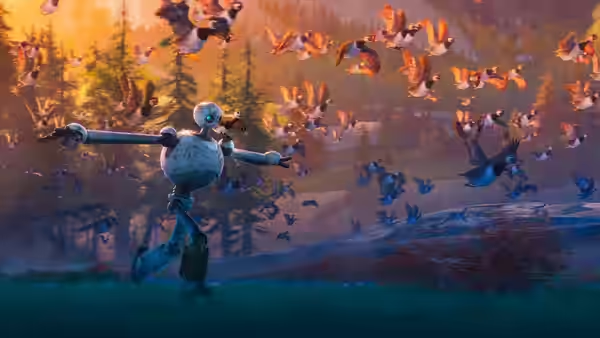
What decided it for us was Nyong’o. Brightbill (Kit Connor) is the runt, and the flying lessons are a long run of failures watched by a robot who cannot look away. Nyong’o spends the film moving from a customer-service cadence to something softer without ever dropping the rhythm of the machine. There is a shot of Roz on the shore, lens turned up, saying nothing, and it moved us more than a film about a robot and a goose had any right to.
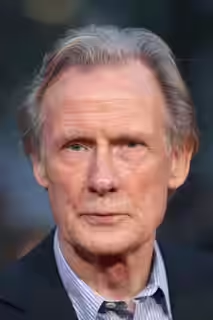
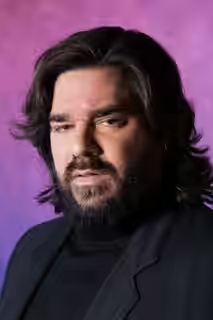
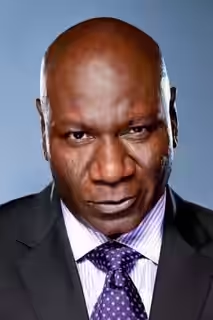
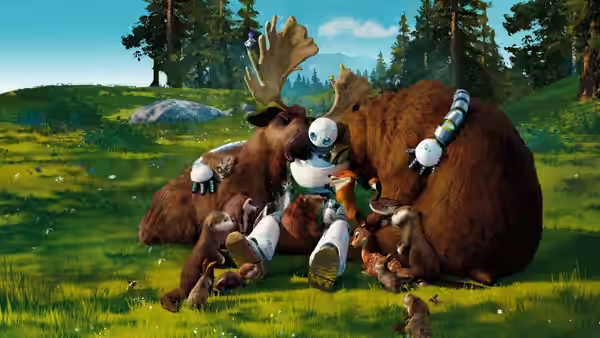
Pascal’s Fink is a coward and a scrounger who becomes useful by accident and is embarrassed to find he likes it. Matt Berry is a beaver who wants to fell every tree on the island, Bill Nighy is Longneck, the old goose who leads the flock, and Ving Rhames is a falcon who takes over the flying lessons. The film is also frank about what an island of animals is. Fink eats things. Pinktail’s children play dead, elaborately, whenever anything startles them, and she is matter-of-fact that not all of them will last the year. We laughed, and then wondered whether we should have. The woods are lovely and everyone in them is somebody’s dinner.
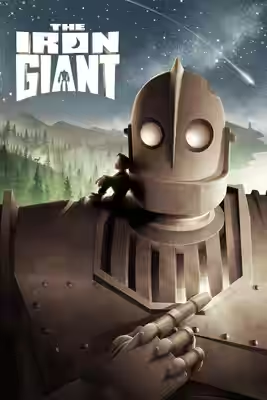
The last third is louder, and we will not say how. Stephanie Hsu voices the trouble, but the film stops looking at faces and starts moving fast, and Blee’s cutting speeds to match. It is competently done and we have seen most of it before, in The Iron Giant and WALL-E. A stretch in which the island’s animals are asked to get along for the common good is sweeter than it is convincing.
Sanders has told this story before. Lilo & Stitch and How to Train Your Dragon were both about a creature that did not belong finding a household that would have it, and this is that again, with better light. It is also, at 102 minutes, the one of the three we would most like to look at again.
It is a U certificate and earns it, though the fox is hungry and the possum does not soften her arithmetic. The youngest viewers may leave with questions; so did we.