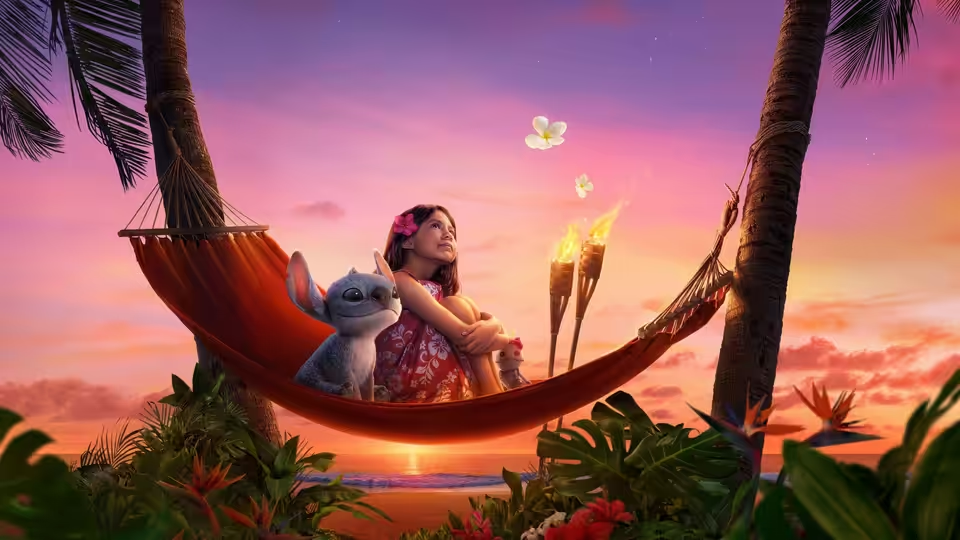
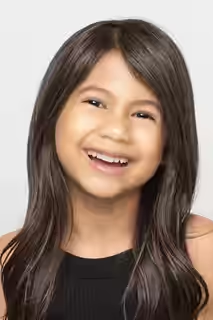
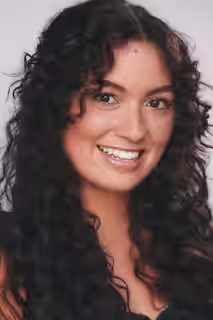
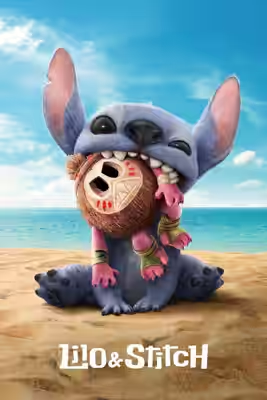
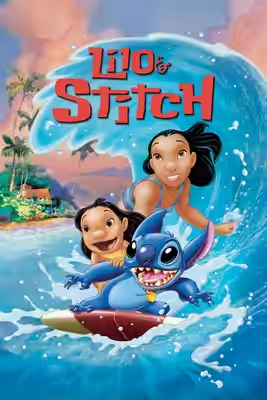
Dean Fleischer Camp’s remake of the 2002 cartoon is warmer than most of Disney’s live-action retreads, and Maia Kealoha and Sydney Agudong make the sisters count. It is also tamer, longer and about half as funny as the film it copies.
Disney has been turning its cartoons into photographs for a decade, and Lilo & Stitch was always going to be a harder case than most. The 2002 original, directed by Chris Sanders and Dean DeBlois, was scrappy and odd and about a small angry girl. Dean Fleischer Camp’s version keeps the girl, the sister and the alien, and softens nearly everything around them. It is a pleasant 108 minutes with a real heart in the middle, and about half as funny as the film it is copying.
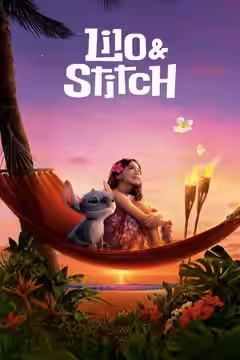
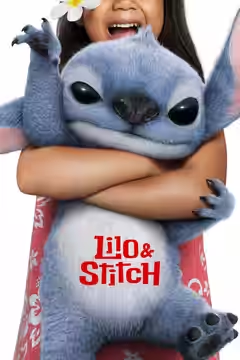
The sisters are the reason to see it. Lilo (Maia Kealoha) is six and has no friends and no parents. Nani (Sydney Agudong) is trying to keep a job, a house and a child, and a social worker, Mrs Kekoa (Tia Carrere, who voiced Nani in the 2002 film), is on the doorstep with a clipboard. Kealoha does not act sad so much as get on with being a difficult child, and when she says something cruel to her sister you believe she meant it. Agudong plays the exhaustion straight, no glamour and no speeches, and the two of them arguing in a kitchen is better than anything the aliens get up to.
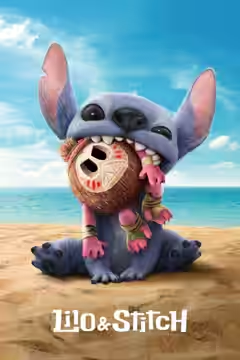
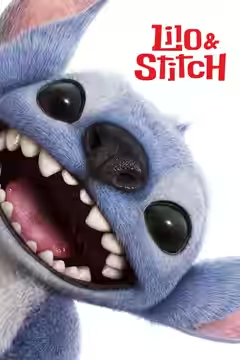
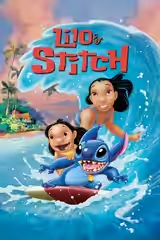
Stitch is the problem, and it is not the voice. Sanders returns to growl and gargle the part, and the sound is the same. The body is not. Stitch is now a small, densely furred animal whose every hair catches the light; the effects work is careful, and the joke has gone out of him. A drawing could stretch, flatten and open a grin from ear to ear. This Stitch can only be a creature in a room, and the film keeps having him knock things over to remind us he is meant to be dangerous.
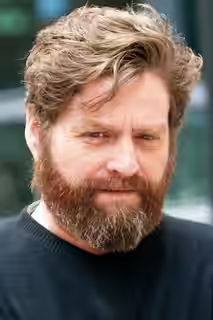
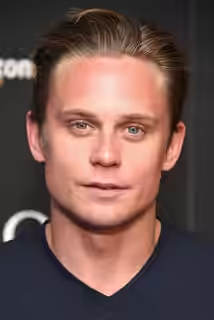
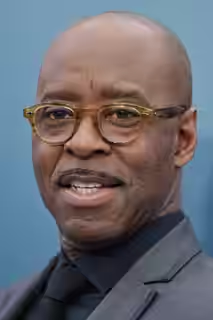
Zach Galifianakis and Billy Magnussen play his pursuers, Jumba and Pleakley, and the film’s cleverest decision is to give them human disguises, so two comedians can stand on a beach in bad shirts. Magnussen is game. Galifianakis is oddly muted, as if he had been asked to play the part rather than be funny in it. Courtney B. Vance makes Cobra Bubbles a government man with a soft centre, which is fine and less fun. Hannah Waddingham gives the Grand Councilwoman a headmistress’s patience and is gone too soon.
Nigel Bluck shoots almost all of it outdoors and in daylight, and the island looks like a place people live: peeling paint, wet roads, the sea a workaday blue. Todd Cherniawsky’s version of the sisters’ house is small, cluttered and correct. Wendy Chuck puts Lilo in the red dress with white leaves the cartoon wore and Nani in whatever is clean. Dan Romer’s score keeps out of the way until the ending, when it does not. Adam Gerstel and Phillip J. Bartell cut the domestic scenes at a walking pace and the alien scenes as a scramble, and the join shows every time.
Here is what got us. There is a scene in the first act, the sisters alone after a bad day, when the word ohana arrives with its definition, and we had read it on a hundred lunchboxes and it still worked. Agudong says it quietly, Kealoha is barely looking at her, and Fleischer Camp holds the shot rather than cutting to the alien. We were moved, and slightly surprised to be. Twenty minutes later, during a chase involving a lorry and a great deal of shouting, we were checking the time.
Fleischer Camp made Marcel the Shell with Shoes On (2021), and it shows in the quiet scenes and nowhere else. The original was a Disney film that did not behave like one: the girl was strange, the alien was a menace, the tourists were a joke at the audience’s expense. This one turns each of those down a notch, and a notch is enough. It is among the better of the studio’s recent remakes, and that is a low fence.
Children under ten will love it, and Stitch will sell a great many toys. It carries a U. If you have the 2002 film in the house, put that on instead; it is shorter, funnier and drawn.