Disney’s forest film has the softest backgrounds and the sharpest shock in the studio’s history, and seventy minutes is exactly long enough. The adult voices in the second half let it down after the children’s, but we would send almost anyone to it.
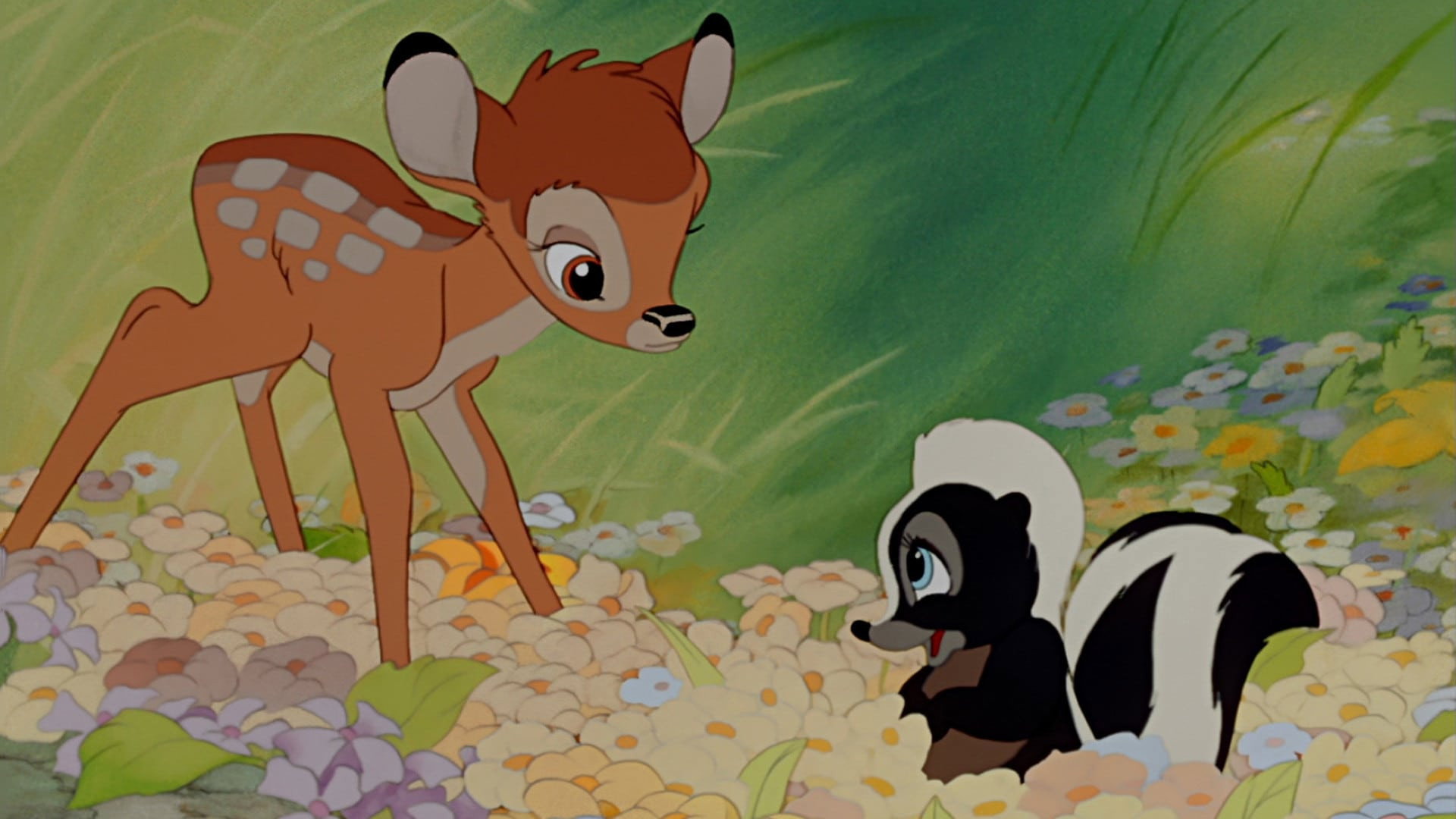
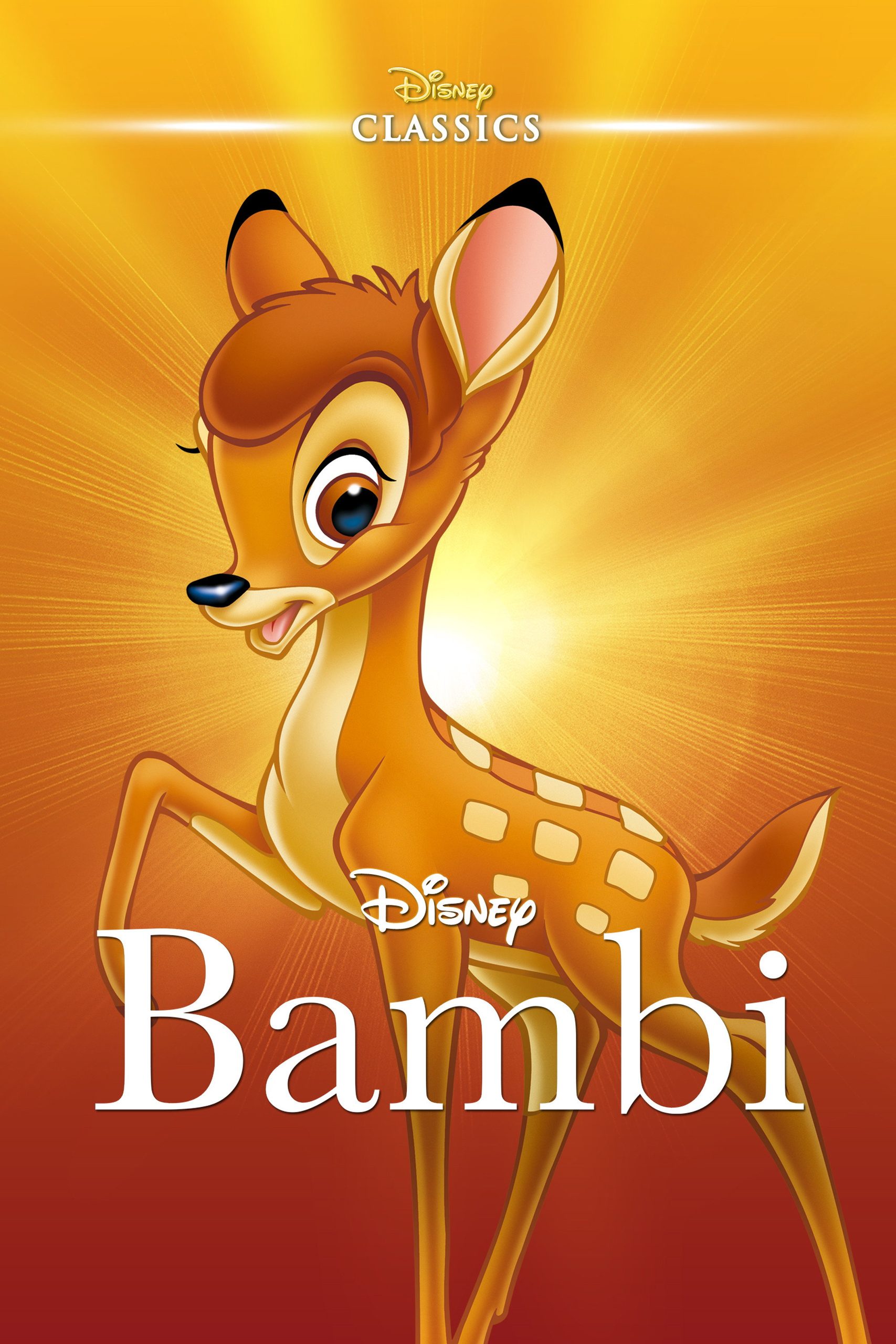
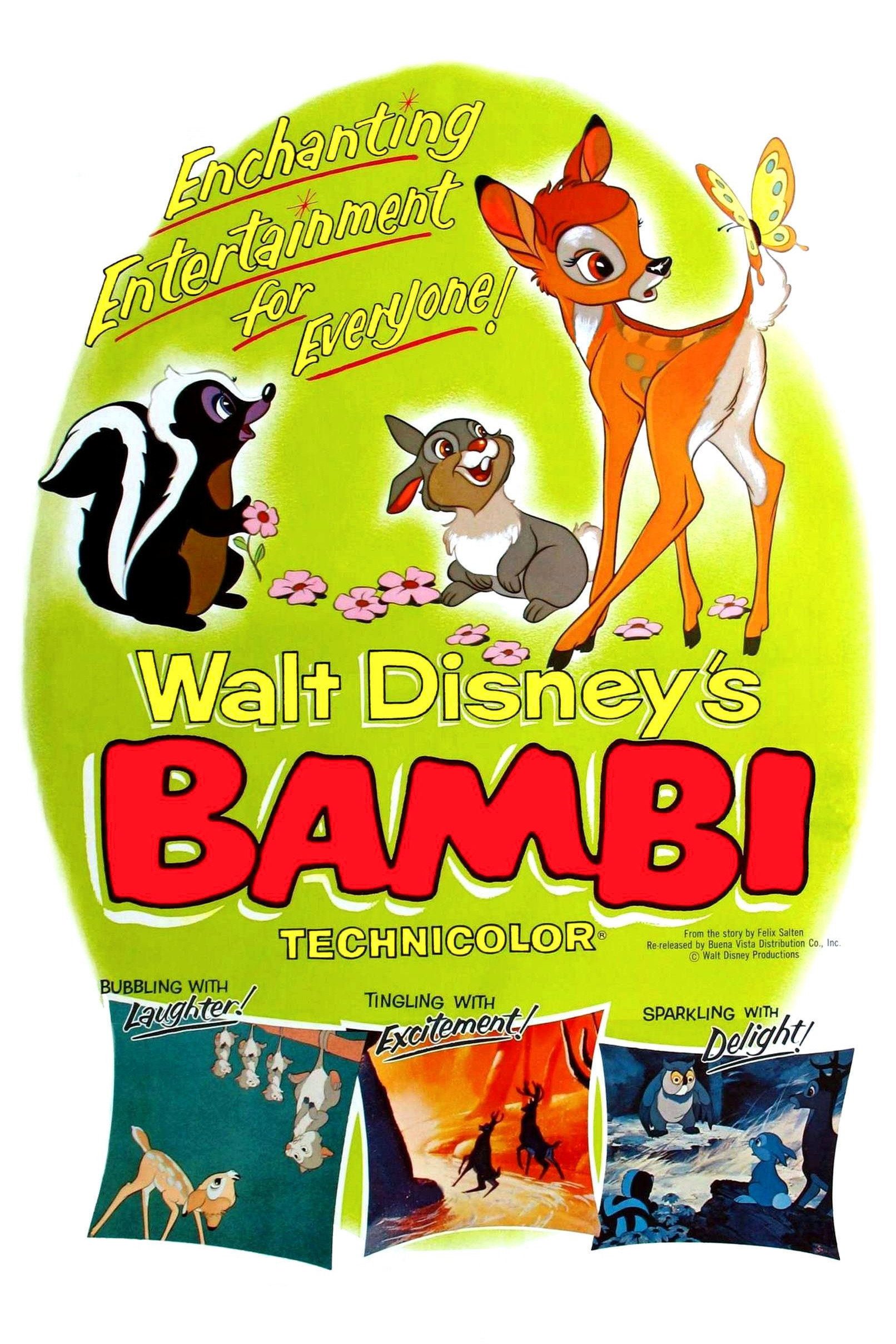
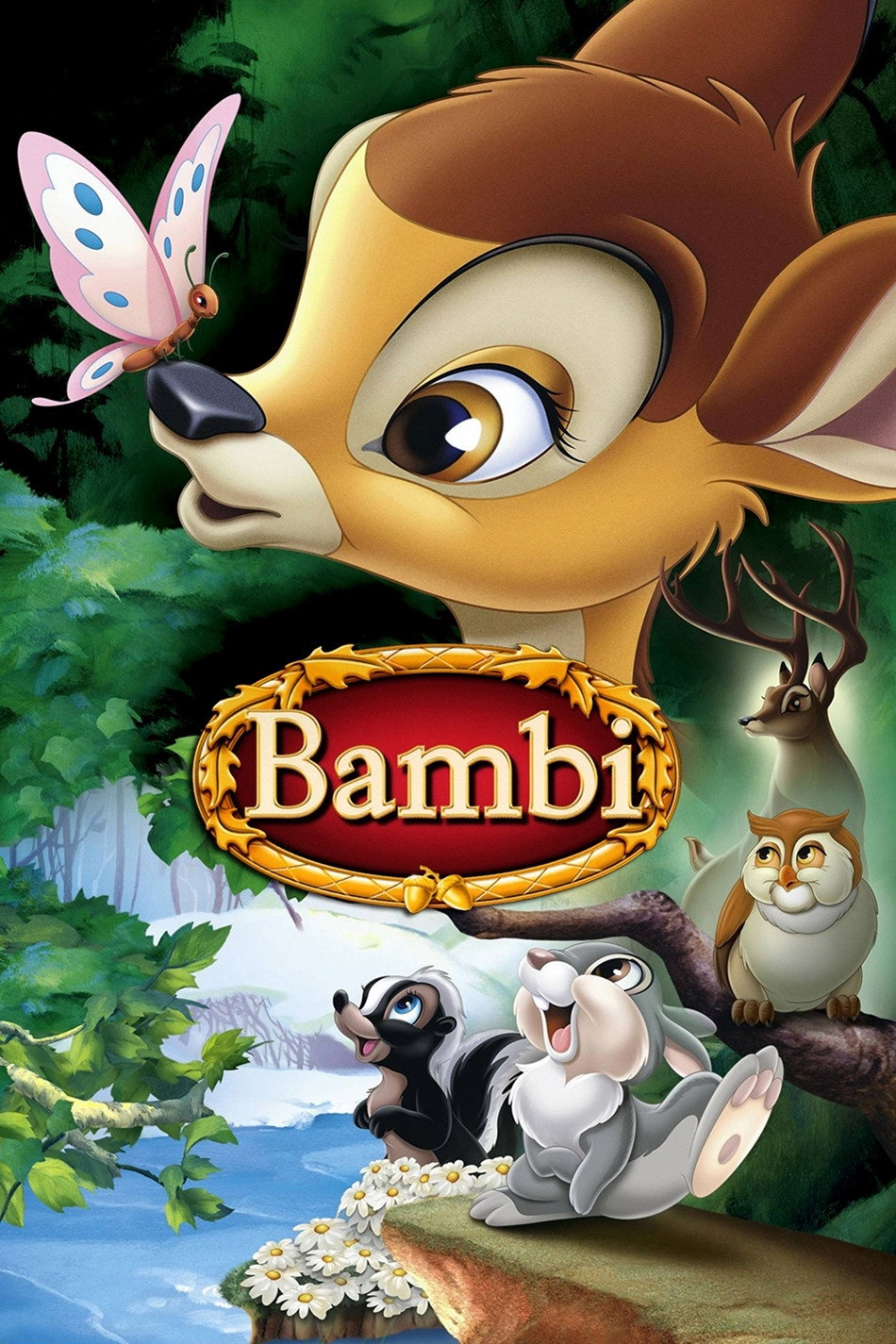
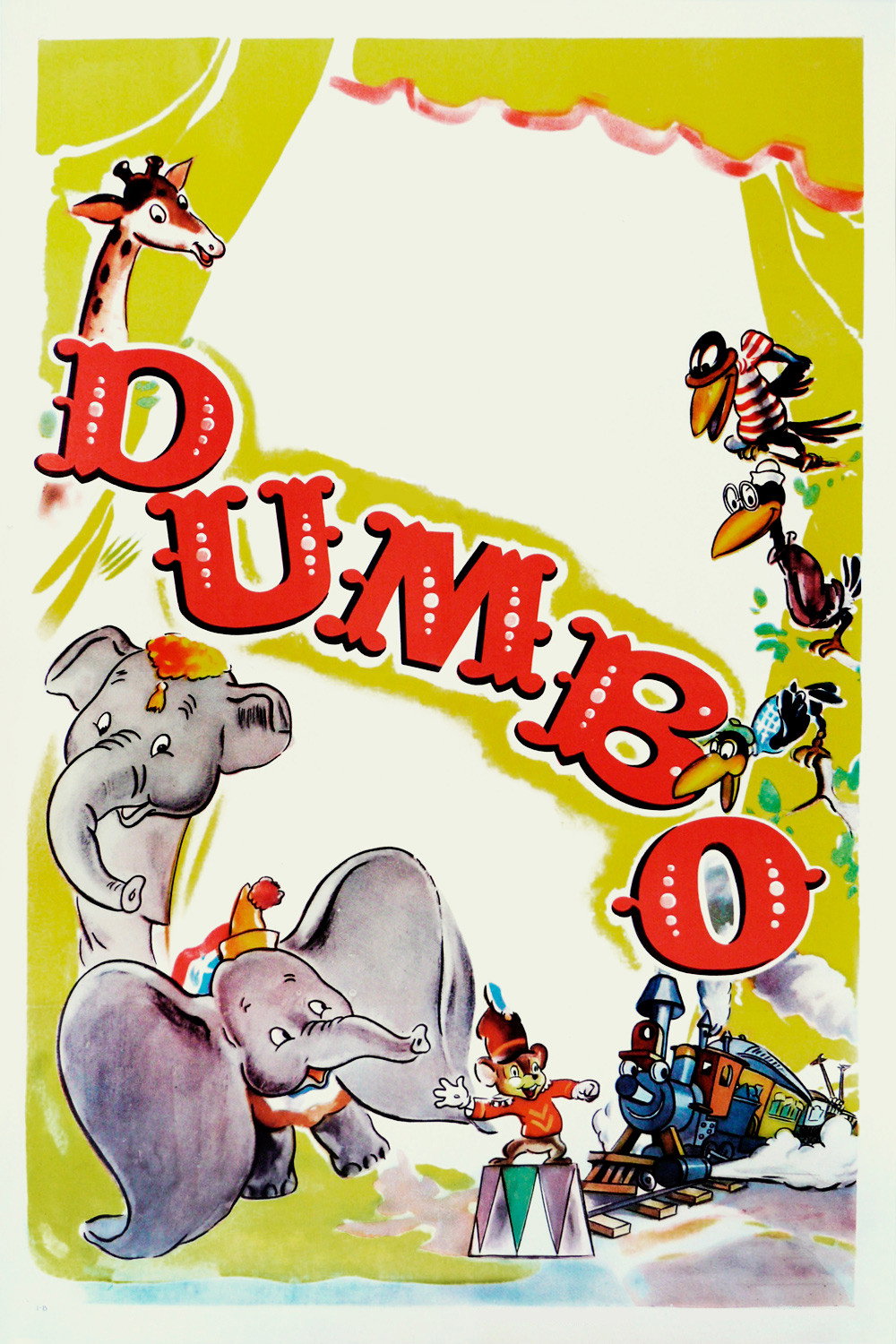
Walt Disney had already produced features about a princess, a puppet and an elephant when he made Bambi, which has almost no plot, no human face and, for long stretches, no dialogue. David Hand directs from Felix Salten’s novel, with a story credited to six writers, and the shape is a year and a bit in the life of a deer. He is born, learns to walk, sees rain, sees snow, grows antlers. It is the nearest thing to a nature film the studio ever made, and one of the two or three best things it has produced. We would send almost anyone to it.
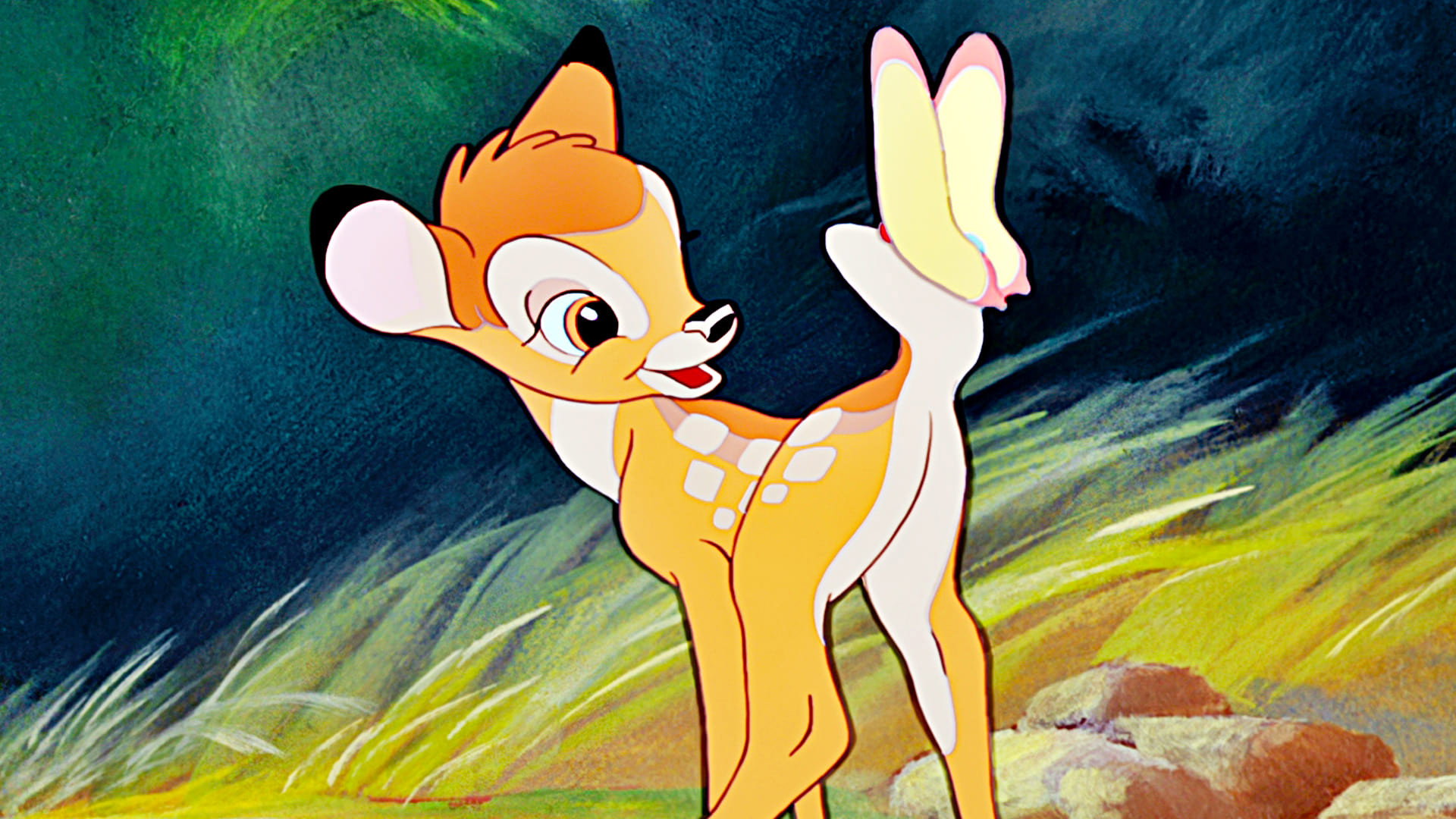
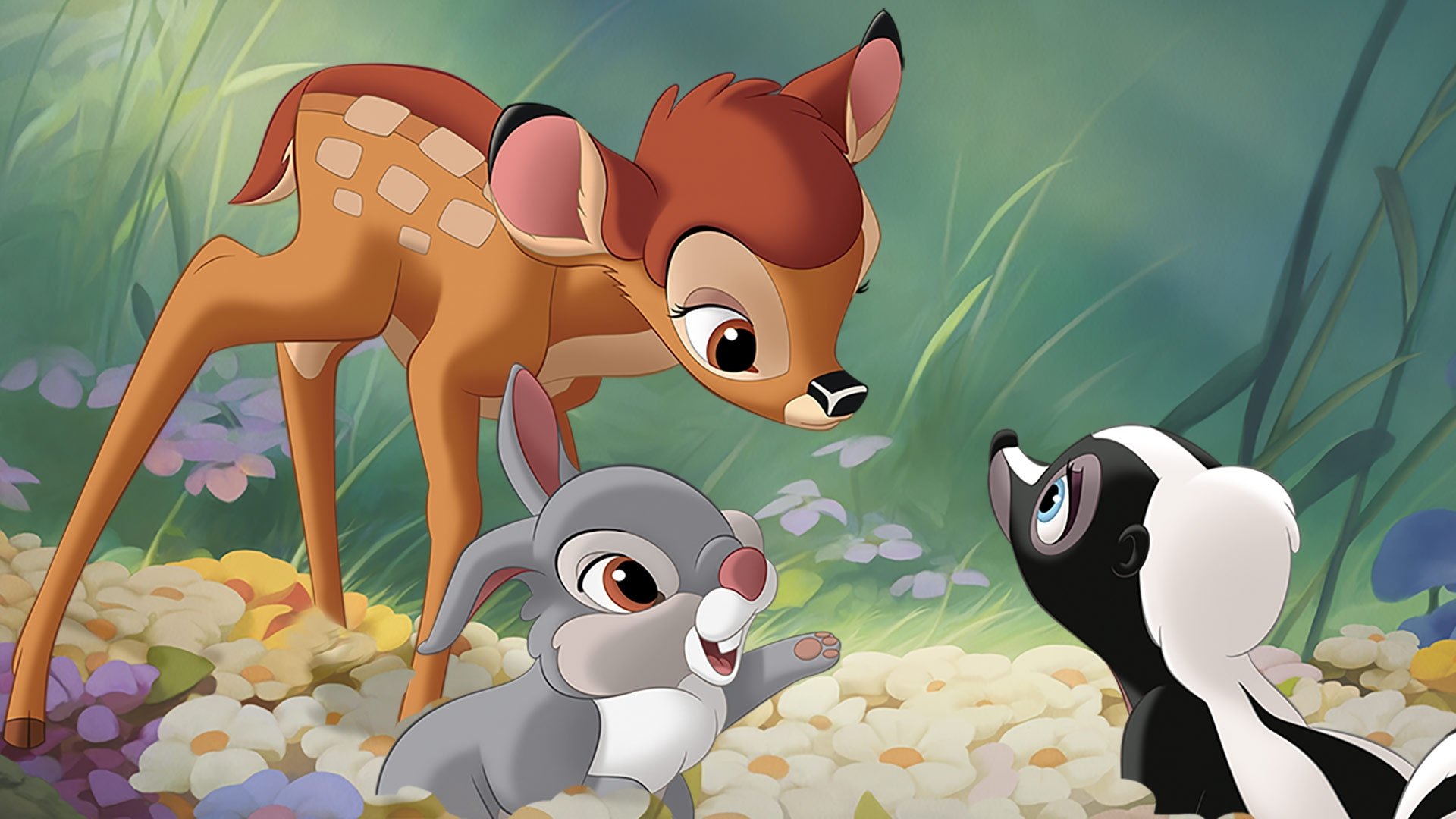
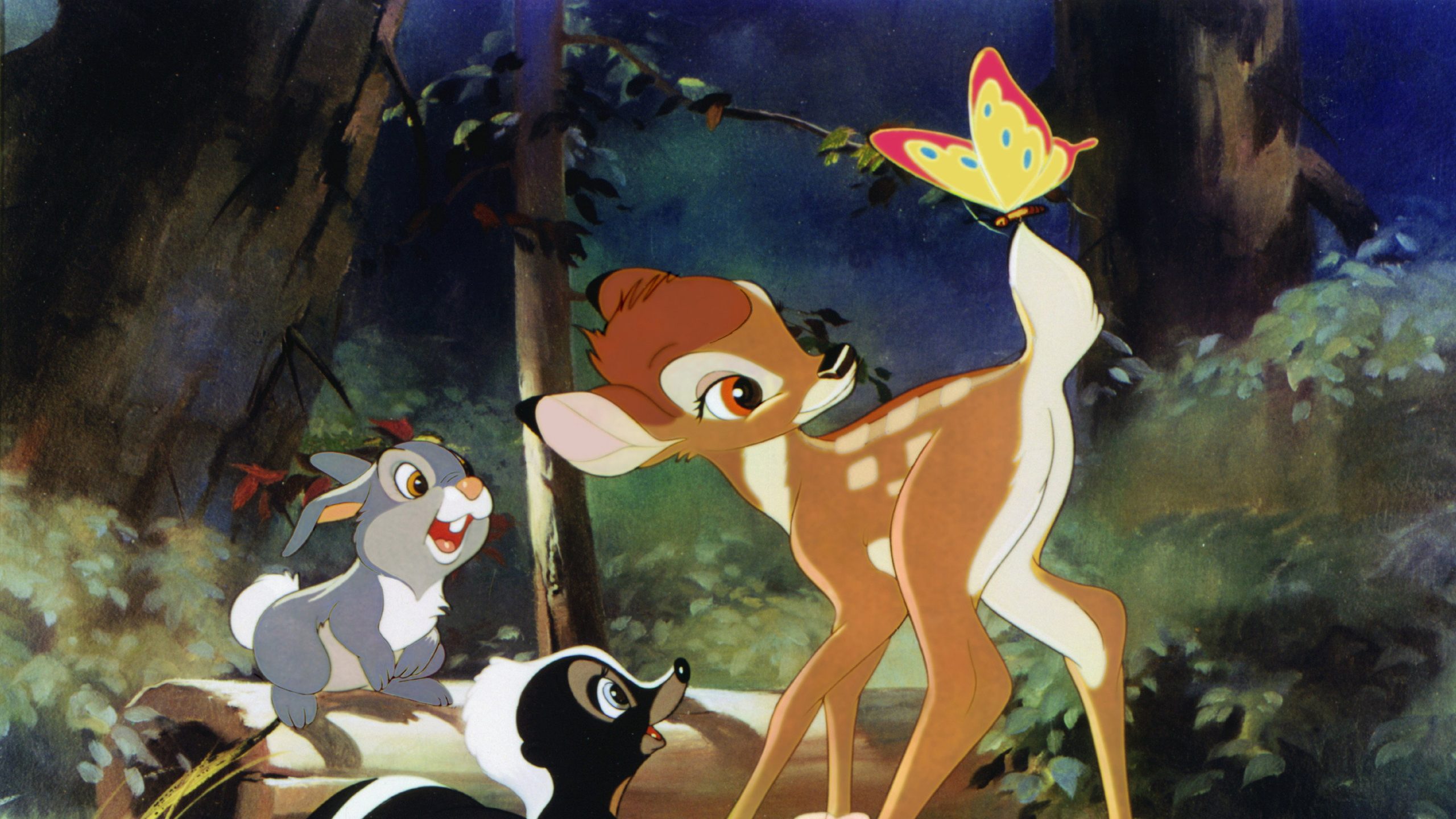
The backgrounds are the reason it has lasted. Earlier Disney features filled every corner of the frame with bark and leaf; here the painters put detail only where the eye is going and let the rest fall into wash. A trunk, a patch of moss, a spray of branches, and behind them green mist. The animals, drawn more like animals than anything the studio had tried before, move in front of these paintings. Watch the first rain: single drops on leaves, a frog, a quail hunching over her chicks, the storm arriving and passing, all timed to the music of Frank Churchill, Edward H. Plumb and Leigh Harline so exactly that we forgot it was drawn. We did not look away once.
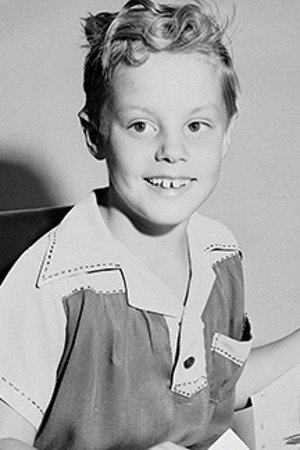
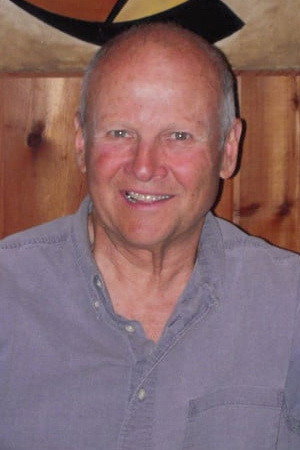
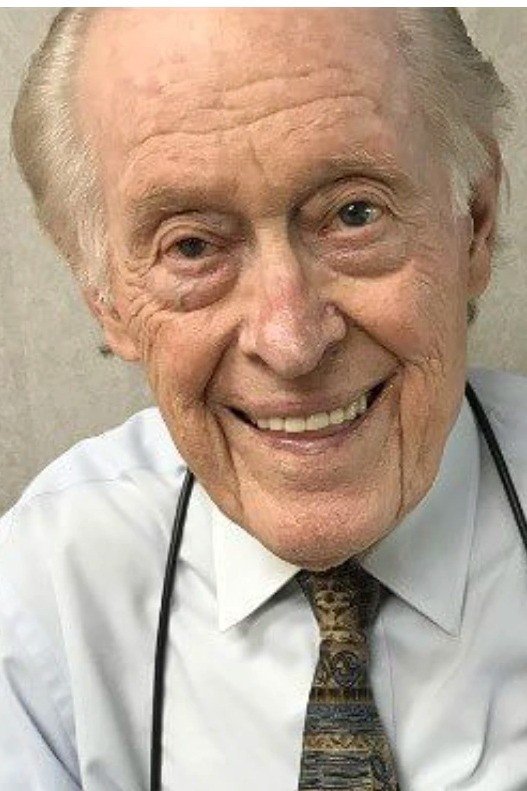
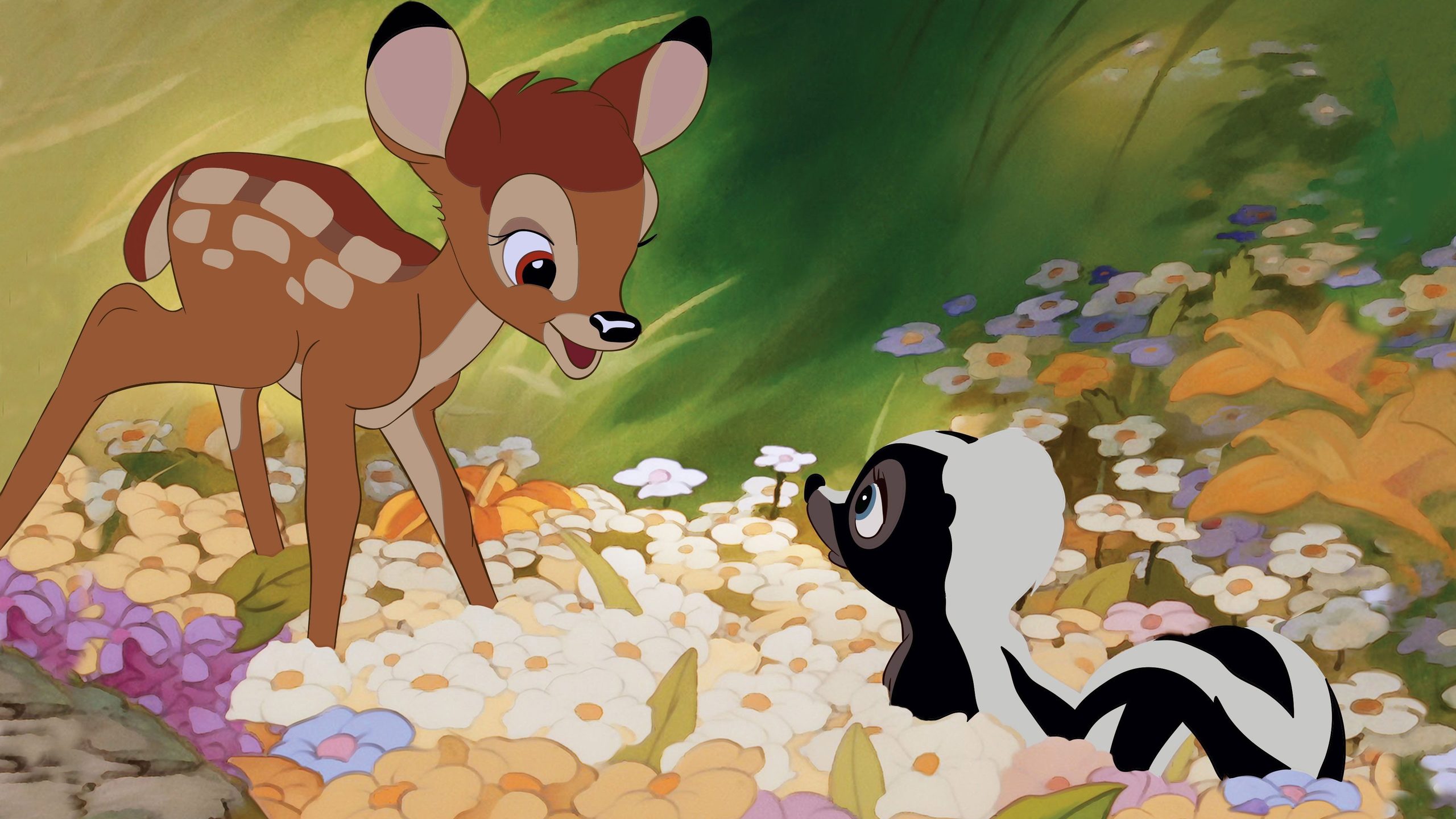
The children are the second great asset. The young roles are voiced by actual children, and it shows. Donnie Dunagan’s Bambi says “bird” as though the word were an object he has just picked up. Peter Behn’s Thumper has been told to be quiet and cannot manage it for more than a sentence, and he gets the laughs the film needs before it can afford its silences. Stan Alexander’s Flower blushes on cue. Will Wright’s Friend Owl is the one adult voice in the first half worth the name. Bambi trying to stand on a frozen pond, legs going four ways at once, made us laugh out loud, and we are not easily made to.
Then there is the other thing. The first trip to the meadow ends with a shot fired offscreen and a line about Man being in the forest, and from then on the film has a gun in it that we never see. The most famous scene arrives in the winter meadow, and we will not describe it. What we can say is how it is done: Thomas Scott cuts to almost nothing, one instruction, a run, a sound, snow falling on an empty frame. We knew what was coming. We have known since we were six. It still tightened our chest, because Hand shows us nothing and trusts the silence.
The caveats are in the second half. Adolescence brings adult voices: Hardie Albright’s older Bambi and Ann Gillis’s Faline sound like a radio serial, and Sam Edwards and Sterling Holloway, taking over Thumper and Flower, cannot match the children before them. Friend Owl’s lecture on spring fever is the one stretch where the film turns into the sort of cartoon it has spent an hour rising above. And the story hurries. Courtship, a rival stag and a set piece that turns the palette orange get the time the first act gave to one rain shower. At seventy minutes nothing drags, but the last twenty feel like the summary of a longer film.
When it opened, several reviewers thought it too real to be a cartoon and not real enough to be anything else. That is what we like most about it. Set against the studio’s run of that period, it lacks the invention of Pinocchio and the tightness of Dumbo, and has something neither has: a forest that looks as if it would carry on whether or not we were watching. It reached British cinemas in 1943 and has been frightening children here ever since.
The U certificate covers the language and not much else. Take a child of five if you are ready for the conversation on the way home, and go yourself regardless. Seventy minutes, no people on screen, and a forest unlike any painted since.